Strength Showdown: SLA vs. DLP vs. LCD Resin 3D Printing

One winner emerges when researchers pit the three main resin 3D printing technologies against each other to see which produces the strongest parts.
A new study published in Scientific Reports sheds light on the strengths and weaknesses of the three major resin-based 3D printing technologies: stereolithography (SLA), digital light processing (DLP), and liquid crystal display (LCD), with clear takeaways for professionals in dental prosthetics, and anyone deciding between these technologies.
- SLA printers use a precise laser to cure resin, allowing for high-resolution prints with excellent interlayer bonding.
- DLP printers use a digital projector to cure an entire layer at once, striking a balance between speed and accuracy.
- LCD printers, while more affordable, rely on a pixelated screen to harden layers, which results in more visible lines and texture.
Researchers tested the mechanical properties of more than 90 3D printed polymer specimens produced with each technology, focusing on three critical qualities: flexural strength (how much bending a material can take before breaking), surface hardness (resistance to scratching and denting), and surface roughness (how smooth or textured the final print feels and appears).
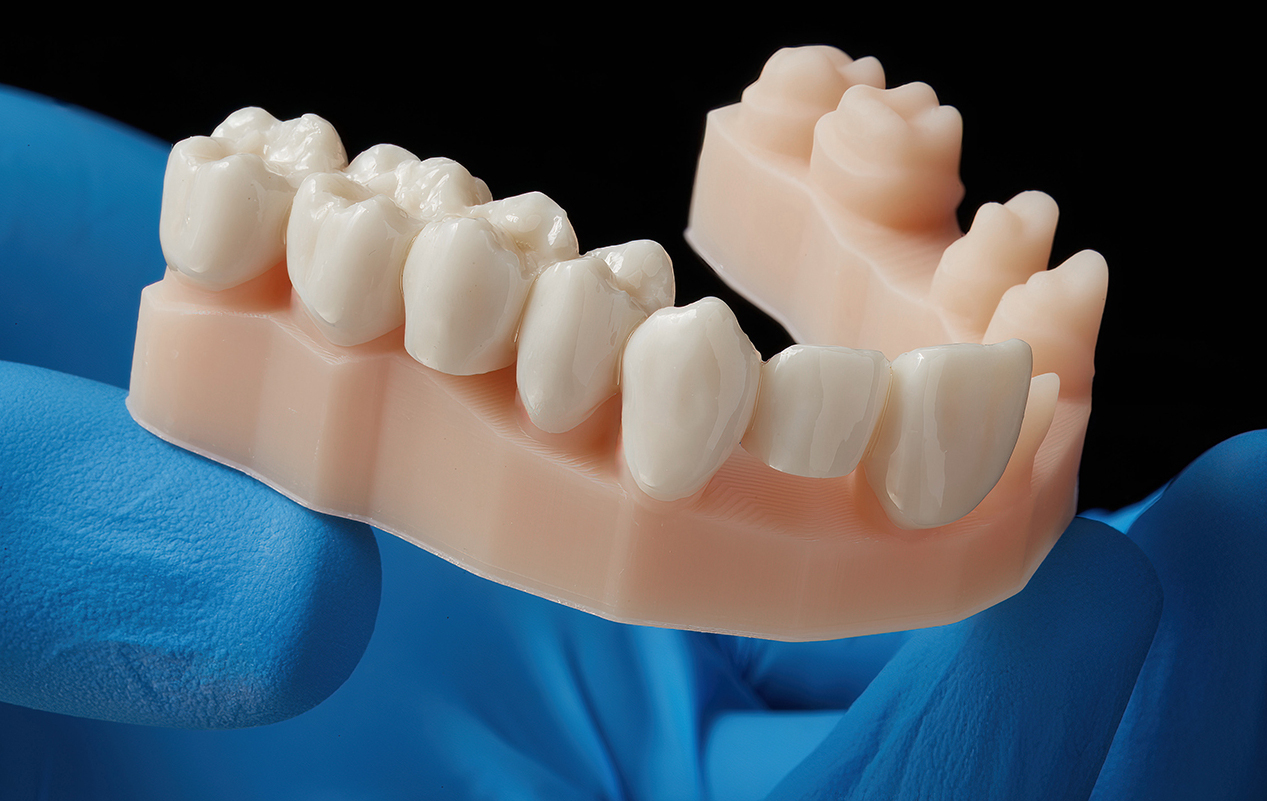
Although all three printing methods used the same type of resin (one designed for dental replacements and recommended by the printer manufacturer for their machine), they did not use the exact same resis, since these can be tuned to the specific technology. Researchers in this study used an SLA from Formlabs with Temporary CB resin, an Asiga DLP with DentaTooth resin, and a LCD from PioNext with a recommended temporary restoration resin from the same company. Exact models of the printers were not disclosed.
The results diverged significantly—especially in durability and surface finish.
Which Resin Tech Is the Strongest and Why
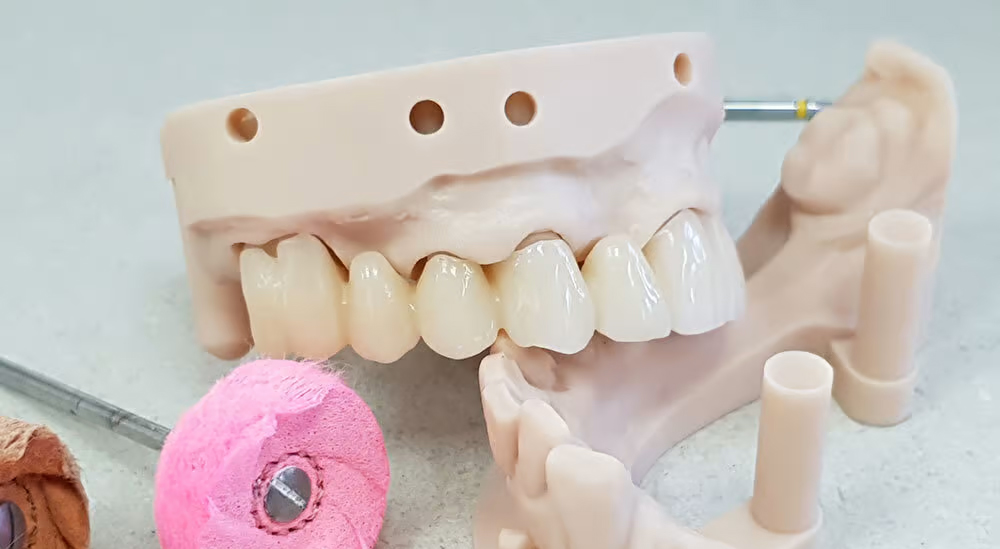
SLA came out on top in terms of mechanical performance overall. Its flexural strength averaged 93.39 MPa, significantly higher than DLP at 69.97 MPa and LCD at 64.69 MPa. This means parts printed with SLA, the researchers say, are better at resisting breaking under pressure or stress, which is a crucial factor for any application requiring strength.
Researchers concluded that the laser used in SLA results in stronger bonding between layers, reducing voids and weak spots. They also found that resin made for SLA technology produces stronger parts.
“The SLA resins used in this study were composed of esterification products, such as 4,4-isopropylidene diphenol, ethoxylated 2-methylprop-2-enoic acid, and diphenyl (2,4,6-trimethyl benzoyl),” the research states. “These components enhance the crosslinking density of the polymer during laser curing, resulting in stronger material bonds and a smooth surface finish.”
The study also noted that SLA’s focused laser ensures a uniform energy distribution, leading to a more homogeneous polymer matrix, while DLP and especially LCD showed more issues with inconsistent curing and surface defects.
When it came to surface hardness, there were no major differences. Researchers found that post-curing standardizes surface hardness, but post-curing could not compensate for poor layer bonding or low cross-linking, which is why SLA still excelled in flexural strength.
The study suggests that no matter which of the three resin technologies you use, your part’s resistance to wear and indentation should remain relatively consistent—at least when using comparable resins and post-processing methods.
The biggest variation appeared in surface roughness. SLA once again led the field with the smoothest finish, measuring just 14.79 nanometers on average. DLP was moderately rougher at 24.59 nanometers, while LCD prints were the roughest by far, with an average surface roughness of 89.87 nanometers. For any industry where aesthetics or hygienics matter—like dentistry, eyewear, or jewelry—this is a significant difference. Rougher surfaces not only look less refined but can also be harder to clean and more prone to plaque or bacterial buildup in oral applications. Finishing options, such as vapor smoothing can wipe out this variance among technologies, but it’s not appropriate for every application.
For those in dentistry or prosthetics, the general implications are clear. SLA could be the first choice when strength and smooth finishes are priorities and speed is less of a priority. DLP offers a solid middle ground especially for temporary restorations—faster than SLA and good enough for many applications where perfect smoothness isn’t required. LCD, while the most budget-friendly, may require post-processing for acceptable results and may not be suitable for load-bearing or highly visible parts.
Although the researchers’ conclusions are generalizations considering that there is such a wide range of 3D printers on the market in each of these three categories, this study is backed up by previous findings summarized in a 2025 review of 11 studies the flexural strength of 3D printed dentures produced with various resin 3D printing technologies.
License: The text of "Strength Showdown: SLA vs. DLP vs. LCD Resin 3D Printing" by All3DP Pro is licensed under a Creative Commons Attribution 4.0 International License.