Stratasys Finally Goes Metal: The Polymer Giant’s Big Shift

The strategic move to invest in Tritone Technologies answers customer demand for a single vendor that can handle everything from prototyping polymers to industrial-grade metal.
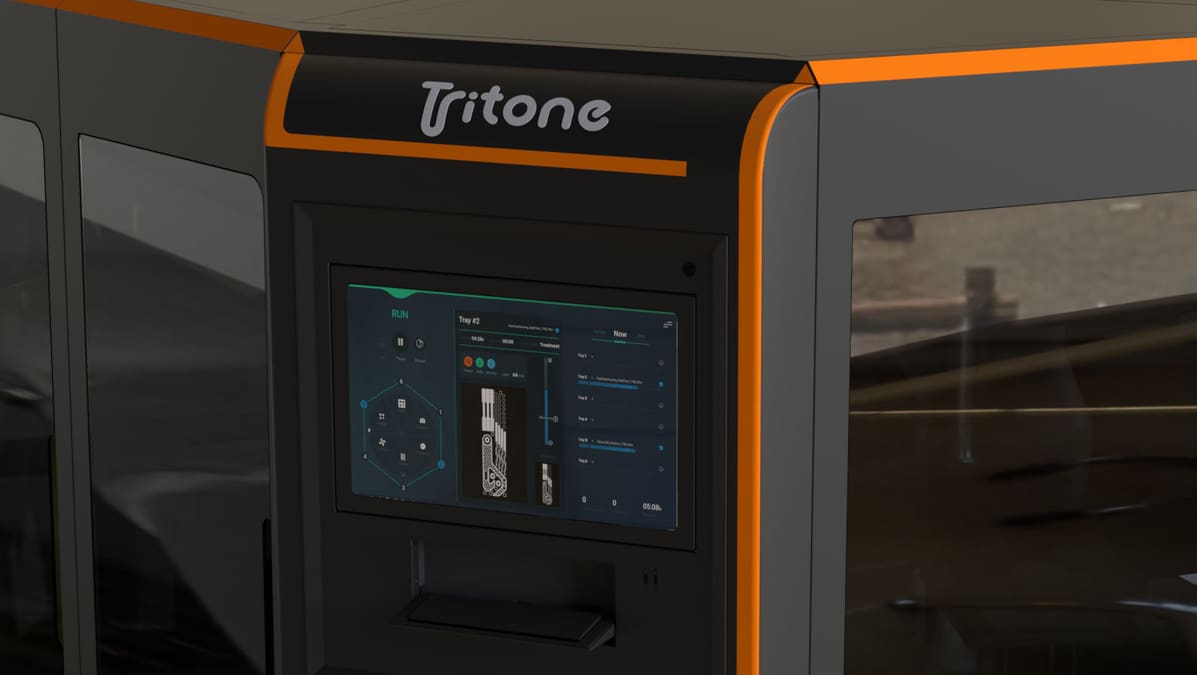
Stratasys, long regarded as a titan of polymer additive manufacturing, is officially expanding into metal. The company announced today a strategic investment and commercial partnership with Israel-based Tritone Technologies, marking one of its most significant portfolio expansions in years.
The move gives Stratasys access to Tritone’s unique production-grade metal and ceramic 3D printing technology—particularly its MoldJet process. Stratasys’ move mirrors a broader trend in the additive manufacturing market: consolidation and portfolio expansion aimed at simplifying the buyer experience. Manufacturers increasingly prefer fewer vendors who can offer end-to-end solutions—from prototyping polymers to production metals.
A Bid to Become a One-Stop AM Provider
Stratasys CEO Yoav Zeif says customers already using the company’s polymer solution, such as FDM, have increasingly pushed for a metal solution.
“After a long search, we found Tritone to offer a unique combination of part quality, cost-efficiency, with a sustainable business model,” Zeif says. “This agreement significantly expands our total addressable market.”
The deal includes participation in Tritone’s latest investment round giving Stratasys an initial minority stake and an option to increase its ownership in the future. A multi-phase commercial agreement is also in place, aligning both companies on reseller support and market development efforts.
MoldJet: Powder-Free Metal & Ceramic AM at Scale
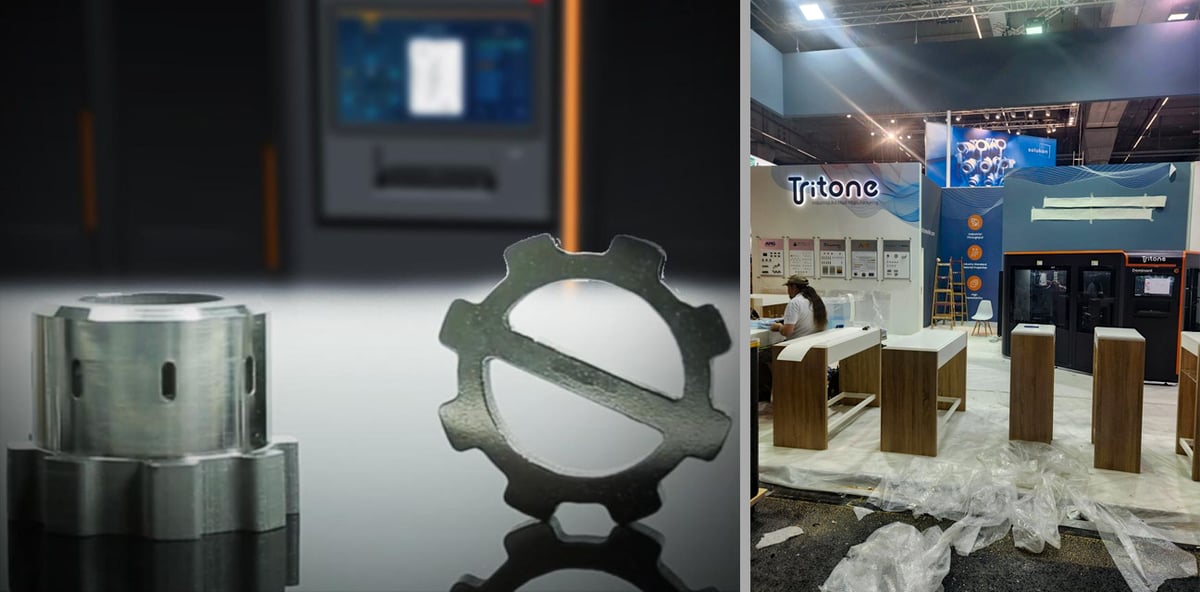
Founded in 2017 by former Kornit Digital founder Ofer Ben Zur, Tritone built its reputation around MoldJet—a powder-free metal and ceramic AM technology designed for industrial-scale throughput.
According to a paper by the Fraunhofer Institute for Manufacturing Technology and Advanced Materials, MoldJet technology uses both material jetting and extrusion: “A mold is produced in one layer as a negative of the component geometry from a wax-like polymer with so-called inkjet print heads. This printed layer of mold material is then filled with metal powder paste via a slotted nozzle and a squeegee.”
The process enables batch production of dense, complex parts suitable for tooling, medical, defense, and general industrial applications.
A key differentiator is MoldJet’s ability to quickly switch between multiple metal alloys and ceramics without lengthy requalification or cleaning cycles. Different part geometries can even be produced simultaneously in a single build.
Ben Zur says the Stratasys partnership validates Tritone’s vision: “By joining forces with Stratasys, we’re extending the reach of our offerings and giving customers the confidence to adopt AM technology for producing precise parts in metals and ceramics that meet the high standards of industrial production.”
For Tritone, the partnership opens global commercial channels and strengthens its ability to scale production deployments.
As the AM industry pushes harder toward true manufacturing-grade workflows, this collaboration positions both companies to capitalize on the shift.
You May Also Like:




Tired of Reading? Try Listening
License: The text of "Stratasys Finally Goes Metal: The Polymer Giant’s Big Shift" by All3DP Pro is licensed under a Creative Commons Attribution 4.0 International License.