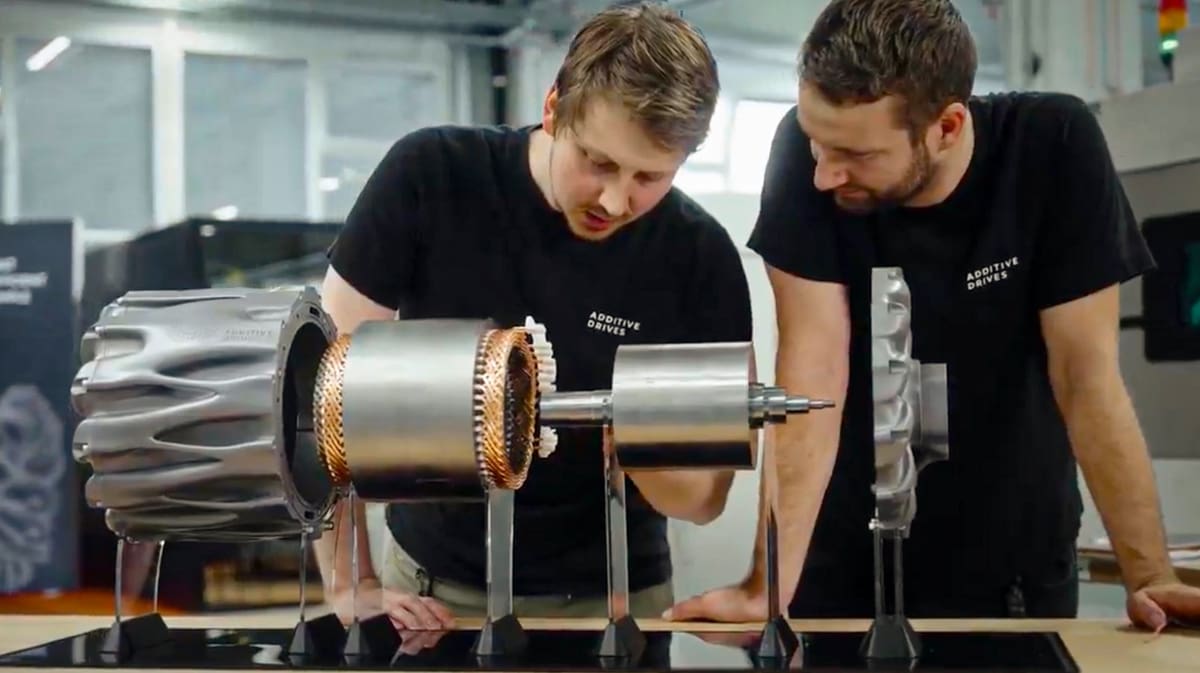
Rescuing the EV Supply Chain, New 3D Printed Electric Motors Need Far Fewer (or no) Rare Earths

With €25 million in new funding and innovative 3D printing techniques, researchers and startups are now achieving 98% efficiency in electric motors—while slashing the need for critical and rare minerals.
The push to decouple electric vehicle production from volatile rare earth markets is finding a new technological catalyst in 3D printing. Driven by recent breakthroughs from the National Research Council of Canada and a new €25 million investment into start-up motor maker Additive Drives, the industry is moving toward motor designs that reach 98% efficiency. These advancements suggest that additive manufacturing may be the key to securing the EV supply chain by significantly reducing, or entirely eliminating, the need for critical minerals.
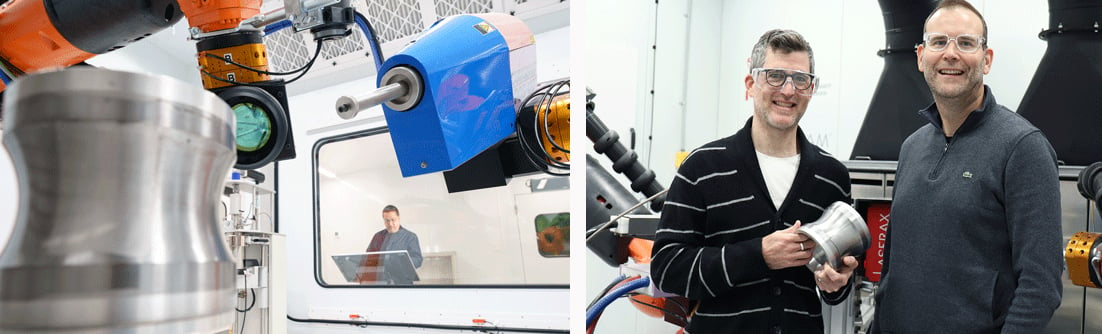
In Canada, scientists at the National Research Council of Canada (NRC) just released a brief on their work pushing the boundaries of electric motor design by exploiting 3D printing techniques and topological optimization. At the council’s Boucherville, Quebec facility, researchers are using cold-spray additive manufacturing to build permanent magnet components with complex shapes and high mechanical strength that do not require assembly and that can incorporate fewer rare earth elements. By pairing additive manufacturing with topological optimization tools, guided by machine-learning algorithms, the team is creating motor geometries that are lighter, more compact and more material-efficient.
The researchers are also exploring alternative magnet compositions such as samarium-iron-nitrogen and samarium-cobalt, which can perform at high temperatures with less reliance on the rare-earth neodymium.
“The potential of topological optimization combined with additive manufacturing is enormous,” say NRC researchers Jean-Michel Lamarre and Fabrice Bernier.” With these approaches, we can create new motor geometries that can significantly reduce or even eliminate the need for rare earth elements, cut manufacturing costs, and enhance both the power‑to‑weight ratio and overall motor efficiency.”
Their work aims not only to stabilize production costs and cut material consumption but also to spur the adoption of advanced design methods across the transportation and clean-technology sectors.
On the industrial front, German electric motor specialist Additive Drives has just secured more than €25 million in fresh capital from green industry investor Nordic Alpha Partners, which acquired a minority stake in the business, alongside additional funding from existing backer AM Ventures. The company is commercializing high-efficiency electric motors fabricated with additive manufacturing processes that do not use rare earth materials.
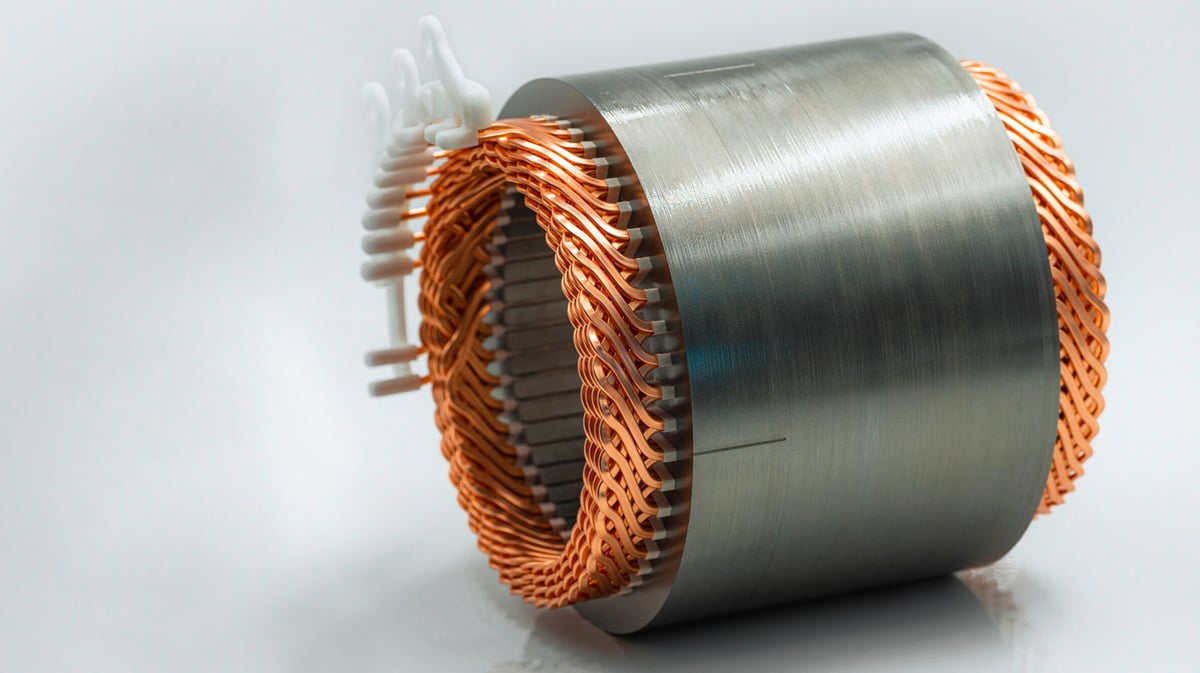
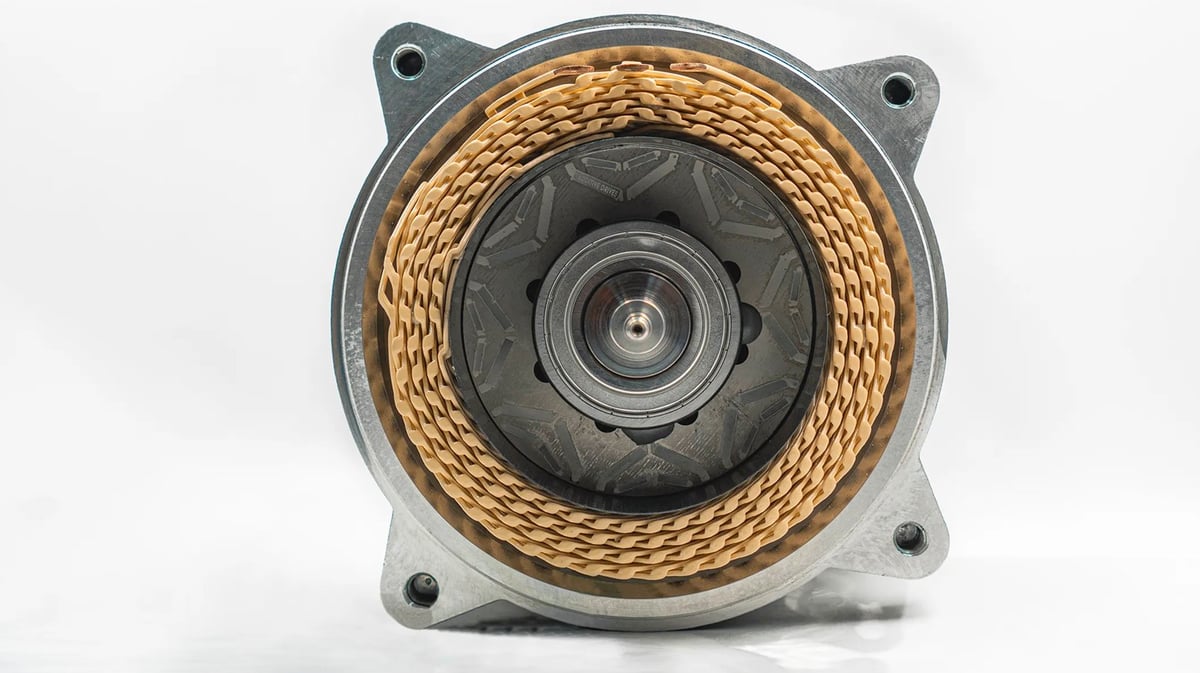
Additive Drives’ proprietary 3D printed motors are designed to deliver up to 98% energy efficiency, sharply reducing energy loss compared with traditional designs. The absence of rare earth materials, the company says, helps mitigate supply risk and supports broader sustainability goals. With the new funding, Additive Drives plans to scale production and expand into high-growth applications in data centers, e-mobility, advanced manufacturing, and other energy-intensive sectors. The company says it can produce working prototypes in roughly three weeks — a speed that contrasts with long lead times typical of conventional motor manufacturing.
Additive Drives counts a number of major industrial customers among its early adopters and has maintained profitability since its early stages, the company says. Its technology underscores the commercial momentum behind rare earth–free electrification technologies.
Taken together, these scientific and commercial efforts illustrate an emerging ecosystem in which additive manufacturing plays a central role in reshaping electric motor design. By enabling complex geometries, material-efficient structures and reduced dependence on critical minerals, industry watchers say 3D printing could unlock new performance frontiers for electric drives while supporting more resilient and sustainable global supply chains.
You May Also Like:


Listen to All3DP’s News Podcast:
License: The text of "Rescuing the EV Supply Chain, New 3D Printed Electric Motors Need Far Fewer (or no) Rare Earths" by All3DP Pro is licensed under a Creative Commons Attribution 4.0 International License.