No Pumps, No Fans: This 3D Printed Heat Exchanger Could Save the Grid from AI’s Energy Demands

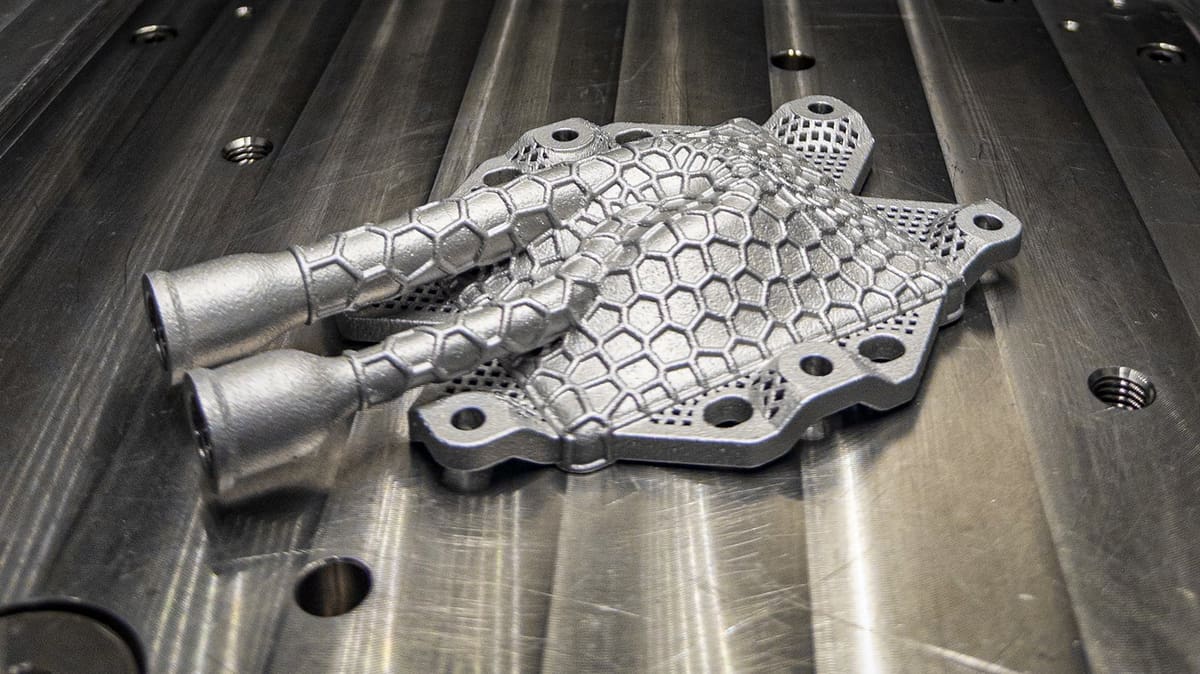
Using 3D printing to create complex internal geometries, this prototype reduces overall material use while significantly improving heat transfer efficiency.
In just the next five years, companies will invest nearly $7 trillion on data centers globally, driven by massive demand for AI. These data centers are expected to double their energy consumption in that time with a substantial portion of energy devoted to cooling systems, which must remove heat from densely packed high-performance hardware.
Enter, a new 3D printed cooling solution that is not only more energy efficient to run, but removes heat from components better.
Developed by the Danish Technological Institute and Danish startup Heatflow, alongside international partners, this 3D printed cooling component prototype tailored for data centers and high-performance computing systems, operates without pumps or fans. It has the potential to make excess heat usable in local heating systems.
Passive Two-Phase Cooling Without Pumps
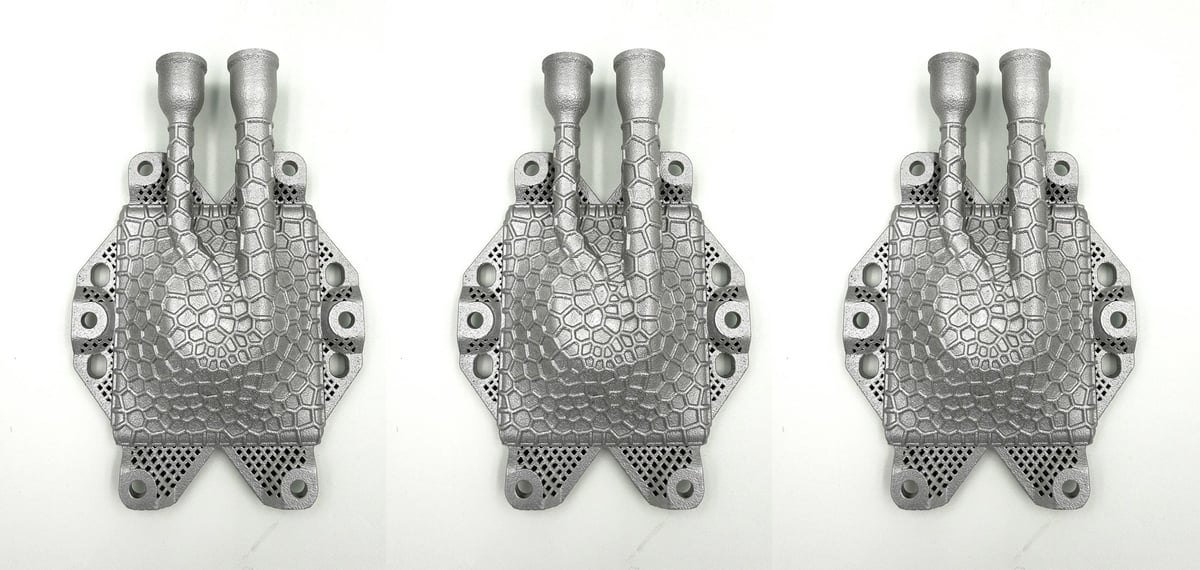
The new solution uses passive two-phase cooling based on a “thermosiphon principle”, where a coolant evaporates at a hot surface, rises naturally, condenses elsewhere, and returns by gravity. This means no energy input is needed to circulate the coolant, reducing energy consumption for cooling operations.
In tests, the prototype achieved a cooling capacity of 600 watts, exceeding its original target of 400 watts, showing that the approach not only saves energy but also efficiently removes heat from components.
3D Printing Enables Integration and Reliability
Although the developers do not claim that the component cannot be made by any other manufacturing method, it chose metal 3D printing for its ability to integrate several complex components into a single-piece aluminium evaporator. The design ensures fewer leaks and has a higher potential for recyclability by using a single material.
A central finding of the project is that the new solution extracts heat at temperatures between 60 °C and 80 °C, which are high enough to feed directly into district heating networks to provide heating for homes, buildings, or factories located close to the data center. This marks a significant shift from traditional air cooling in servers, which typically dissipates heat at much lower temperatures that are not suitable for reuse.
Environmental Benefits and Project Details
Using 3D printing also reduces overall material use compared with conventional multi-component solutions. Although the project is still at a demonstrator stage, life cycle analyses indicate potential reductions in total CO2 emissions of 25% – 30% per unit compared with conventional solutions.
The head exchanger is the product of the AM2pC project (Novel two-phase cooling systems for data centres through additive manufacturing) is a European research project (2023–2025) focused on developing highly efficient, 3D-printed, passive cooling solutions for data centers and high-performance computers. Partners included Open Engineering (Belgium) and Fraunhofer IWU (Germany), in addition to Heatflow and the Danish Technological Institute.
You May Also Like:
Listen to All3DP’s News Podcast:
License: The text of "No Pumps, No Fans: This 3D Printed Heat Exchanger Could Save the Grid from AI’s Energy Demands" by All3DP Pro is licensed under a Creative Commons Attribution 4.0 International License.