Prusa’s New PA11 Nylon Filament Promises Its Strongest Layer Bonding Yet

Prusa’s castor oil-derived PA11 filament combines unusually strong interlayer adhesion with low friction, impact resistance, and the durability needed for demanding moving parts.
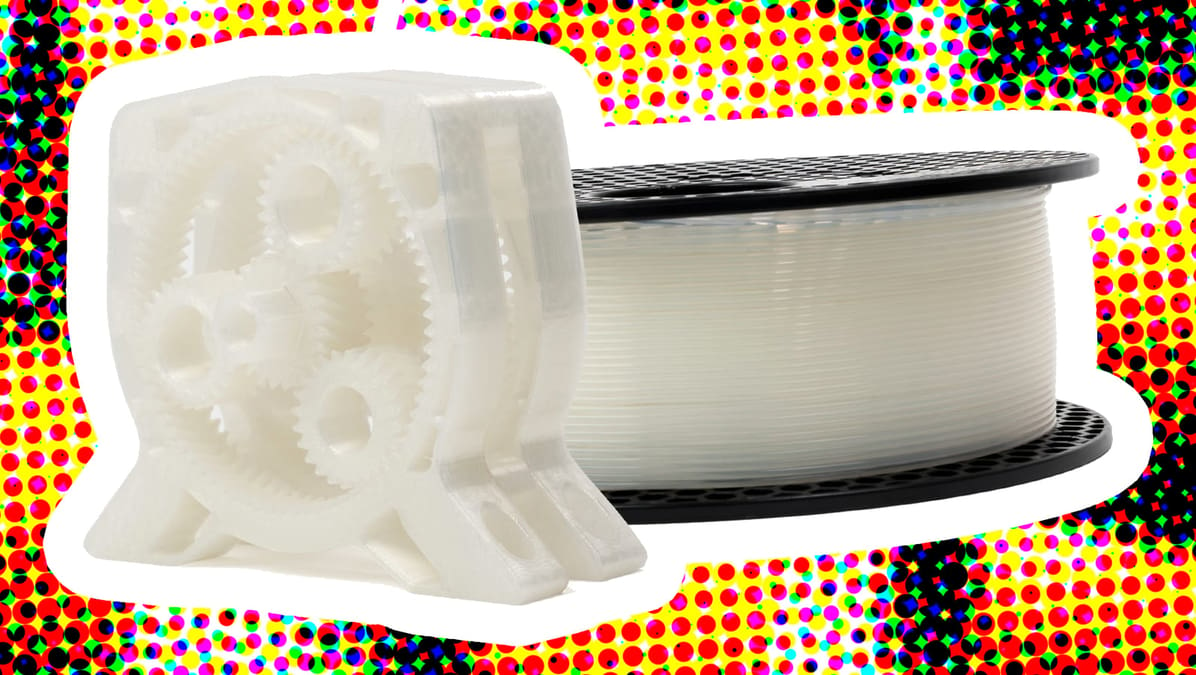
Prusa Research just expanded its technical filament lineup with Prusament PA11 Natural, an unfilled nylon aimed at gears, moving mechanisms, outdoor components, and other mechanically demanding parts. This is not hobbyist material, especially with the $132 per kilo price, but if you need strong layer adhesion, impact resistance, and low-friction movement, this material fills a gap within the overall filament market.
Prusa says the new filament is related to Prusa’s carbon fiber-filled PA11, introduced in 2022, but without the carbon fibers. PA11 Natural is less rigid and more likely to warp, which is why it needs an enclosure, but it offers better bonding between printed layers. This could make it especially useful for parts that are repeatedly loaded, bent, or struck.
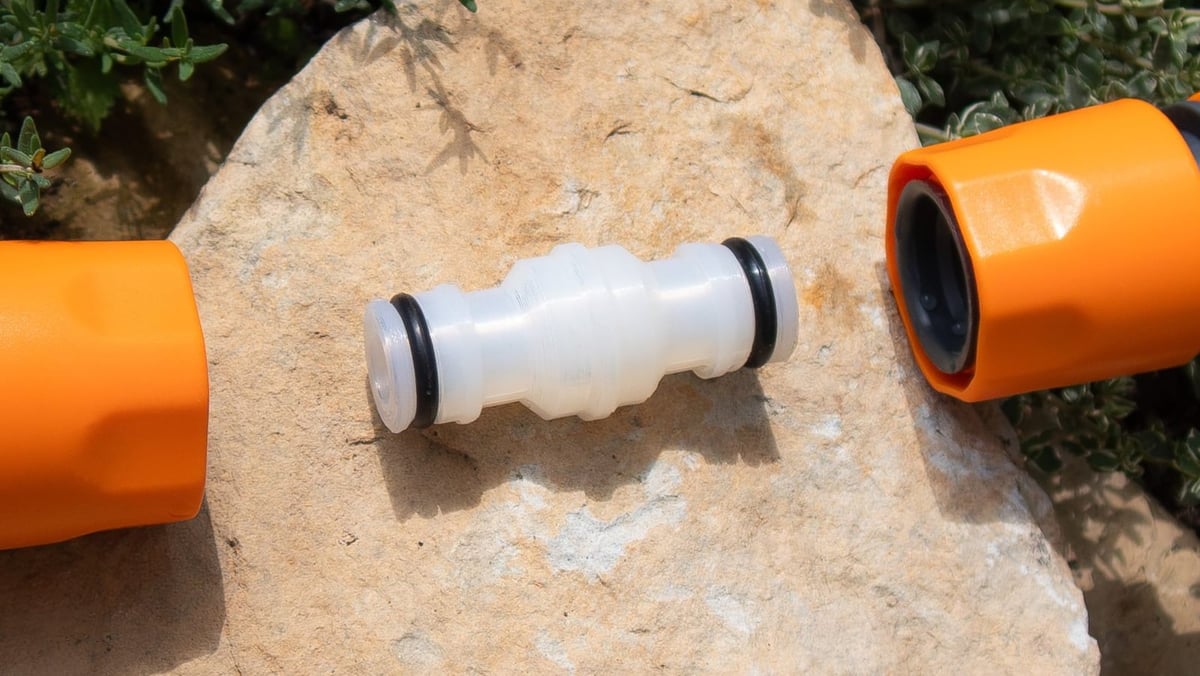
In fact, Prusa says this material achieved the highest result for any Prusament filament in one key measure: tensile-strength anisotropy coefficient, which is how evenly a printed part handles force in different directions. FDM prints are usually weakest where one layer joins the next, but a tensile-strength anisotropy coefficient of 0.84 means the printed part is almost as strong between its layers as it is along them. A score of 1 means strength is equal in X, Y, and Z, and for comparison, Prusa lists a score of 0.60 for PLA High Speed and 0.33 for standard PLA and PC Blend.
Made for Moving & Outdoor Parts
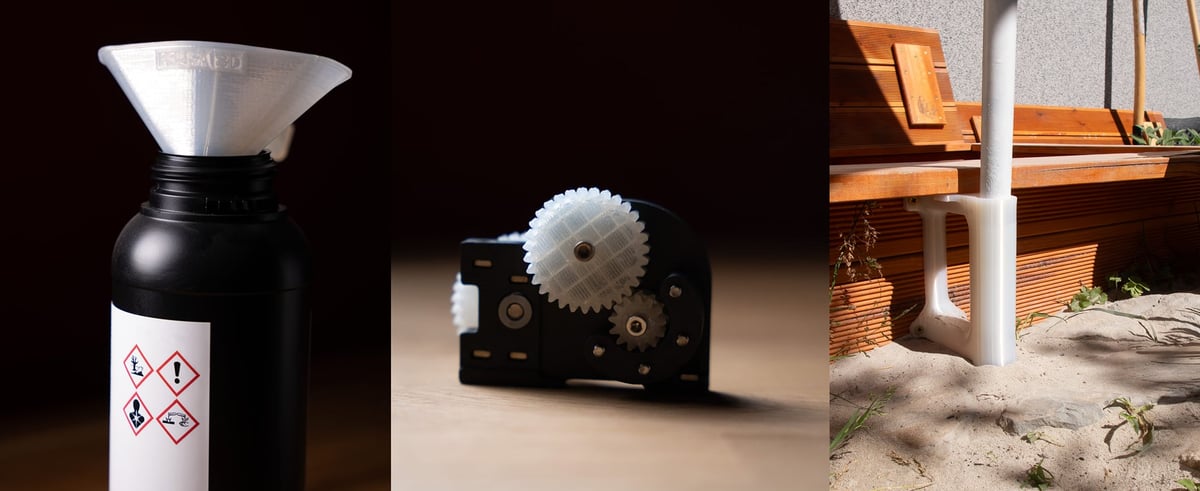
One often under-touted attribute of this type of nylon is that it is not made derived from fossil fuels, like PA 12s. PA11 is castor oil-derived nylon. It is commonly used in industrial powder-bed printing, like SLS, but is less familiar as an FDM filament.
Its low friction and resistance to wear make PA11 Natural a potential choice for:
- Gears
- Bearings and bushings
- Sliding mechanisms
- Automotive parts
- Outdoor components
- Parts exposed to oils or fuels
Prusa says the material resists UV exposure and chemicals including alcohols, acetone, motor oil, gasoline, and diesel. Users should still test compatibility for their specific chemical, temperature, and exposure time.
As printed, Prusa gives the filament a heat-deflection temperature of 58.7 °C. Annealing the finished part can reportedly increase that figure to 122.5 °C, although the process requires controlled heating and cooling over several hours.
A Bit Demanding to Print
PA11 Natural is not intended as an easy replacement for PLA or PETG, by any means.
Prusa recommends:
- A nozzle temperature of 275 ±10 °C
- A bed temperature of 100 ±10 °C
- A chamber temperature of 55 ±5 °C
The company currently provides PrusaSlicer profiles for the Core One+, Core One L, and Pro HT90. A standard brass nozzle can be used because the filament does not contain abrasive fibers.
Like other nylons, PA11 Natural absorbs moisture from the air. Prusa recommends drying it at 90 °C for six to eight hours before printing and storing it in a dry box.
A dedicated PA Nylon build sheet is recommended, especially for larger parts. Prusa also advises using an enclosed printer with air filtration or operating it in a well-ventilated area.
Prusament PA11 Natural is supplied as 800 g of 1.75-mm filament in a translucent, yellowish-white color. More colors are expected later.
The spool includes an NFC tag using the OpenPrintTag standard, allowing material information to be read with the Prusa mobile app.
At a listed U.S. price of $104.99 for 800 g, the filament costs approximately $132 per kilogram. That makes it an expensive and demanding material, but its combination of strong layer bonding, impact resistance, chemical durability, and low friction could make it valuable for specialized functional parts.
You May Also Like:
License: The text of "Prusa’s New PA11 Nylon Filament Promises Its Strongest Layer Bonding Yet" by All3DP is licensed under a Creative Commons Attribution 4.0 International License.
CERTAIN CONTENT THAT APPEARS ON THIS SITE COMES FROM AMAZON. THIS CONTENT IS PROVIDED ‘AS IS’ AND IS SUBJECT TO CHANGE OR REMOVAL AT ANY TIME.