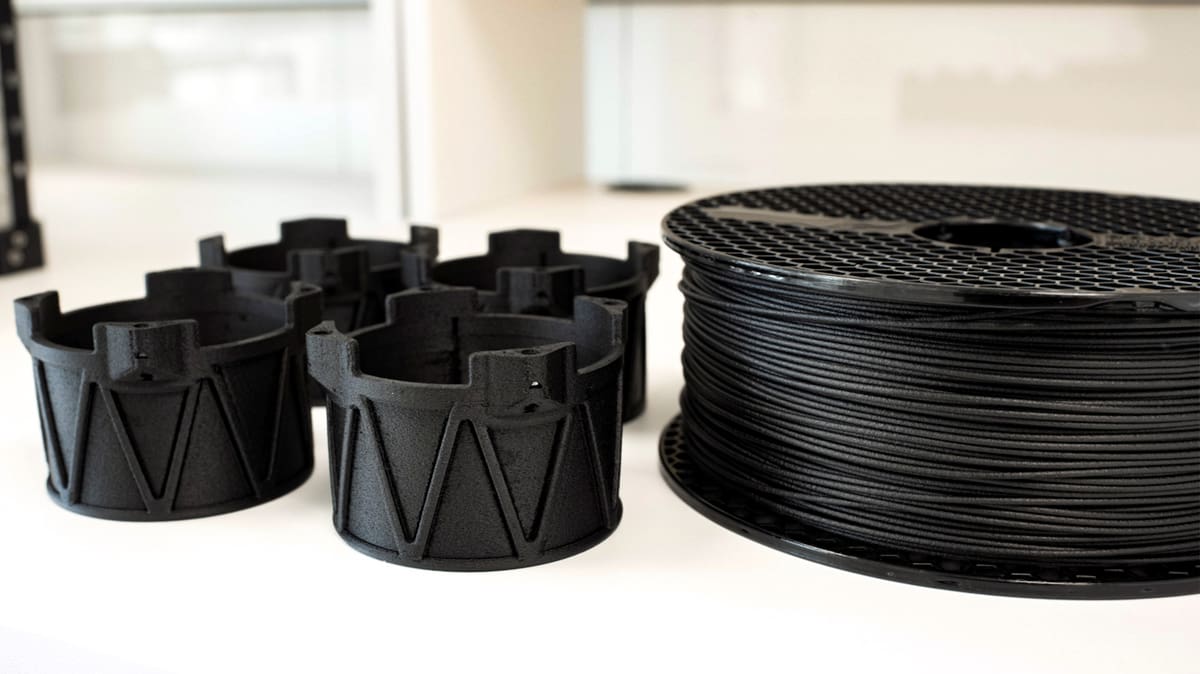
Prusa Launches Space-Grade Filament You Can Print at Home

Possibly Prusa's most expensive and ambitious filament, this new polycarbonate is designed to meet the rigorous demands of orbit.
Prusa Research says its new polycarbonate (PC)-based filament was “developed for the space industry” but is compatible with common desktop 3D printers. What a combination!
At $229 per 850 grams, though, Prusa may be aiming for the stars with this new “Prusament PC Space Grade Black”.
“Our goal was to create a professional, yet affordable material that would make prototyping and manufacturing space components easier,” the company says in its blog post. “Until now, only costly materials like PEEK, PEKK, and PEI with ESD-safe properties were suitable in this field.” So, by “affordable,” Prusa means compared to PEEK and PEKK, which are definitely pricey. Yet, Prusa’s own PEI, launched last year “for extreme environments,” is $139 per half kilo, by comparison.
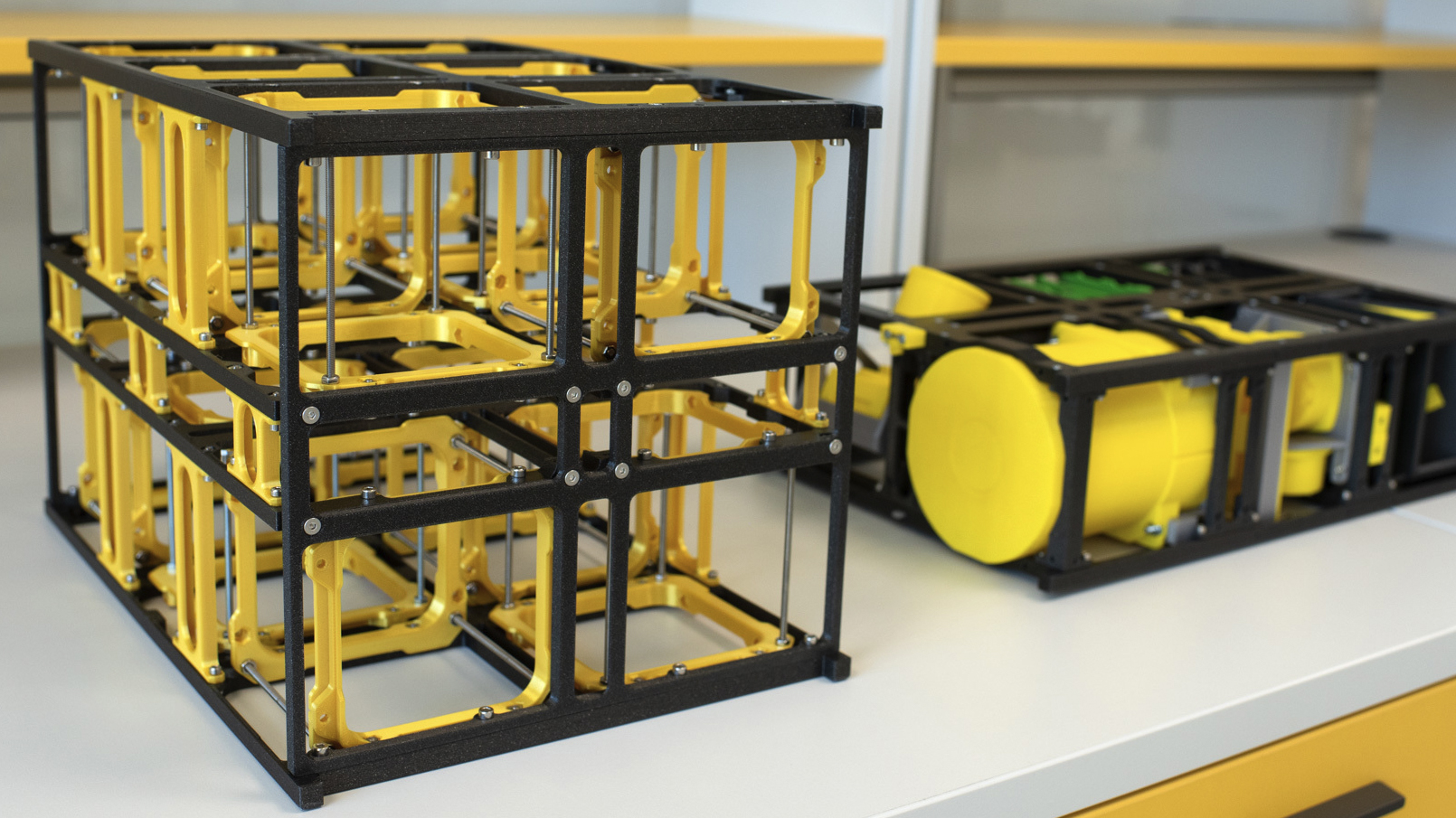
Nonetheless, Prusa says its PC Space Grade Black was developed in cooperation with the Czech space company TRL Space, which offers complete turnkey space missions. TRL says it is using this material in its space satellites for brackets and other structures.
Space Grade Black has not yet met the highest classification for polymers used for structural components, such as CubeSat frames (it’s still waiting for several test results), Prusa says, but it is currently suitable for less-demanding space-related applications, including components under lower stress levels, such as electronics housings and wire holders.
Low Outgassing from a PC
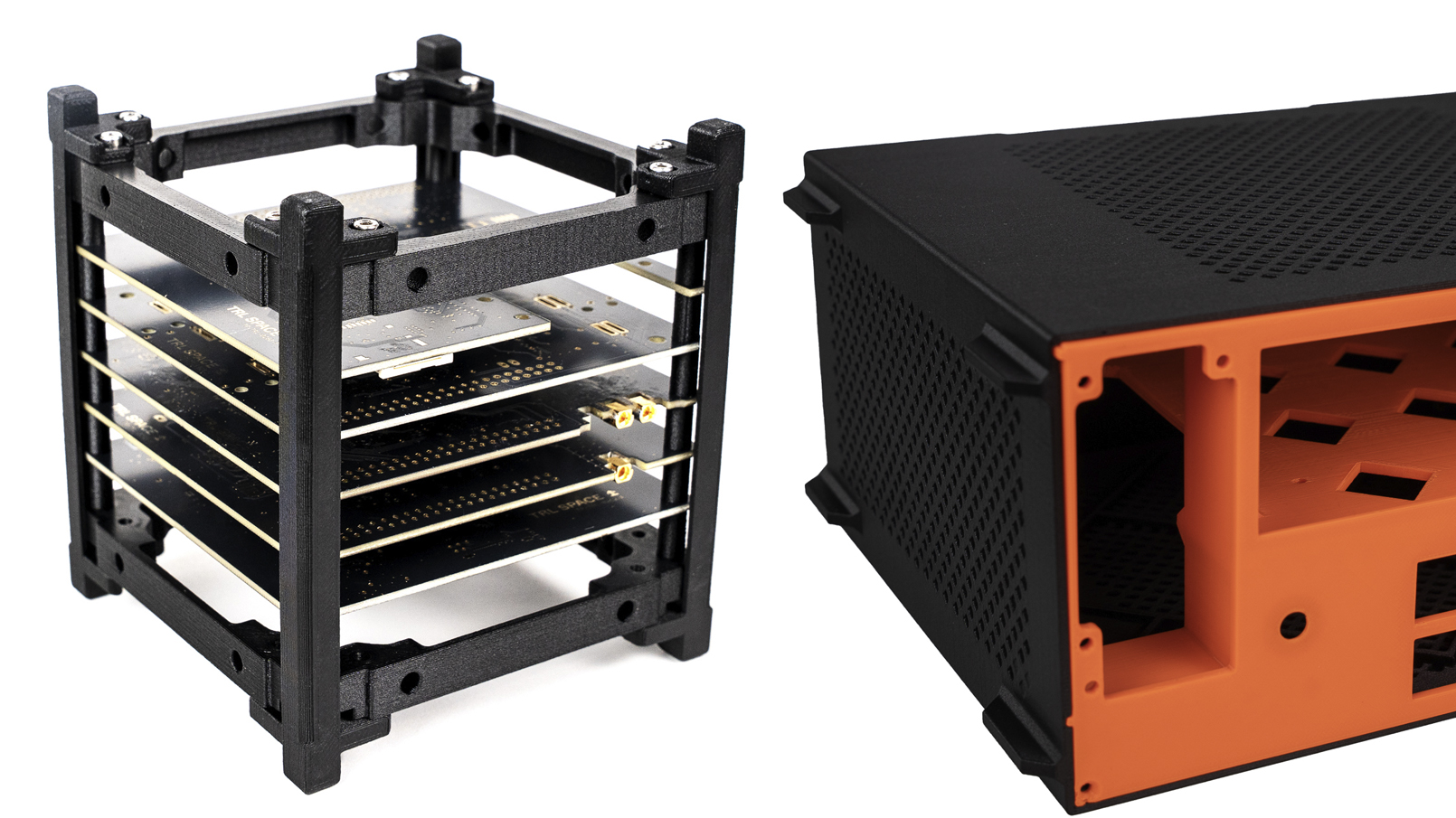
Plastics used in the cold, dark vacuum of space need to have very low outgassing properties, Prusa says. Gases released can affect, or even damage, the electronics used in satellites or contaminate optical devices and sensors. The polymers PEEK and PEKK are known low out-gassers, yet Prusament was “able to fulfill strict requirements defined by the European Space Agency using PC (polycarbonate), which is a relatively cheap, common, and easy-to-print material.”
The outgassing test was conducted on 3D printed samples at an ESA-affiliated laboratory.
Highly ESD Safe
In addition to its low-outgassing, the material has high electrostatic dissipation properties (ESD), which means it will dissipate electrostatic charges, protecting electronic devices, making it ideal for housings. Helping with the ESD are carbon additives inside the filament that also give it a specific black color with a satin finish. The surface structure of the printed object may slightly resemble other carbon-filled filaments, such as Prusament PC Blend Carbon Fiber.
Prusament PC Space Grade Black – Technical Data
Recommended Print Settings
Typical Material Properties
Mechanical Properties (3D Printed Specimens)
Outgassing & Resistivity Properties (3D Printed Specimens)
You May Also Like:

Listen to All3DP’s News Podcast:
License: The text of "Prusa Launches Space-Grade Filament You Can Print at Home" by All3DP Pro is licensed under a Creative Commons Attribution 4.0 International License.
CERTAIN CONTENT THAT APPEARS ON THIS SITE COMES FROM AMAZON. THIS CONTENT IS PROVIDED ‘AS IS’ AND IS SUBJECT TO CHANGE OR REMOVAL AT ANY TIME.