This article is free for you and free from outside influence. To keep things this way, we finance it through advertising, ad-free subscriptions, and shopping links. If you purchase using a shopping link, we may earn a commission. Learn more
2.Whoa
Peopoly Updates Asura SLA Print Prep Software to 2.0
Users of SLA 3D printers have a robust new solution for their print preparation needs; updated to 2.0, Peopoly's Asura now features built-in slicing and distortion adjustment for precision prints.
Advertisement
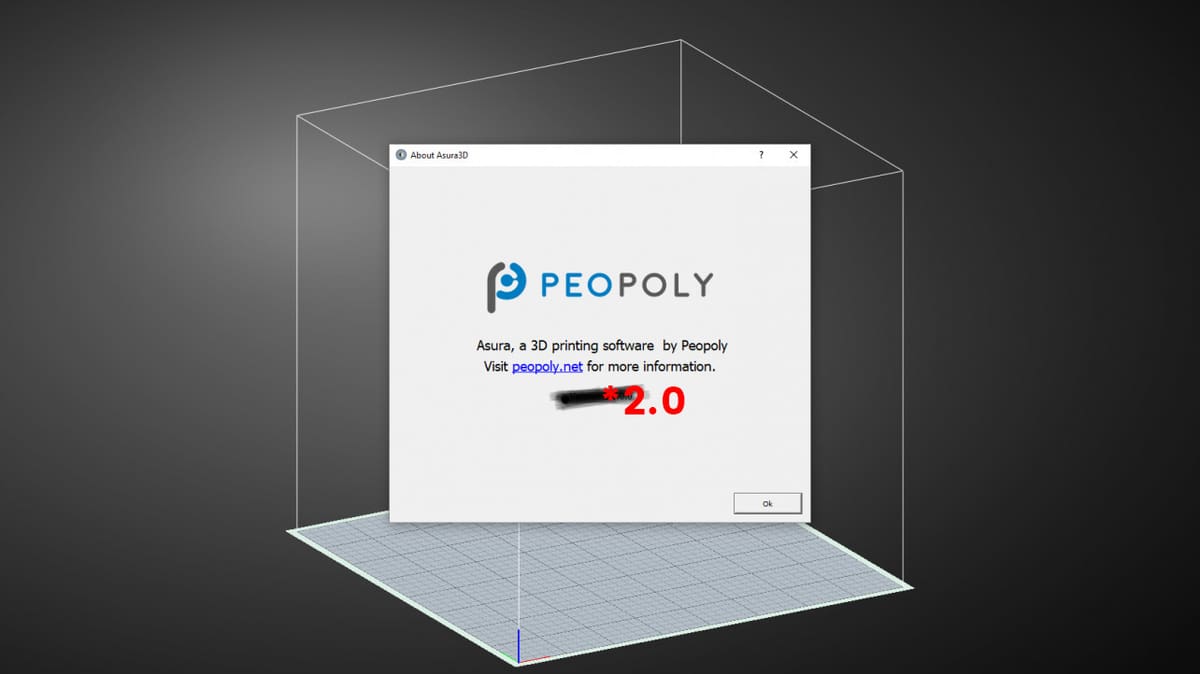
Peopoly, the maker of the exceedingly popular Peopoly Moai kit SLA 3D printer, has just pushed a full version update to its Asura print preparation software. Dubbed Asura 2.0, the program has gained new abilities in slicing directly to G-code and distortion correction.
When the Peopoly Moai launched a criticism lay in the fussy multi-program workflow required to prepare models for printing. With support generation and hollowing both crucial requirements of the SLA printing process, it was necessary to hop between multiple programs to tackle each step. Work needed to be done, and Peopoly was listening.
Launched in beta in July 2018, Asura began to temper this tedious barrier for those adopting the Moai as their first SLA 3D printer. Four short months later, and the program has filled in the gaps, culminating in the recent release of Asura 2.0 which now lets you add supports, hollow a model, correct for distortions and, finally, slice the model to G-code for printing directly on the Moai.
Advertisement
Advertisement
What’s New?
Since the Asura beta and its automatic support generation, it has been possible to export your modified 3D models for use in other software and slicers. Subsequent versions added manual support generation, plus hollowing and hole generation.
All of the above remains with Asura 2.0. One sophisticated new trick comes in distortion correction.
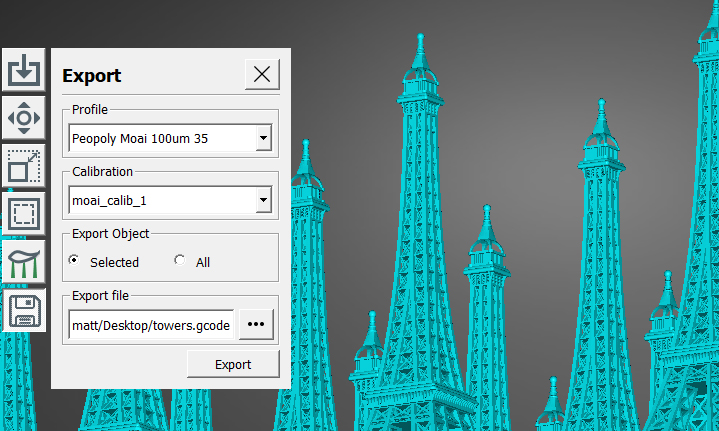
In combination with a test print, you can measure the distortion unique to your setup. Armed with the data from this test, you can input some values which then lets Asura correct when exporting your G-code. Such a feature compensates for one of the downsides of SLA printing using a laser and galvanometers and is a boon for users requiring precision across larger and batch prints.
Also new in Asura is slicing to G-code. Using Ultimaker’s CuraEngine — expected given the Peopoly-edition Cura that accompanied the Moai at launch — this is the final piece of the puzzle so to speak, meaning that Peopoly now has a comprehensive solution to what we find is one of the more tedious aspects of SLA printing.
Windows users can check it out here (sorry Mac and Linux peeps), and view the changelog on the Peopoly Wiki.
Matthew Mensley is a senior editor at All3DP with nine years covering consumer 3D printing hardware. He writes news, reviews, and buying guides with the clarity of someone who's seen enough hype cycles to know which ones to take seriously.