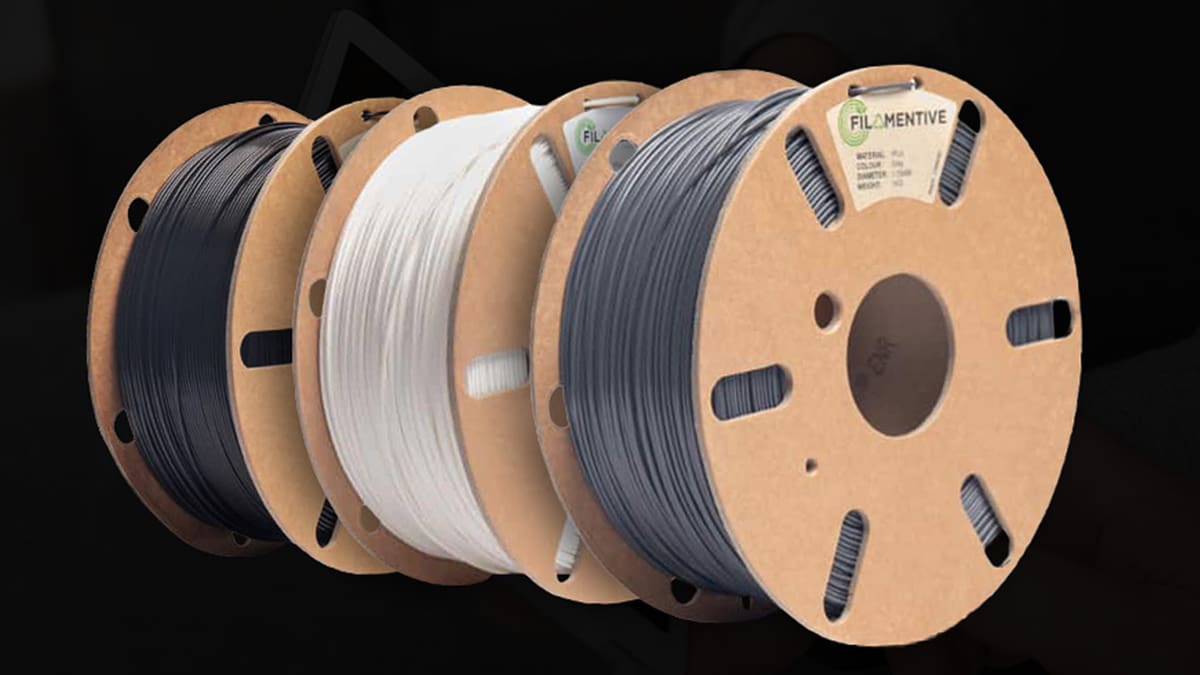
New Bio HT PLA Offers the Elusive Combo: Industrial Strength & Sustainability

Filamentive Bio HT offers 160°C heat resistance and industrial strength in a bio-based PLA that requires zero annealing.
UK-based 3D printing filament company Filamentive has unveiled Bio HT(~$54/kg), a new bio-based, high-temperature 3D printing filament aimed at engineers, production teams, and industrial makers who need performance and sustainability in equal measure, the company says.
Designed to bridge the gap between ease of printing and real-world functional performance, Filamentive says Bio HT, which is a PLA, delivers heat resistance and mechanical strength “far beyond standard PLA-class materials,” while remaining easy to work with on most open filament extrusion printers.
Unlike some high temperature PLAs, which require a post-printing heat treatment, Bio HT delivers as-printed heat performance without post-processing, making it more directly suitable for functional, heat-exposed parts.
Heat Resistance Where It Matters
Bio HT’s thermal credentials are impressive for a bio-derived material and Filamentive, which mostly focuses on sustainable and recycled filament materials, does a good job documenting them.
One measure of thermal resistance to look for in your filament is the Vicat softening point. This is a standardized way to measure when a plastic begins to noticeably soften under heat and a small mechanical load (named after French engineer Louis Vicat). It’s not the temperature at which the material melts, but the point at which it becomes soft enough that a needle-like probe can penetrate a defined distance under a specified force.
Filament heat metrics:
- Glass transition (Tg) marks when a polymer becomes rubbery, not when it deforms under load.
- HDT (Heat Deflection Temperature) measures heat resistance while under bending load.
- Vicat Softening Point marks the onset of surface/structural softening without melting
- Melting point (Tm) is when the polymer becomes liquid.
Where a lot of filament makers use the more vague “heat resistance”, Filamentive give your data. The Vicat softening point of Bio HT is 160 °C (ISO 306, A, 4 mm) with an HDT/B (0.45 MPa) of around 115 °C. These measurements put it well above typical PLA, PETG, or ABS filaments — making it a strong contender for parts that see intermittent or sustained heat exposure.
Overall, this means tools, such as jigs, fixtures, housings, brackets, and shop-floor aids can hold shape and stiffness where as some ABSs or PETGs would soften or deform. Of course, nylon (PA12) is common for 3D printing tools and it has an average Vicat of around 180 °C, but it isn’t bio-based, which is the point of Bio HT: robust parts without the fossil fuels. Nylon (PA11) is often bio-sourced but not easy to find in filament form, and you’ll be hard pressed to find a bio-based ABS or PETG.
The More Stainable High-Temp Filament
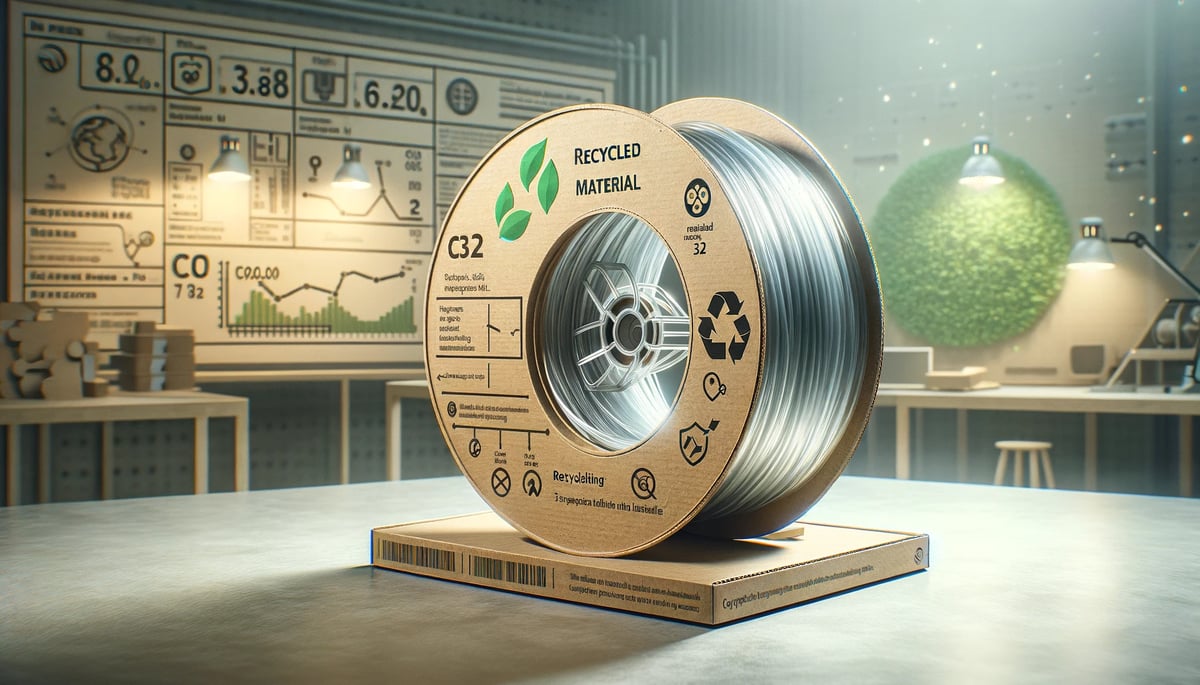
Bio HT is derived entirely from renewable feedstocks with a base polymer that is certified biodegradable under controlled industrial composting conditions (ISO 14855), a distinction that gives users measurable sustainability credentials. Like all PLAs it is not compostable at home or in a landfill. Bio HT is shipped on a 100 % recyclable cardboard spool and the filament also holds FDA food-contact status.
In addition to heat resistance, Filamentive says Bio HT combines high rigidity with robust flexural and impact performance, producing parts that feel solid and hold tolerances well.
Filamentive positions Bio HT as a material for engineering teams, print farms, and industrial users who need a heat-resistant filament that prints as reliably as PLA but performs more like an engineering polymer in warm environments. Its semi-matte finish also helps mask layer lines, giving prints a professional, functional look straight off the printer.
The filament is designed for dependable 3D printing with minimal warping, and typical print settings include nozzle temperatures around 215 ± 25 °C and bed temperatures between 0–50 °C.
Available now in Black, Grey, and White.
Bio HT could become a go-to choice where functional parts need both thermal stability and a reduced environmental footprint — especially in applications where traditional high-temperature materials like ABS or nylon have dominated.
You May Also Like:



Listen to All3DP’s News Podcast:
License: The text of "New Bio HT PLA Offers the Elusive Combo: Industrial Strength & Sustainability" by All3DP Pro is licensed under a Creative Commons Attribution 4.0 International License.
CERTAIN CONTENT THAT APPEARS ON THIS SITE COMES FROM AMAZON. THIS CONTENT IS PROVIDED ‘AS IS’ AND IS SUBJECT TO CHANGE OR REMOVAL AT ANY TIME.