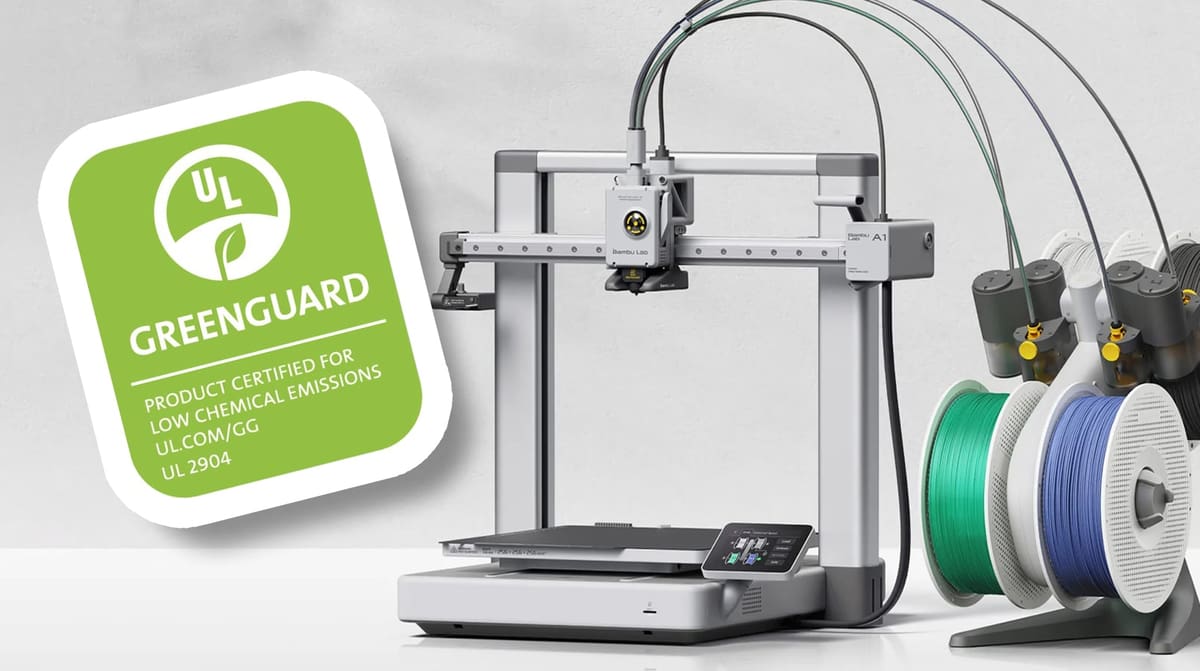
More 3D Printers Are Now Greenguard Certified, But What Does It Really Prove?

Greenguard certification is becoming a selling point for school and home 3D printers. We break down which machines and filament combos actually qualify, and what the label leaves out.
While most students still have a few weeks left to enjoy summer vacation, teachers are busy planning the school year’s curriculum, which increasingly includes 3D printing. When schools plan 3D printer purchases, it’s often not as simple as going to MicroCenter or ordering from MatterHackers. Regulations may direct them to buy 3D printers for the classroom that have certain safety and environmental certifications.
In fact, it’s fairly common in schools for low-emission certification to be part of purchasing specifications.
Until just a few years ago, UL 2904 Greenguard certification, showing that a 3D printer and its materials have been tested for low chemical emissions into indoor air, particularly volatile organic compounds (VOCs), was mostly associated with industrial systems. Now major desktop manufacturers are using it as an explicit classroom, home, and child-safety differentiator.
Prusa and Stratasys have long had some Greenguard certifications on select machines, but now, Bambu Lab and Ugee have joined the club in 2026 as more manufacturers see air quality has a growing concern.
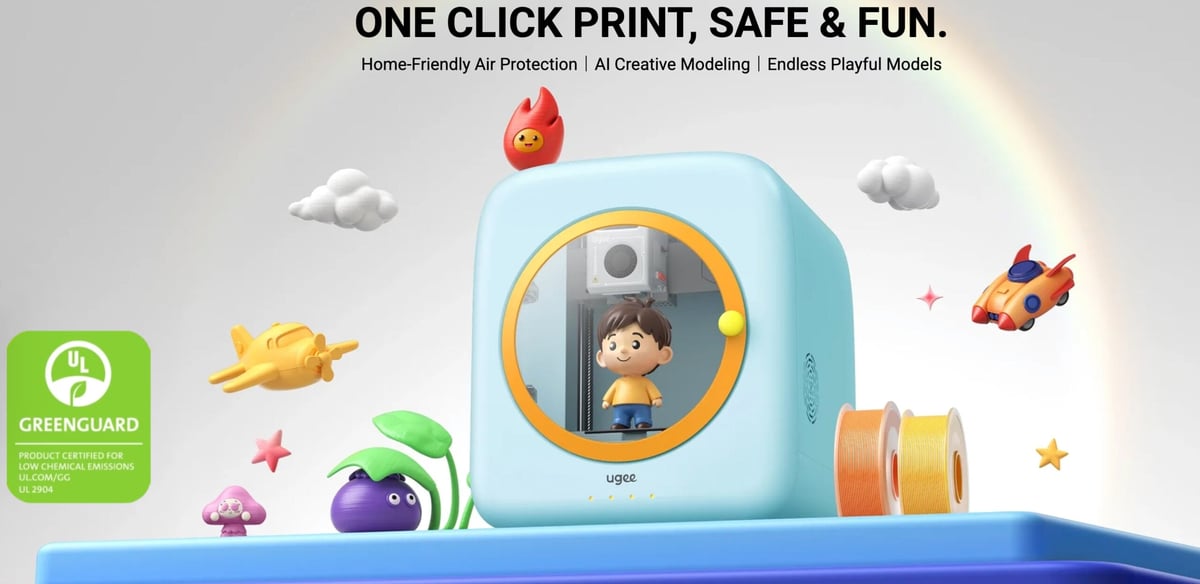
In September 2024, Prusa could legitimately describe the MK4/MK4S as essentially unique among consumer desktop machines with Greenguard certification. By 2026, Bambu Lab has moved aggressively into UL 2904 and Ugee, the Chinese tablet maker has made Greenguard a headline feature of its upcoming children’s printer.
While Greenguard certification is useful evidence that a particular 3D printing setup has relatively low airborne emissions. It is not a declaration that 3D printing is emission-free, universally safe, or safe with every filament you put through the machine.
Greenguard certification means the printer has been proven in independent testing while using specific material to have emissions that are below the limits established by UL 2904 for airborne particles and chemical emissions. It doesn’t mean they are the lowest possible or the lowest on the market, just that they can prove it.
Greenguard + Standard Best Practices = Safer Classrooms
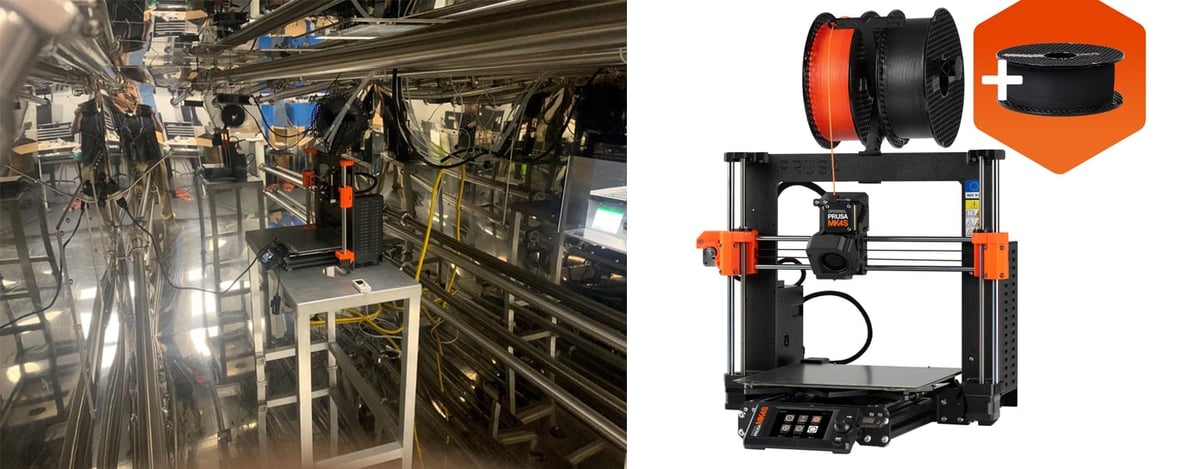
Certification does not eliminate the need to think about filament choice, ventilation, filtration, printer placement, and sensible operating practices. The National Institute for Occupational Safety & Health (NIOSH) recommends a combination of measures to limit emission risk, including lower-emission materials, printer enclosures, ventilation and reducing the amount of time people spend close to operating printers. In other words, emissions control is a system, not merely a checkbox on the printer’s feature list.
And while air quality is getting a bit more attention in the industry as more 3D printer makers boast enclosures and filtration systems, proving air quality with a standard like Greenguard is still relatively unusual in consumer 3D printing.
Greenguard certification isn’t free, and UL 2904 testing requires specialized environmental-chamber and emissions analysis, followed by ongoing certification costs. But expense is probably only part of the reason relatively few consumer 3D printers carry the certification. Desktop printers are unusually complicated certification targets because emissions vary with filament, temperature, and operating conditions, while consumer machines often support large numbers of third-party materials and have relatively short new product development cycles.
Until schools and other institutional buyers began paying greater attention to indoor-air emissions, many manufacturers may simply have little commercial incentive to certify their printers.
Although Greenguard should not be translated into “emission-free,” “completely safe,” “eco-friendly,” or “safe with every filament,” it can help you choose a demonstrably lower-emitting printer and material configurations.
Greenguard Certified 3D Printer & Material Combinations
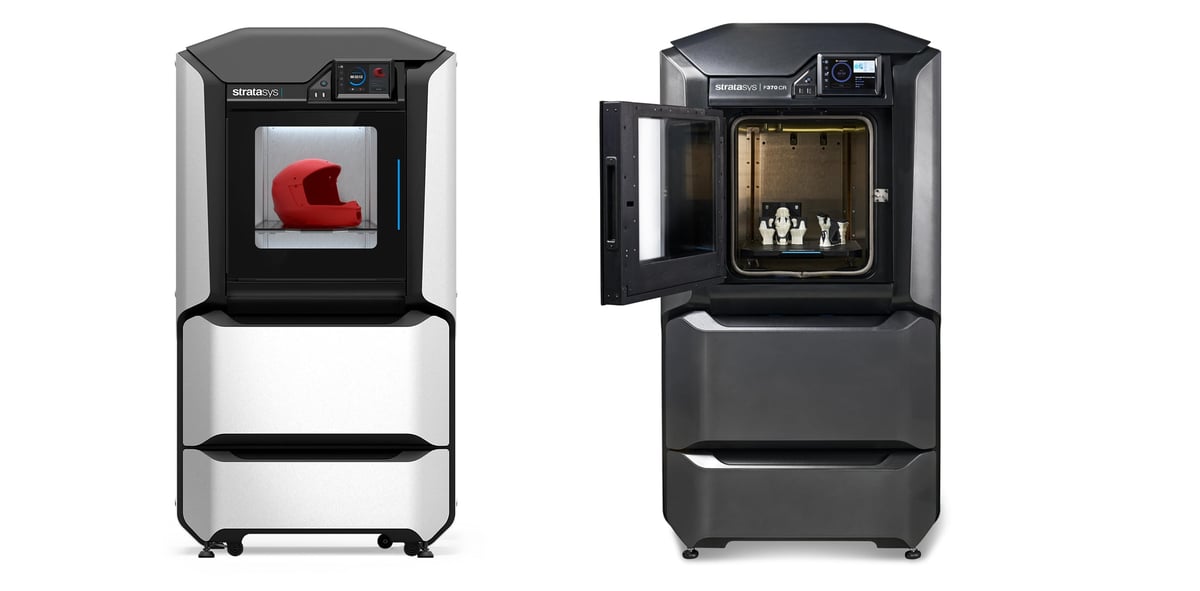
Currently only these desktop 3D printer manufacturers below have Greenguard certification, which refers to specific machine and material combinations, not the machines or the materials alone. Although Stratasys is not the type of desktop machine you might expect to find in schools, it could fit within a modern shop class, so we added it here.
MakerBot by UltiMaker previously received UL Greenguard certification for its Method, Method X, and Sketch printers in 2021 with specified materials. However, certification is renewed annually and we could not verify current Greenguard listings for these models in 2026 using Greenguard’s official database. The newer Sketch Sprint has been independently verified “to meet UL 2904 emissions requirements”, the company says, but MakerBot does not currently describe it as actually Greenguard Certified.
FAQ: Greenguard Certification & Desktop 3D Printing
As desktop 3D printers move from workshops into homes, offices, libraries, and classrooms, questions about what they put into the air have become increasingly important. Melting thermoplastics can release volatile organic compounds (VOCs) and very small particles, including ultrafine particles. Greenguard certification gives buyers one way to identify 3D printers and printing materials that have undergone standardized third-party emissions testing, but it’s not the only air quality remedy to be conscious of and the certification is often misunderstood.
Here are the key things hobbyists, educators, parents, and 3D printer buyers should know.
What is Greenguard certification?
Greenguard is an indoor-air-quality certification program administered by UL Solutions. For 3D printers, certification is based on ANSI/CAN/UL 2904, Standard Method for Testing and Assessing Particle and Chemical Emissions from 3D Printers.
Greenguard certification is intended to give buyers independent evidence that a tested 3D printing system meets defined low-emission criteria.
What emissions does UL 2904 look at?
UL 2904 covers both particles and volatile organic compounds (VOCs), which are chemicals that readily enter the air as gases. Its scope includes coarse, fine, and ultrafine particles as well as chemical emissions generated while a 3D printer operates. Testing is performed under controlled conditions so emissions can be measured and compared against specified limits.
Does Greenguard certification mean a 3D printer produces no emissions?
No. Greenguard should be understood as a low-emission certification, not a zero-emission certification. UL 2904 establishes maximum allowable concentrations for specified particles and chemicals. A certified system has demonstrated that its emissions remain below those criteria under the applicable test conditions.
Does a Greenguard-certified printer still need ventilation?
Yes, all 3D printers should operate in a ventilated room. Greenguard shouldn’t be viewed as a substitute for sensible ventilation and exposure control. NIOSH recommends strategies such as using lower-emitting materials, providing appropriate ventilation, using filtration or source controls, and isolating printers from occupants where appropriate.
UL 2904 also makes clear that its certification criteria do not address every potential safety and health concern.
Does Greenguard mean a 3D printer is “safe”?
Safe is too broad a conclusion to draw from the certification alone. Greenguard provides evidence about airborne chemical and particle emissions. It is not an all-purpose 3D printer safety certification.
Is the printer certified, or is the filament certified?
Both together. Many certification claims apply to a specific printer and material combination. For example, Prusa states that the Original Prusa MK4 and MK4S received UL 2904 Greenguard certification when printing with Prusament PLA and PETG. Bambu Lab specifies that its X2D is certified when printing with Bambu PLA Basic or PETG Basic. Changing filament can change the printer’s emissions profile. Different polymers, pigments, additives, fillers, processing temperatures, and formulations can all affect emissions.
Does third-party filament invalidate Greenguard certification?
Probably. It may put the new combination outside the configuration that was actually certified. That doesn’t necessarily mean the third-party filament has high emissions or is unsafe. It means you should not automatically extend the certification claim to a material that wasn’t included in the certified configuration.
For schools and other organizations buying on the basis of certification, this distinction can be particularly important.
Can filament itself be Greenguard certified?
Yes. UL 2904 allows Greenguard certification of both 3D printers and 3D-printing materials. Some filaments are therefore certified products in their own right, rather than appearing only as part of a certified printer/filament combination. Bambu Lab, for example, currently sells several filament lines carrying UL 2904 GREENGUARD certification.
If I buy Greenguard-certified filament, will it be low-emitting on any printer?
Although it’s reasonable to expect a Greenguard filament to be a comparatively low-emitting material when printed properly on another well-controlled machine, the certification does not automatically transfer to every printer. UL 2904 emissions testing is conducted under defined printer and operating conditions, but while printing Greenguard filament within its recommended temperature range is a sensible choice for reducing exposure, other factors like printer design, actual hotend temperature, airflow, enclosure, and filtration can affect emissions.
Isn’t PLA natural and basically emission-free?
No. PLA is often considered one of the more suitable materials for indoor desktop printing, and NIOSH notes that PLA often releases fewer particles than ABS. But “lower emitting” and “emission-free” are not the same thing.
EPA research confirms that filament-based 3D printing can generate both VOCs and ultrafine particles, and emissions vary among filament types. PLA’s plant-derived origins also don’t tell you what happens when a particular formulation containing pigments and additives is heated to printing temperatures.
Is an enclosed 3D printer automatically low-emission?
No. An enclosure can be an important engineering control, particularly when combined with appropriate filtration or external exhaust. But simply surrounding a printer with plastic or metal doesn’t tell you how much material escapes into the room.
An enclosure is therefore a design feature while Greenguard is a test-based emissions certification. The two shouldn’t be treated as interchangeable.
Is a HEPA and/or activated-carbon filters equivalent to Greenguard certification?
A well-designed HEPA + activated-carbon system can potentially reduce measured emissions to very low levels, even below UL 2904 limits. This, however, shouldn’t be considered “equivalent to Greenguard” unless the specific printer/material configuration has been tested for emissions and those figures are available.
Does the number of printers in a room matter?
Definitely. Certification describes the tested system under defined conditions, which are typically one printer in a test room. It isn’t a statement that an unlimited number of printers can operate in any room without affecting indoor air quality. UL 2904 explicitly notes that emissions will be evaluated in different exposure scenarios, an increased number of printers, printing duration, room size, ventilation and air exchange, and more.
Greenguard is therefore best viewed as one useful layer of risk reduction, not the whole safety program.
Can an open-frame printer receive Greenguard certification?
Yes. An enclosure is not inherently required for a printer to demonstrate sufficiently low emissions under UL 2904.
You May Also Like:

License: The text of "More 3D Printers Are Now Greenguard Certified, But What Does It Really Prove?" by All3DP is licensed under a Creative Commons Attribution 4.0 International License.