Lawmakers vs. Logic: Why Software Blocks Won’t Stop Illegally 3D Printed Guns (And What Actually Might)

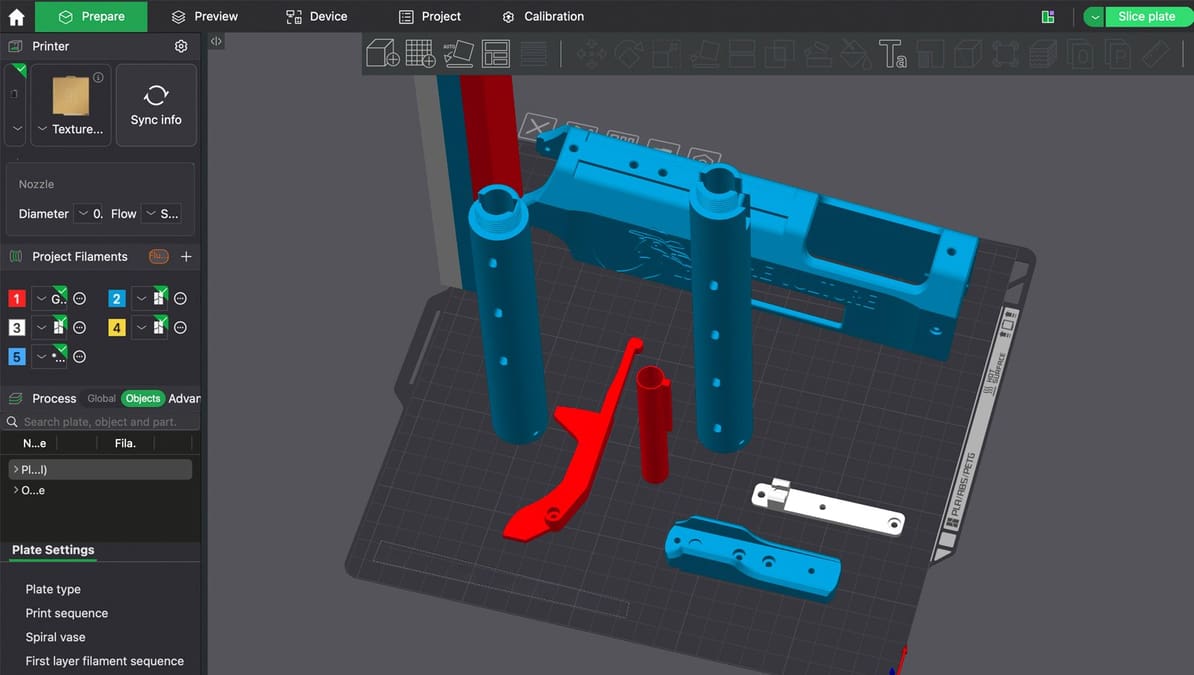
A Washington State proposed law would mandate that 3D printers have 'blocking technologies' to identify and stop firearm parts before they're created.
If you don’t know how 3D printers work, you shouldn’t be writing laws to regulate them. Sounds pretty simple. U.S. lawmakers aren’t experts on everything, of course, so they consult with experts to ensure that the legislation they’re proposing is, at the very least, reasonably sound and technically feasible. But in an election year, all that goes out the window.
Case in point, the proposed new law in Washington State that would require all 3D printers sold in the state to include software that can detect and block printing of firearms or firearm parts, proposed by Rep. Osman Salahuddin, who is up for re-election this year. This bill relies on a concept that is neither reasonably sound nor technically or practically feasible.
This is not a completely new idea. Manhattan District Attorney Alvin Bragg, in 2025 — coincidentally the year he was running for re-election — sent letters to the CEOs of 3D printer manufacturers, including Bambu Lab and Creality, urging them to adopt technology that would detect and stop the printing of firearms on 3D printers. Nothing came of it, but Bragg was re-elected.
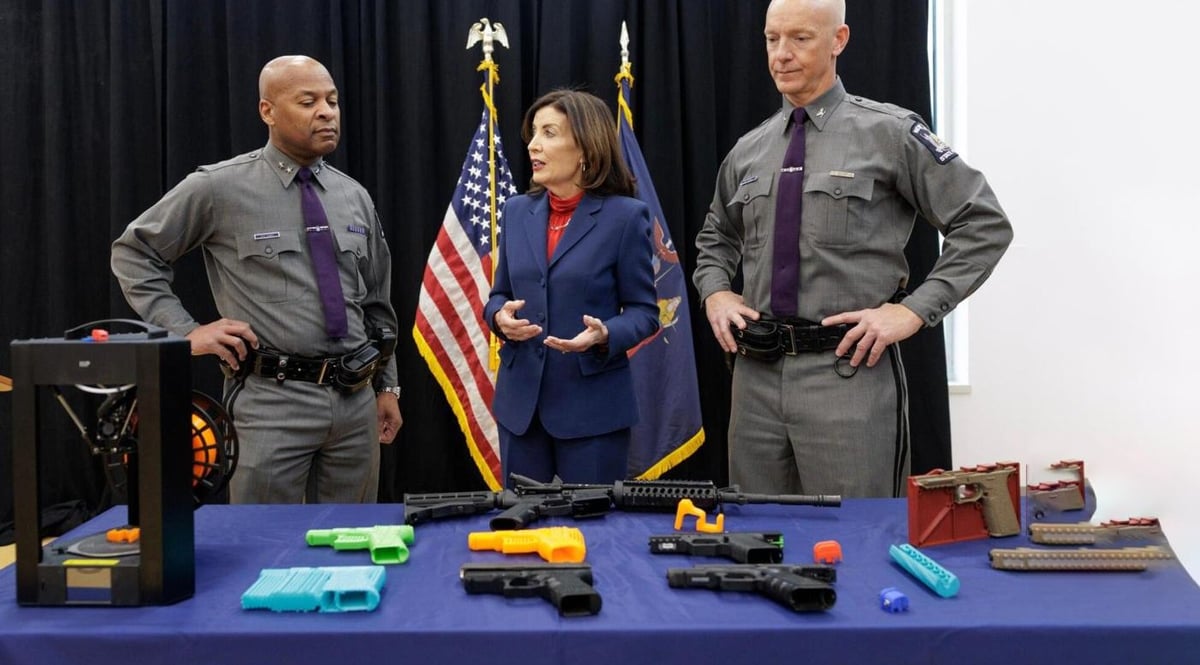
Bragg’s letters were part of a larger initiative in the state to combat ghost guns – unserialized and untraceable firearms, which domestically 3D printed guns ostensibly are. This month, New York Governor Kathy Hochul, also running for re-election in 2026, rolled out a public safety package that includes a proposal to require software in 3D printers that blocks the manufacturing of firearms and firearm parts.
Despite the call from lawmakers to simply install firearm-detecting software on 3D printers, the fact is that it doesn’t yet exist. Just because a Spanish software company with less than 8 employees says it developed an AI-guided product that can detect firearms and firearm parts on a 3D printer, doesn’t really make it so. In fact, the only information we could find on the Print&Go 3D Gun’t solution, cited in numerous pieces of legislation as the answer, is a 2024 press release.
Mandating gun-blocking software turns every 3D printer into a monitored device that scans and filters all prints, restricts software, kills offline use, and introduces false positives and IP issues. And it won’t stay confined to guns and could affect how everybody prints everything.
Still, even if we entertain the idea that detecting “gun parts” is possible, which it technically probably is, it would also be imperfect, bypassable, and ultimately ineffective. (But, I suspect these up-for-election lawmakers already know this.)
Why ‘File Blocks’ Fail the Reality Test
First, even if a software company spent the time and resources to create an AI-powered database of gun parts (or adopted the database some laws aim to create) to which ever single part to be printed had to be run through (pause to shudder at the thought of the privacy risks), any moderately determined person could get around in a variety of ways.
- Slightly reshape or “kitbash” the part (split it into multiple pieces, add decorative features, etc.).
- Encrypt or compress the file and generate G-code elsewhere (printer only sees generic motion commands).
- Modify the printer firmware or use open-source control boards that simply ignore the checks.
- Print jigs or “80%” designs that don’t look like a gun but are trivial to finish with minimal tools.
All of those make algorithmic detection much harder. The more you try to catch clever variants, the more complex and brittle the detection system becomes, eventually returning a flood of false positives that block benign objects, such as film props, toys, and any part that happen to be tube-like or frame-like.
Sure, the software that’s inside your paper printer and scanner does actually detect when you’re trying to photocopy a $20 bill, but it was never aimed at criminals. Currency detection, perhaps like firearm detection, isn’t intended to eliminate production, just stop the lowest-tier of counterfeiters. For 3D printed firearm parts, this approach might discourage naïve users and push sophisticated makers further into the shadows, but it wouldn’t stop the problem.
Elected officials can get all of the above and more from ChatGPT, and they probably have. They may be as surprised as anyone if their bills passed, because passing the bill isn’t the point; it’s telegraphing that you’re “doing something” about gun violence in America, no matter how ridiculous the proposal is. The trouble is that ridiculous bills do get passed.
Fortunately, none have so far, but if you’re a lawmaker and want to do something to get 3D printed ghost guns off the streets, consider these actions below that have actually been shown to work.
What Actually Works: Moving Beyond the ‘Print’ Button
In 2022, the federal ATF issued a new rule that clarified assemble-yourself gun kits and core gun parts (unfinished frames, receivers) as firearms that require serial numbers, background checks to possess, and licenses to manufacturer. Since this federal rule was finalized, ghost gun numbers have flattened out or declined in several major cities, including New York, Los Angeles, Philadelphia, and Baltimore, according to reporting by the Associated Press based on court documents. Manufacturing of miscellaneous gun parts also dropped 36% overall, the Justice Department has said.
Several states have passed laws that either ban 3D printed firearms outright (unless serialized and legally made by a licensed manufacturer) or require serial numbers on and background checks to purchase all 3D printed firearms. Treating 3D printed firearms just like traditionally firearms provides law enforcement with clearer guidelines for gun procession charges.
A 2023 California law requires a state license in addition to a federal license for anyone using a 3D printer or CNC mill to manufacture firearms or firearm parts. In this case it treats a consumer desktop 3D printer as commercial manufacturing equipment.
Several states, such as Rhode Island and New York, that have specifically criminalized the manufacture and possession of unserialized 3D printed guns and related conduct have seen increases in gun seizures and prosecutions. A proposed New Jersey law aims to upgrade several existing gun offenses from second-degree to first-degree crimes, including manufacturing a firearm with a 3D printer and purchasing firearm parts to manufacture a firearm without a serial number.
The strategies that have actually made a dent in the ghost-gun problem tend to work because they go after the whole ecosystem, not just the moment someone presses “print.” Actions like requiring serial numbers, treating unfinished receivers as real firearms, checking backgrounds, and cracking down on trafficking or sharing CAD files make it harder to get parts and harder to sell or move finished guns. Printer-blocking software, on the other hand, only tries to stop the very last step—and it’s pretty easy to work around with open-source tools, modified designs, or just a different slicer. So while software blocking sounds clever, it mostly stops casual attempts. The broader policies change incentives and close loopholes, which ends up being more effective in the real world.
You May Also Like:



Listen to All3DP’s News Podcast:
License: The text of "Lawmakers vs. Logic: Why Software Blocks Won’t Stop Illegally 3D Printed Guns (And What Actually Might)" by All3DP Pro is licensed under a Creative Commons Attribution 4.0 International License.