How BMW Scales 3D Printing to 1.6 Million Prototype and Series Production Parts

BMW’s transition to automated, open-material additive manufacturing moves beyond prototyping to a fully integrated production ecosystem, potentially replacing traditional machine tooling with 3D printing across the entire vehicle lifecycle.
BMW is no longer just prototyping with 3D printing; it’s preparing to print the future of the automobile at scale. By 2027, the automotive giant aims to hit a “next industrial level,” moving beyond specialized parts to a fully automated, open-material production ecosystem. From its high-tech campus near Munich, BMW is proving that additive manufacturing is the key to faster, more flexible car production—and the days of traditional tooling may be numbered.
The company says its Additive Manufacturing Campus (AMC), just outside of Munich, will play a central role in pushing the technology to what it calls the “next industrial level.”
The strategy reflects a continuation of the shift in the role of 3D printing toward to a fully integrated production technology capable of supporting both high-mix manufacturing and future large-scale automotive parts production.
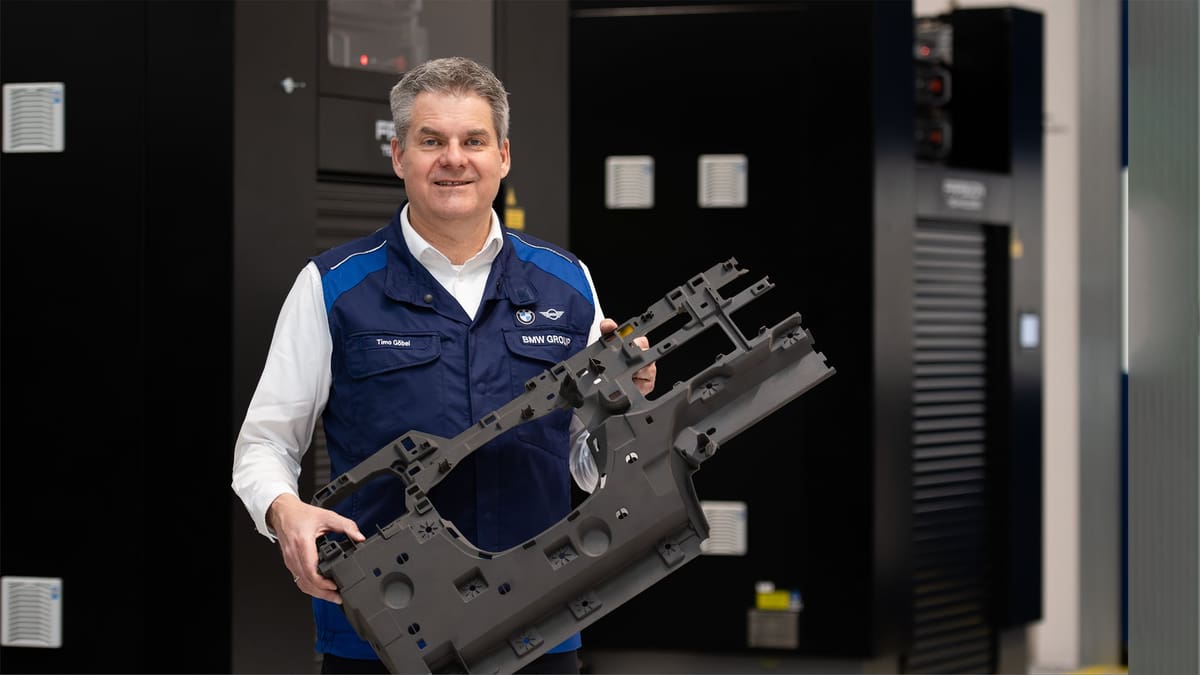
Timo Göbel, BMW head of its additive manufacturing campus, says he learned from his time at Rolls-Royce how powerful additive manufacturing processes can be when applied correctly. “This experience continues to shape my perspective today. I already advocated strongly for the technology back then and am now very much looking forward to shaping the next stages of development for the BMW Group.”
Automation and Open-Material Systems
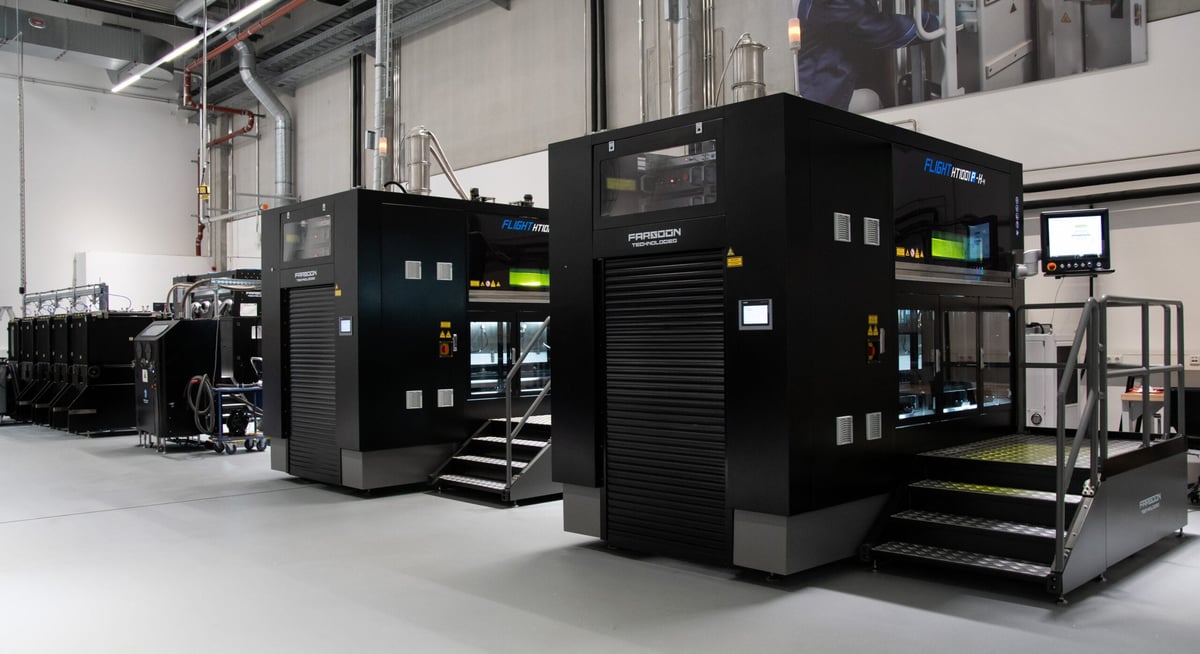
A central pillar of BMW’s scaling strategy is the use of automated, digitally connected process chains combined with open-material systems and open interfaces. The approach aims to integrate additive manufacturing more seamlessly into existing automotive production lines, the company says.
A expanding technology portfolio includes new equipment with larger build volumes and improved automation. In the polymer segment, the company prioritizes systems that are already suitable for series production. When the market lacks appropriate equipment, BMW develops custom solutions to meet the performance standards of its factories.
“As we observe strong growth and broader fields of application across all phases of the product life cycle, we are continuing our investment strategy in this key technology,” notes Göbel.
In metal AM, the company has already integrated key subprocesses from the Industrialization and Digitalization of Additive Manufacturing (IDAM) project into its campus infrastructure, with the next step being a new generation of metal 3D printers.
The latest phase of BMW’s AM expansion strategy focuses on deeper integration of AM across all stages of the vehicle lifecycle while maintaining an emphasis on quality and process reliability.
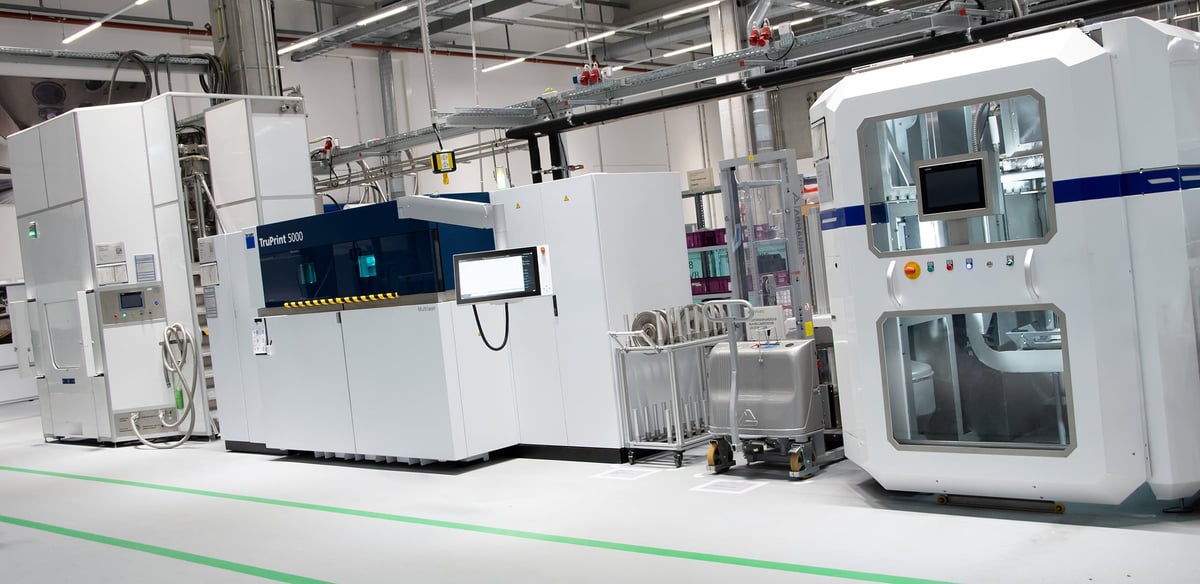
BMW expects additive manufacturing to play an increasing role in series production, particularly for components that offer technical or economic advantages, as well as personalized or limited-edition parts for customers.
“Through scaling, we will be able to manufacture larger components with significantly improved properties across the entire product development process – and with substantially shorter lead times,” says Göbel. “For many applications, we will no longer need tooling, which greatly increases flexibility and speed.
From Prototypes to Series Production
BMW’s history with additive manufacturing stretches back more than three decades.
Key milestones include:
- 1990–1991: The company’s Rapid Technologies Center produced its first prototype parts using AM equipment.
- 2012: Polymer brackets entered series production in the Rolls-Royce Phantom.
- 2017: Metal AM components were used in series production for the BMW i8 Roadster.
- 2017: MINI Yours Customized allowed customers to design and order personalized printed parts.
- 2020: The Additive Manufacturing Campus consolidated research, production, and qualification activities.
- 2022: The IDAM initiative established fully automated, digitally networked metal AM production lines.
- 2024: The campus began developing Wire Arc Additive Manufacturing (WAAM) for large structural components.
BMW says WAAM is expected to enter series production from 2027, potentially enabling large-volume structural components to be produced additively for automotive applications.
With increasing automation and an open-materials approach, BMW aims to broaden the range of printable components and integrate AM more deeply into industrial vehicle manufacturing.
A Hub for Industrialized 3D Printing
Opened in 2020, the BMW Group Additive Manufacturing Campus brings together production, research, and workforce training in one facility to accelerate the adoption of AM in vehicle development and manufacturing.
The campus supports everything from early design and prototyping to series production and aftersales parts. Since production began at the facility, BMW reports that more than 1.6 million 3D printed components have been manufactured for use across its brands, including BMW, MINI, Rolls-Royce, and BMW Motorrad. In addition, over 100,000 components are produced annually in decentralized facilities at vehicle plants around the world.
According to BMW, additive manufacturing is now “firmly embedded throughout the entire product life cycle,” supporting applications ranging from prototype parts to production components and customer-specific elements.
You May Also Like:


Listen to All3DP’s News Podcast:
License: The text of "How BMW Scales 3D Printing to 1.6 Million Prototype and Series Production Parts" by All3DP Pro is licensed under a Creative Commons Attribution 4.0 International License.