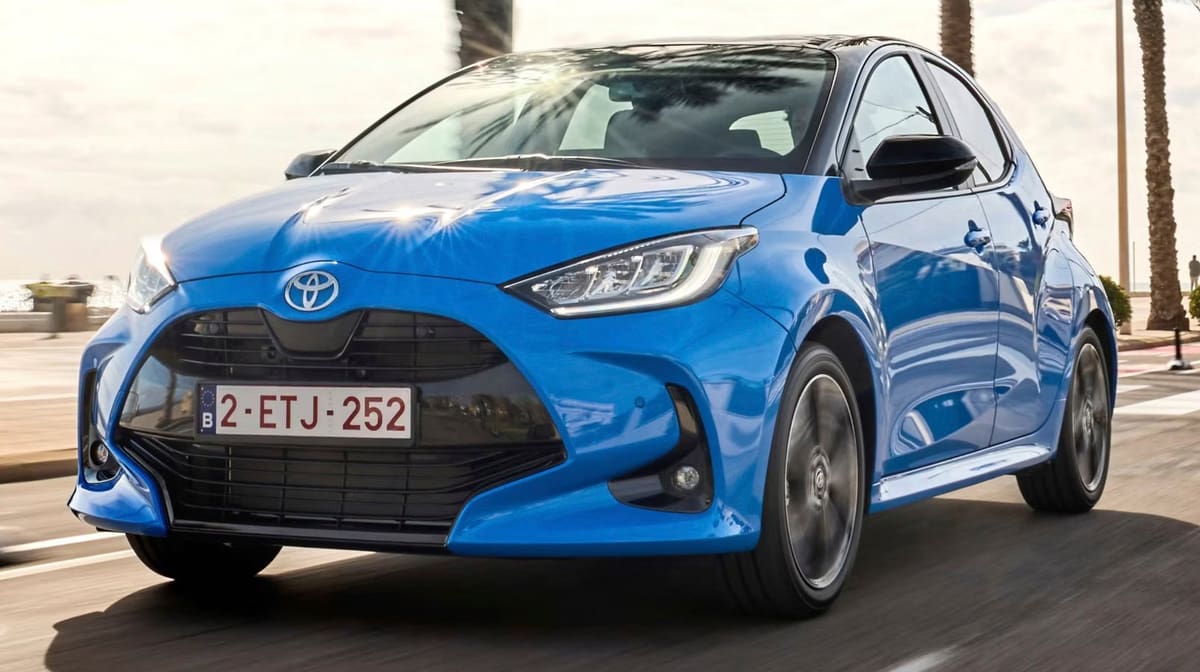
Toyota’s New 3D Printed Tool for Its Yaris Hybrid Could Reshape How Cars Are Made

Toyota turns to a new aluminum material and 3D printing method to make large, complex die casting tools.
In the relentless race to make cars more efficiently, every component counts. Toyota is now targeting a crucial manufacturing step, using advanced 3D printing to create massive die-casting tools. The project aims to slash production times and costs, potentially changing a key part of how vehicles are made.
Although the large die-casting tool inlay developed jointly by Fraunhofer Institute for Laser Technology, MacLean-Fogg, and Toyota has not yet been deployed in routine production manufacturing, it’s a promising demonstration of something the AM industry has long been touting — the fact that 3D printing can quickly produce custom molds with efficiency-boosting conformal cooling channels that are not manufacturable any other way.
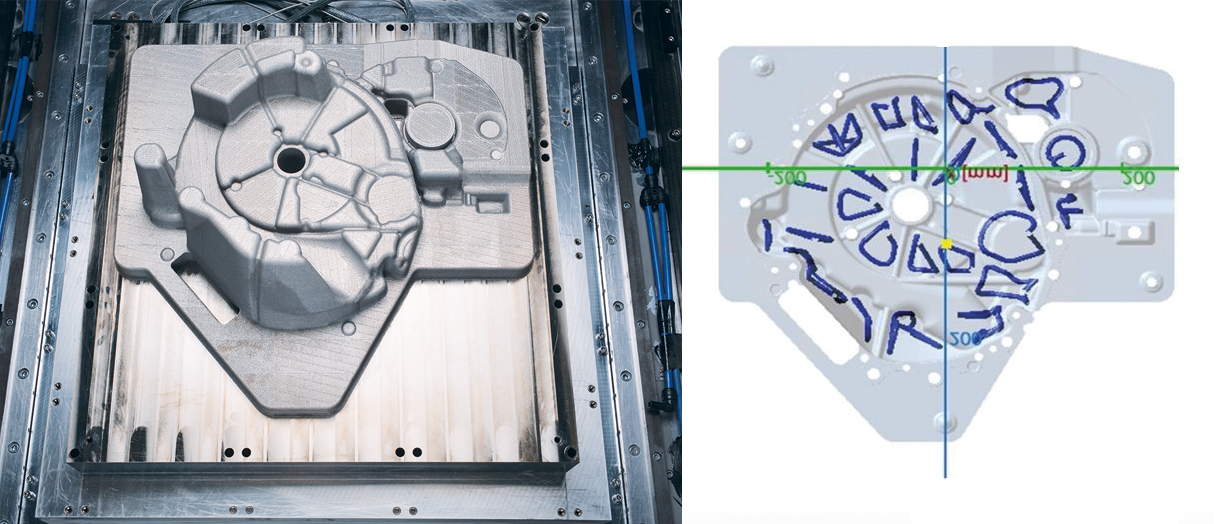
The project proved, according to Fraunhofer, the scalability and feasibility of a large insert built additively with the new L-40 tool steel and a large-format laser powder bed fusion system. Toyota is already using smaller mold tools in series production and found found that they provide a significantly longer service life than traditionally manufactured tools.
This die-casting tool inlay, designed for the transmission housing of the Toyota Yaris Hybrid, incorporates conformal cooling channels that closely follow the complex contours of a die cavity rather than running in straight lines as with traditional drilled channels. In an aluminum housing die casting tool, they provide more uniform and efficient heat extraction across the cavity surface, which shortens cycle times by enabling faster and more consistent solidification. This reduces the likelihood of hot spots, porosity, and distortion, leading to improved casting quality, while also extending die life by minimizing thermal fatigue.
After the mold insert was built, it was stress relief annealed, and its functional surfaces were milled conventionally. The high dimensional accuracy of the additive base body only required precise final finishing without additional material input.
At the core of the development is a new tool steel called L-40, created by MacLean-Fogg specifically for additive manufacturing. The material has a much lower tendency to crack during both printing and post-processing and exhibits strong mechanical properties, including high hardness, tensile strength, and impact resistance.
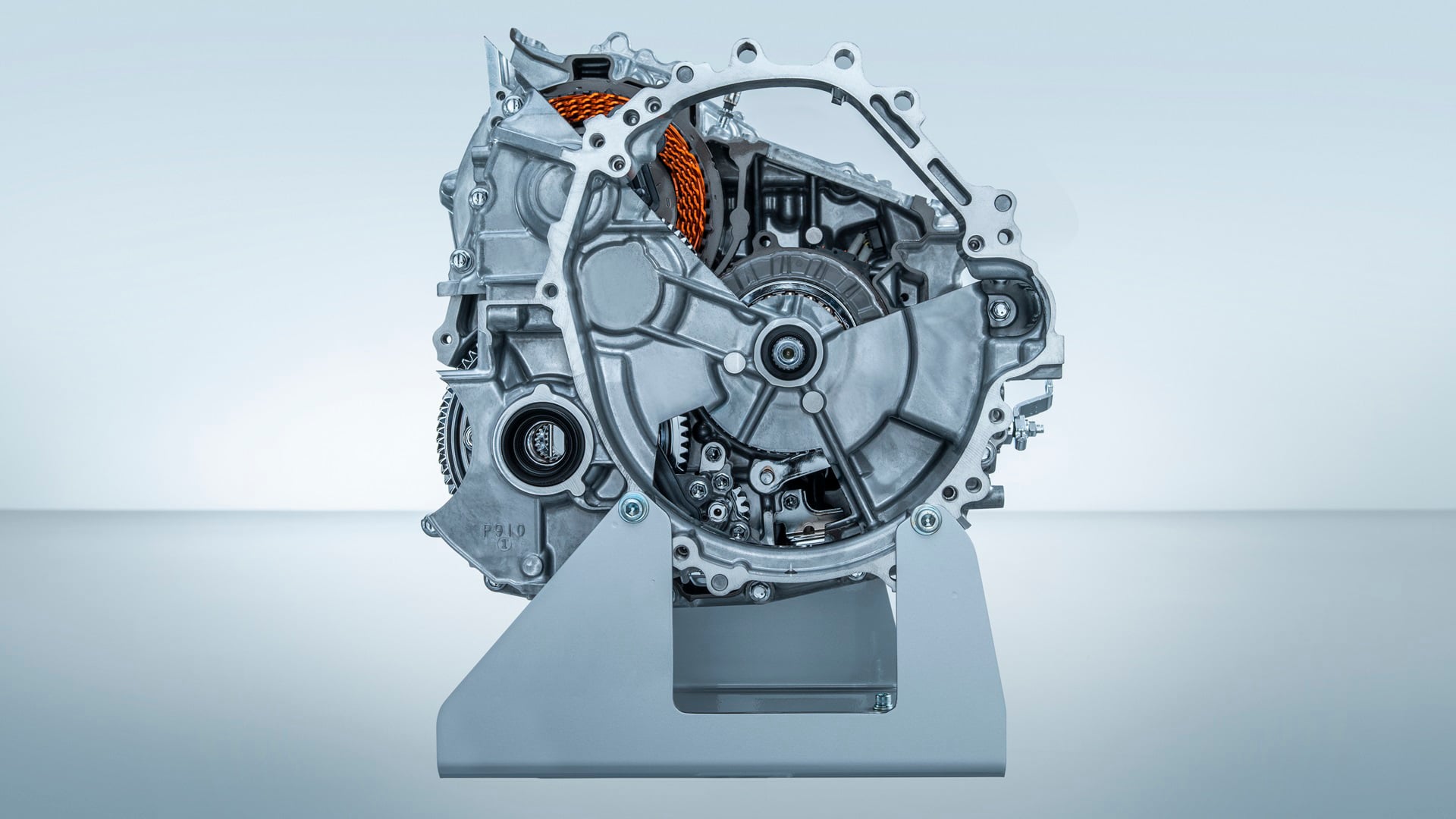
The project relied on Fraunhofer ILT’s large gantry-based LPBF 3D printer, which offers a build volume of 1,000 × 800 × 350 mm and can reproducibly manufacture components exceeding 20,000 cm. This scale of additive production had previously been limited by residual stress, distortion, and poor performance in conventional tool steels such as H11, H13, and M300.
An innovation in the LPBF 3D printing was Fraunhofer’s heated substrate module that keeps the build platform at around 200 °C during production. This innovation minimizes thermal stress and further reduces the risk of cracking in such large builds, according to Fraunhofer.
The results indicate clear advantages for tool life and efficiency, says Fraunhofer.
“To overcome these limitation, we need a new generation of machines and materials specifically tailored to the requirements of large-format HPDC tools,” explains Niklas Prätzsch, group leader LPBF process technology at Fraunhofer ILT. “It was precisely this combination that was the subject of the latest changes we have implemented.”
Fraunhofer ILT’s achievement shows that with the right combination of material, machine technology, and design strategies, it is now possible to produce large and heavily loaded die-casting tools additively. This opens new opportunities for the automotive industry, where scalable, long-lasting tools with improved thermal management can support more flexible production of vehicle components and shorten lead times.
You May Also Like:



Listen to All3DP’s Podcast:
License: The text of "Toyota’s New 3D Printed Tool for Its Yaris Hybrid Could Reshape How Cars Are Made" by All3DP Pro is licensed under a Creative Commons Attribution 4.0 International License.