From 10 Weeks to 72 Hours: The Power of Hybrid Manufacturing (3D Printing & CNC Machining)

Meltio, DMG Mori, and Mazak are leading a $3.1 billion hybrid manufacturing market, slashing material waste by 97% and creating a new standard for industrial production.
For more than a decade, the factory floor has been split between two rival camps: additive manufacturing (3D printing) and subtractive manufacturing (CNC machining). But that rivalry is fading fast as hybrid manufacturing is bringing the best of both worlds together in one seamless process.
According to 2025 market data, hybrid manufacturing is no longer a niche experiment; it’s a fast-maturing industrial strategy expected to grow a staggering 23.5% over the next decade, with the global market projected to hit $16.5 – $23 billion by 2033.
Specialty machine shop Hybrid CNC Parts, in Worchester, Mass., for example, this month purchased two additional hybrid 3D/CNC machines from Haas and Meltio to serve industries, such as aerospace, defense, and advanced R&D that increasingly require rapid prototyping, repair, and small-batch production of complex metal components.
The Power of 3D/CNC Integration
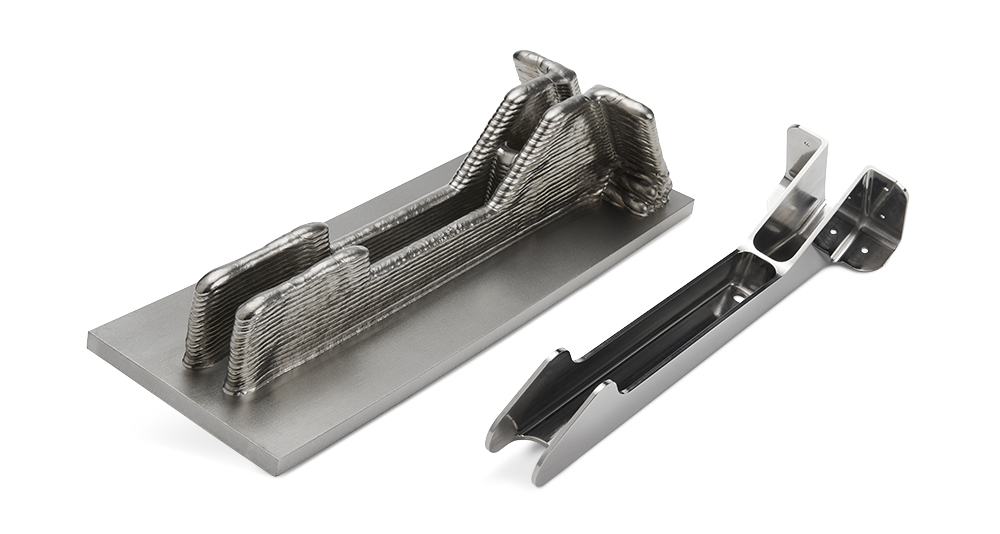
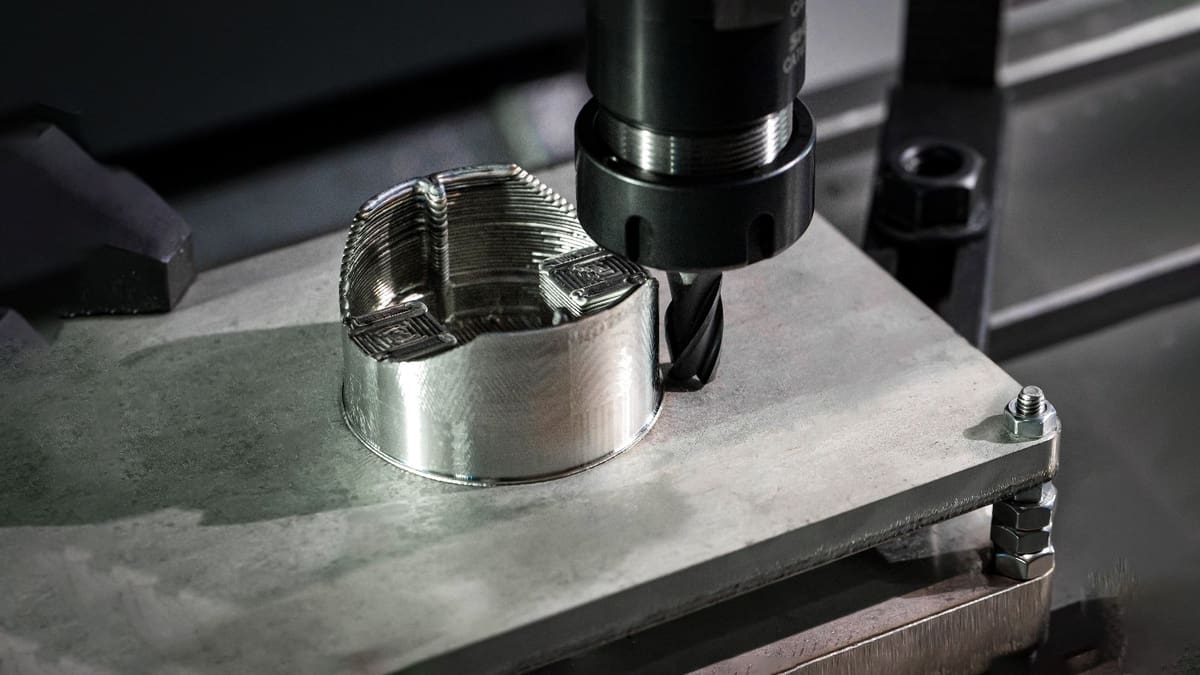
At its core, hybrid manufacturing combines the geometric freedom of 3D printing with the precision of CNC machining all within a single workflow. Instead of choosing between building up or cutting down, manufacturers now do both in one operation.
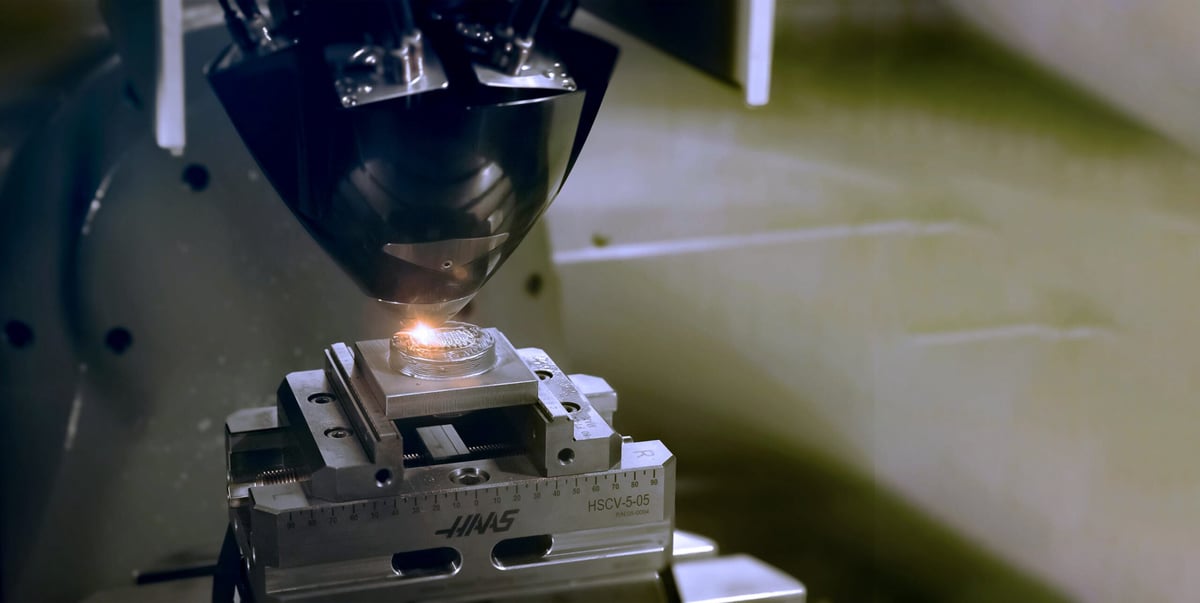
Here’s how it works: a robotic arm fitted with a directed energy deposition (DED) printhead lays down metal layer by layer to form a “near-net shape.” Then, without ever moving the part, a CNC toolhead takes over to machine it to final specs—tight tolerances, smooth surfaces, and all.
The benefits are dramatic. With no need to move parts between machines, production times plummet. In one documented case, a critical spare part was delivered in just 72 hours, compared to the usual 8 – 10 week wait. The process also slashes material waste—especially crucial when working with pricey metals like titanium or nickel superalloys. Compared to machining from a solid block, hybrid systems can reduce material use by up to 97%.
CNC/3D Modular Revolution
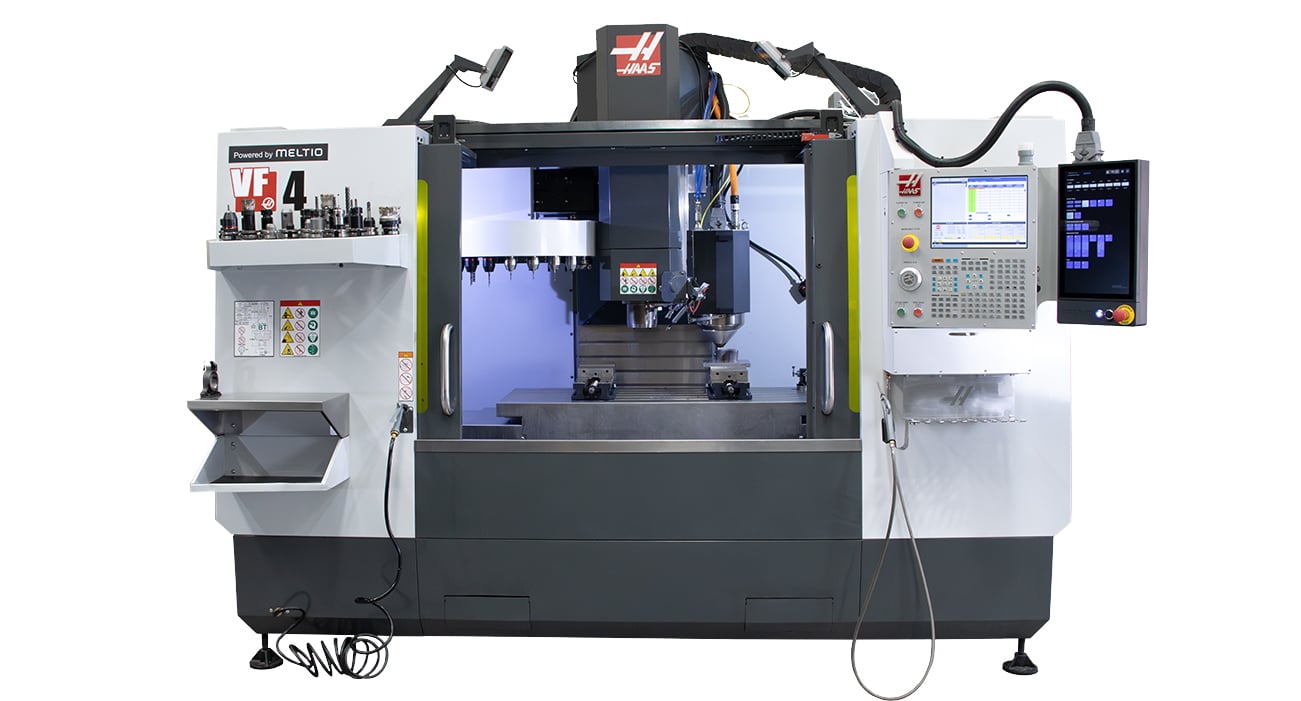
One company pushing this transformation forward is Meltio, a Spanish multinational that’s redefining how hybrid systems are deployed. Instead of selling massive, all-in-one machines, Meltio offers the Meltio Engine, a modular integration kit that turns almost any existing CNC machine or robotic arm into a hybrid metal 3D printer.
This retrofit approach lowers the cost of entry and lets manufacturers upgrade their current equipment rather than replace it. It’s a clever play that’s helping hybrid tech spread faster across industries.
Meltio also stands out for using standard welding wire as its feedstock instead of expensive metal powders. The result: lower material costs, simpler logistics, and safer handling. The company’s latest Blue Laser version takes things further, offering higher energy efficiency and the ability to process reflective materials like copper alloys, expanding hybrid manufacturing’s reach into new applications.
Of course, the big machine tool names aren’t sitting this one out.
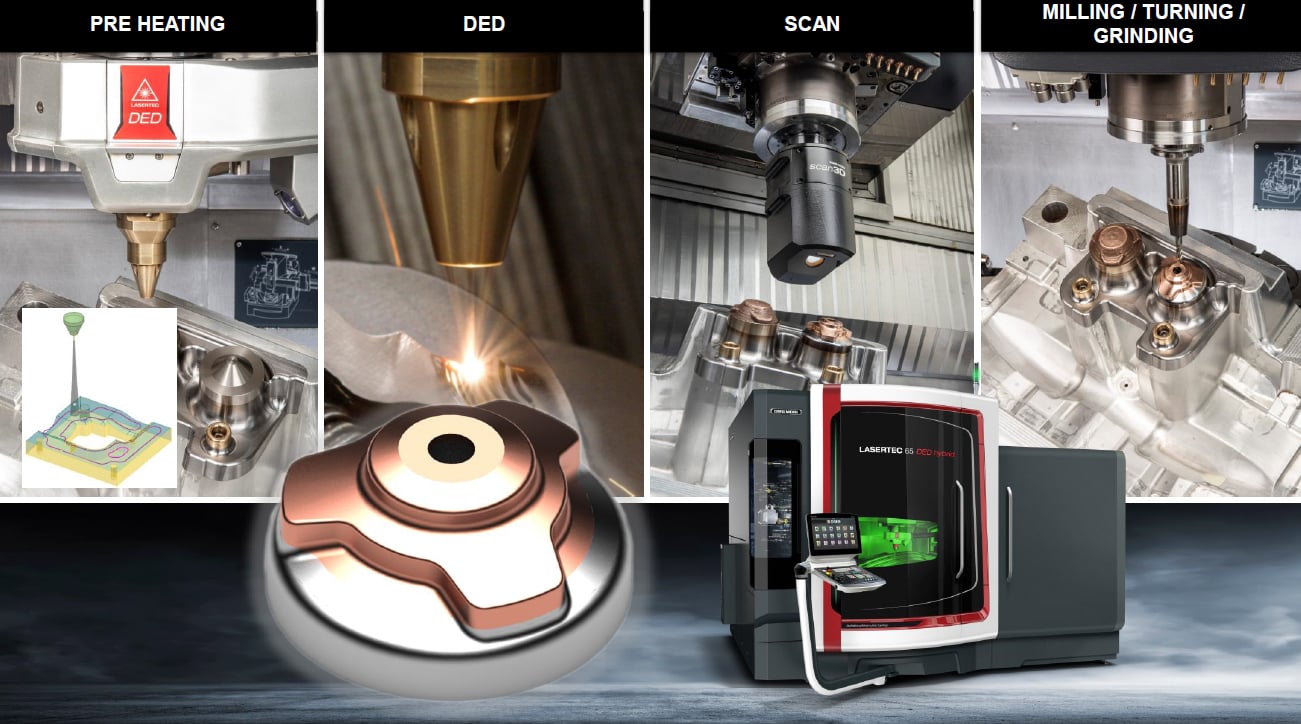
DMG Mori, the German-Japanese powerhouse, leads the charge with its Lasertec DED hybrid series. The company’s “6-in-1 process” integrates milling, turning, grinding, preheating, additive metal deposition, and 3D scanning—all within one setup. It’s part of what DMG Mori calls its “Machining Transformation,” a move toward full process integration. The result: no more casting, transporting, or post-processing between steps. Their powder nozzle system can even add metal features directly onto components, then machine them to final tolerance—all in one go.
DMG Mori USA just opened a new technology center in Medina, Ohio, that will include a dedicated additive manufacturing display area featuring metal parts produced using DMG Mori’s AM machines.
Mazak, another Japanese OEM, offers the Integrex i-AM line, which fuses 5-axis machining with additive manufacturing. Its fiber lasers melt metal powder delivered through cladding heads stored in the machine’s tool magazine, managed just like any other cutting tool. This setup excels in repairing high-value parts—think turbine blades—or in joining dissimilar metals for advanced engineering applications.
Mazak’s had made it clear that its growing focus is on process consolidation. Although it hasn’t debuted new machines in a while, its “Multi-Tasking Machines” — what it called its hybrid offerings, continue to feature prominently in its manufacturing lineup.
Meanwhile, U.S.-based Optomec takes a more modular path with its LENS (Laser Engineered Net Shaping) Print Engine, designed to retrofit new or existing CNC machines into hybrid systems. Some configurations even include controlled atmospheres for reactive metals like titanium, making it a cost-effective bridge for manufacturers entering the hybrid space.
The ripple effects are spreading across multiple sectors:
- Aerospace & Defense: The top adopter, using hybrid manufacturing to produce lightweight, high-strength components such as turbine blades and structural brackets with internal cooling channels—geometries that traditional machining simply can’t handle.
- Automotive: Hybrid systems are proving invaluable for rapid prototyping and for creating durable tooling like injection molds with conformal cooling, which shorten production cycles. Hybrid manufacturing from Meltio, for example, has been used to create extremely complex geometries for optimizing exhaust flows in combustion engines and reducing the assembly time from eight hours to just one.
- Heavy Industry & Repair: Perhaps the most disruptive use case is in Maintenance, Repair, and Overhaul (MRO).
2025 Beyond Production: Toward Resilient Manufacturing
As we move through 2025, it’s clear hybrid manufacturing isn’t just about making better parts—it’s about building a smarter, more resilient industrial ecosystem. By enabling on-demand production and repair, hybrid systems help buffer against the supply chain disruptions that have plagued manufacturers worldwide.
“Market momentum is expected to be shaped by technological improvements in process control, expanded material compatibility, and rising demand from aerospace, defense, and medical sectors, where precision and performance are critical,” according to the recent Hybrid Additive Manufacturing Machines Market report.
Still, challenges remain. The biggest bottleneck is no longer hardware cost but the skills gap. The industry needs a new generation of engineers fluent in both additive and subtractive technologies—and the sophisticated software that ties them together.
But one thing is certain: as robotics, 3D printing, and CNC machining fuse into a single workflow, hybrid manufacturing is setting a new benchmark for industrial agility, sustainability, and speed. The once-divided factory floor is finally converging—into the factory of the future.
You May Also Like:



License: The text of "From 10 Weeks to 72 Hours: The Power of Hybrid Manufacturing (3D Printing & CNC Machining)" by All3DP Pro is licensed under a Creative Commons Attribution 4.0 International License.