Can’t Sell Your 3D Prints on Etsy Anymore? MyMiniFactory May Have the Answer

As Etsy cracks down on sellers of licensed 3D prints, MyMiniFactory is stepping up with a program to verify designers and makers, and sell prints.
Two million registered users turn to the online platform MyMiniFactory to sell and buy STL files. The 12-year-old site is a popular ecosystem enabling creators to upload, share, and sell 3D printable digital models.
Now, its new two-phase Premium Merchant Program aims to move beyond the sale of just digital files to physical prints.
Launched yesterday with nearly a hundred participating Premium Merchants, the first part of the program is a $25/month verification system designed to designate makers (Premium Merchants) as companies that 3D print and sell only licensed designs from established creators.
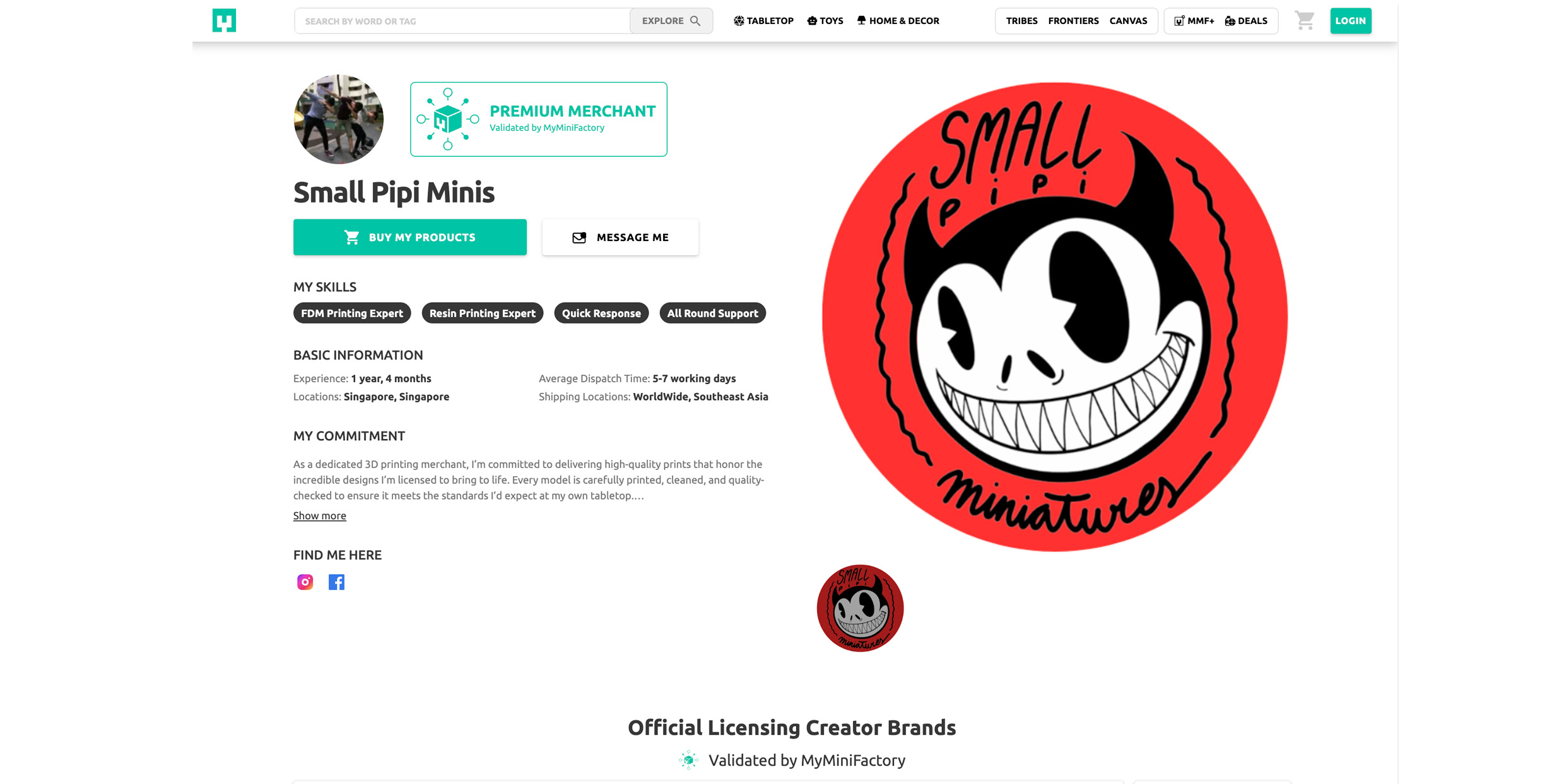
For example, Singapore-based 3D printing shop Small Pipi Minis has a merchant profile on MyMiniFactory that lists it as a Premium Merchant Validated by MyMiniFactory. The profile lists all of the designers Small Pipi Minis is licensed to print, including Dungeon Blocks, Naga Minis, and Witchsong Miniatures.
To order physical prints, visitors are linked off to Small Pipi Minis’ own website, but the second phase of the Premium Merchant Program, already in development and slated to roll out later this year, will enable sales of physical products directly through MyMiniFactory.
The program emphasizes transparency, ensuring that merchants only sell designs they have commercially licensed. The platform handles royalties paid back to the designs and offers flexible purchasing options for physical prints, including credit card and PayPal payments.
Why This Matters: The Etsy Fallout
MyMiniFactory is launching the program, in part, in response to changes at Etsy, the online platform for selling handmade and crafts-related items, which now bans 3D printing companies or makers from selling prints that they have licensed but not designed themselves.
Etsy amended its rules on June 10, covering what sellers can and can not sell on the platform. What is apparently a move to cut down on the skyrocketing number of sellers offering the same thing, for example, 3D printed toys or figurines from the exact same STL file, Etsy now says that anyone using a 3D printer (and other similar tools) can only print and sell their own original designs, prints that have been “hand altered” or “hand assembled.” This potentially leaves thousands of 3D printing companies and makers who only print licensed 3D products without a platform.
“We’re saying, if you’ve commercially licensed the files from designers, you should still be able to sell them,” MyMiniFactory marketing director Rees Calder told All3DP. “We’ve put a verification process in place that will actually say these merchants are selling prints that they have the legal commercial license from these designers, whether these merchants are going to sell prints on MyMiniFactory or their own website. This is the way of saying they’re allowed to do that.”
Will Consumers Care About Licensing?
Of course, there’s little reason to believe consumers care who owns the license to the design of the part they’re purchasing. Of the hundreds of 3D printed articulated dragons available on Etsy — some original designs, some licensed, some pirated — most consumers will select by price or the photos. Yet, Rees hopes Etsy’s focus on designers, along with MyMiniFactory’s license verification, could put creators more in the forefront.
“We are trying to shift the mindset a little bit and say, look, there’s a designer involved in this process,” says Calder. “And we want the consumer to be aware of that.”
MyMiniFactory can’t compete with Etsy for consumer traffic, and instead will rely on designers and 3D printing companies to link back to MyMiniFactory from their own marketing. Plus, there’s a growing number of designers, especially in the miniature and tabletop gaming space, who have followers who want “official” parts. These designers can designate 3D printing companies or makers as manufacturing partners on MyMiniFactory.
3D printing companies with their own websites or profiles on other platforms that once linked to Etsy as a fulfillment platform will be able to link consumers to their MyMiniFactory profile instead.
Designers in the Driver’s Seat
The Premium Merchant Program takes a 10% cut for providing automatic licensing, verified maker status, and direct input into future platform development. Program participants have access to licensed designs from MyMiniFactory’s 150,000+ file library.
Makers can only sell physical prints they have a license to as long as the designs or creators are on MyMiniFactory.
“This is the best way for us to make 100% sure that they are selling the 3D prints according to the license set by the designer,” says Calder. “Designers would not need to pay to be verified merchants – they would just need to sell their licensed files via MyMiniFactory. The only people who would need to pay for the verified merchant program are those who wish to sell prints designed by other people.”
MyMiniFactory could potentially end up with the same issue Etsy sought to fix: dozens and dozens of 3D printing companies offering the exact same product.
“We don’t want a flood of articulated dragons everywhere, and we’re hoping that people find their niche,” says Calder, “but we’re not going to prohibit people from selling anything that they have the license to.”
As the second phase of the program nears launch, MyMiniFactory hopes to prove that licensed commerce can scale without sacrificing creativity, community, or compliance.
You May Also Like:


License: The text of "Can’t Sell Your 3D Prints on Etsy Anymore? MyMiniFactory May Have the Answer" by All3DP is licensed under a Creative Commons Attribution 4.0 International License.