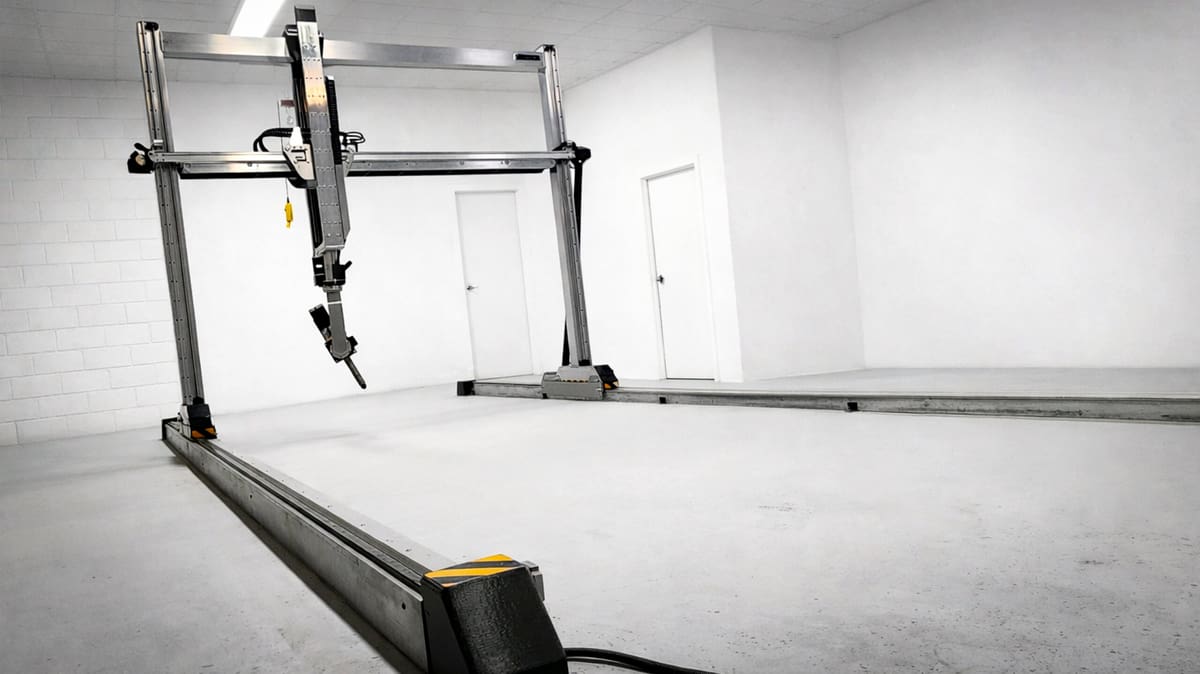
Can ErectorBot & Aibuild Make Large-Format 3D Printing as Easy as Desktop?

Coupled with machines starting at $15,000, ErectorBot’s hopes its Aibuild software integration can tame the complexity of industrial-scale printing, and make it accessible for any size manufacturer.
Large-format additive manufacturing has never suffered from a lack of ambition. The sector can print tooling, molds, architectural elements, marine parts, construction components, and industrial-scale prototypes far beyond the reach of desktop machines. But the bigger the printer, the bigger the risk: failed builds consume more material, tie up more machine time, and demand more specialized knowledge from operators.
ErectorBot, the U.S.-based maker of large-format gantry 3D printing systems, says its integration with software maker Aibuild is designed to address exactly that problem. According to Leonard Dodd, founder and CTO of ErectorBot, the collaboration centers on bringing ErectorBot’s machine kinematics and digital twin data into Aibuild’s LFAM software environment.
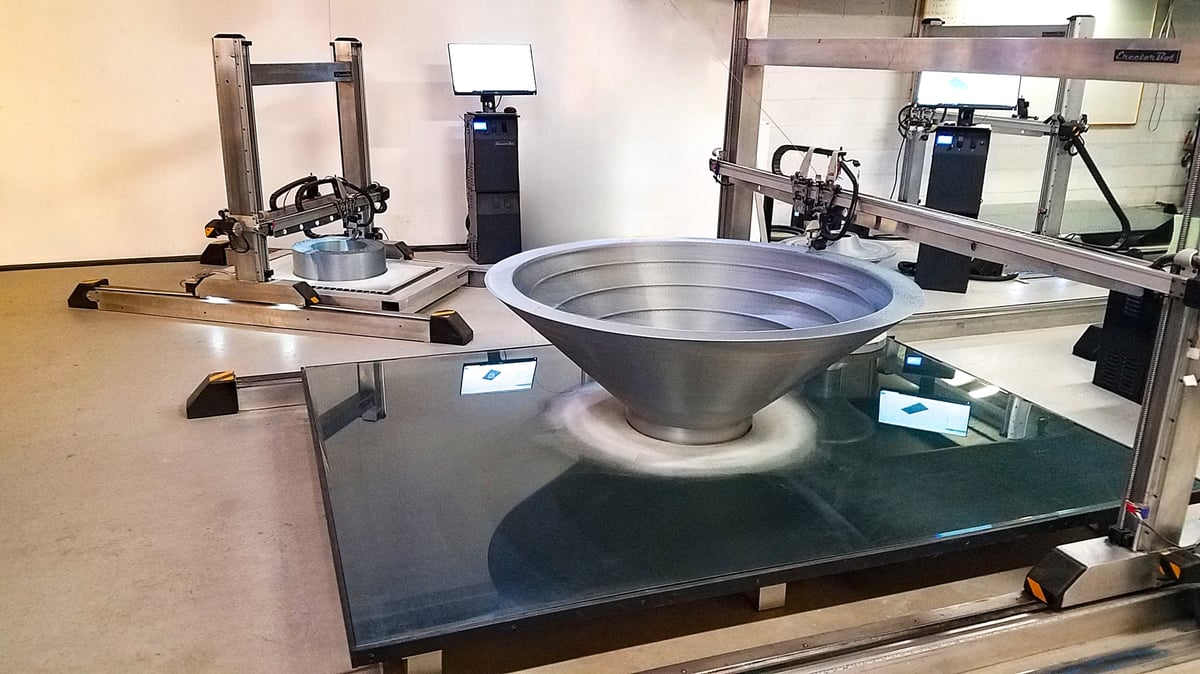
In practical terms, that means ErectorBot users can access Aibuild’s AI-powered CAM and workflow platform with machine-specific knowledge of ErectorBot’s large-format gantry systems. Aibuild describes its software as built for robotic and gantry-based large-format additive manufacturing, with automated toolpath generation across polymer extrusion, metal DED, WAAM, concrete, paste extrusion, and related workflows.
For ErectorBot, the move is also a shift in posture. Dodd says the company has opened up elements it had previously kept under wrapp. “Ultimately ErectorBot after years of keeping these elements private and reserved … released its kinetics mapping and digital twin to marry the two,” he said.
From Open-Source Slicers to AI-Assisted LFAM
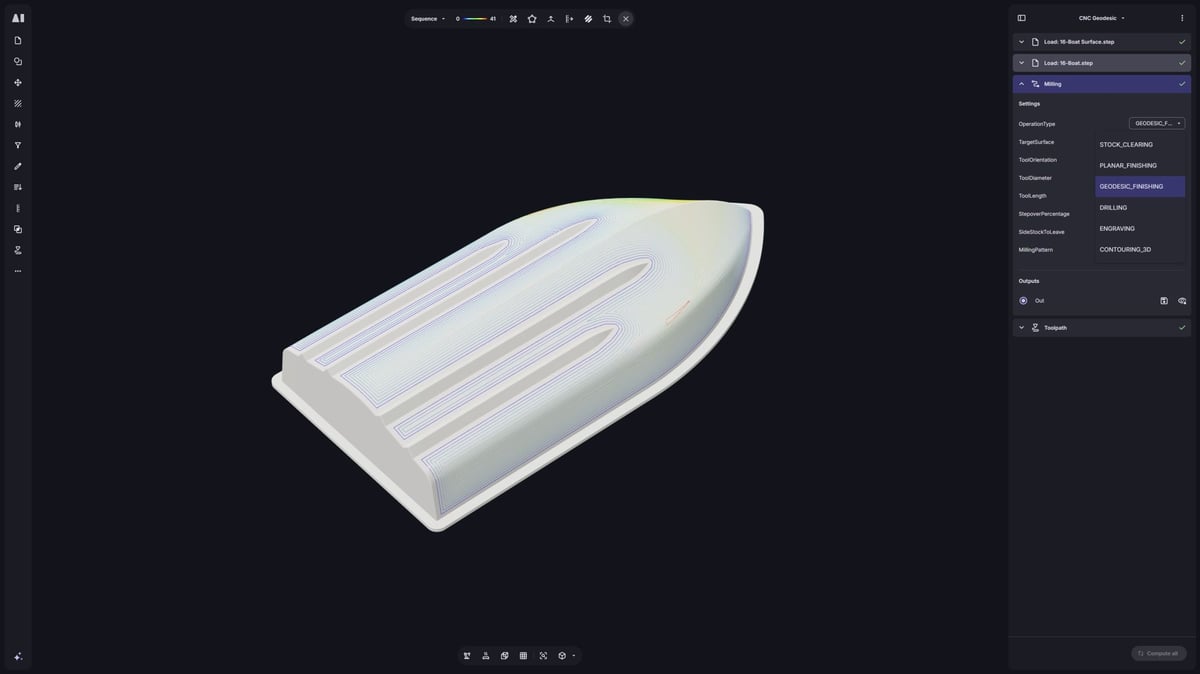
Desktop-style slicing software is just the beginning for large format AM. Additional software must account for deposition width, material behavior, orientation, thermal effects, collision risks, bead consistency, and, increasingly, multi-axis movement.
Aibuild’s value proposition is to replace fragmented and manual programming steps with a more integrated software stack. Its platform includes LFAM toolpath creation, print analysis, optimization, and AI-assisted workflow tools, according to company materials. The company has also recently moved beyond CAM alone. In March, Aibuild announced Aibuild OS, which it describes as an autonomous engineering platform using agentic AI to execute CAD, CAE, and CAM workflows from plain-language prompts through to manufacturing-ready outputs.
Aibuild already works with other large-format systems, including robotic-arm setups. But Dodd argues that ErectorBot’s gantry architecture gives it a different proposition.
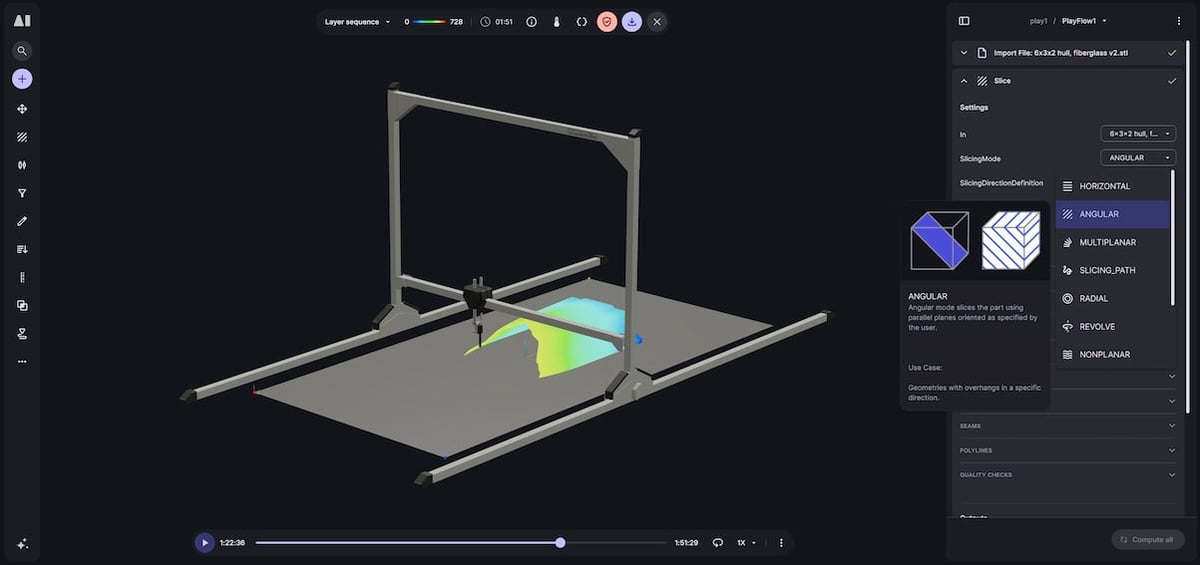
“The ErectorBot Gantry Nine Ops system allows for full ‘equal reach’ around models within the entire workspace or envelope without the dynamic angularity limitations the further you go in any particular direction,” Dodd says. “And allows for much lower costs of ‘floor propagation’ or print farms, much lower maintenance and cost reoccurrences for larger operations.”
The company’s argument is not that gantries are universally better than robotic arms. Rather, Dodd positions ErectorBot as a cost- and reach-oriented alternative at a time when the LFAM market is increasingly exploring robots on tracks, dual-arm systems, and hybrid platforms.
“ErectorBot paired with AI-Build, establishes a new benchmark for the LFAM category without a doubt,” he says. “Where as the market has currently been evolving towards robotic arms on additional tracks and even 2 robotic arms on additional tracks, the ErectorBot platforms handle these issues natively at under six figures.”
ErectorBot 3D gantry systems, which the company says have been improved for 2026, start at $15,000.
The LFAM Software Race to Replace Specialized Operators
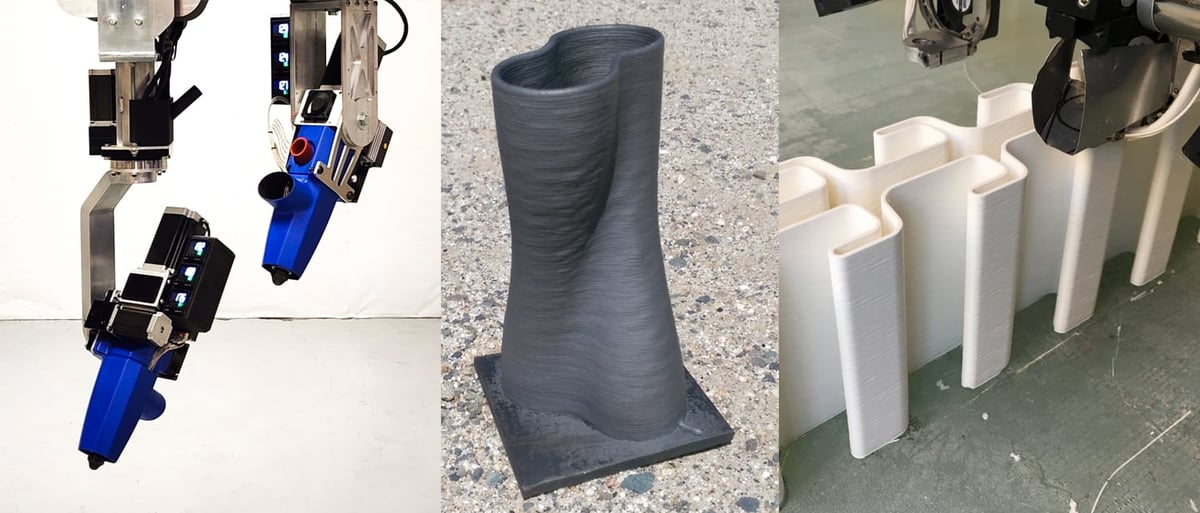
The ErectorBot-Aibuild collaboration fits a broader trend: LFAM hardware companies increasingly need more than big motion systems and high-output extruders. They need software that makes those machines usable by production teams without relying on a handful of highly specialized operators.
For Dodd, the goal is not only reliability but access to more of the hardware’s existing capability. “Reliability of repeatability is always a goal, yet entry cost of hardware and setup, increasing the process combination ability, and lightest form-factor footprint are also critical,” he says.
Dodd also criticized the way some industrial software packages reserve advanced axis capabilities for more expensive tiers. “Whereas more traditional industrial packages ‘lock’ these additional axis abilities into tiered payment structures that inhibit the full value of already existing hardware,” he said.
Aibuild has pursued similar hardware-software integrations elsewhere. In 2025, for example, Massive Dimension and Aibuild announced MD Software, a platform combining Massive Dimension’s large-format extrusion systems with Aibuild’s software for industrial users.
The most interesting part of ErectorBot’s Aibuild integration is not that AI is being attached to another 3D printer. It is that very large gantry machines may become easier to program, simulate, and run through software that understands their kinematics from the start.
For LFAM, that matters. Build volume and extrusion rate are only part of the equation. The harder challenge is making large machines predictable enough for routine production.
ErectorBot’s next challenge will be proving, with customer examples and technical detail, how much the Aibuild integration reduces setup time, failed prints, and operator complexity in real production environments. Until then, the collaboration is best understood as a promising software step toward a long-standing LFAM goal: making the biggest 3D printers behave a little more like the small ones.
You May Also Like:


License: The text of "Can ErectorBot & Aibuild Make Large-Format 3D Printing as Easy as Desktop?" by All3DP Pro is licensed under a Creative Commons Attribution 4.0 International License.