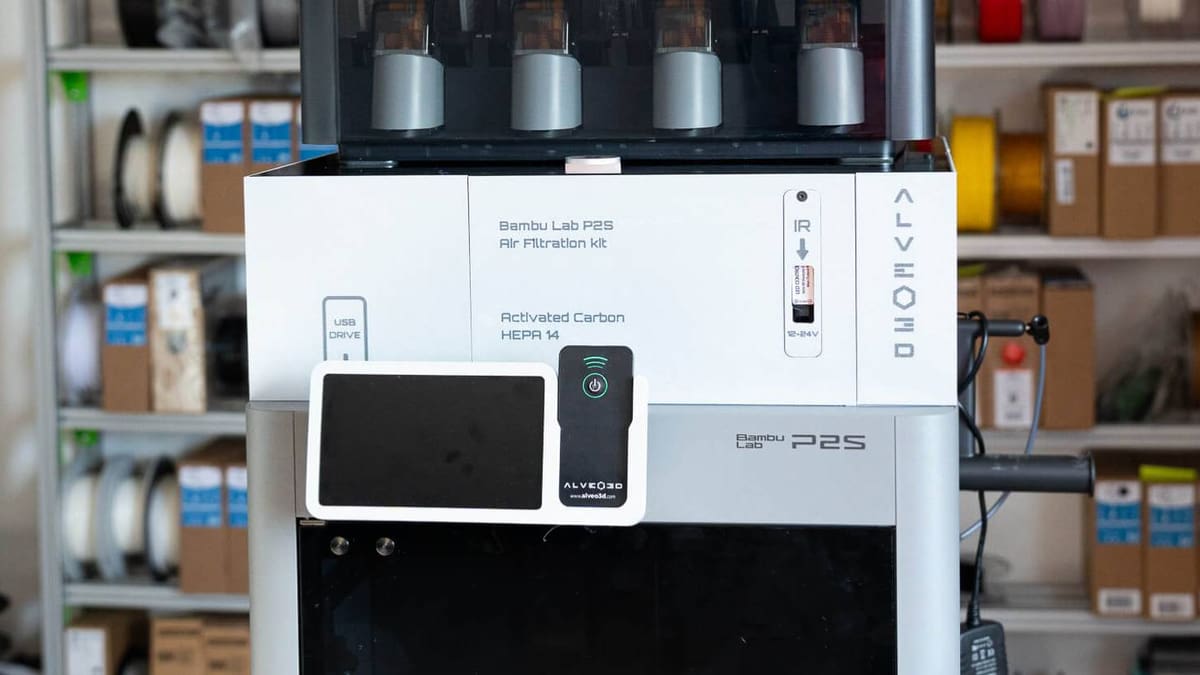
Alveo3D Launches HEPA14 Filter Kit for Bambu Lab P2S, Adds Extra Layer of VOC Capture

New external kit from French filtration specialists Alveo3D adds ultrafine particle filtering to the Bambu Lab P2S’s native VOC-capturing charcoal-based filter.
Priced at €89 (~$103) Alveo3D’s new kit for the Bambu Lab P2S adds a HEPA14 filter, targeting a specific niche of user looking to exceed the P2S’s UL 2904 (Greenguard) certification. While that certification confirms the printer operates below harmful emission thresholds for standard indoor use with particular materials (typically Bambu Lab PLA and PETG), Alveo3D’s kit pushes the headroom higher to accommodate materials known to emit more potentially harmful emissions, such as ABS, ASA, Nylon and others.
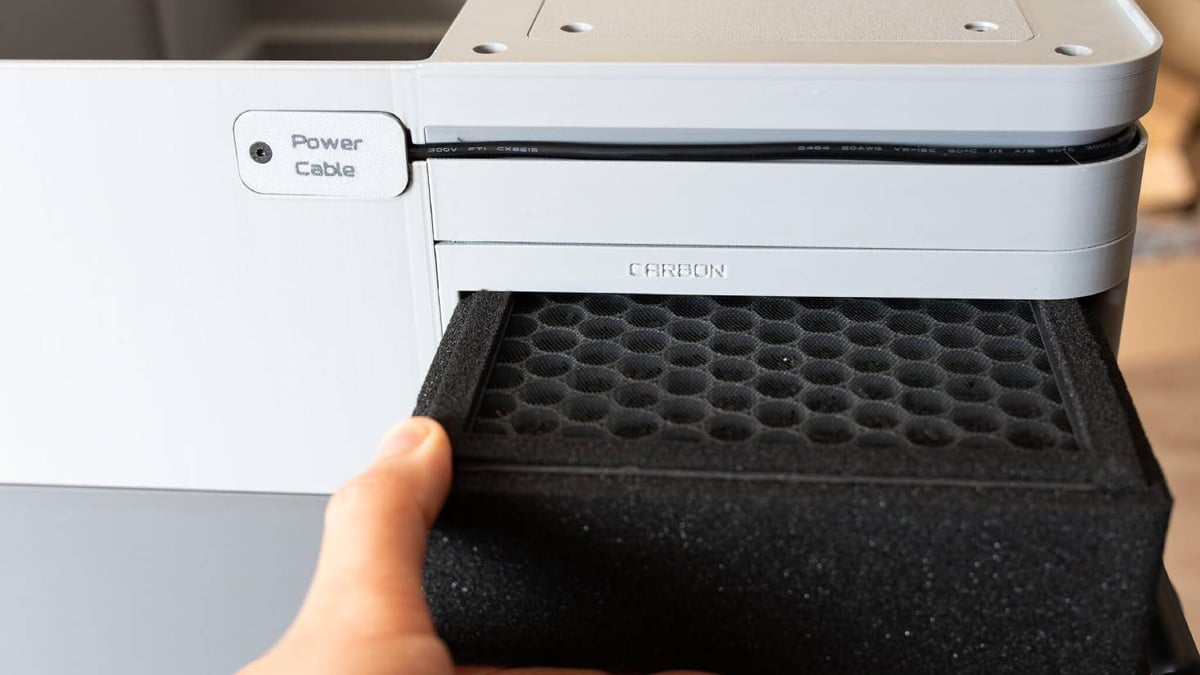
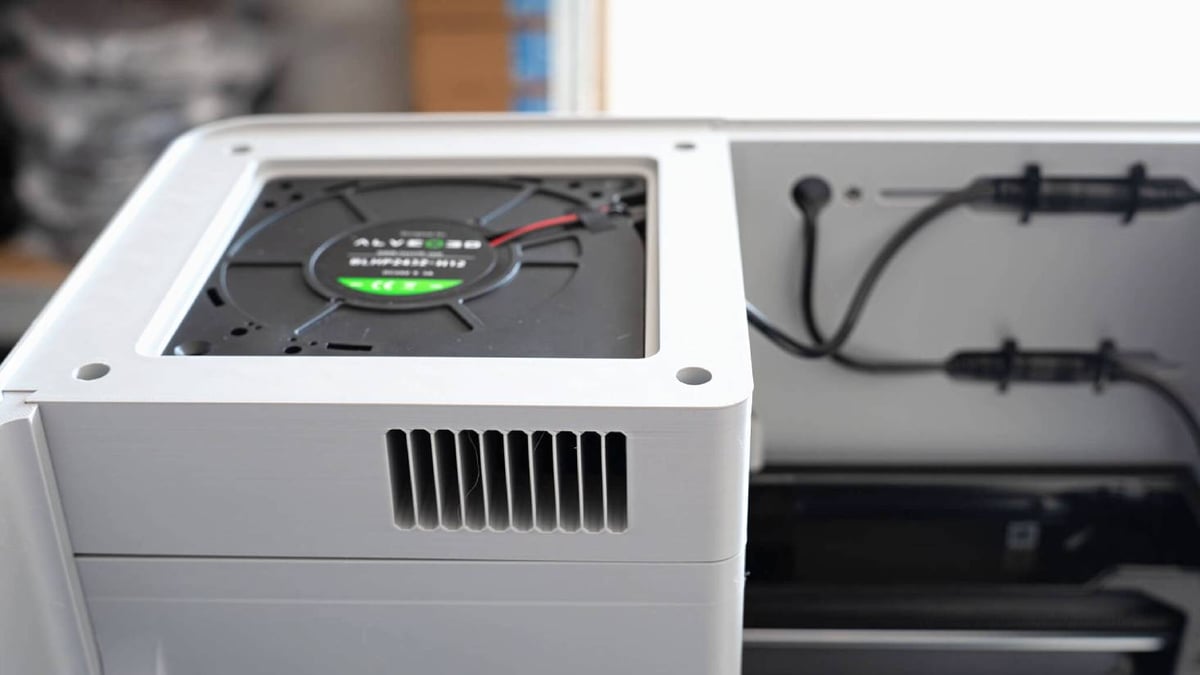
The Alveo3D P2D kit uses the company’s P4D-R filter cartridge, rated to HEPA14 under EN1822 standards to capture 99.995% of particles at the most penetrating particle size, typically around 300 nanometers (0.3 microns). The kit itself ships with a filter, fan, seals, and mounting hardware; you just print the housing from the provided STL and 3MF files. Installation requires no permanent modifications to the printer, thought it does extend the basic printer’s total height to around 600 mm.
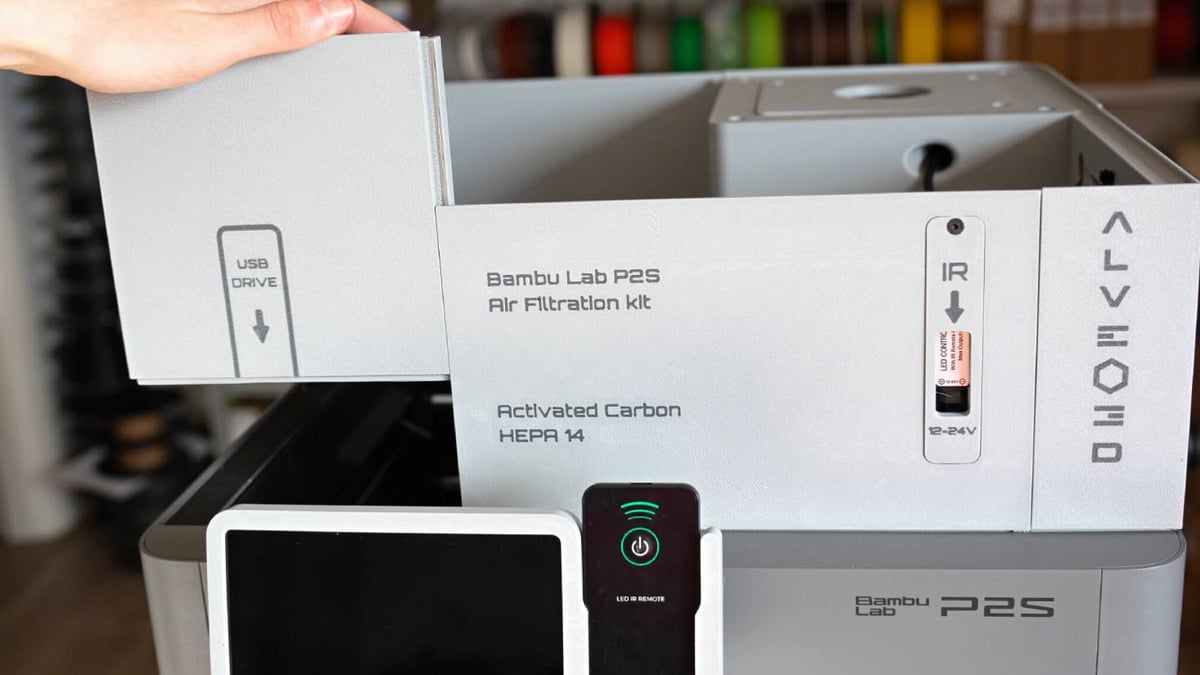
Printing the components yourself gives you control over the looks, naturally, with Alveo recommending filament that matches the printer’s default grey hue. Be mindful of it being a five-plate print. An IR remote control (provided) lets you turn the filter on and off from a distance. Control is not integrated into the P2S itself.
Designed to scrub the air inside the chamber rather than exhausting it, the filter can be changed from outside without disassembly. Such filters (just as they are in the printers themselves) are consumable components – a P4D-R cartridge replacement costs €35 (~$40). Alveo3D claims the system reduces both UFP and VOC concentrations in the surrounding workspace, though the company’s published performance data – a stated 4x reduction for its prior P1S/X1C kit – comes from internal testing and has not been independently verified for the P2S version.
Why Does Ventilation Matter?
The U.S. EPA and a multitude of studies confirm that desktop FDM printers emit ultrafine particles and volatile organic compounds during operation, with UFPs small enough to deposit deep in lung tissue. A January 2024 study published in the journal Toxics identified toxic metals including chromium, lead, and cadmium in printer-emitted UFPs, along with VOCs classified as IARC carcinogens, while a 2025 study evaluating 11 school and university settings recommended engineering controls – specifically, enclosures exhausted outdoors – as the primary protective measure.
Alveo3D’s P4D-R cartridge is of a type recommended by the French National Center for Scientific Research, the company says.
Bambu Lab sells its own External Exhaust Fan Kit for the P2S, which comes with the benefit of direct integration with Bambu Studio to switch filtration modes based on filament type.
That native upgrade path competes directly with third-party alternatives like Alveo3D and the VoxelPLA VentoBox, a multi-stage HEPA13 unit that more tidily slots inside the print chamber. Alveo3D’s approach appears to be a little pricier than others, including Bambu Lab’s own crack at upping the P2S’s air filtration, but brings the beefiest filter with a longer lifespan than other systems we’ve looked at. Alveo3D’s filter cartridge is rated for 900 hours of use, up from 600 hours on the company’s earlier Bambu-compatible models.
The P2S launched globally in October 2025, incorporating second-generation features from Bambu’s H2 series, including the DynaSense extruder and Active Airflow system. But heavy duty air filtration remains very much a “hands-on” adventure for those who print tougher materials and need to be sure of the air quality in proximity to the printer.
Alveo3D’s kit is available now through the company’s site and resellers. The printable files for the housing are available on MakerWorld.
Read more recent news:
- A New 3D Printed Rival for Adidas? This Japanese Startup Promises Advanced Propulsion Tech
- We Tested Meshy 6: Can AI Finally Generate Good 3D Printable Models From Photos?
- Forget 4 Colors: This Orca Slicer Fork Unlocks Virtually Unlimited Color Combos
Tired of Reading? Try Listening
License: The text of "Alveo3D Launches HEPA14 Filter Kit for Bambu Lab P2S, Adds Extra Layer of VOC Capture" by All3DP is licensed under a Creative Commons Attribution 4.0 International License.