154 Candidates per Job: Why Your 3D Printing Knowledge Isn’t the Magnet it Used to Be

As the additive manufacturing job market matures, companies prize specific roles and production skills over general AM knowledge — creating an oversupply of talent and a shortage of openings.
The global additive manufacturing (AM) industry is entering a new phase marked by steady growth, industrial adoption, and a shift toward production-focused applications, according to the latest 2026 Additive Manufacturing Salary Survey Report by Alexander Daniels Global. Although there are signs of major expand across aerospace and defense, and a bit lesser so in medical and automotive markets, the report finds that hiring has cooled significantly — and competition for open roles has reached record highs.
After years of rapid innovation and hardware-driven hype, the AM market is now defined by operational maturity and measured scalability. Services and materials have overtaken hardware as the fastest-growing revenue segments, benefiting from reshoring efforts and increased demand for serial production.
"This year’s data shows 154 professionals for every one AM job globally. The shift reflects slower hiring and a cooling job market, as companies scale more cautiously and retention remains high." — Alexander Daniels Global
However, the job market tells a more challenging story for both newcomers and experienced professionals. For 2025, the survey reports 154 AM professionals for every open role globally, driven by slower hiring and rising retention. Regional figures highlight the same trend, with candidate-to-job ratios reaching:
- 134:1 in North America
- 129:1 in EMEA
- 313:1 in APAC
The report describes the shift as a move from “talent shortage to opportunity shortage,” as companies prioritize replacement hires and internal upskilling over large headcount expansion.
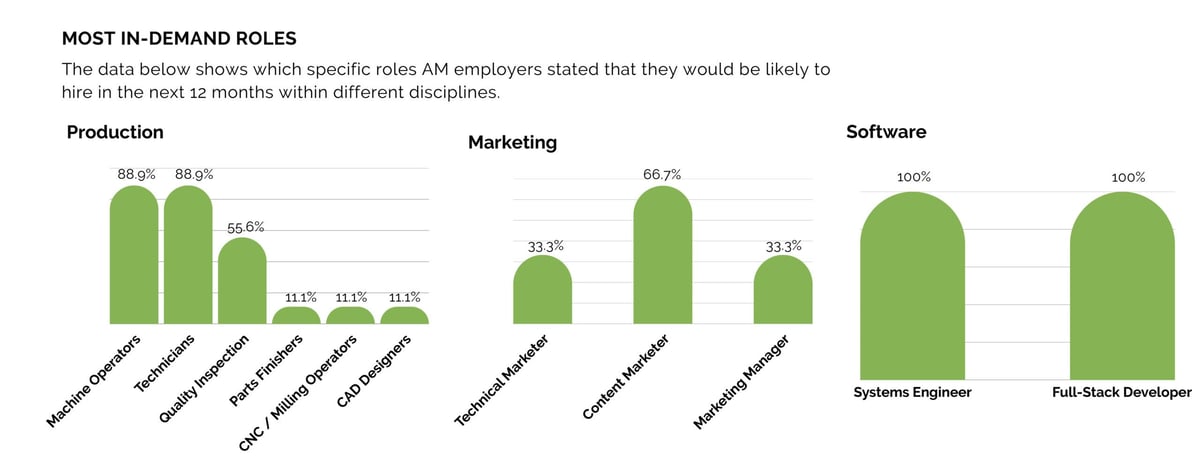
In terms of demand, production roles are set to dominate hiring in 2026, with 75% of companies planning to expand in this area. Jobs such as machine operators, technicians, and quality inspectors are benefiting from the industry’s transition from prototyping to scalable manufacturing. Sales, applications, and consulting functions also remain active hiring zones, reflecting continued commercial adoption and customer enablement needs.
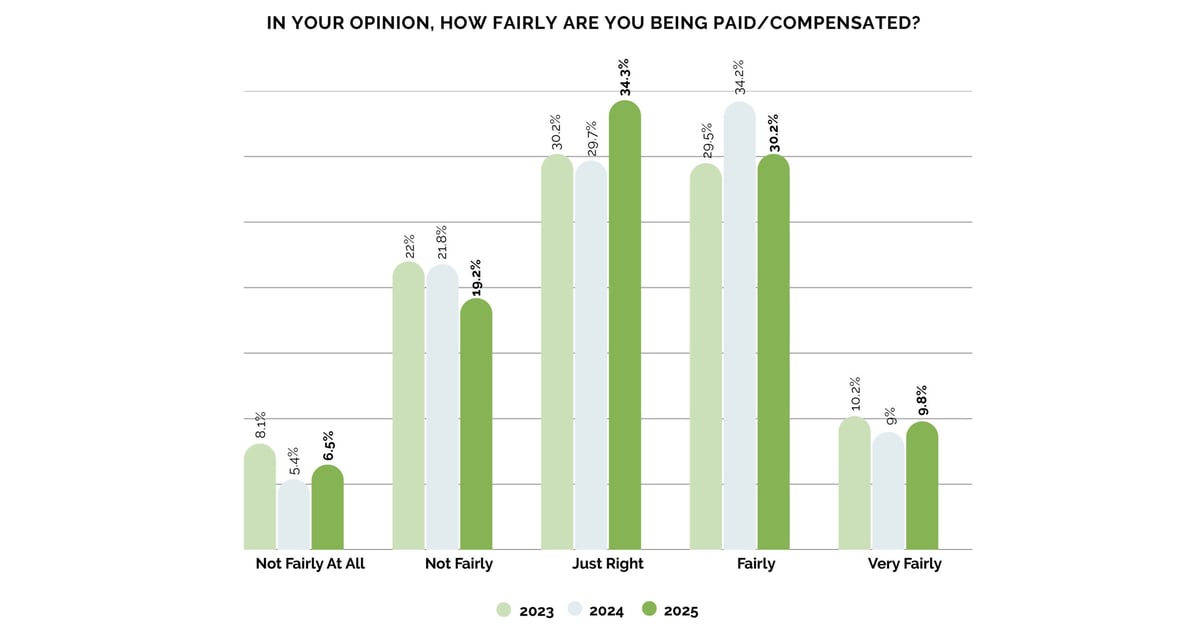
Despite tighter hiring, satisfaction with compensation appears stable. 74.3% of professionals view their pay as fair, and a majority report AM salaries as broadly comparable to other industries. Cost-of-living pressures and increased workloads remain key factors for those who feel underpaid.
Looking forward, the report points to a more mature and selective AM ecosystem supported by persistent labor shortages in manufacturing and growing industrial adoption of additive processes. While the industry continues to expand, competition for roles suggests that the next stage of growth may benefit experienced operators, engineers, and production specialists most of all.
Alexander Daniels Global Takeaways & Advice for Job Seekers in AM
As the additive manufacturing (AM) industry matures, professionals must adapt to an increasingly competitive and selective job market. With more talent than available roles, especially in regions like EMEA and North America, job seekers should sharpen their skills to stand out in a crowded field.
- Embrace Specialized Skills: While general knowledge of AM technology remains valuable, specialized expertise is now at a premium. For example, roles like Solutions Engineer, Applications Specialist, and Customer Success Engineer are gaining prominence as companies prioritize end-to-end customer support. Upskilling in areas like system integration, process optimization, and customer-facing roles can provide a distinct advantage.
- Focus on Software and Technical Competencies: The AM industry is increasingly software-driven, with strong growth in positions related to software engineering, machine learning, and data analysis. Roles such as Software Controls Engineer or Computational Geometry Engineer are becoming central to the industry’s growth. Developing proficiency in these technical areas could position you as a highly sought-after candidate.
- Flexibility and Work-Life Balance Matter: The rising demand for flexible working hours and remote work options is reshaping employee expectations. As an AM professional, consider roles that offer these benefits, as they are now viewed as standard rather than optional. Employers in the industry are also offering improved benefits such as private healthcare, pension plans, and paid time off.
- Leverage Your Network and Professional Development: The job market is shifting from rapid growth to consolidation, with internal promotions and upskilling becoming more important than new hires. Job seekers should not only focus on applying to open positions but also consider networking opportunities within the industry, attending AM conferences, and joining professional groups to learn about emerging trends and connect with hiring managers.
- Understand Employer Expectations: As competition for talent intensifies, employers are looking for professionals who can demonstrate both technical expertise and adaptability. In addition to your core AM knowledge, companies are increasingly prioritizing candidates with strong communication skills, an understanding of customer needs, and the ability to navigate complex, real-world applications of AM technology.
By focusing on these strategic areas, AM professionals can better navigate the evolving job market, align with employer priorities, and position themselves for long-term career growth in the industry.
Download a free copy of the full 67-page report at Alexander Daniels Global.
License: The text of "154 Candidates per Job: Why Your 3D Printing Knowledge Isn’t the Magnet it Used to Be" by All3DP is licensed under a Creative Commons Attribution 4.0 International License.