PET vs PETG: Why That One Letter Changes Everything

PET and PETG share nearly the same name, but that one letter — the "G" — changes how PETG prints. Here's why.
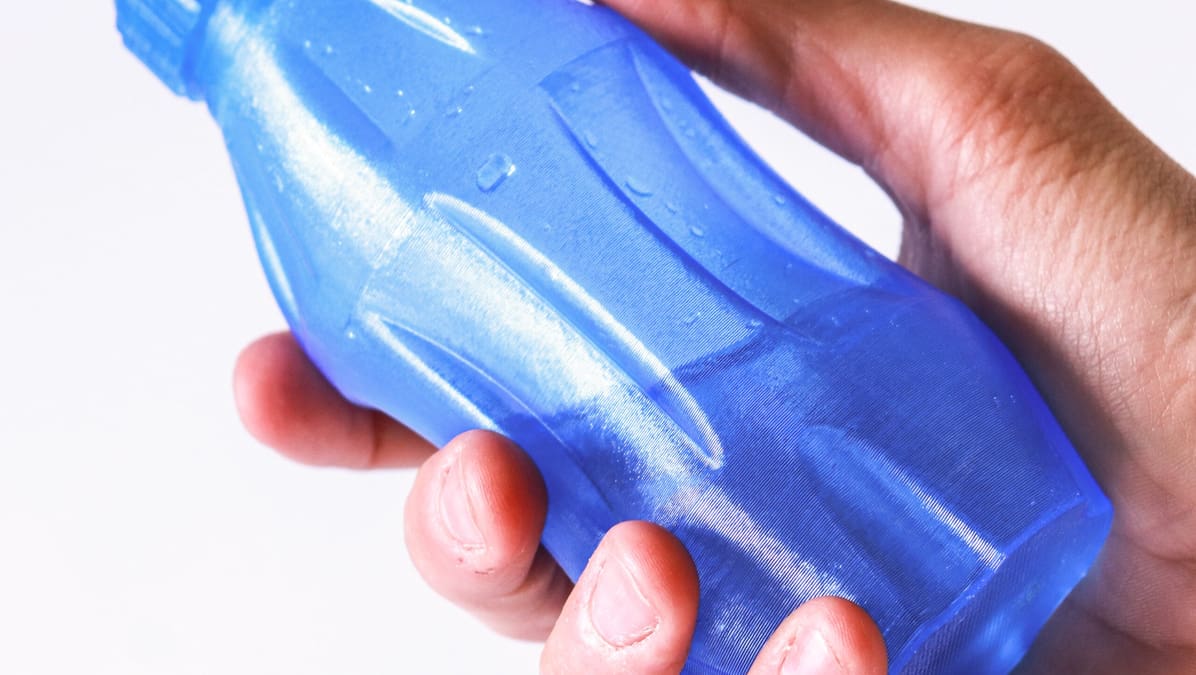
The world produces roughly half a trillion PET beverage bottles a year, which is close to a million every minute. PET (polyethylene terephthalate) is one of the most familiar every day plastics but you rarely see it as a spool of filament for 3D printing. PET’s cousin, PETG, however is far more common as a printing material, but what difference does that “G” make?
PET and PETG are in the same polymer family. PETG is often the go-to for mid-range temperature and mechanical resistance on a budget because it’s cheap, readily available, and easy to print. PET, on the other hand, isn’t a commonly used filament in the 3D printing community. Resources on its properties and print settings are few and often contradictory, perhaps because PET filament is hard to come by in the first place.
The lack of the -G in PET is often misunderstood, yet it makes a huge difference when it comes to printability and recyclability — you can’t put your PETG parts in the recycling bin with your beverage bottles.
Below we dive into the material science and the practical 3D printing of these two related polymers.
The Extra G
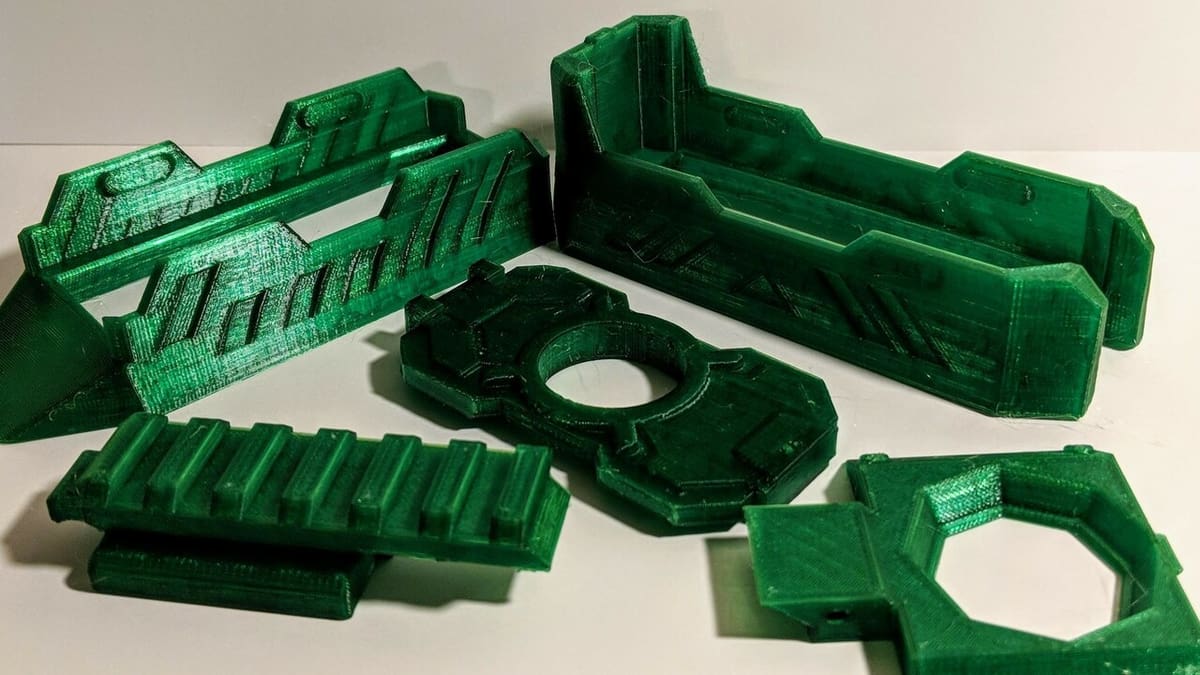
The crucial difference between PET and PETG is how they solidify after leaving the nozzle. PET naturally has a stronger tendency to form ordered, crystalline regions as it cools. PETG is chemically modified in a way that suppresses much of that crystallization. For 3D printing, that means PETG can cool and solidify more predictably, while PET can require more careful control of the material and printing conditions.
Let’s start right off with just a little bit of chemistry.
The “G” stands for glycol-modified. It’s sometimes described as though PETG were simply ordinary PET with some glycol mixed into it afterwards, but that isn’t quite right.
PET itself is already a polyester made using glycol as one of its chemical building blocks. With PETG, part of that chemistry is changed by introducing another glycol-based building block, commonly CHDM (cyclohexanedimethanol).
You don’t need to remember the chemical name. What matters is what it does.
Imagine PET’s polymer chains cooling down and attempting to line themselves up into neat, tightly packed regions. That process is called crystallization. The modification used in PETG makes it harder for the chains to arrange themselves that way.
As a result, PETG generally remains amorphous rather than readily crystallizing. Manufacturers of PETG-type copolyesters specifically exploit this behavior for easy extrusion, molding, thermoforming, and high clarity.
And extrusion, of course, is exactly what happens in an FDM 3D printer. For blow-molding water bottles, on the other hand, you want the plastic to crystallize because the result is a very thin bottle that is surprisingly stiff, strong, clear, and resistant to creep and gas permeation.
Why Crystallization Matters to Your 3D Printer
A 3D printer repeatedly melts plastic, pushes it through a nozzle, and asks it to cool into exactly the right shape.
Anything that makes that cooling process less predictable can make printing more difficult.
With PET, crystallization can occur as the material cools. The formation of those ordered regions changes the material’s density and dimensions, potentially contributing to shrinkage and distortion if the process isn’t well controlled.
PETG largely sidesteps that particular problem because its modified structure is much more resistant to crystallization. Research into material-extrusion printing specifically identifies this suppression of crystallization as one reason PETG works well as a feedstock for the process.
So instead of thinking: PET + glycol = PETG, it’s more useful to think of PET as more willing to crystallize, and PETG as modified to resist it, which is what makes PETG easier to process.
PET vs PETG: the Difference for 3D Printing?
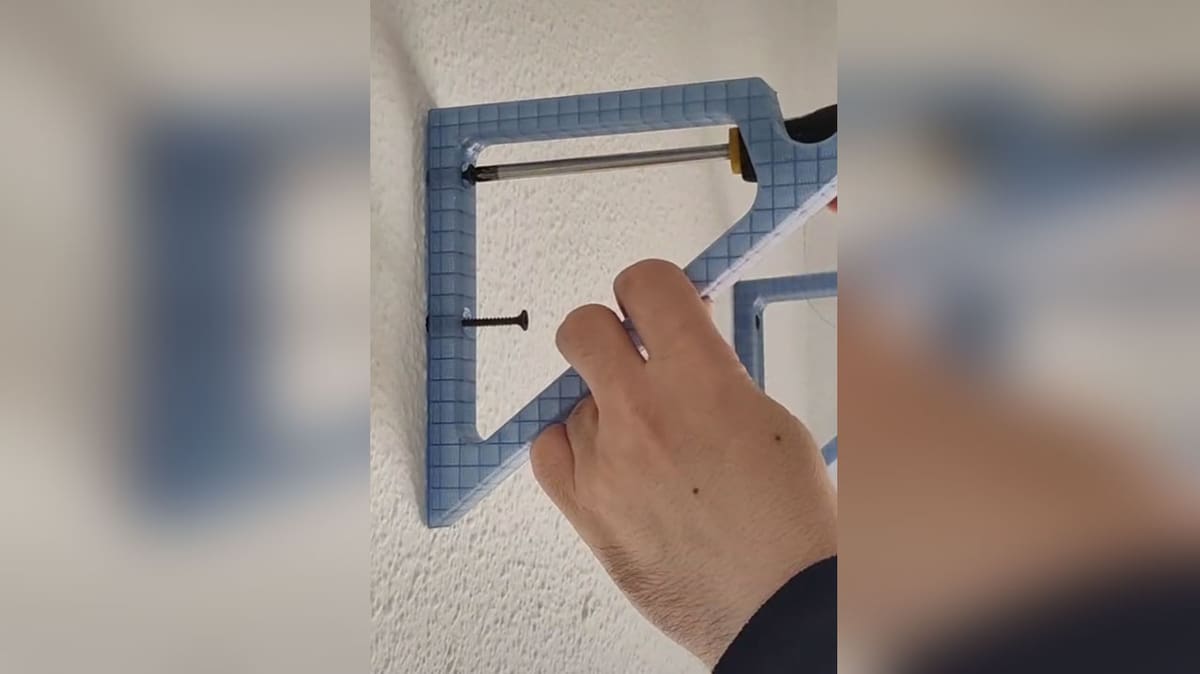
If you’re simply choosing a filament for a functional print, PETG is usually the more useful material to know about. It’s tough, relatively easy to print, doesn’t warp much, and is widely available. That makes it a popular choice for brackets, cases, printer parts, holders, and other objects that need to do more than just look good.
PET filament is much less common. You might choose it because a particular PET formulation offers the stiffness, mechanical properties, recycled content, or other characteristics you need. But unlike PETG, PET isn’t really a standard “next filament to try” for most hobbyist printers.
Why Print With PET?
Why does PET filament exist at all, you might ask? PETG already covers most of what someone wants from a stiffer, more functional print, with far less fuss than PET’s crystallization demands. ABS and ASA can match or beat PET on toughness without that same shrinkage and warping risk, in exchange for needing an enclosure of their own. Nylon and polycarbonate go further still on sustained load, extreme heat, or outright toughness than PET ever will unreinforced.
A handful of specific cases answer that:
- You need more stiffness or heat resistance than PETG gives you, without nylon or PC’s hassle. PET-CF (carbon-fiber-reinforced PET) sits in the gap between PETG and true engineering plastics — mechanically closer to nylon or polycarbonate, without their drying regimens or enclosure requirements.
- Recycled content or recyclability is the point, not a side benefit. PET is the world’s most recycled consumer plastic, so rPET filament lets you print with genuinely reclaimed material, plus you can recycle your PET parts along with your other plastic waste.
- Cost and availability matter, relative to nylon or PC — not relative to PETG. True engineering nylons and polycarbonate filaments are pricier and harder to source. PET and PET-CF are the more accessible middle tier when PETG isn’t quite enough but nylon or PC feels like overkill.
- The part needs to hold its size in a humid or outdoor environment over time. Nylon parts keep absorbing ambient moisture after they’re printed, which can slowly change their dimensions and strength over months of use. PET doesn’t have that ongoing moisture creep, so it can hold its shape better over the long run even where nylon wins on day-one toughness.
Depending on the formulation, PET can offer high stiffness and useful mechanical or thermal characteristics, and recycled PET can also be attractive when material origin is a priority.
That stiffness argument only means something once you know what PET is actually being compared against. ABS and ASA can match or beat it on toughness, but both need a heated enclosure and warp more. Nylon and polycarbonate can be stiffer and more heat-resistant still, but both are hygroscopic enough to demand serious drying and storage discipline, and polycarbonate needs hotend temperatures most desktop printers aren’t built for. PET — especially in its carbon-fiber-reinforced formulations — sits in the gap between those extremes: mechanically closer to nylon or polycarbonate than to PETG, without their moisture problems or printing difficulty.
That gap is also why more PET filaments have shown up in the past couple of years. Two separate pushes point the same way. One is sustainability: PET is the world’s most recycled consumer plastic, mostly thanks to drink bottles, so manufacturers already have a cheap, abundant recycled feedstock (rPET) to work with — a circular-economy story PETG, made from virgin resin, can’t tell as easily.
The other is straightforward engineering demand: reinforced PET-CF filaments have found real use in parts that need to hold their shape under sustained load and moderate heat (jigs, fixtures, brackets) without nylon’s drying regime or polycarbonate’s cost and printing difficulty.
In other words, PET is more of a specific-material choice; while PETG is an everyday filament category. When mechanical or temperature performance really matters, the filament’s technical data sheet is more useful than assuming every PET or PETG behaves identically.
What Does That G Mean for the Finished Part?
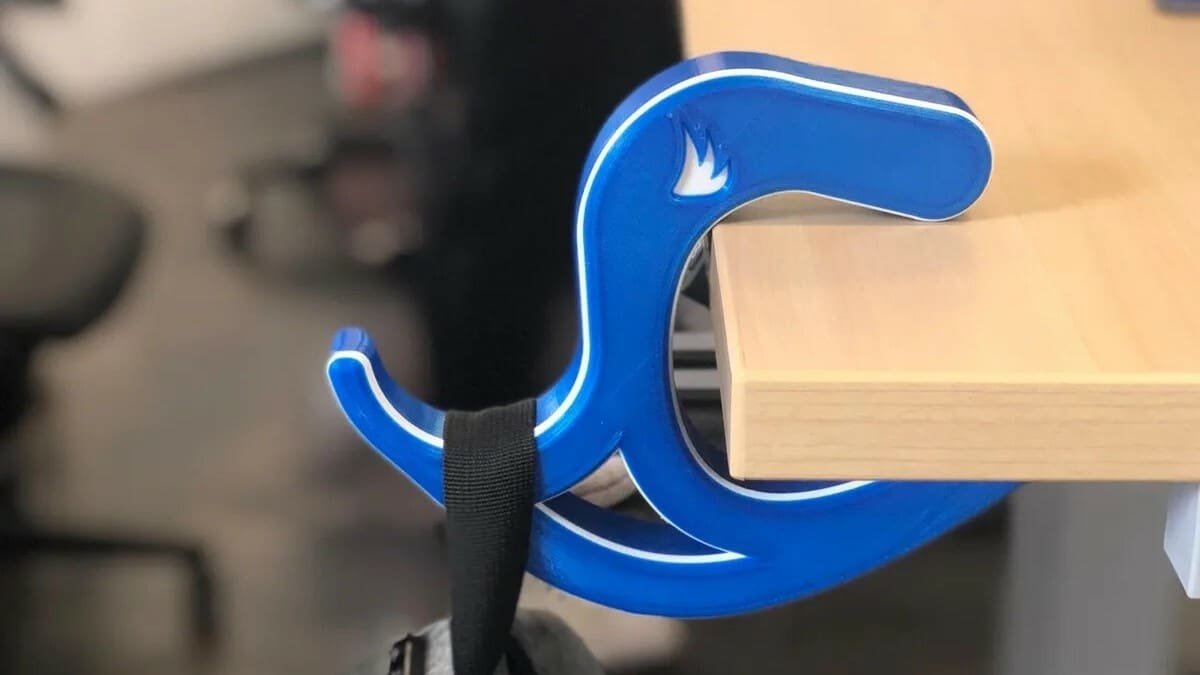
The PET/PETG distinction affects more than printability, but this is where it’s important not to make the acronyms sound more precise than they are.
Toughness and Rigidity
PET and PETG can both produce strong functional parts. PETG is generally valued for toughness and its ability to deform somewhat rather than failing in a brittle manner.
PET formulations can be comparatively stiff, which may be useful when dimensional rigidity is the priority.
But filament formulation, additives, print orientation, temperature, and layer adhesion can all have a major effect on the finished part. If you’re choosing a material for a genuinely demanding mechanical application, compare the manufacturers’ test data rather than choosing solely between the words “PET” and “PETG”.
Heat Resistance
PET’s ability to crystallize can provide advantages at elevated temperatures, but again, that doesn’t mean every spool labeled PET automatically has better heat resistance than every PETG.
The thermal performance of a printed part depends on the precise polymer formulation and how it has been processed. If your part needs to survive a specific temperature, check its heat-deflection or glass-transition data instead of relying on the material family alone.
Appearance
PETG is particularly well suited to glossy, transparent, and translucent filament.
Its resistance to crystallization helps the material remain clear during processing. PET can also be transparent, plastic drink bottles make that obvious, but crystallization can make PET turn increasingly opaque or hazy. PETG therefore gives manufacturers a wider processing window when optical clarity matters.
Printing PET vs PETG

Despite the differences in their chemistry, the actual nozzle and bed temperatures recommended for commercial PET and PETG filaments can overlap considerably.
PETG commonly prints with a nozzle somewhere around the mid 200 °C range and a heated bed. For example, Prusa recommends around 230-240 °C at the nozzle and 85-90 °C on the bed for its standard PETG profile. Commercial PET filaments can occupy a similar range, with current PET products recommending roughly 230-260 °C depending on the formulation.
That overlap is another reason not to reduce the difference to a single temperature setting.
Note: These figures are general starting points. Exact settings depend on the filament manufacturer, printer, hotend, nozzle size and print geometry. Always check the recommended settings printed on the filament spool before printing.
With PETG, the more familiar problems are usually stringing, moisture, and very strong bed adhesion. PET can introduce another variable: controlling crystallization and shrinkage. How significant that is depends heavily on the particular PET formulation.
For either material, the manufacturer’s recommended profile should be your starting point. Generic PETG settings may get an unfamiliar PET filament into the right neighborhood, but they shouldn’t override the specifications for the spool you’re actually using.
PET or PETG: Which Should You Choose?
For most desktop 3D printing, the answer is simple: Choose PETG if you want an accessible filament for tough, practical, functional parts.
It’s widely supported, relatively inexpensive, available in many varieties, and easy enough to print on most modern machines. Its modified chemistry also makes it well suited to the melt-and-cool cycle of extrusion-based 3D printing.
Choose PET when a particular PET filament offers something you specifically need. That could be stiffness, a particular mechanical or thermal specification, recycled feedstock, or simply a formulation you want to experiment with.
And that’s ultimately why the difference between PET and PETG matters to a 3D printer.
They aren’t just two versions of essentially the same filament. The modification represented by the “G” changes how the polymer organizes itself as it cools. That seemingly microscopic difference has a very practical consequence at the printer: PETG is generally easier to turn from molten plastic into a predictable 3D-printed part.
PET Filament Options
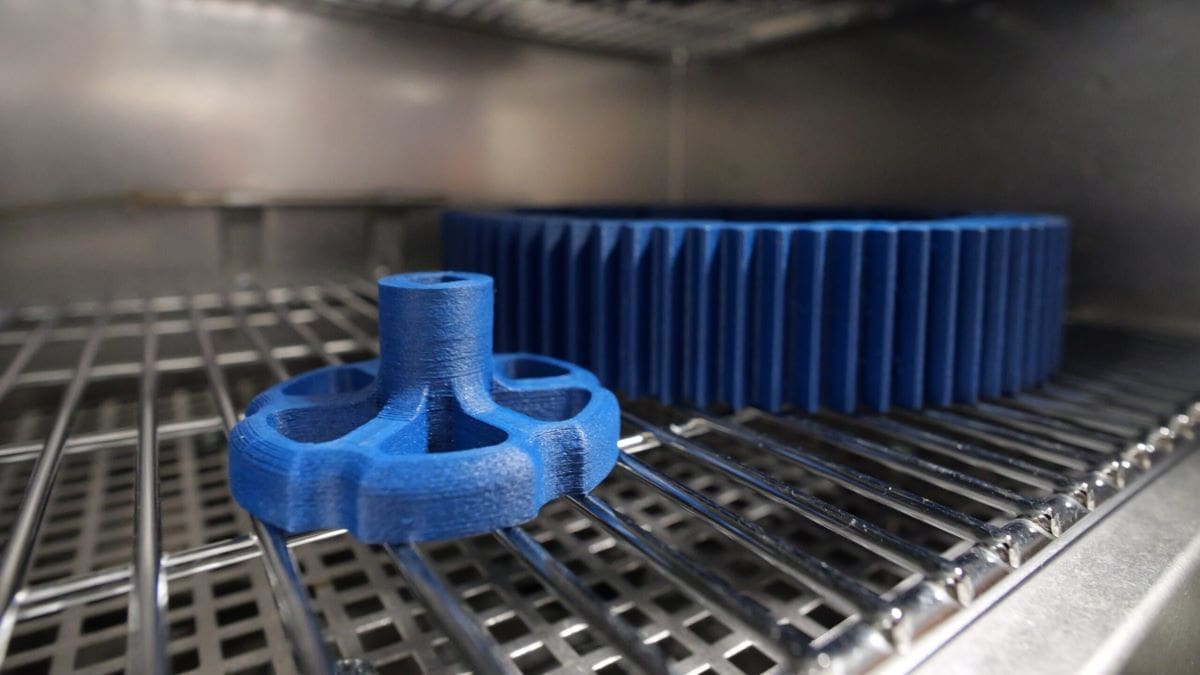
PET is still much less common as a 3D printing filament than PETG, so the options break down less by browsing a broad catalog and more by which of PET’s specific advantages you’re actually after.
For plain stiffness beyond PETG, FormFutura EasyFil PET is formulated for low warping on an ordinary desktop machine, and Forward AM Ultrafuse PET is another standard PET option intended to offer a broad printing window. BASF describes it as easy as PLA, “but much stronger”.
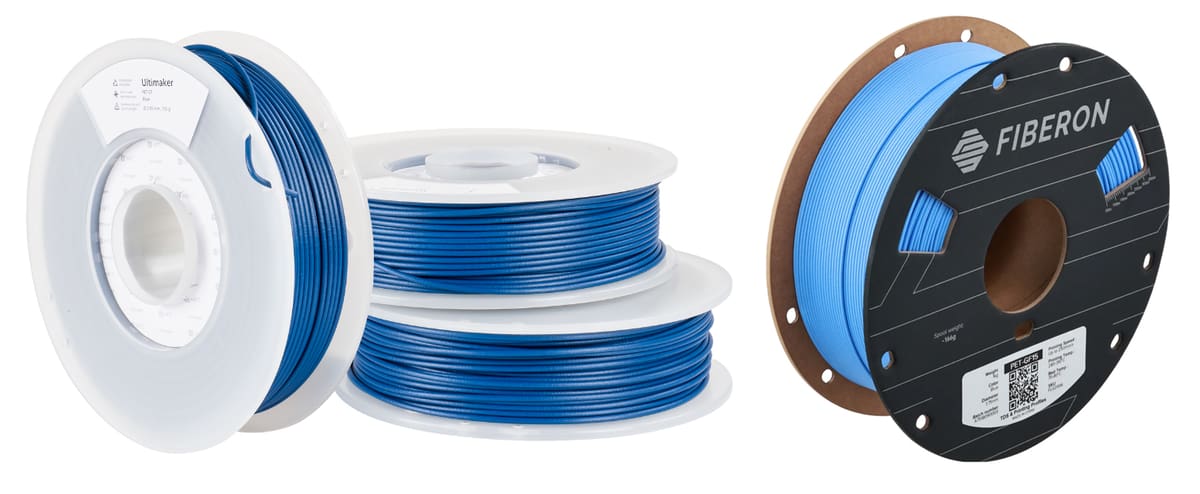
For more demanding applications, PET is also available in reinforced forms such as Polymaker’s Fiberon PET-CF17, UltiMaker PET CF, and Ultrafuse PET CF15, which use carbon fiber to increase stiffness and dimensional stability. These products also hint at where PET has found a stronger foothold in 3D printing: not just as an alternative to PETG, but as a base material for more specialized engineering filaments.
PETG, by comparison, is a much broader and more mainstream filament category that we cover in our guide to the best PETG filaments.
You May Also Like:


License: The text of "PET vs PETG: Why That One Letter Changes Everything" by All3DP is licensed under a Creative Commons Attribution 4.0 International License.