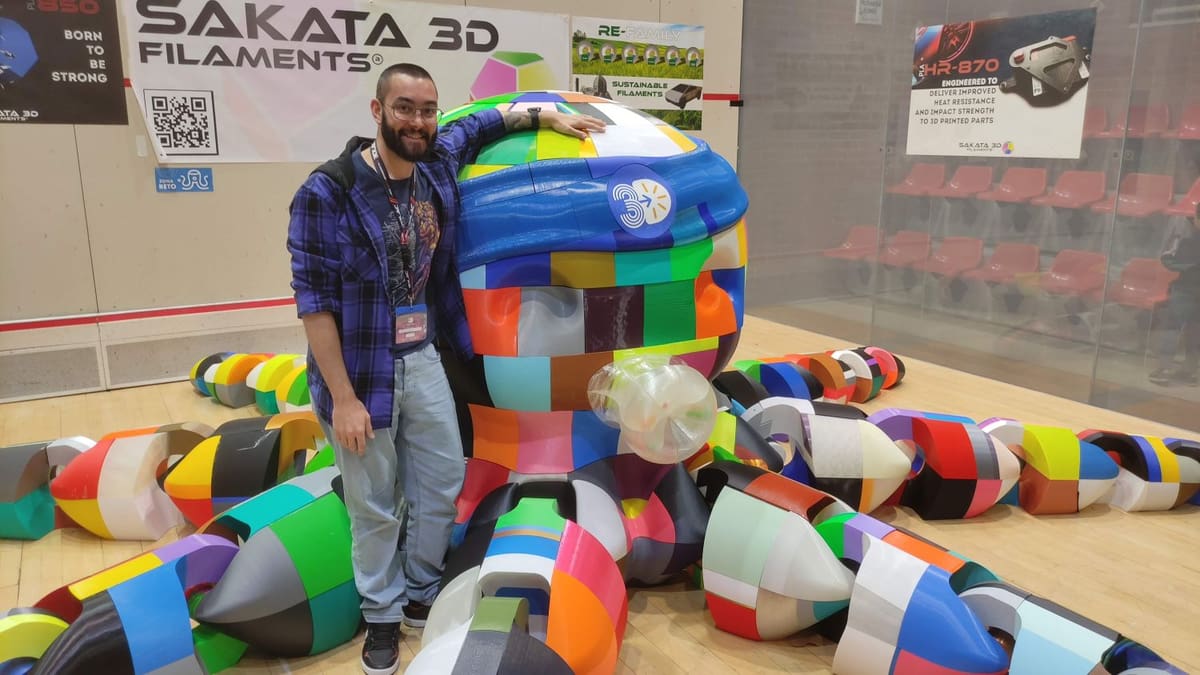
Designer Spotlight: Javier Rodríguez (McGybeer)

Cute Mini Octopus. Cali-Dragon. Articulated Lizard. Articulated Shark. Do we even need to tell you who's in this week's Designer Spotlight?
If you’ve been anywhere near a 3D printer, a site for STL files, or looked for cool things to 3D print, odds are you’ve come across a design by Javier Rodríguez (McGybeer). No, really.
The Cute Mini Octopus (that’s not so mini in the image above)? Over a million downloads of its different versions from Thingiverse alone. Yes, you read that right. Cali-Dragon? Around 1,750 makes combined from different repositories. The Articulated Dragon? The most downloaded paid model on Cults. Color us impressed.
And Javier isn’t just sharing amazing and well thought out models – he also offers a design course, tutorials, and printing tips.
Of course we had to feature him in our Designer Spotlight series. Let’s learn more about him and his creative process!
Q&A
All3DP: Tell us a little about yourself – what’s your background?
Javier: I have a PhD in Electronic Engineering and worked in particle physics R&D for 12 years. That’s where I first used a 3D printer in 2014, and soon I got my own. I’ve always loved to draw, and this hobby allowed me to join art and engineering. It quickly grew into something bigger and by early 2022 I decided to quit my job and become a full-time 3D designer.
How do you get the ideas for your designs?
Ideas come randomly, even when I’m doing something unrelated. A thought pops up, and I quickly sketch it before it disappears. Most of my designs start with an animal, then I figure out the articulations. Other times, I develop a new joint first and think of which creature it fits. My wife has also insisted on certain designs! I listen to my Patreons and followers too, they sometimes plant the seed that grows into a new idea. But I can’t create something unless I truly feel it.
How much does the technical side of 3D printing (e.g. supports, a design that requires assembly or one that’s printable in one piece) come into play when you’re designing? Or is your designing entirely independent from 3D printing and you later figure out how they work together best?
200%. From the beginning, my goal was to design without supports. That approach has defined my style. My first big challenge was the Cute Mini Octopus: fully articulated, no supports, no assembly. It worked! (Except for a tiny support on the mouth for aesthetics ). I always design with printability in mind. The only exceptions are small snap-fit assemblies (like the Rattlesnake’s rattle or the Ladybug’s antennae) or built-in breakable supports when there’s no alternative. Every idea must be printable; otherwise, it doesn’t make it past the sketch phase.
Of all the things you’ve created, which are you most fond of and why?
Without a doubt, the Articulated Dragon. Since I started designing articulated models, I wanted to make a dragon, but my skills weren’t there yet. The idea evolved as I improved, until I finally developed the perfect articulation. It became my most detailed and time-consuming project. In November 2021, it was finished. It went viral, made the front page on Cults, and proved how much I had evolved. It also gave me the confidence to quit my job – and I even got a tattoo of it to commemorate that moment! It also sparked a flood of articulated designs – collateral damage, I guess 😀
If you could step back in time and give yourself some advice from the beginning, what would it be?
Probably, it would be to take copyright seriously from the start. I didn’t expect my designs to get so popular, so I didn’t pay much attention to that detail. Also, I wish I had engaged with the 3D printing community earlier. That limited my growth. Once I connected with the community, it became a key turning point in my career. Not only did it help me improve, but I also met some amazing people along the way.
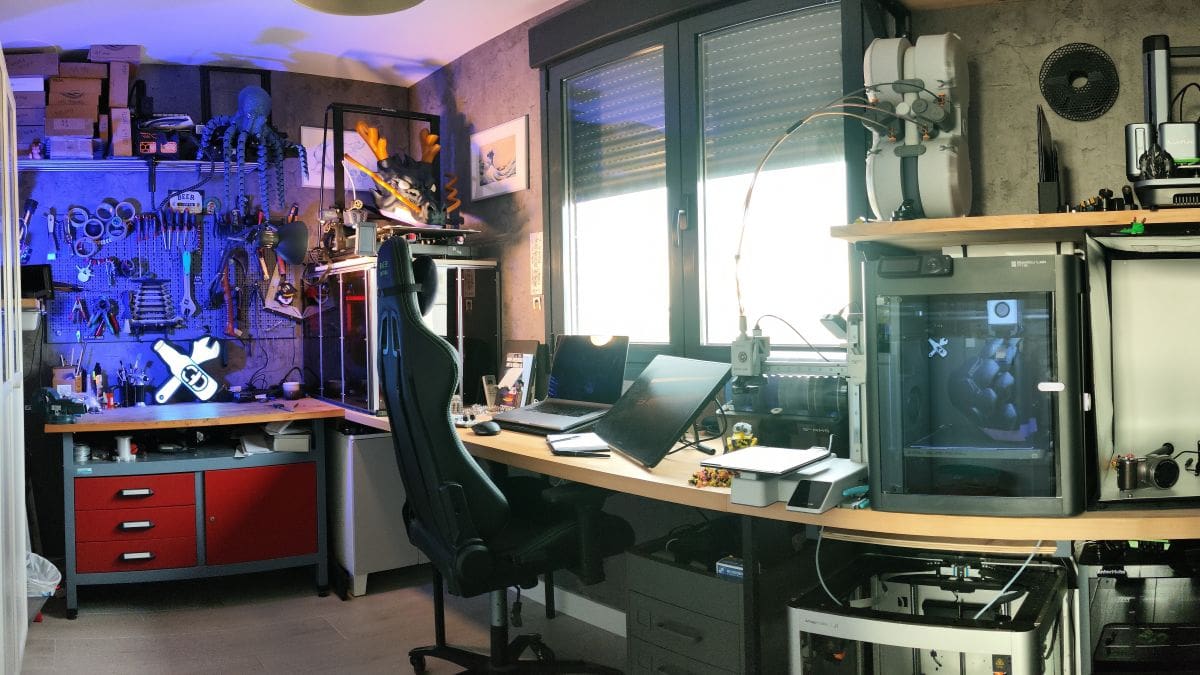
Rapid Fire
- Favorite CAD software? Blender
- Favorite slicer? Orca Slicer
- Favorite 3D printer? Bambu Lab P1S
- Favorite filament material to print with? PLA (good ones)
- Favorite filament brand? Many, I can’t pick one 😂
Where to Find Him
Do you want to be reminded of the next designer profile? Sign up for our newsletter.
License: The text of "Designer Spotlight: Javier Rodríguez (McGybeer)" by All3DP is licensed under a Creative Commons Attribution 4.0 International License.