The Best New Desktop & Industrial 3D Printers from Formnext 2026: Toolchangers, Throughput & Technical Firsts

From sub-$1,000 desktop toolchangers to lightning-fast industrial metal powerhouses, we scoured the halls of the world's largest additive manufacturing show to bring you the standout machines reshaping 3D printing.
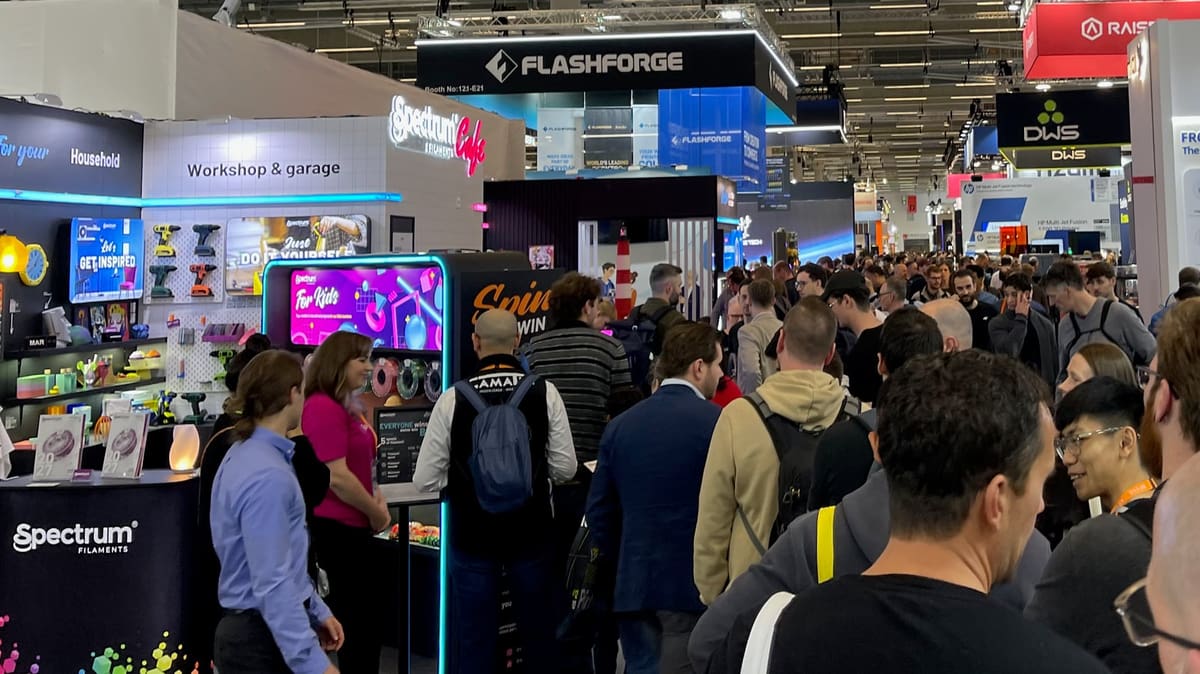
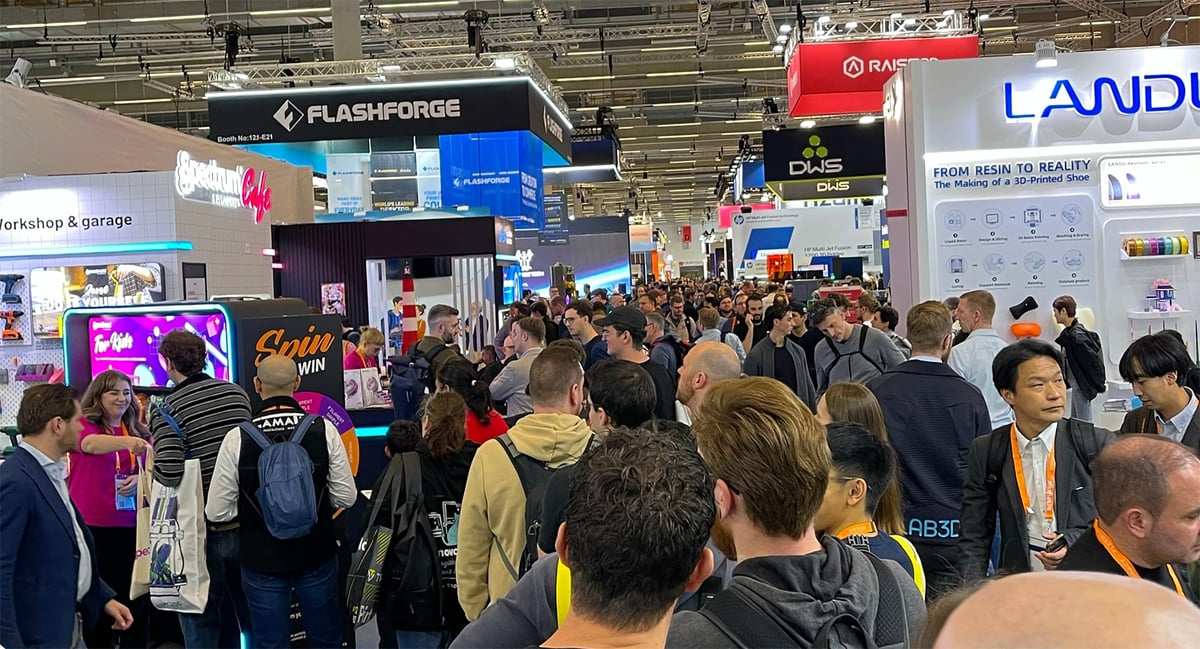
All3DP’s editors spent four long, lively days navigating the sprawling halls of Formnext 2026 logging tens of thousands of steps, watched hundreds of machines in action, handled more printed parts than we could count, and spoke with scores of manufacturers, engineers, and developers. Our mission, as always, is to bring you a firsthand look at the technologies making their debut, the trends shaping the industry, and the machines worth keeping an eye on, which, this year, seems to be more consumer focused than ever.
For all its industrial ambitions, Formnext remains refreshingly eclectic. Few other trade shows bring together fledgling Kickstarter hopefuls and global manufacturing heavyweights under one roof, offering such a broad snapshot of where a technology stands and where its developers intend to take it.
AI, Shoes & the Economics of 3D Printing
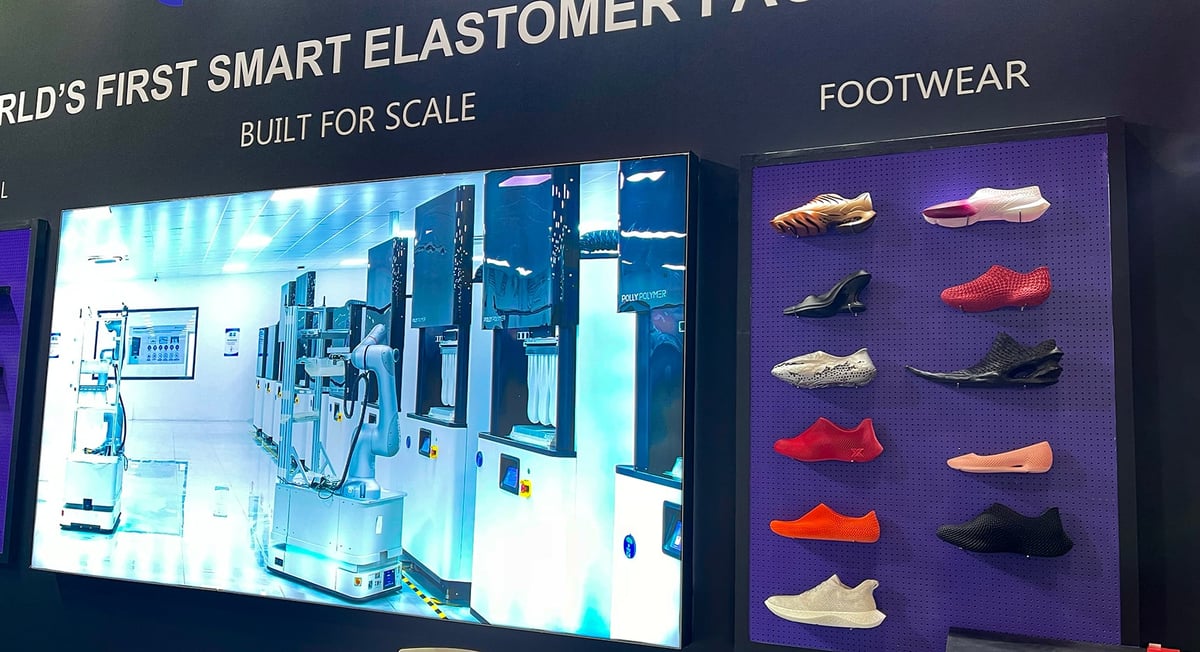
If boats, drones, and robots were the defining exhibits of last year’s Formnext, this year it was nearly impossible to escape AI and footwear. AI-powered modeling platforms carved out a conspicuous presence on the show floor — Tripo, Hi3D — promising new capabilities to come for seasoned engineers while lowering the barriers to entry for newcomers to additive manufacturing.
But beyond the eye-catching applications and software demonstrations, the more consequential story was unfolding on the hardware front: an industry increasingly preoccupied with the economics of production.
Where previous editions of Formnext seemed locked in an arms race of ever-larger build chambers, more lasers, and higher wattages, this year’s industrial printer debuts reflected a more pragmatic set of priorities. Unattended serial production, automated depowdering, rapid job changeovers, and seamless integration into wider manufacturing workflows were recurring themes, all in pursuit of a lower cost per part.
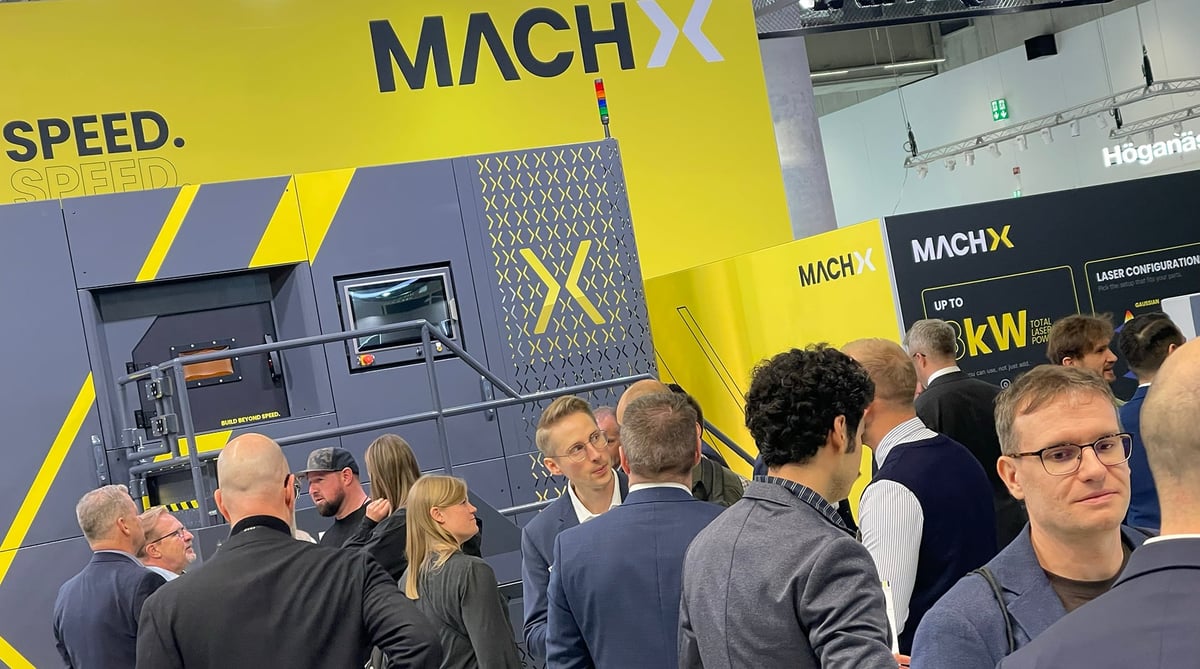
In metal additive manufacturing, platforms such as Nikon SLM’s MachX exemplified this shift, placing as much emphasis on what happens between builds as on the printing process itself.
At the other end of the spectrum, compact and comparatively affordable machines, including SnowX’s sub-$6,000 SnowPod metal printer and Inkera’s C1 color resin system, pointed toward a more accessible future for industrial technologies.
Pellet extrusion, meanwhile, continued to gather momentum, with offerings from BigRep and AIM3D underscoring its growing appeal for high-throughput polymer production and high-performance materials.
The consumer and prosumer contingent, more prominent than ever this year, was engaged in a race of its own. The technology of the moment? Perhaps unsurprisingly, tool-changing FDM printers and quite a few laser cutters.
What follows is our annual roundup of the most noteworthy and promising 3D printers unveiled at Formnext 2026. Bear in mind that many of these machines are still some months away from commercial availability. Expect further launch details to emerge over the next three to eight months, and, as always, we’ll keep our new-printer guide updated as they do.
New Extrusion 3D Printers (Filament, Pellets)
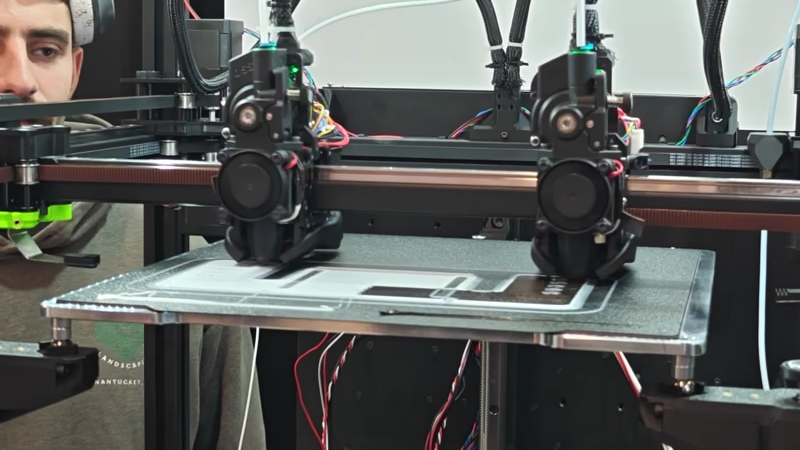
Material-extrusion debuts at Formnext ranged from pre-Kickstarter desktop units to AI-powered high-temperature industrial giants in probably one of the most diverse offerings of any Formnext to date.
Material extrusion arguably delivered some of the most diverse hardware debuts at Formnext 2026, from sub-$1,000 desktop multi-material machines to aerospace-grade pellet printers. While the latest offerings from Bambu Lab, Prusa, and Creality formally debuted before the show, newcomers to the multi-printhead market, including Co Print and Elegoo, suggest that the days of wasting copious amounts of filament on material changes may be numbered.
Perhaps the more consequential development on the industrial side is the growing attention paid to pellet extrusion. With Peopoly, BigRep, and AIM3D pursuing very different customer segments, printing directly from polymer granules is becoming an increasingly compelling proposition, both for its material economics and sheer throughput. Elsewhere, Raise3D is challenging traditional industrial FDM price points, while BCN3D is taking a surprisingly convincing stab at eliminating another barrier to adoption altogether: knowing how to use CAD.
While the latest from Bambu Lab, Prusa, Creality, and more formally debuted before Formnext, they were there at the show attracting crowds of fans.
Raise3D Brings Large-Format Industrial FDM Down to Prosumer Prices
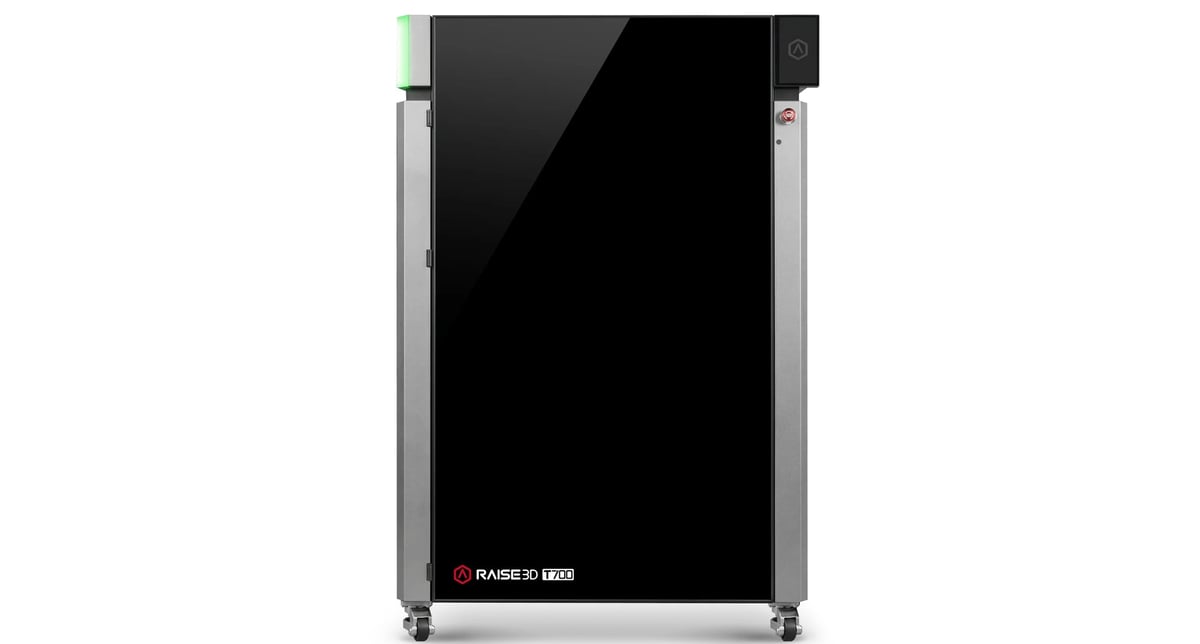
A meter-tall industrial FDM printer with an actively heated chamber for under $16,000? Raise3D is making large-format printing considerably easier to justify with its new T450 ($4,999) and T700 ($15,999), sporting build volumes of 450 × 350 × 400 mm and 700 × 500 × 1,000 mm, respectively.
The clever bit is Raise3D’s TwinFlow extrusion system, which feeds two strands of filament into a single nozzle for volumetric flow rates of up to 80 mm³/s. Alternatively, the two feeds can handle different materials for soluble supports or dual-color printing.
Both machines sport a 420°C hot end with a wear-resistant silicon carbide nozzle tip for fiber-reinforced engineering polymers, while actively heated chambers reach 70°C on the smaller machine and 60°C on its considerably taller sibling.
Qidi Tech Takes a Simpler Route to Multimaterial Printing With the Q3D
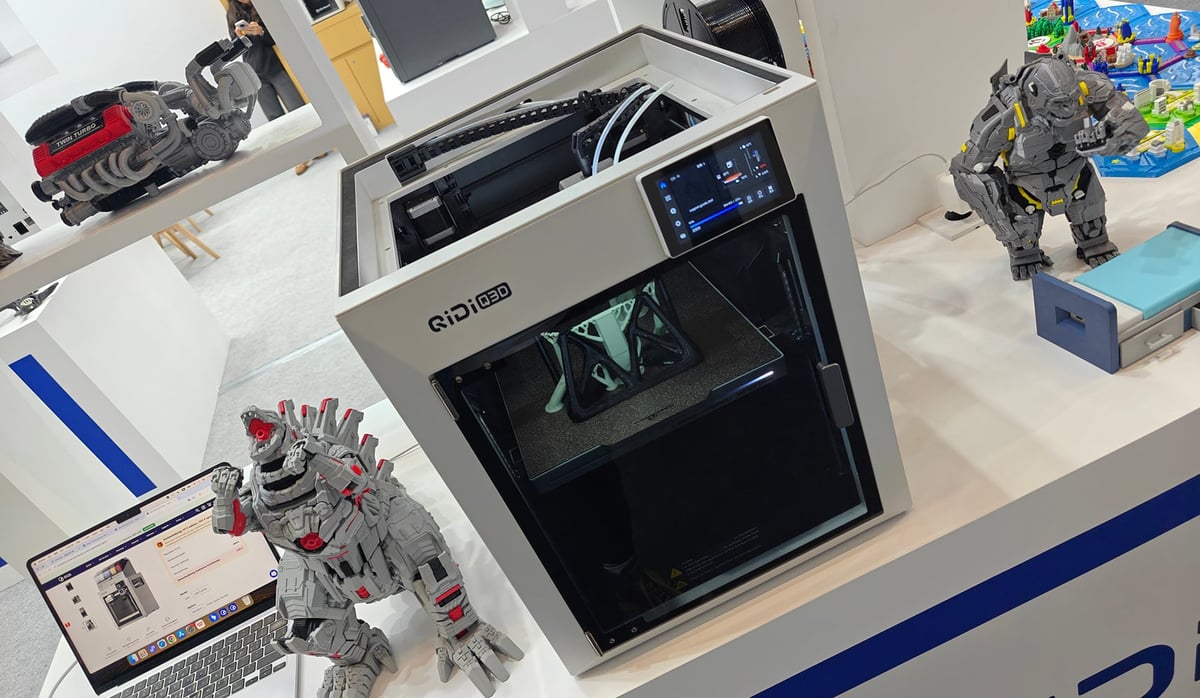
While several desktop printer manufacturers are betting on multiple independent printheads, Qidi Tech is taking a less mechanically complicated approach with its new $599 Q3D, incorporating two independently heated hot ends into a single printhead.
What makes the machine particularly interesting is its emphasis on engineering materials rather than multicolor novelties. With a primary hot end reaching 350°C and an actively heated chamber capable of 70°C, the Q3D offers the potential to combine high-performance polymers with dedicated support materials without the expense of a toolchanger.
The fully enclosed machine sports a 260 × 260 × 260 mm build volume and a dedicated extruder cooling system designed to mitigate heat-related filament clogging – a particularly welcome feature when printing in a hot chamber. Qidi Tech opened preorders on the first day of Formnext.
BCN3D’s Aurora: We Asked for a Bracket, and It Designed One
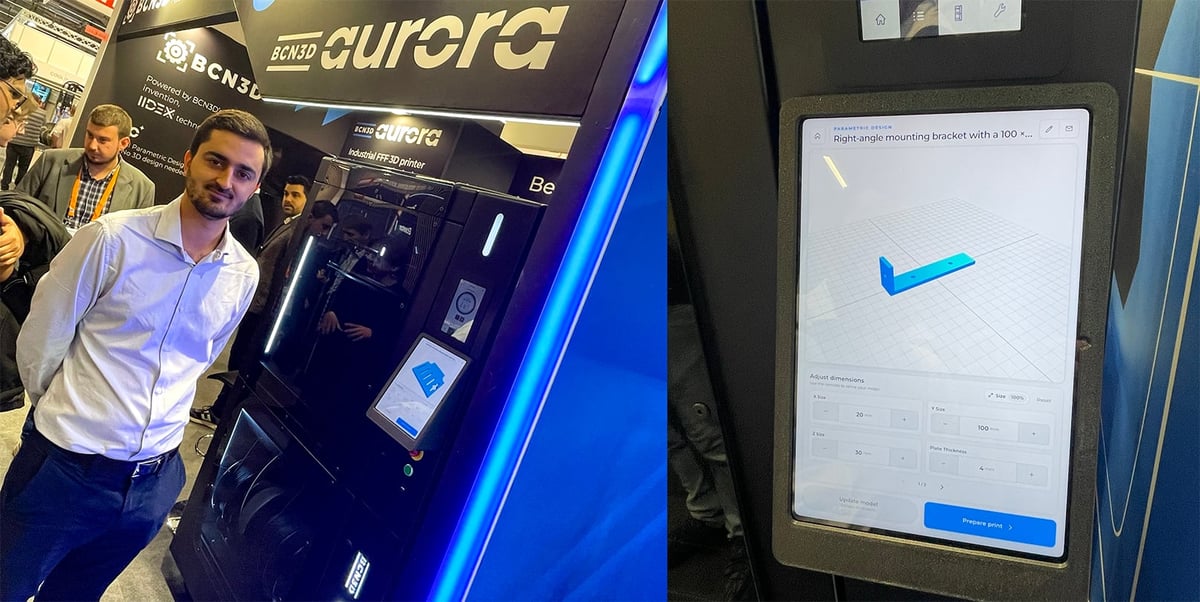
We were more than a little skeptical when BCN3D announced its Aurora ahead of Formnext, promising an industrial 3D printer that could do away with CAD and slicing software. But having tried it ourselves at the show, we have to admit, we were impressed. We simply spoke to the machine, asking it to create a 2 × 10 cm bracket, and within seconds, there was our 3D model in a parametric format we could adjust on the fly. Users can also put an existing part on the print bed where the machine will photograph it and create a digital model that could then be adjusted on the machine or quickly imported into Fusion or another CAD if it’s going to be part of a complex assembly or if more robust edits are needed.
Underneath the AI, the Aurora is a capable industrial FDM machine featuring BCN3D’s familiar independent dual extrusion (IDEX) architecture, a 450 × 300 × 450 mm build volume, a 70°C actively heated chamber, machine-vision-assisted printhead alignment, and integrated filament drying.
Co Print Graduates From Multicolor Upgrades to a Four-Head Printer of Its Own
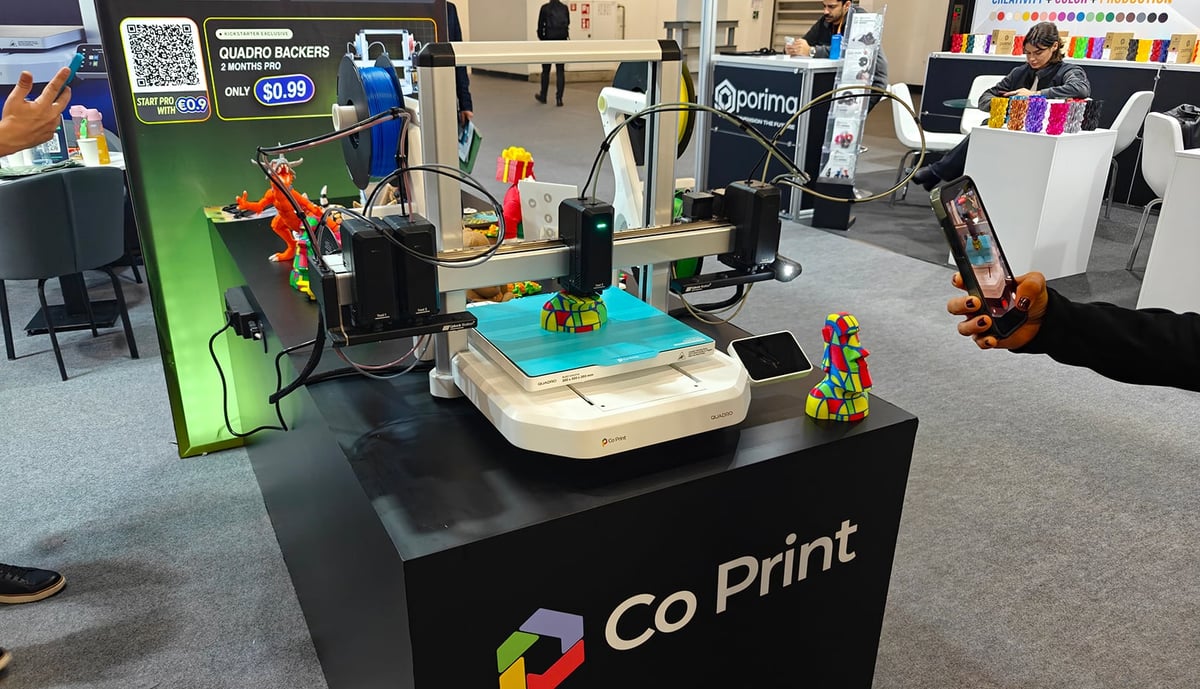
After years of helping other manufacturers’ printers go multicolor, Turkish company Co Print is getting into the printer business itself. Its first standalone machine, the Quadro (from $649 on Kickstarter), takes a different approach to multi-material printing with four independently driven printheads.
Rather than have a single carriage shuttle back and forth to collect tools, the Quadro can send one head back to its dock while the next moves into position. Co Print claims material changes can take as little as a second, without the obligatory pile of purged filament.
The machine sports a 300 × 300 × 300 mm build volume accessible to all four heads, 300°C hot ends, and open-source firmware and slicing software. First deliveries are expected in Q1 2027.
BigRep Makes Good on Its Pellet Printing Promise With the Pellex 750
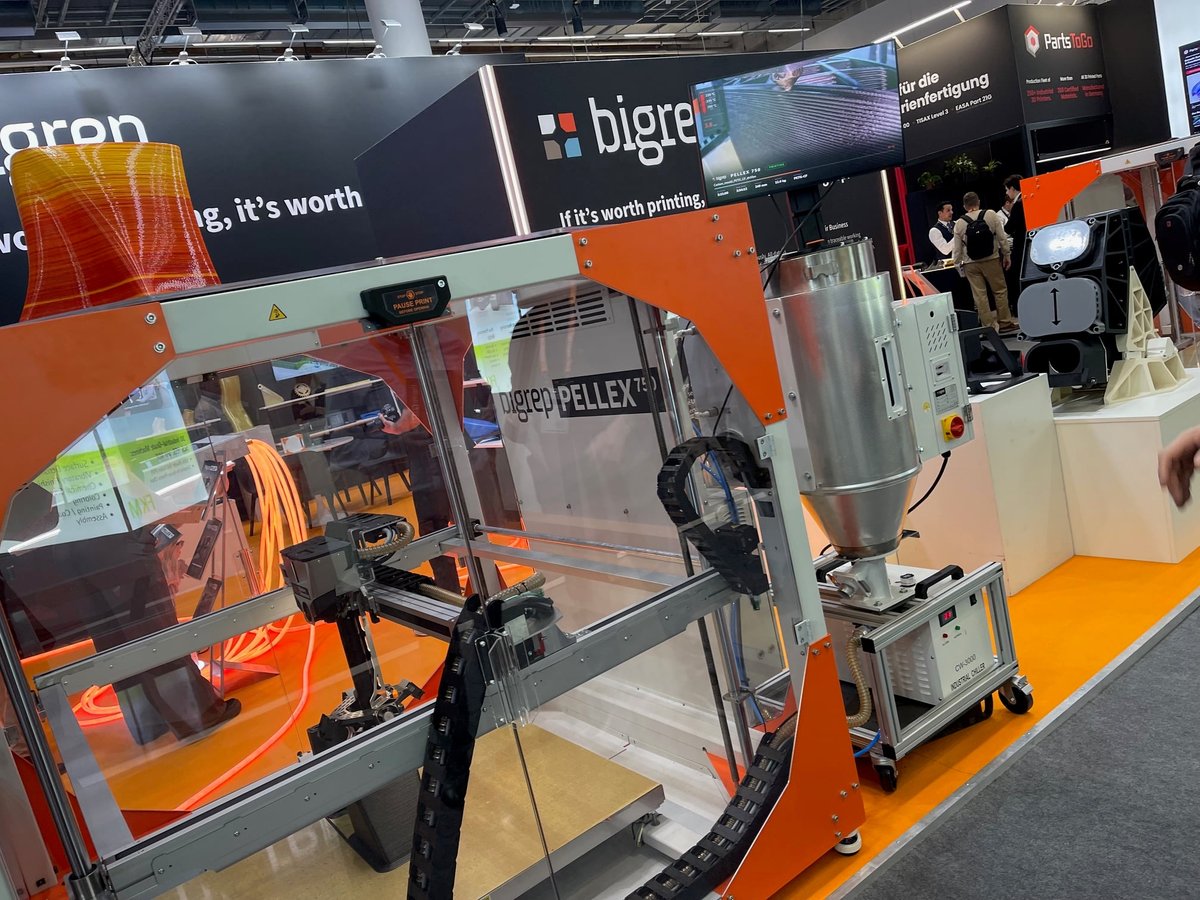
At last year’s Formnext, BigRep gave us a glimpse of its pellet extrusion ambitions. This year, the German large-format specialist has a dedicated machine to show for it.
Built on the familiar BigRep One platform, the Pellex 750 features a pellet extruder developed with US extrusion specialist Massive Dimension, capable of processing up to 4 kg of polymer per hour. That’s quite a leap from the 200 g/h filament throughput of BigRep’s One.5X.
With a 1,005 × 1,005 × 750 mm build volume, nozzle temperatures up to 350°C, and a choice of 2, 4, or 6 mm nozzle diameters, the Pellex is squarely aimed at applications where sheer material output and cost per kilo matter more than fine layer lines. Pricing has yet to be announced.
Elegoo Joins the Toolchanger Fray With the Centauri X Ultra
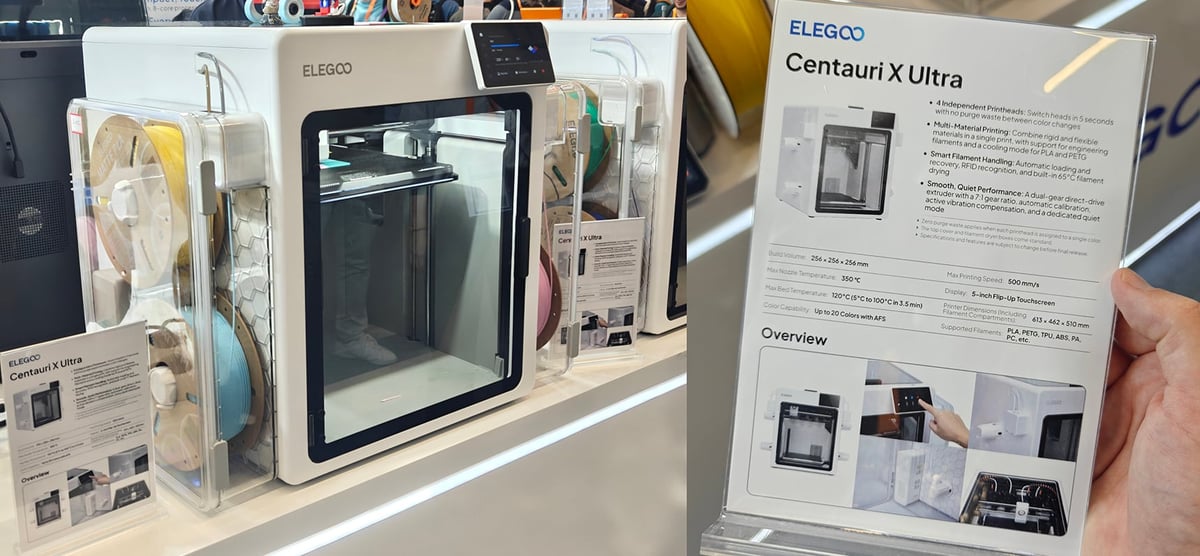
If there was any lingering doubt as to where the desktop multicolor printer market is heading, Elegoo’s surprise unveiling of the Centauri X Ultra should put it to rest. Just a year after introducing its Canvas filament feeder at Formnext, the company is showing off a machine with four independent printheads.
The fully enclosed Centauri X Ultra retains the familiar 256 × 256 × 256 mm build volume of the Centauri series but adds low-waste material switching, integrated filament drying, and hot ends reaching 350°C. The separate printheads also open the door to combining rigid and flexible filaments without wrestling them through a shared extrusion path.
Elegoo is targeting a Q1 2027 release at what we’re told should be a sub-$1,000 price point.
AIM3D Makes the Case for Printing Aerospace Parts With Pellets
High-performance polymers are expensive enough without paying the premium to have them turned into filament. German pellet printing specialist AIM3D is tackling that particular problem with its new aerospace-oriented ExAM A 510, developed and certified in collaboration with aviation consultancy AM-MRO for processing ULTEM 9085.
The engineering effort has gone into making the process repeatable, rather than simply getting the material hot enough to print. An actively heated chamber on all sides and tightly controlled pellet feeding help deliver consistent material properties regardless of where a part sits on the build plate.
For aerospace manufacturers, the appeal is not just cheaper raw material but a documented, standardized printing process that could make qualified, decentralized production of polymer components more economically viable.
New Metal 3D Printers (LPBF, DED)
If the metal 3D printer debuts at Formnext 2026 are any indication, the industry’s obsession with laser counts is giving way to a more nuanced discussion of productivity. Not that the laser arms race is over – Eplus3D is now squeezing 16 into a mid-sized machine – but what happens between builds is getting nearly as much engineering attention as what happens during them. Nikon SLM Solutions, Farsoon, and Eplus3D are all tackling the less glamorous aspects of metal additive manufacturing: machine utilization, powder logistics, and the elimination of manual intervention between print jobs.
Perhaps more interesting this year, though, are the departures from conventional machine design. Kurtz Ersa is rethinking how lasers reach the powder bed, JEOL is refining how electron beams melt it, and AltForm is challenging the notion that a machine’s capacity is fixed at the point of purchase. Meanwhile, at the opposite end of the industrial spectrum, newcomer SnowX is testing whether laser powder bed fusion can find a market among small workshops with its remarkably inexpensive benchtop metal 3D printer.
Nikon SLM MachX Series: 8 kW Power and 25-Minute Changeovers
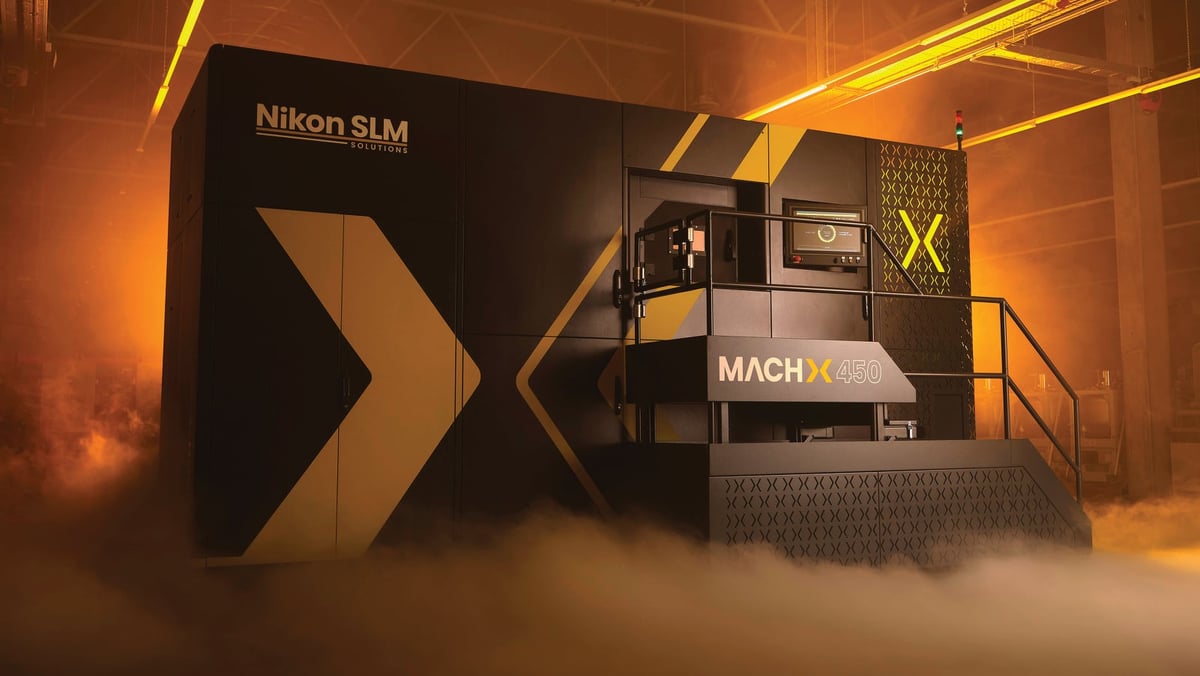
Nikon SLM Solutions tackled factory-floor utilization with its all-new MachX platform, pitching a metric it calls “throughput density”—maximizing production output relative to cleanroom footprint. The MachX scales across three configurations sharing identical process architecture and optics:
- MachX 450: 450 × 450 × 450 mm standard envelope.
- MachX 450C: 450 × 600 × 450 mm extended Y-axis for broad, flat components.
- MachX 450E: 450 × 450 × 1,000 mm tall envelope (approx. 200 liters in a 13 m² footprint) tailored for rocket thrust chambers and aerospace structures.
Optics configurations scale to four 1-kW, eight 1-kW, or four 2-kW lasers (up to 8 kW total) with Gaussian or top-hat beam profiles. To eliminate inter-build downtime, the system moves preheating and cooldown outside the primary build chamber, enabling build cylinder exchanges in as little as 25 minutes. The platform also debuts SLMX, an adaptive process monitoring and simulation intelligence suite, backed by a 230-liter Universal Powder Tank for continuous multi-machine cell connectivity.
SnowX SnowPod: Bringing Sub-$6,000 Metal Powder Bed Fusion to the Benchtop
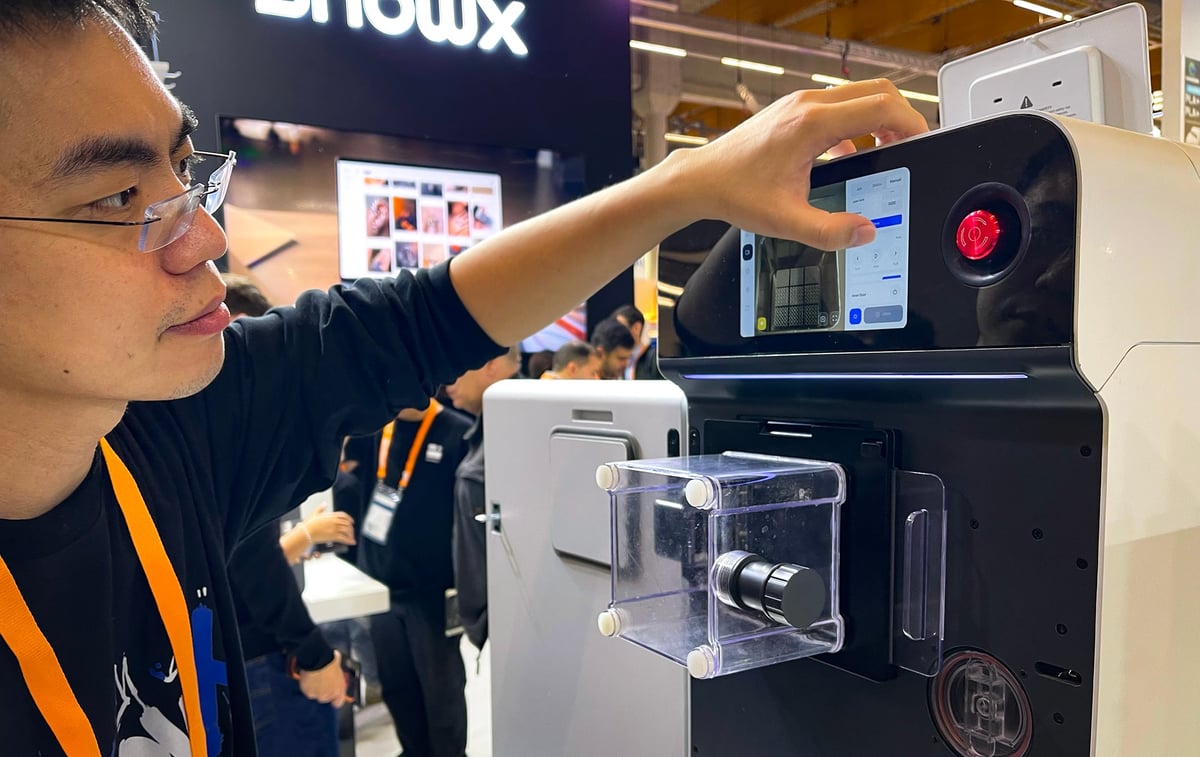
While multi-laser behemoths dominated the metal LPBF offerings, Chinese manufacturer SnowX drew substantial booth crowds by addressing the opposite end of the metal spectrum: radical affordability and compact accessibility. With the live debut of the SnowPod, SnowX introduced a desktop-class system featuring an aggressive promotional launch price of $5,299 ($9,299 standard MSRP) ahead of an upcoming Kickstarter rollout.
Designed for prototyping, mechanical components, jewelry, and small-batch metal manufacturing, the SnowPod packs a complete laser sintering architecture into a benchtop footprint. Inside, an 80 × 80 × 100 mm build envelope is powered by a 200 W fiber laser focused down to a fine ~40 μm spot size, supporting layer thicknesses adjustable from 30 to 60 μm.
We asked about the health, safety, and handling barriers that typically prevent small workshops from adopting metal powder, so company CEO Fangda Xu walked us through how the system works from enclosed cartridge-based powder delivery system or sealed material loading and active air filtration to an internal recovery mechanism reported to reclaim roughly 90% of unfused powder. There’s also a required nitrogen unit (if you shop doesn’t already have one) to keep the chamber atmosphere sealed. It’s a standalone NitroPod nitrogen generator for a promotional launch price of $5,299 (regularly $9,299).
Launch, with validated parameters for 316L and 17-4PH stainless steels, is expected for Q2 or Q3 2027.
Farsoon Unveils the FS722M: Eight 1-kW Lasers and Continuous Cartridge Production
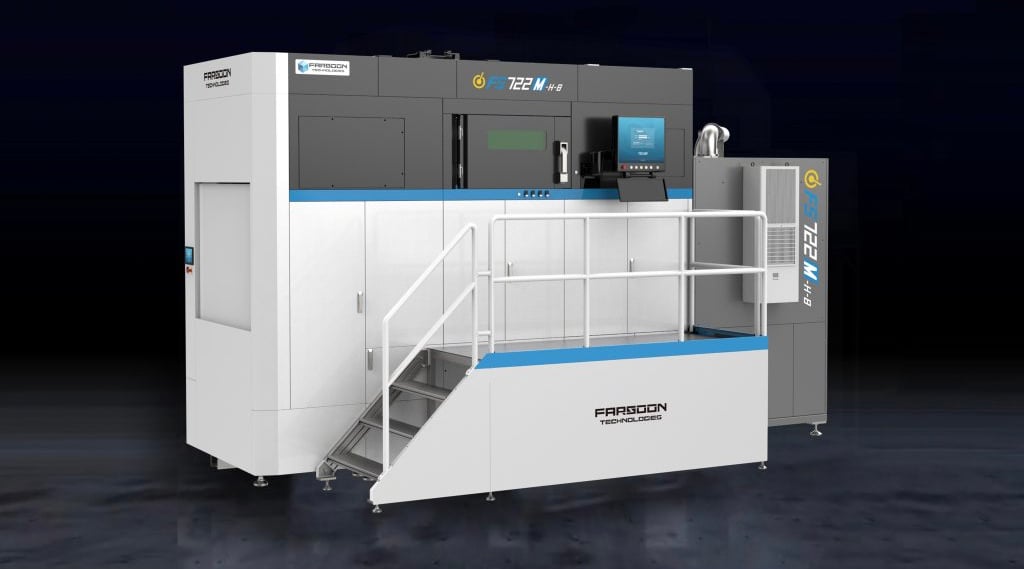
Farsoon Technologies used its spotlight at Formnext to unveil the FS722M, a next-generation large-format laser beam powder bed fusion system engineered around the uptime, repeatability, and the demands of serial-production customers, the company says. Evolving from the company’s FS721M and FS721M-H architectures, the FS722M targets heavy industrial sectors—including automotive components, large tooling inserts, and machinery parts—where high volumetric output must pair with automated powder logistics.
The core envelope measures 720 × 420 × 650 mm, retaining an elongated rectangular build plate ideal for broad or extended geometries while offering a 650 mm vertical height for tall structures or extensive vertical batch nesting. To melt powder fast, Farsoon equipped the build chamber with eight 1,000 W fiber lasers, achieving deposition rates of up to 1,000 cm³/h depending on chosen alloys and parameters. The optical train incorporates digital galvanometers, customizable scanning strategies, and an optional beam-shaping configuration to balance high-speed core infill with fine feature resolution.
The new machine incorporates an upgraded recoater blade, an enhanced multi-layer gas flow system across the wide bed, and a fully automated, closed-loop powder handling system that sieves, recycles, and stores material under continuous inert protection. Commercial delivery schedules and pricing to be announced.
Kurtz Ersa Takes a Different Angle on Metal LPBF
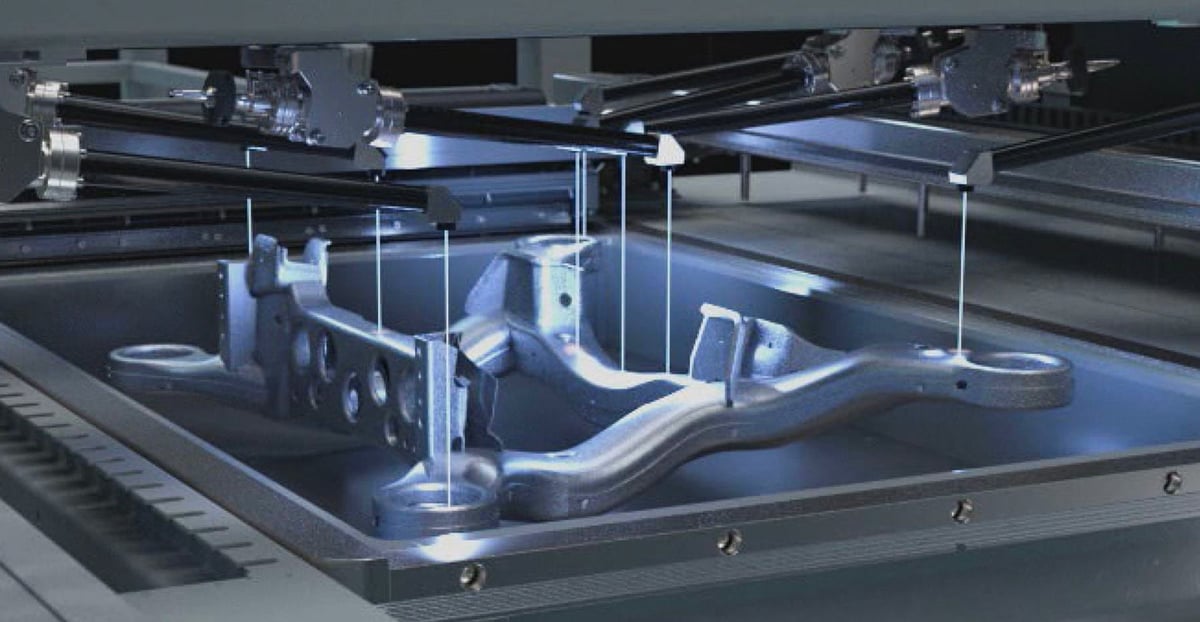
In a sea of metal 3D printers boasting ever more lasers, German machine builder Kurtz Ersa is doing something decidedly different with its new Flying Ray S, teased for quite some time and finally unveiled this year. Rather than directing the laser across the powder bed from a fixed overhead scanner, it moves the optics themselves on a motorized pivoting arm. Why bother? Conventional scanners deliver an increasingly elliptical laser spot toward the edges of the build plate. Kurtz Ersa’s approach keeps the angle of incidence consistent, promising more uniform part properties and less work qualifying parts for serial production.
The Flying Ray S sports a 250 × 250 × 350 mm build volume, one or two 400 W lasers, and initially supports 316L stainless steel. But the bigger ambition is a family of larger machines to which manufacturers can transfer their already-qualified print processes.
Eplus3D Doubles Down on Lasers With the EP-M550L
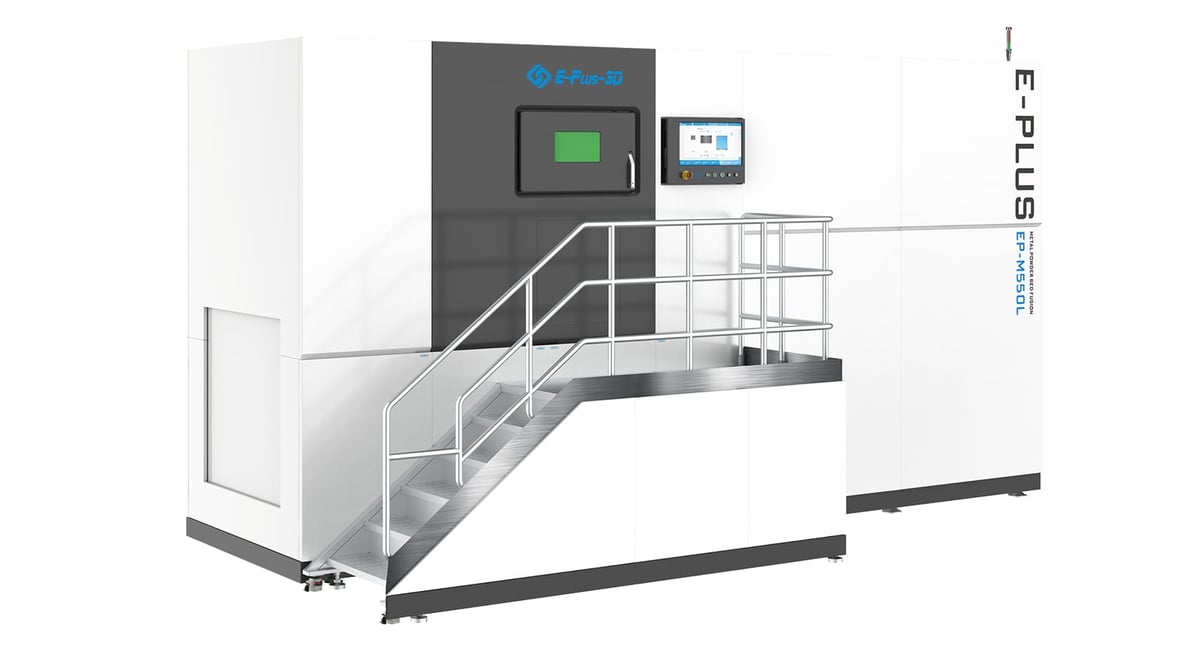
Last year at Formnext, Eplus3D debuted its eight-laser EP-M550. This year, the Chinese metal AM specialist has doubled the laser count without expanding the build area. The new EP-M550L packs up to 16 fiber lasers into a 550 × 550 × 600 mm build chamber, with 500 W, 700 W, and 1,000 W power options and a claimed theoretical build rate of up to 560 cm³/h.
But all that printing power is of little use if powder handling becomes the production bottleneck. Eplus3D tackles this with interchangeable build cylinders, separate powder recovery stations, and automated powder collection, sieving, and recycling.
The system can also integrate with automated guided vehicles, robotics, and manufacturing execution software, catering to manufacturers pursuing lights-out metal AM production.
AltForm’s Zenit Modular Is a Metal DED That Grows With You
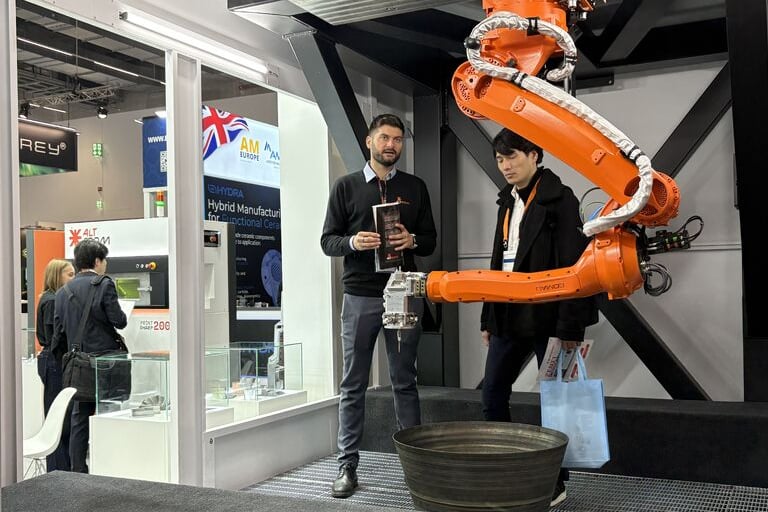
How big a metal 3D printer do you need? With AltForm’s new Zenit Modular series, you don’t necessarily have to decide upfront. The Italian machine maker’s robotic laser directed energy deposition (DED) platform can be expanded after installation as production demands grow.
The series starts with the single-robot Zenit L and its 2 × 2 m working area, scaling up to the dual-robot XL at 4 × 2 m and the four-robot XXL at 4 × 4 m.
Beyond the flexibility to add robots and build space without investing in an entirely new machine, the platform supports processing under an inert atmosphere, enabling large-format printing with reactive metals such as titanium.
JEOL’s JAM-5200EBMPlus Brings More Finesse to Electron Beam Melting
Japanese electron optics specialist JEOL launched its upgraded JAM-5200EBMPlus on the eve of Formnext. Rather than simply cranking up the beam power (which it also did), JEOL is getting more sophisticated about how it melts metal.
The standout feature is a new multi-dot scanning strategy that moves beyond conventional contour-and-hatch melting, giving users greater control over material microstructure and, according to JEOL, improving surface quality in notoriously tricky overhang regions.
The Plus also introduces dedicated build units optimized for individual metals, a longer-lasting cathode, and optional in-situ backscattered electron imaging. The latter draws on JEOL’s expertise in electron microscopy, enabling real-time process monitoring to streamline quality assurance and print parameter development.
New Polymer Powder Bed 3D Printers (SLS, SAF)
The competition in polymer powder bed fusion is increasingly being fought on cost per part rather than print speed alone. All three new systems launched at Formnext 2026 are geared toward serial production, but each approaches the economics somewhat differently. EOS is engineering its SLS process around a predictable 24-hour production cycle, Farsoon is looking to virtually eliminate downtime between builds, and Stratasys is making a more aggressive play for HP’s Multi Jet Fusion customers with greater production capacity per square meter of factory floor.
What’s particularly telling this year is how much engineering attention is going into getting parts out of these machines. From EOS’s deliberately less dense powder cake to automated unpacking and powder recycling systems, manufacturers are recognizing that the labor involved in freeing parts from powder can be just as consequential to the economics of serial production as the speed at which they’re printed.
EOS’s Helior Targets the 24-Hour Production Cycle
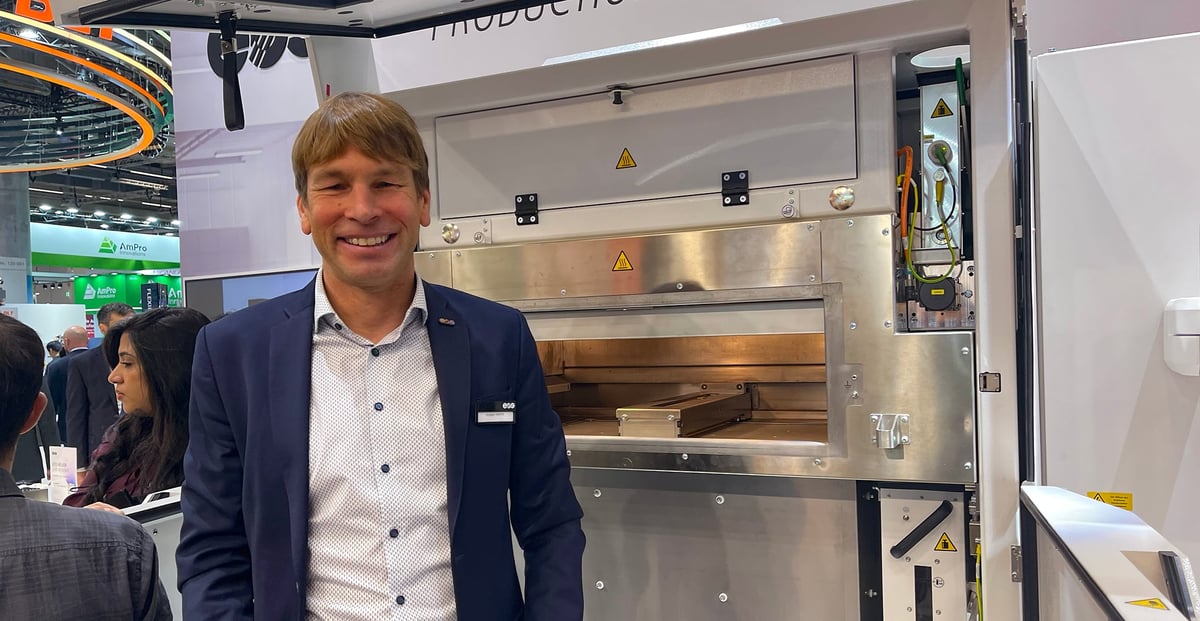
EOS is taking a fresh look at the economics of serial SLS production with its new Helior. Retaining the generous 154-liter build volume of the P 770 but adding a third 70 W laser, the machine promises up to 60% higher throughput than its predecessor and 80% more than the P 760. At a packing density of 10%, EOS says a full build can be completed in 24 hours, making production scheduling considerably more predictable.
Perhaps equally significant is what happens after printing. An independently adjustable roller recoater and geometry-specific laser exposure parameters produce a less dense powder cake, making it easier to excavate parts – one of the more labor-intensive aspects of SLS production.
The system integrates closed powder feeding and automated unpacking developed with AM Solutions. Commercial availability is slated for December 2026, initially with PA 2200 and PA 2220 HighReuse materials.
Stratasys’ H550 Takes Aim at HP Multi Jet Fusion
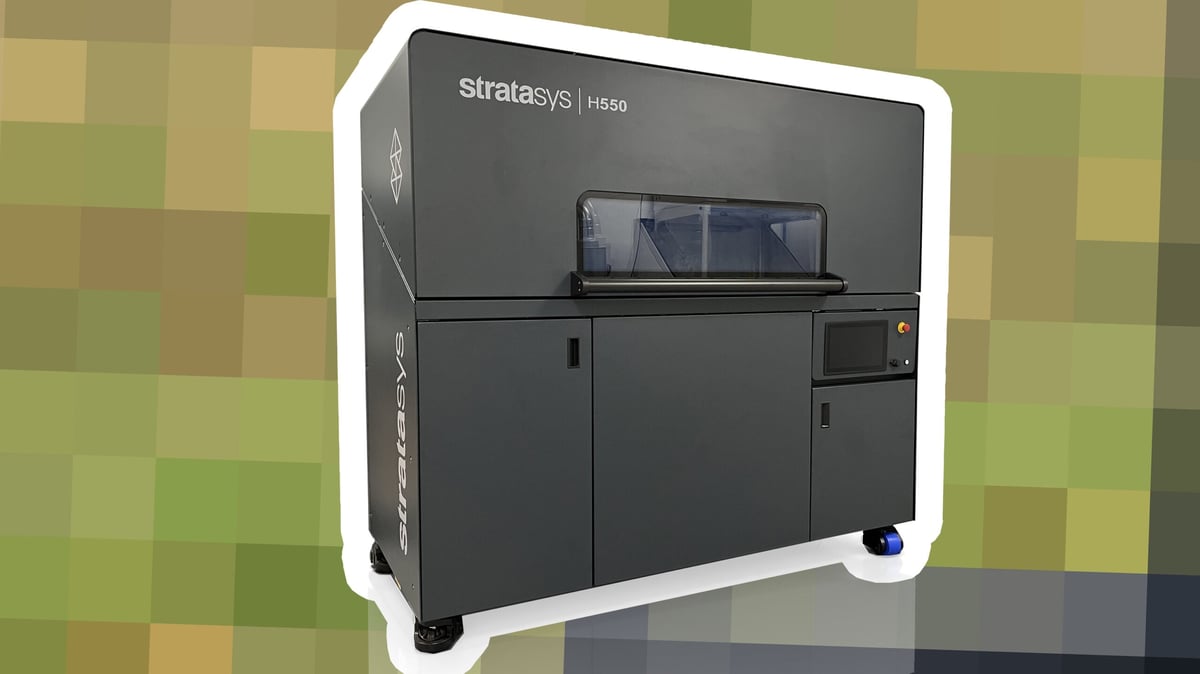
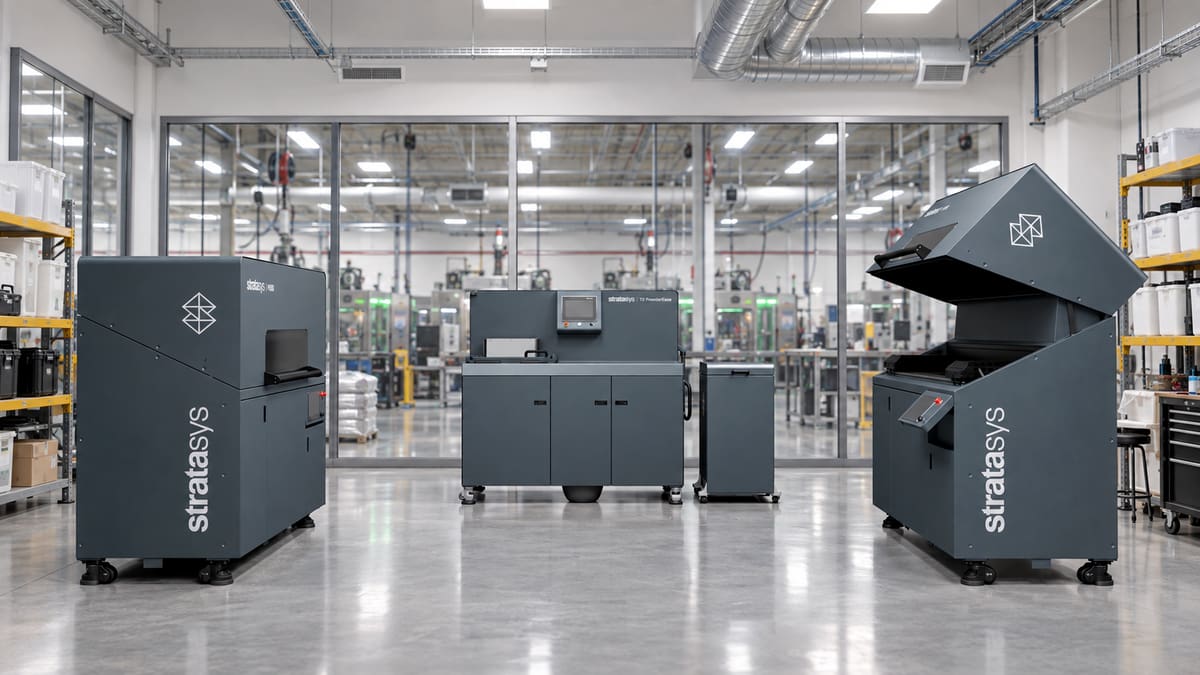
Stratasys is turning up the competitive heat in polymer powder bed fusion with its new H550. The latest addition to its Selective Absorption Fusion (SAF) portfolio squeezes an 80% larger build volume (34.2 liters with a 450 mm long axis) into the same machine footprint as its H350.
Speaking to All3DP at the show, SAF inventor Neil Hopkinson highlighted one of the technology’s attractions for serial production: a fixed 16-hour print cycle regardless of how densely you populate the build chamber. Stratasys claims up to 30% lower total cost of ownership compared with competing systems such as HP’s Jet Fusion 5200, owing in part to its single fusing fluid and a recommended powder reuse rate of 70%.
The H550 is complemented by the PowderEase T2 automated unpacking station, which can excavate a build in roughly 20 minutes. Stratasys is taking preorders now, with deliveries scheduled for Q2 2027 and PA12 nylon as the initial material offering.
Farsoon’s Flight HT1002P-CAMS Goes Big on Continuous SLS Production
While EOS is engineering its latest SLS machine around a 24-hour production cycle, Farsoon is pursuing continuous production with its new Flight HT1002P-CAMS. The machine boasts a cavernous 325-liter build volume (1,000 × 500 × 650 mm) and four 300 W fiber lasers with scanning speeds of up to 20 m/s.
But the real productivity gains may come from keeping those lasers busy. Farsoon’s modular continuous additive manufacturing system (CAMS) uses a bidirectional conveyor to shuttle interchangeable build cartridges between independently configured preheating, printing, cooling, and unpacking stations.
Manufacturers can tailor the system to their factory layout, incorporating robotic handling, automated guided vehicles, and closed-loop powder management as production demands dictate.
New Resin 3D Printers (SLA, LCD, Material Jetting)
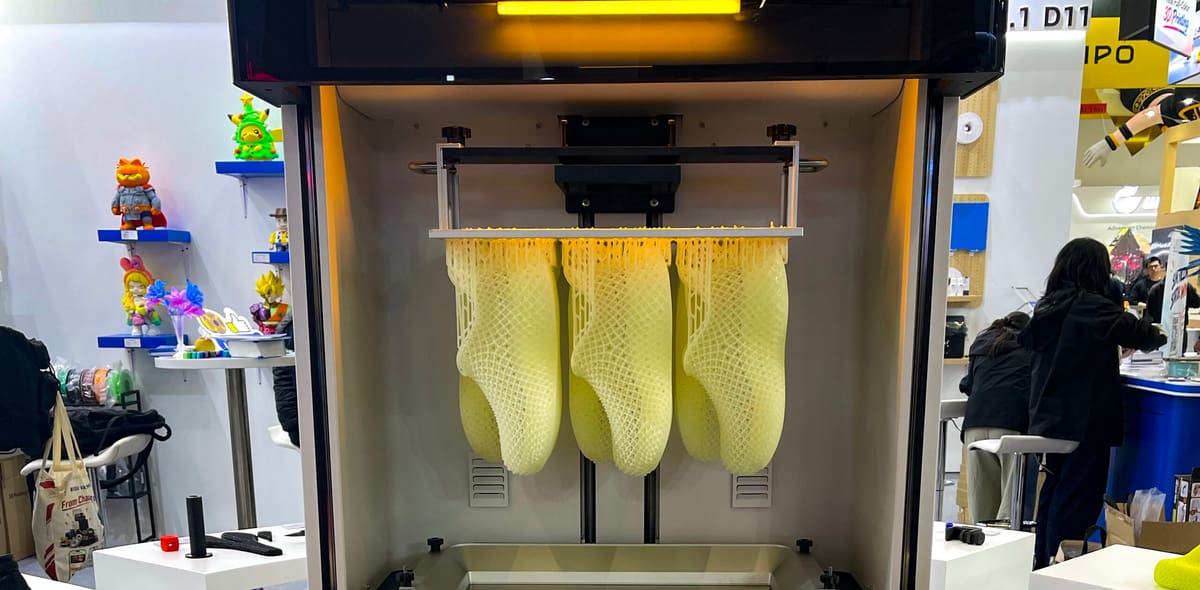
Multicolor and multimaterial printing may have dominated the conversation around FDM at Formnext 2026, but some of the more interesting developments in this area came from resin and material jetting specialists. DWS is bringing multimaterial capabilities to the traditionally single-material world of stereolithography, while Added is challenging the closed material ecosystems typical of industrial inkjet 3D printing, opening up applications well beyond conventional photopolymers.
Full-color 3D printing, meanwhile, is shaping up to be an increasingly competitive market. With newcomers like Inkera bringing photorealistic printing to the desktop and established players like Mimaki addressing material costs, a technology long associated with expensive industrial equipment could find a considerably wider audience. Elsewhere, Elegoo and 3D Systems are focusing on the less glamorous but commercially important aspects of resin printing: easier material handling, reduced consumable costs, and less laborious post-processing.
DWS Brings Multimaterial Printing to Stereolithography
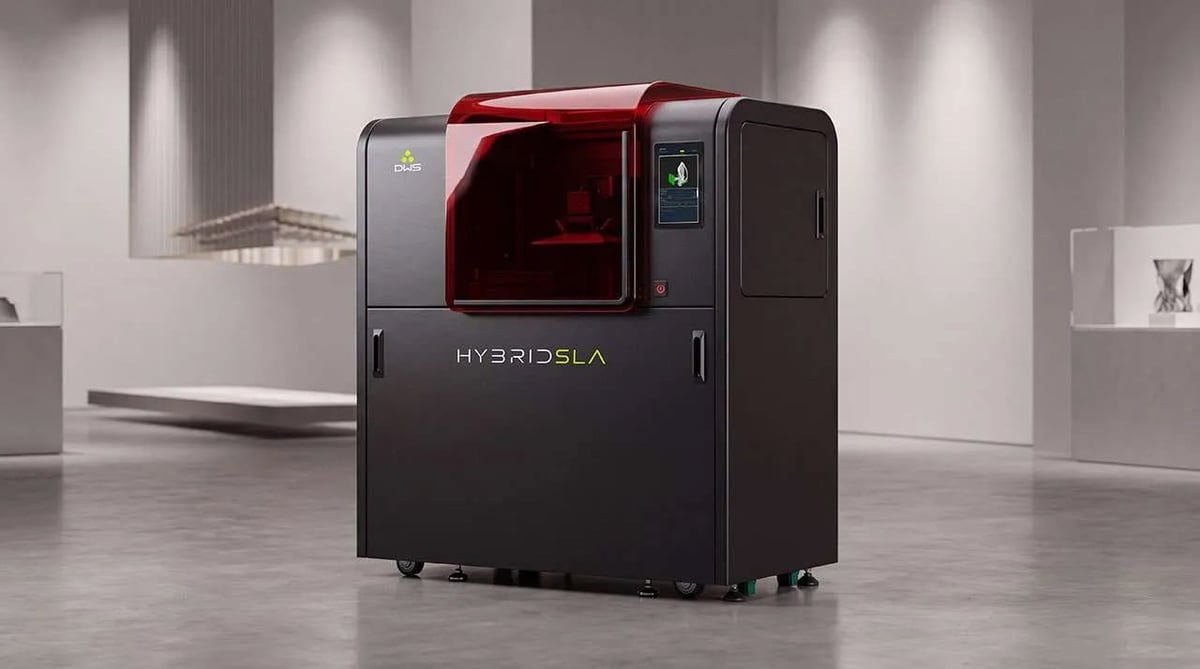
Multimaterial printing has been getting plenty of attention in FDM, but Italian SLA specialist DWS is taking the concept into vat photopolymerization with its new Hybrid SLA technology.
The idea is to retain the fine detail, dimensional accuracy, and smooth surfaces associated with stereolithography while incorporating materials with different physical properties into a single part. Particularly interesting is the ability to process materials across a wide range of viscosities, including highly viscous formulations.
DWS sees the technology as a means of realizing increasingly sophisticated generative designs in which material properties are as much a design variable as geometry itself. Details of the hardware, material combinations, and commercial availability have yet to be disclosed.
Elegoo’s Saturn 5 Ultra Takes Some of the Chore Out of Resin Printing
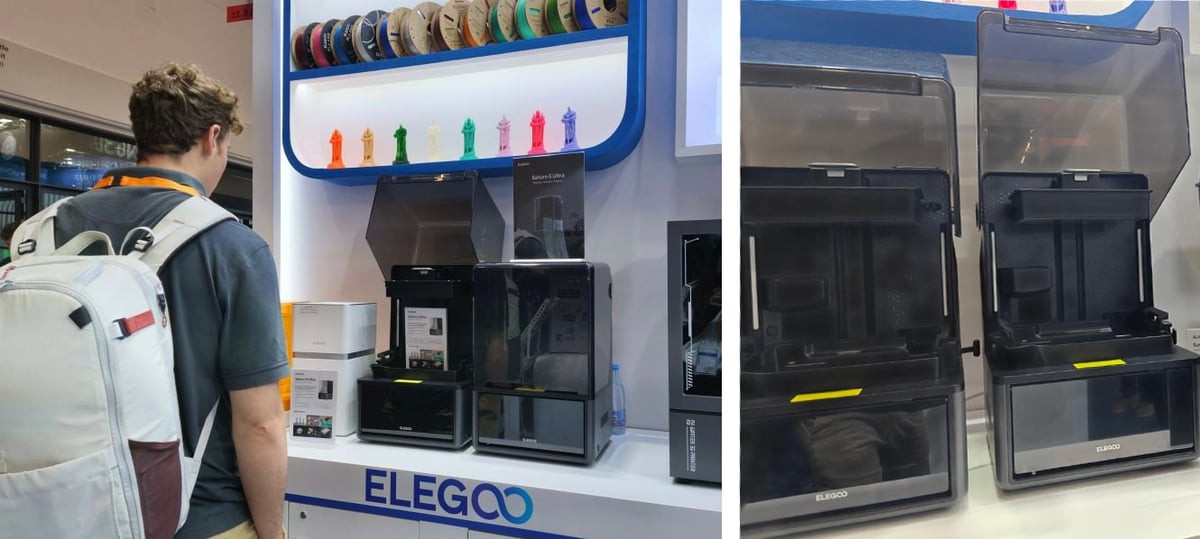
While much of the attention at Elegoo’s booth centered on its new FDM multi-printhead machine, the company also gave us a first look at the next generation of its popular Saturn resin printer series.
Rather than make ever-higher screen resolution the headline feature, Elegoo is putting more emphasis on the practicalities of resin printing. The Saturn 5 Ultra incorporates automatic resin monitoring and replenishment, along with design changes intended to simplify maintenance and day-to-day operation.
Elegoo is targeting an early Q1 2027 release, with pricing, LCD resolution, and build volume specifications still to come.
Inkera’s C1 Brings Millions of Colors to the Desktop
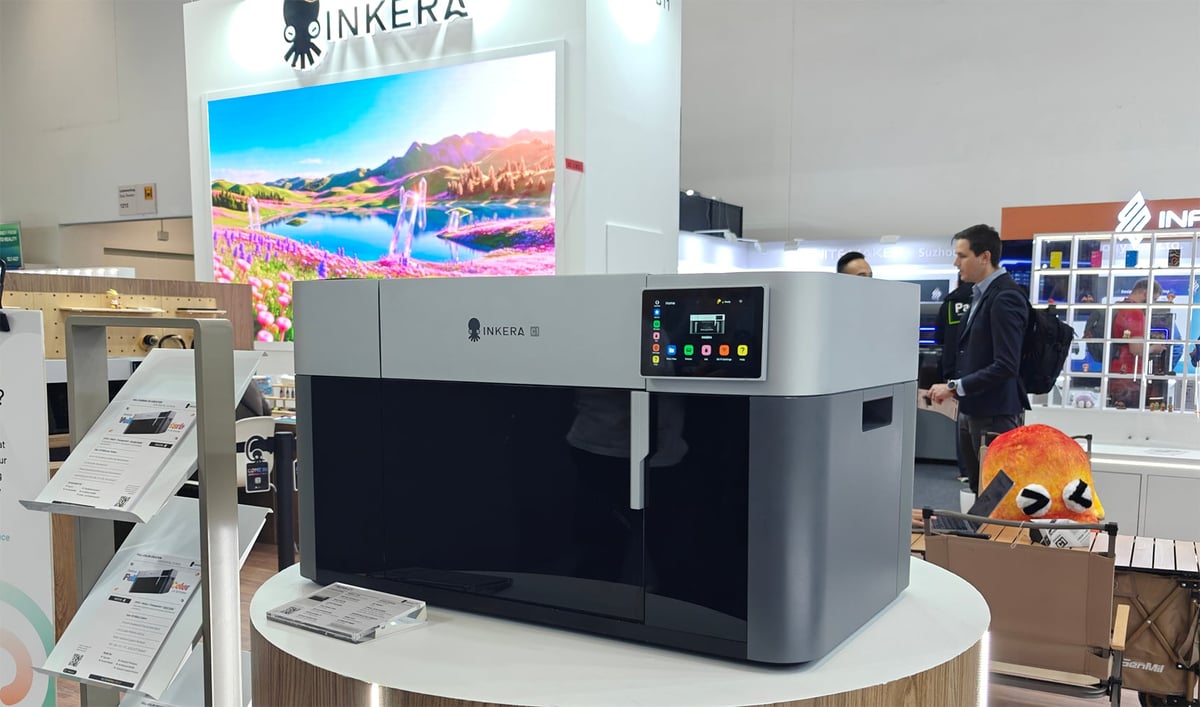
Desktop full-color material jetting is shaping up to be an interesting new battleground. Following Flashforge’s entry into the market, newcomer Inkera debuted its first 3D printer, the C1, at Formnext.
The machine sports a 200 × 150 × 120 mm build volume and eight material channels: CMYK, white, transparent, support, and, most interestingly, a dedicated spot-color channel for reproducing shades that are difficult to achieve through conventional color mixing.
Inkera claims a palette of more than 10 million colors, along with the ability to incorporate transparent and glossy effects directly into printed objects. Water-soluble supports should make post-processing intricate figurines and delicate prototypes considerably easier.
Commercial availability is slated for Q1 2027, although the all-important price has yet to be announced.
3D Systems Gives Its MultiJet Technology a Productivity Makeover
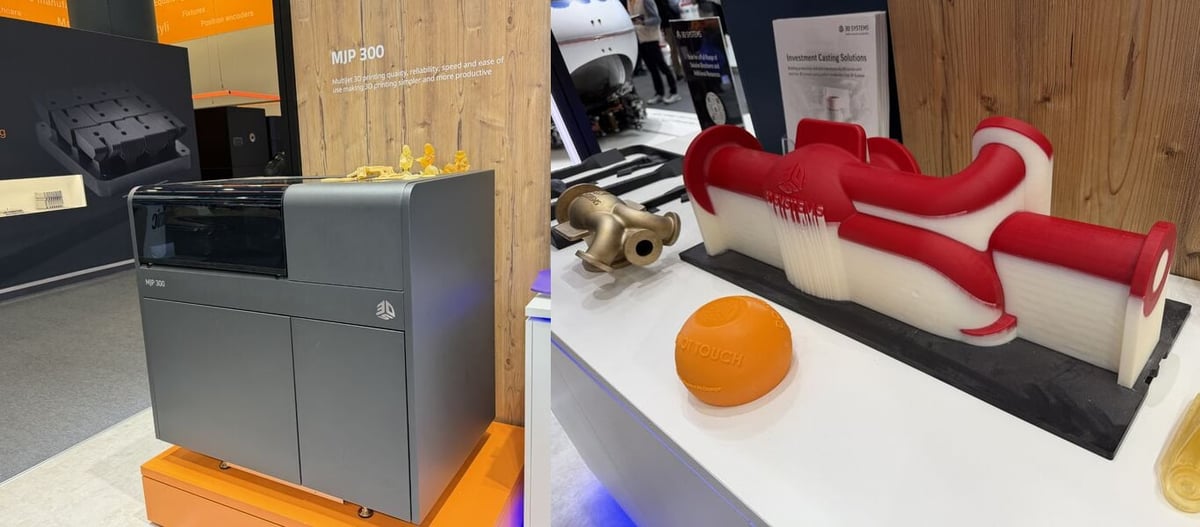
Three decades after introducing its MultiJet printing technology, 3D Systems is giving the platform a refresh with the MJP 300, this time with an emphasis on production flexibility and lower consumable costs.
The machine sports a 294 × 211 × 144 mm build volume that can be divided into three printing lanes, enabling users to group parts by height to optimize production times. New print modes offer a choice between faster output and finer detail, with layer thicknesses down to 16 microns.
The MJP 300 also introduces more economical support structures, automatic switching between material cartridges during long builds, and enhanced cybersecurity and fleet management features. Complementing the printer is 3D Systems’ EasyClean station for removing wax supports without manual scrubbing or waterjetting.
Commercial availability is scheduled for Q1 2027.
Added’s JetForge Opens Up Material Jetting to Experimentation
If you’ve ever wanted to experiment with inkjet 3D printing without being tied to a printer manufacturer’s proprietary materials, British specialist Added has an interesting proposition in its new JetForge platform.
The system is built around interchangeable modules, dubbed Blades, that can accommodate different inkjet printheads, dispensing valves, paste extruders, and curing or layer-leveling equipment. The flagship JetForge Core accommodates six modules, enabling researchers to combine up to six materials in a single build or configure four printheads alongside curing and leveling modules.
The potential material palette extends well beyond conventional photopolymers to conductive, dielectric, magnetic, and biological materials. A smaller, two-module JetForge Go caters to researchers developing new material formulations and evaluating printheads before scaling up to more complex applications.
Mimaki Makes Full-Color 3D Printing More Colorful and Textural
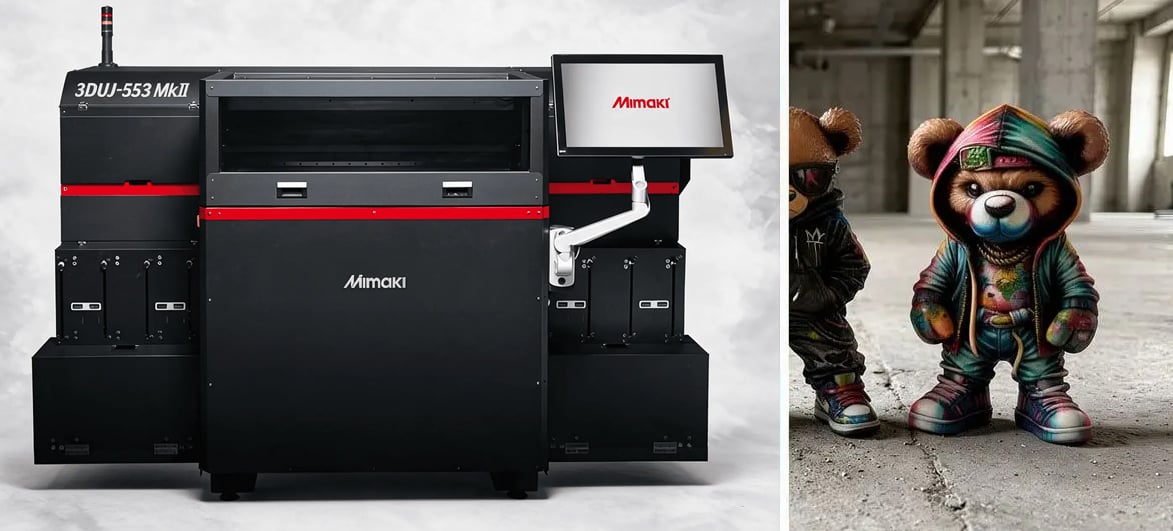
As desktop newcomers attempt to democratize full-color material jetting, established industrial player Mimaki is tackling the economics of producing larger photorealistic models with its new 3DUJ-553MkII.
The machine boasts a color gamut roughly 40% larger than its predecessor’s, improving the reproduction of subtle shades and complex visual textures such as wood grain, leather, and carbon fiber.
Perhaps the more commercially significant development is a dedicated, less expensive infill material. After all, there’s little point in paying for premium material on the inside of a full-color figurine or architectural model.
Mimaki has also introduced its Smart Relay feature, which allows subsequent print jobs to start automatically using the remaining space on the build platform, enabling unattended production outside normal working hours. Commercial availability is scheduled for spring 2027.
Lynxel Rethinks the Resin Vat and Adds Full Color
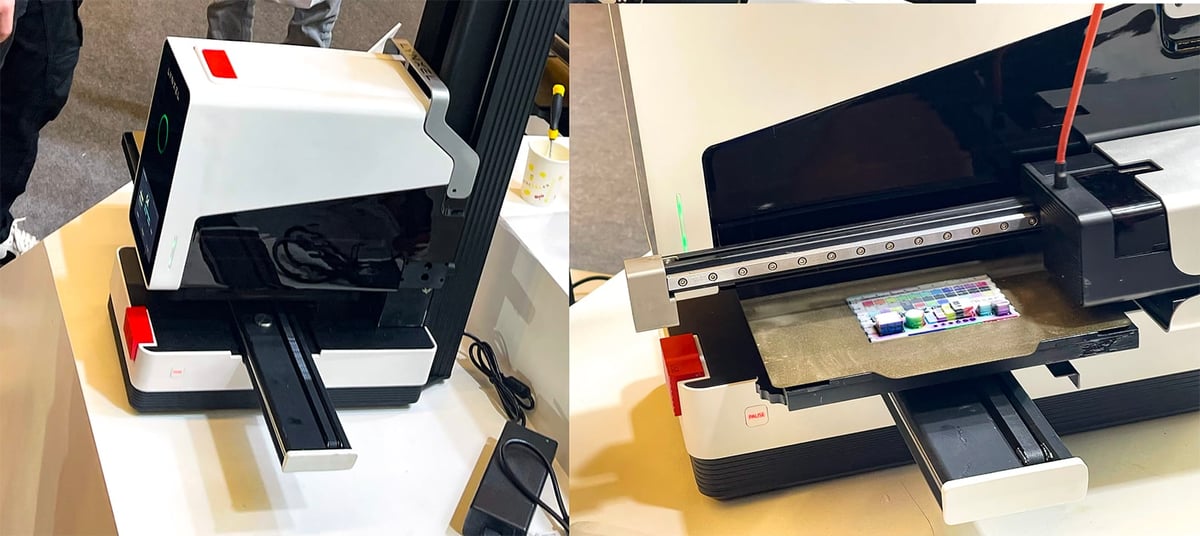
Judging by the crowds gathered around newcomer Lynxel’s booth at Formnext, there’s considerable curiosity about an alternative to conventional vat photopolymerization. We saw the company’s technology in action on the show floor, where it demonstrated a rather different approach to resin delivery.
Dubbed Layered Membrane Stereolithography (LMS), Lynxel’s technology uses a moving membrane to deliver resin to the printing area. The approach reportedly enables the processing of exceptionally viscous materials – up to 300,000 cP, according to the company – potentially broadening the range of printable resin formulations considerably.
Lynxel is debuting two machines: the LynBeam LB1 and the altogether more intriguing LynChrom LC1, which incorporates an inkjet module to apply full color to the surface of parts as they’re being printed. Both machines are slated for a Kickstarter launch in December 2026, with commercial pricing yet to be announced.
New Ceramic 3D Printers (DLP)
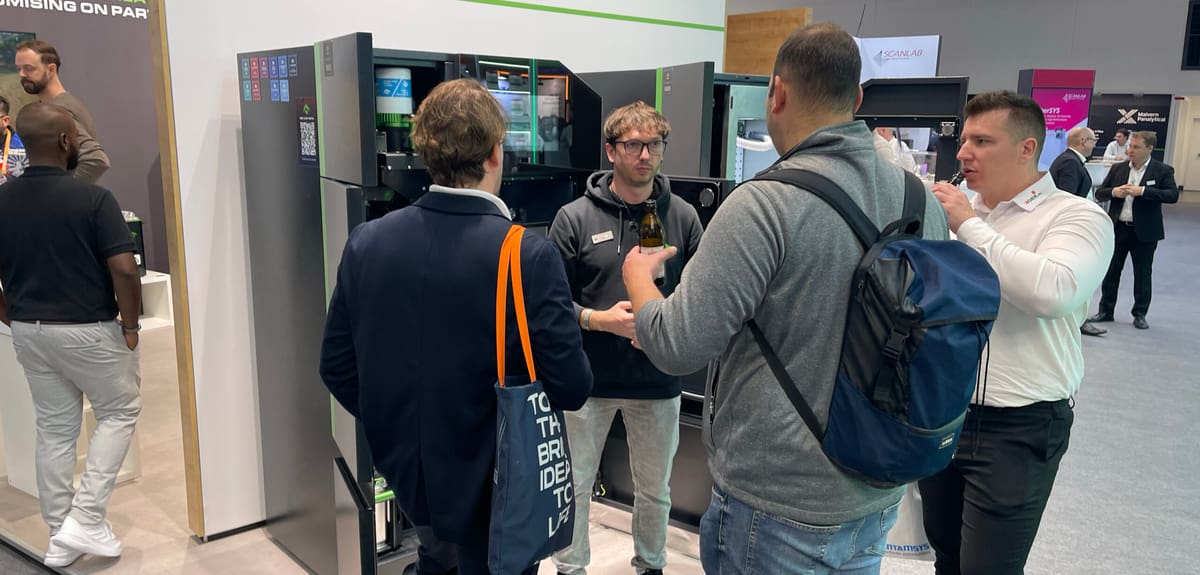
While much of the industrial 3D printing hardware at Formnext 2026 is geared toward scaling production, ceramic 3D printer manufacturers are putting considerable effort into making it easier to get started. Two established players, Admatec and 3DCeram, are introducing compact DLP systems priced below €100,000, with different approaches to helping customers progress from laboratory experiments to industrial production.
Perhaps equally important to the growth of technical ceramic additive manufacturing is the freedom to experiment with new material formulations. Open material platforms, smaller slurry requirements, and, in Prodways’ case, considerably more powerful optics are giving researchers greater latitude to explore ceramics that have traditionally been difficult to 3D print.
Admatec’s Admaflex Discovery Lets Ceramic 3D Printing Start Small
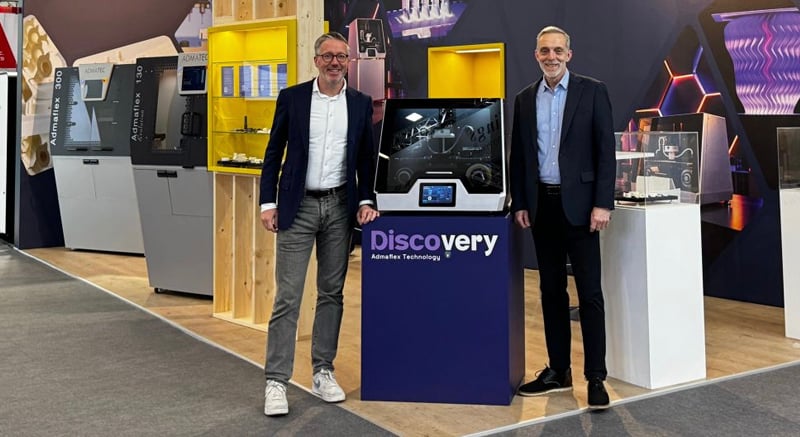
At €75,000, Dutch ceramic AM specialist Admatec’s first desktop 3D printer is a relatively inexpensive proposition in the world of technical ceramics. But perhaps more appealing to industrial R&D departments is that investing in the Admaflex Discovery doesn’t necessarily mean investing in another machine when applications mature beyond the laboratory.
The DLP printer sports a 96 × 54 × 110 mm build volume, a 50 µm resolution, and print speeds of up to 150 layers per hour. Despite its benchtop form factor, it incorporates the material recirculation and foil-based printing technology of Admatec’s larger industrial machines.
The Discovery can subsequently be converted into a larger, freestanding machine with more powerful optics, increased resolution, and a choice of two resolution settings. First deliveries are expected in spring 2027.
3DCeram Makes Its First Foray Into DLP With the CLP50
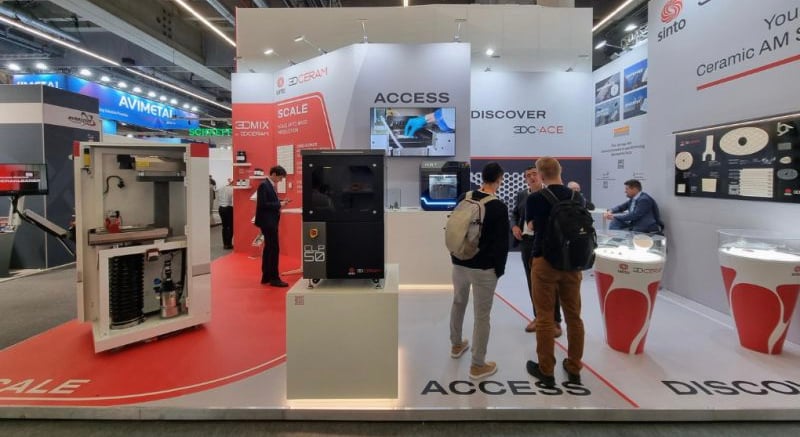
French ceramic stereolithography specialist 3DCeram is branching out into DLP with its new CLP50, priced from €80,000. The compact machine retains the top-down printing architecture of the company’s industrial SLA systems but brings ceramic 3D printing to a more accessible price point.
With a 96 × 54 × 100 mm build volume, 50 µm lateral resolution, and material-dependent print speeds of up to 400 layers per hour, the CLP50 is geared toward application development and small-batch manufacturing. Researchers can get started with as little as 100 mL of ceramic slurry and experiment with their own material formulations.
For manufacturers with an eye on eventual serial production, the appeal is compatibility with 3DCeram’s existing ceramic slurries, providing a route to scaling up on its larger industrial SLA machines.
Prodways Cranks Up the UV Power to Print More Challenging Ceramics
Not all ceramic slurries lend themselves readily to photopolymerization, particularly darker formulations that absorb considerable amounts of light. French machine maker Prodways is tackling this limitation with its new Ceram Pro 365 Max, a higher-powered iteration of its industrial ceramic DLP platform.
The machine’s MovingLight projection system delivers UV light intensity of up to 200 mW/cm² at a wavelength of 365 nm, expanding the range of highly absorbing and viscous ceramic formulations that researchers can explore.
With a maximum build volume of 264 × 328 × 350 mm and a native pixel resolution of 31 µm, the machine caters to both material development and industrial production. Interchangeable build platforms and dedicated R&D kits requiring less than a liter of material make it possible to experiment with new formulations without filling the machine’s entire vat.
Look for more new printer details here on All3DP as they become commercially available.
You Might Also Like:

License: The text of "The Best New Desktop & Industrial 3D Printers from Formnext 2026: Toolchangers, Throughput & Technical Firsts" by All3DP Pro is licensed under a Creative Commons Attribution 4.0 International License.