Five Technologies to 3D Print the Same Part: Which is Best When Ordering Online?

From $25 plastic to $380 metal, we look at five 3D printing technologies (FDM, SLS, MJF, SLA, LPBF) to explore price, strength, and real-world value.
Ordering a 3D printed part online has become as simple as uploading a file, selecting a material, and clicking “buy.” But behind that simplicity lies a crucial choice: which 3D printing process should you use? The decision can dramatically affect cost, strength, surface finish, and suitability for real-world use.
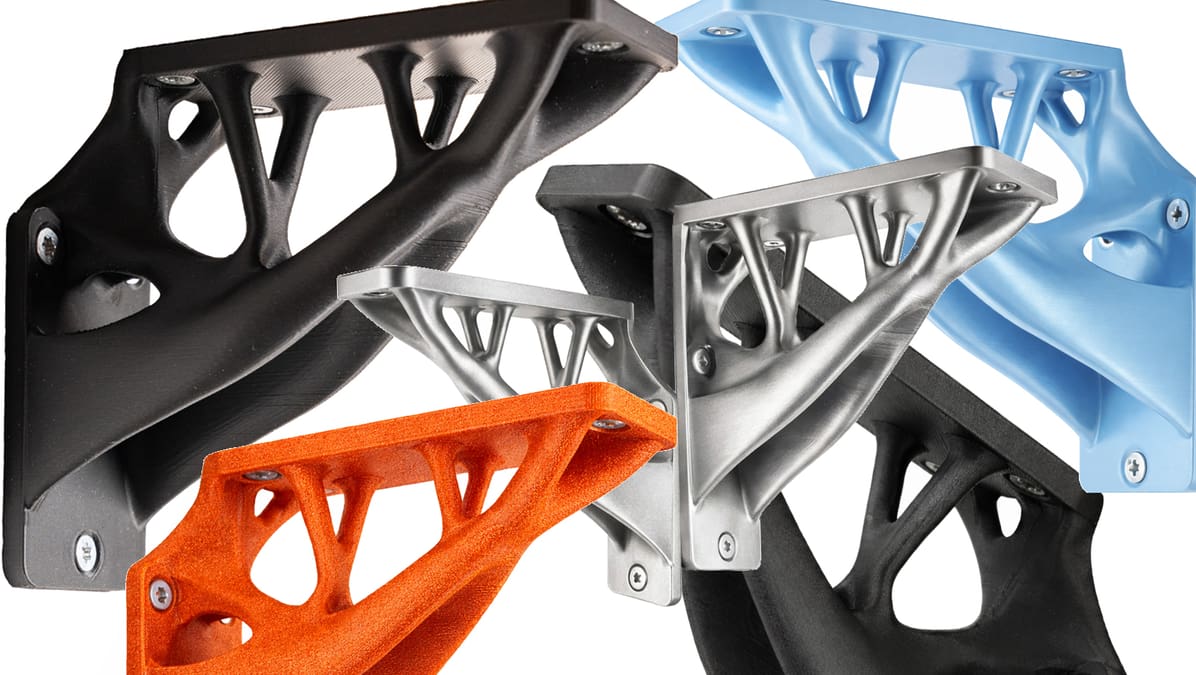
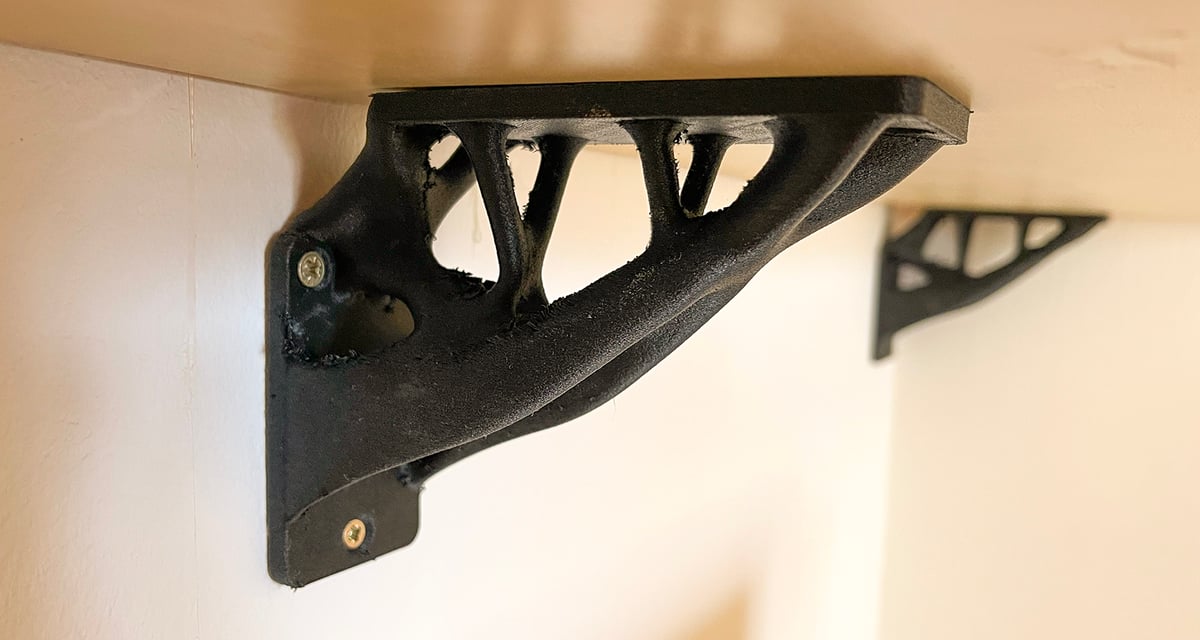
To explore this, we ordered the same component — a set of four shelf brackets — from online 3D printing service Craftcloud using five different manufacturing methods. The results reveal how technology shapes both price and performance.
Yes, Craftcloud is a part of All3PD. Still, for our analysis here, it was actually very useful because it’s a 3D printing marketplace that comprehensively shows all the technology and material options out there.
Below, we compare the options, what you get for your money, and when each method makes sense. Of course, the “right” method depends entirely on which factor matters most to you: cost, strength, appearance, and durability.
The best all-around value for our shelf brackets was using the 3D printing technology selective laser sintering (SLS), and the materials Nylon PA12.
But if budget matters most, FDM with PLA wins. If strength is king, metal printing takes the crown. The critical information to have when ordering a part is how much strength does my part need and how do I know how strong a part made with a particular material or a particular technology will be? The truth is that it’s very hard to determine exactly, outside of using load-bearing simulation software on the digital file of your part.
That’s why, for this example, we chose shelf brackets as a general guideline, assuming two brackets would hold up a 1-meter-long shelf of about 10 kg (20 lbs) of books and objects.

Craftcloud by All3DP Get quality parts 3D printed at the most competitive price!
Which Method Should You Choose?
Model Source: Our test model is the “Medium Topology Optimized Shelf Bracket” designed by Basement Factory and available at MakerWorld.
FDM with PLA — The Budget-Friendly Workhorse
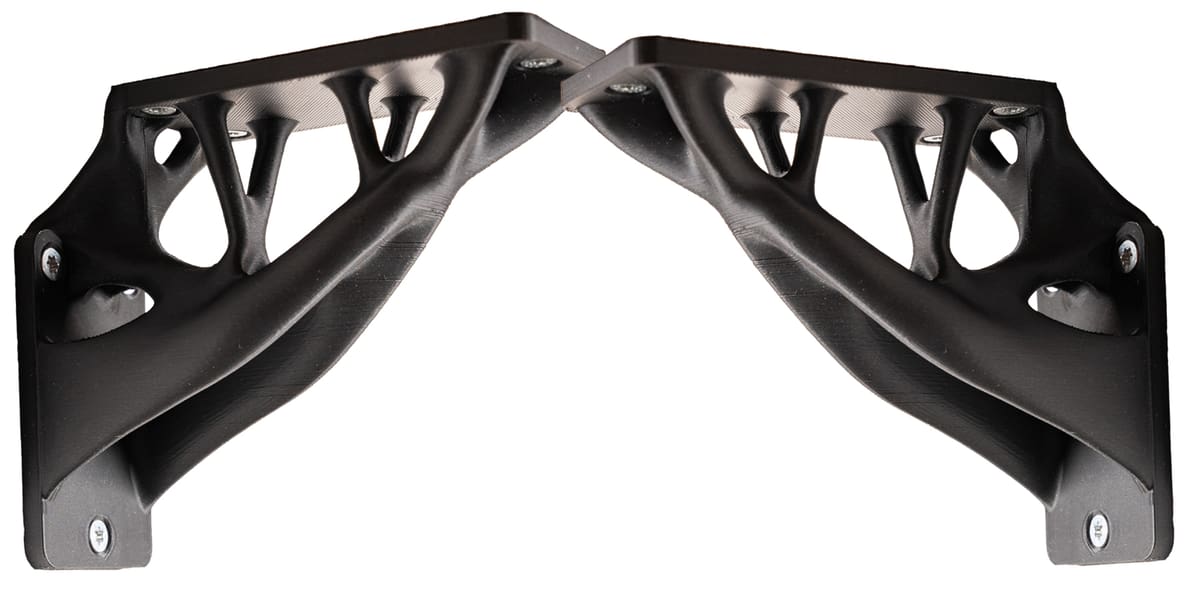
Total for four brackets: $24.85 + $13.03 shipping
Fused Deposition Modeling (FDM) is the most common desktop 3D printing method. The printer melts plastic filament and deposits it layer by layer. For this order, we chose PLA, a plastic derived from natural sources, like corn starch.
Typical uses: hobby parts, classroom projects, prototypes
Why choose it?
- Cheapest option by far
- Fast turnaround
- Good for prototypes, testing fit, or light-duty use
- Great for hobbyists, makers, and budget-conscious projects
Trade-offs:
PLA isn’t heat-resistant or strong and can deform under heavy load or in warm environments. For decorative shelves, prototypes, or temporary installations, it works fine — but it’s not practical for heavy-duty brackets. It would be a great option if you wanted a prototype of their bracket to test fit and placement before you went ahead and spent hundreds of dollars on the aluminum version.
FDM as a technology would likely work if you bumped up the strength of the material from PLA to carbon-fiber-filled nylon. This price at Craftcloud would then be $59.87 for four brackets.
SLS with Nylon PA12 — Strong, Functional, Reliable
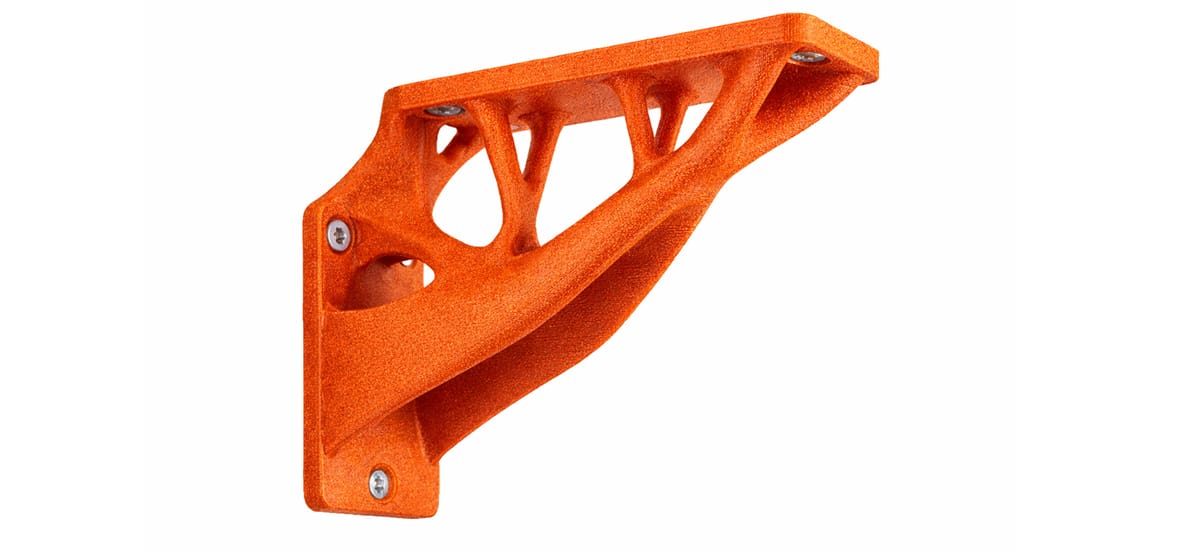
Total for four brackets: Craftcloud $155.99
Selective Laser Sintering (SLS) uses a laser to fuse powdered nylon into solid parts layer by layer. The result is durable, lightweight, and heat-resistant components with consistent mechanical properties. SLS takes to color dying well.
Typical uses: enclosures, snap-fit parts, automotive clips, and tooling
Why choose it?
- Excellent strength-to-weight ratio
- No need for support structures
- Good surface finish for functional parts
- Ideal for real-world applications like brackets, clips, and enclosures
For our shelf brackets, SLS Nylon PA12 strikes a great balance between cost and performance, making it a top choice for practical home or workshop use. It’s really a toss-up between SLS and MJF, depending on the online service you select, because some may offer MJF at a lower cost than SLS.
MJF with Nylon PA12 — Industrial Quality, Premium Price
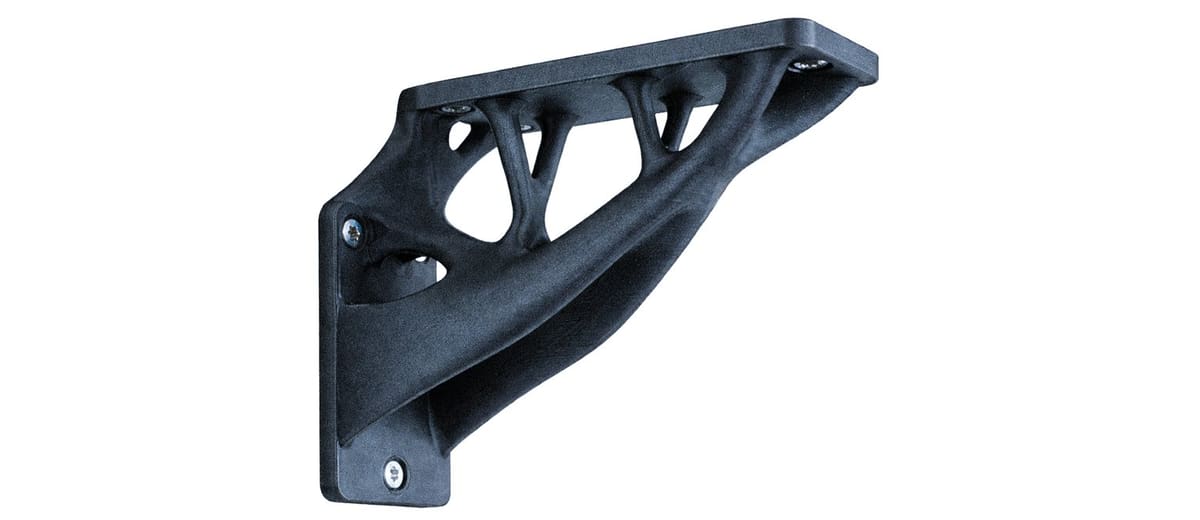
Total for four brackets: $207.75
Multi Jet Fusion (MJF), developed by HP, is another powder-based nylon process, but with better surface quality than traditional SLS and higher mechanical strength overall. It can also be dyed (like SLS) in a variety of colors. One of the advantages of ordering parts in MJF is that, since it is a proprietary technology, you are more likely to get consistent quality wherever you order your MJF parts.
Typical uses: end-use components, industrial housings, and production parts.
Why choose it?
- Very consistent mechanical properties
- Smoother surface than SLS
- Excellent detail and accuracy
- Great for end-use parts in engineering and product design
Compared to SLS, MJF can be pricier, but if your brackets need to look as good as they function, MJF is worth considering.
SLA with Tough Resin — High Detail, High Performance
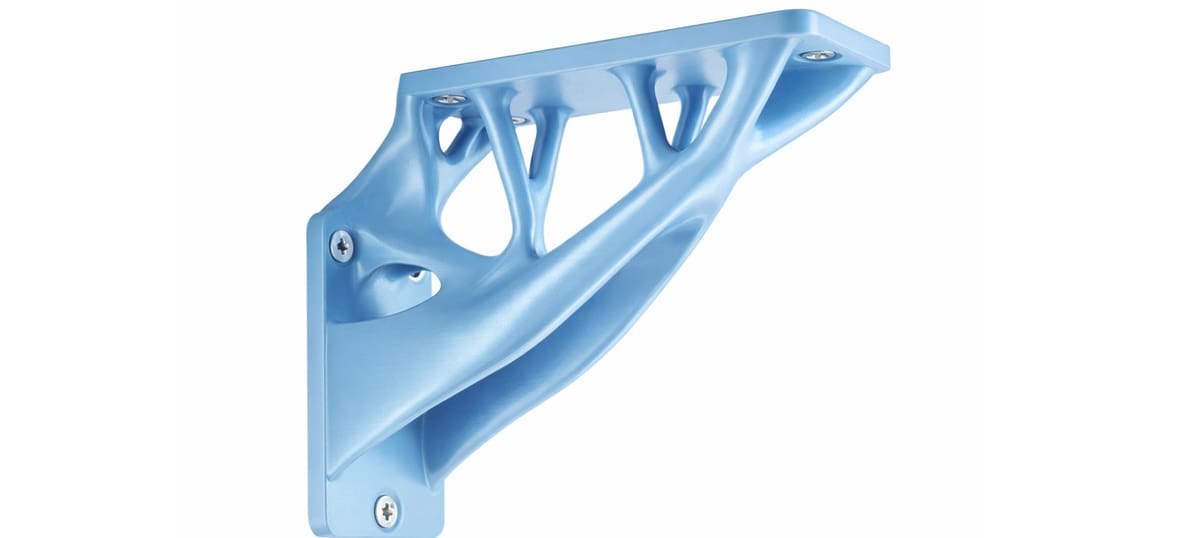
Total for four brackets: $276.51
Stereolithography (SLA) is a type of resin 3D printing that uses a laser to cure liquid resin into solid plastic. The Tough Resin material option is designed for functional parts that must handle stress and strain. Here, it’s important to select a “tough” or “engineering grade” resin since “standard” resin is likely to be too brittle to hold up as a shelf bracket, but would work as a non-load-bearing prototype.
Typical uses: high-volume consumer products, medical models, and visual prototypes.
Why choose it?
- Extremely smooth surface finish
- High level of detail
- Good impact resistance
- Great for visible parts or precision components
SLA parts may degrade under UV light over time. For indoor shelves — especially those meant to be seen — that won’t be holding a heavy load, SLA is a compelling choice and comes in a range of colors.
Metal LPBF with Aluminum — The Ultimate Bracket
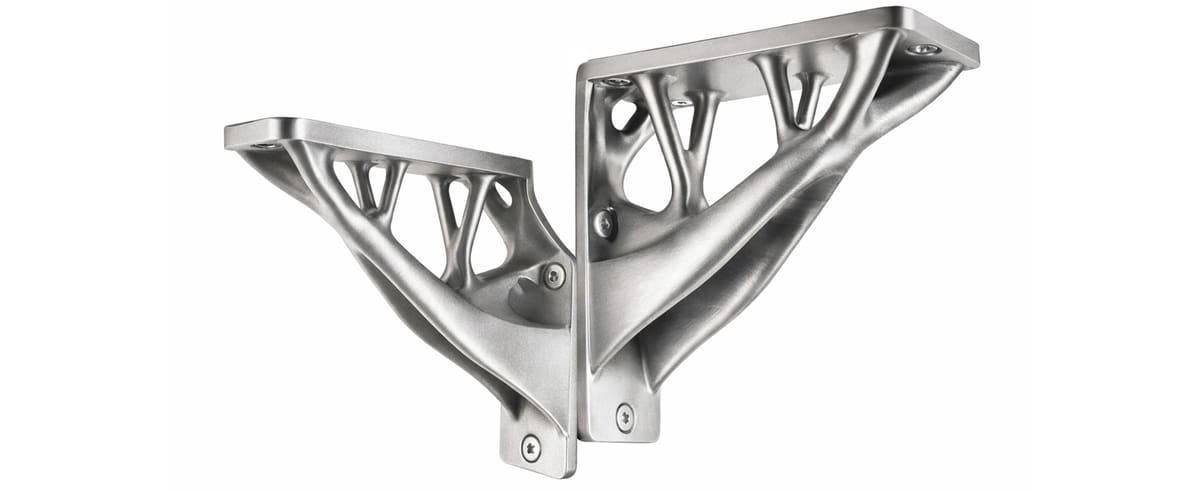
Total for four brackets: $388.77
Laser Powder Bed Fusion (LPBF), also known as SLM or DMLS, melts fine aluminum powder layer by layer to create fully metal parts. This aluminum option is your strongest option while also being lightweight.
Typical uses: aerospace brackets, robotics components, machine parts.
Why choose it?
- Incredibly strong and lightweight
- Heat-resistant and durable
- Suitable for heavy loads and industrial environments
- Looks and performs like a machined metal part
This is the most expensive option, but also the most robust. If your shelf needs to hold serious weight (tools, machinery, or heavy equipment), aluminum metal printing is unbeatable.
And that’s the beauty of modern online 3D printing services: the same part, five very different paths from file to finished product.
Note: Although the actual parts were not printed and delivered — that would have been wasteful — we took Craftcloud’s platform and instant quote feature for a spin.
You May Also Like:


License: The text of "Five Technologies to 3D Print the Same Part: Which is Best When Ordering Online?" by All3DP is licensed under a Creative Commons Attribution 4.0 International License.