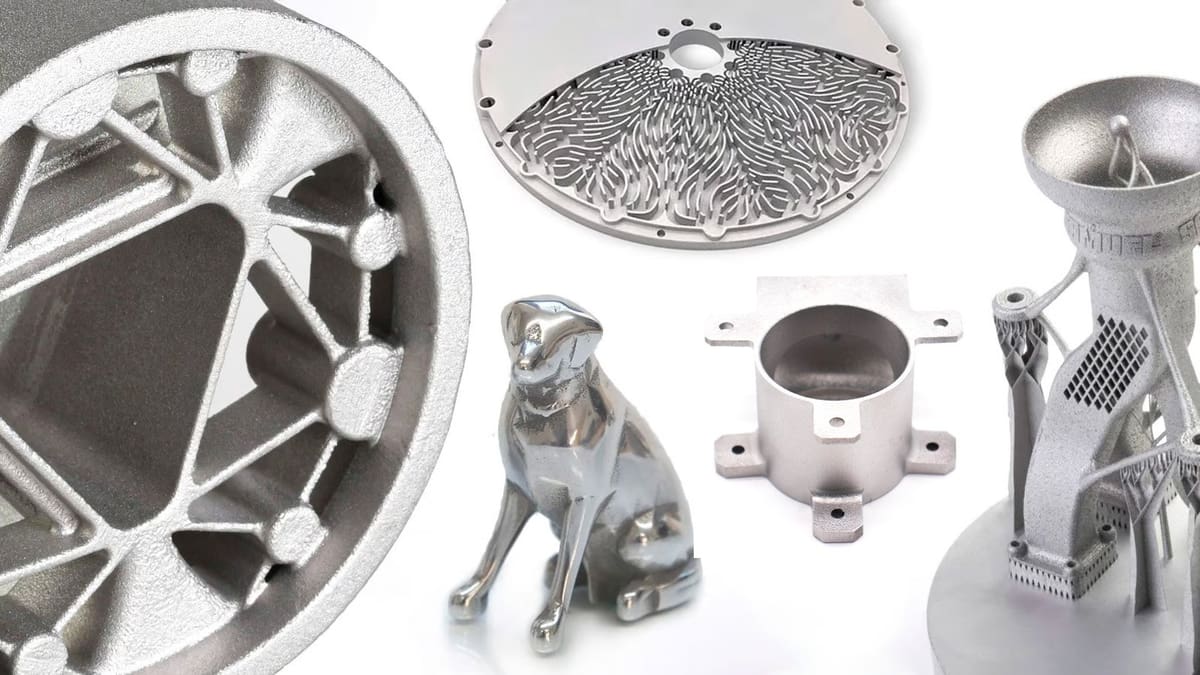
The Reality of 3D Printing Aluminum: What You Need to Know Before You Start

From aerospace-grade alloys to the hidden hurdles of metal FDM, discover why printing with aluminum is no longer just for industrial giants—and the critical steps you need to get it right.
From automotive spare parts to satellite antennas, applications for 3D printed aluminum parts are expanding due to an uptick in the adoption of new aluminum materials developed specifically for additive manufacturing. There are also more 3D printer options and services on the market to deliver pure and alloy aluminum parts.
Just a few months ago MIT engineers used AI to come up with a unique 3D printable aluminum alloy that can withstand high temperatures and is five times stronger than traditionally manufactured aluminum. They say it could be used to replace cast titanium parts delivering half the weight and a tenth the cost. Mid last year, the Oak Ridge National Laboratory found that its new aluminum alloy DuAlumin-3D prints better than some current alloys without cracking, which could make 3D printing lighter heat-resistant parts for cars more effective.
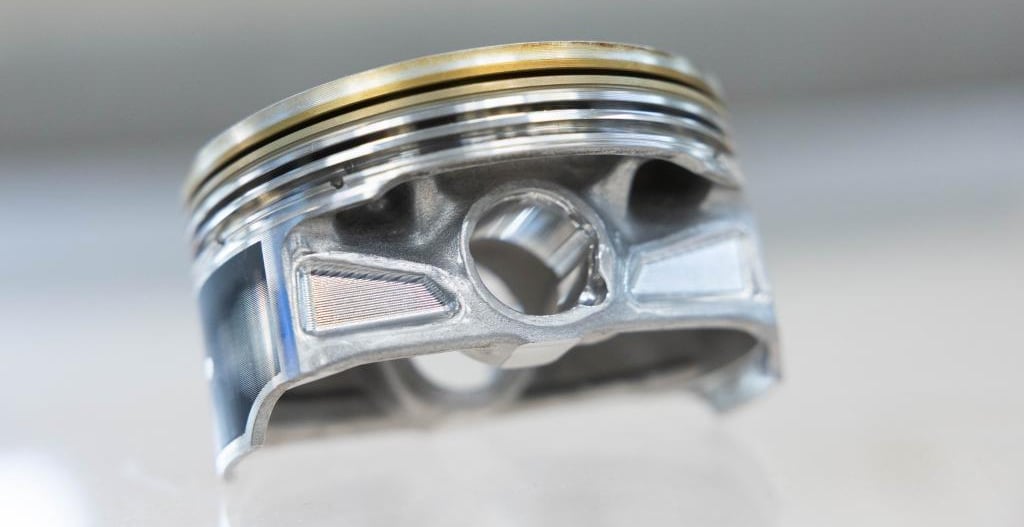
Aside from the advances in the lab, there are real-world aluminum news that you can take advantage of today.
EOS now offers aluminum AlSi10Mg powder made from 100% recycled feedstock with reduced CO₂ equivalents, which is a concrete step toward more sustainable aluminum AM materials.
3D printing with aluminum is in high demand because the aluminum alloys used in 3D printing often have better material properties than conventionally manufactured aluminum and parts made from these alloys can feature the complex geometries only possible with additive manufacturing (AM).
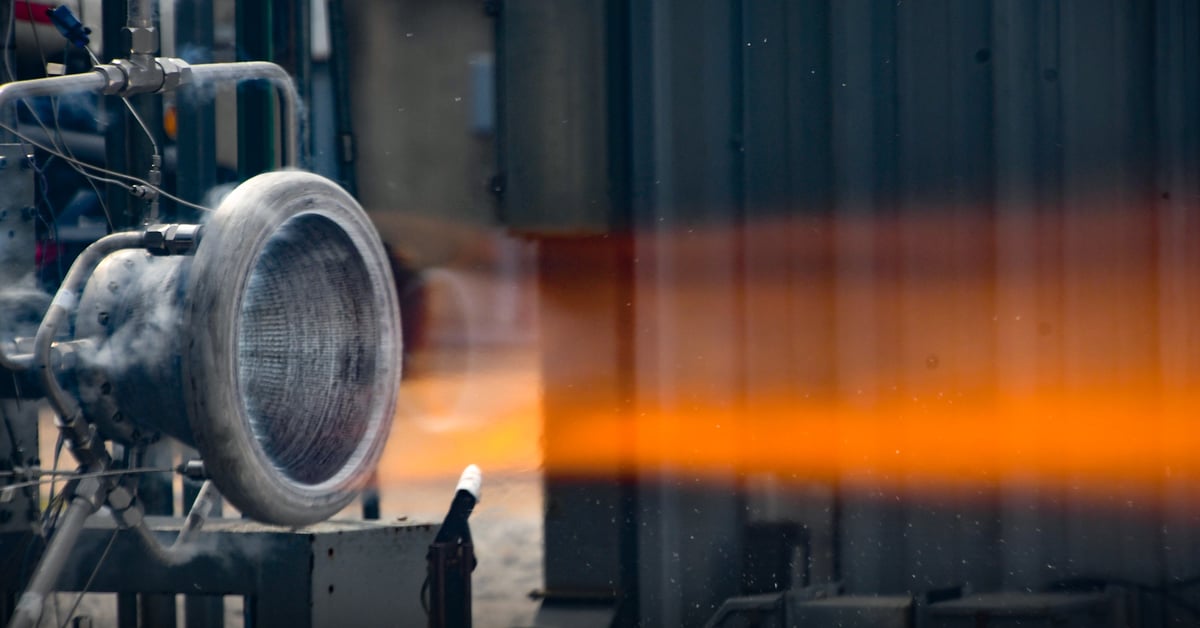

The US Navy has used a containerized liquid metal 3D printer to produce functional parts aboard the USS San Diego. The aluminum parts were subsequently evaluated for quality and performance, with results indicating the components were fully functional for their intended applications.
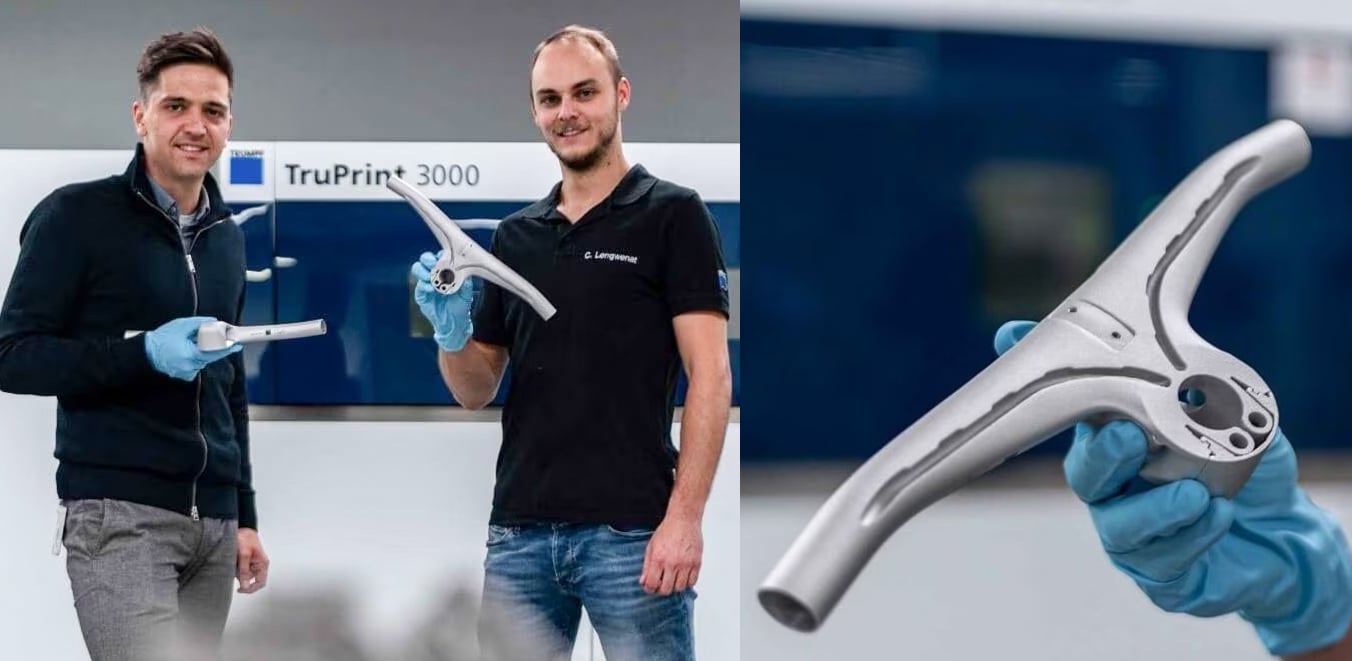
Scott Bike Components recently debuted a novel handlebar (pictured above) design at the bicycle expo Eurobike 2024 that housed the brake cables inside through internal channels. The 3D printed handlebar was made from a stronger aluminum alloy called Aluminum 6061 and 3D printed using a metal laser powder bed fusion machine from Trumpf.
3D printed aluminum parts landed on the Moon as part of the Japan Aerospace Exploration Agency’s Smart Lander. The shock absorber structures found on the tip of each lander leg were designed to deform on impact with the surface to soften the landing, yet needed to be super lightweight for the travel.
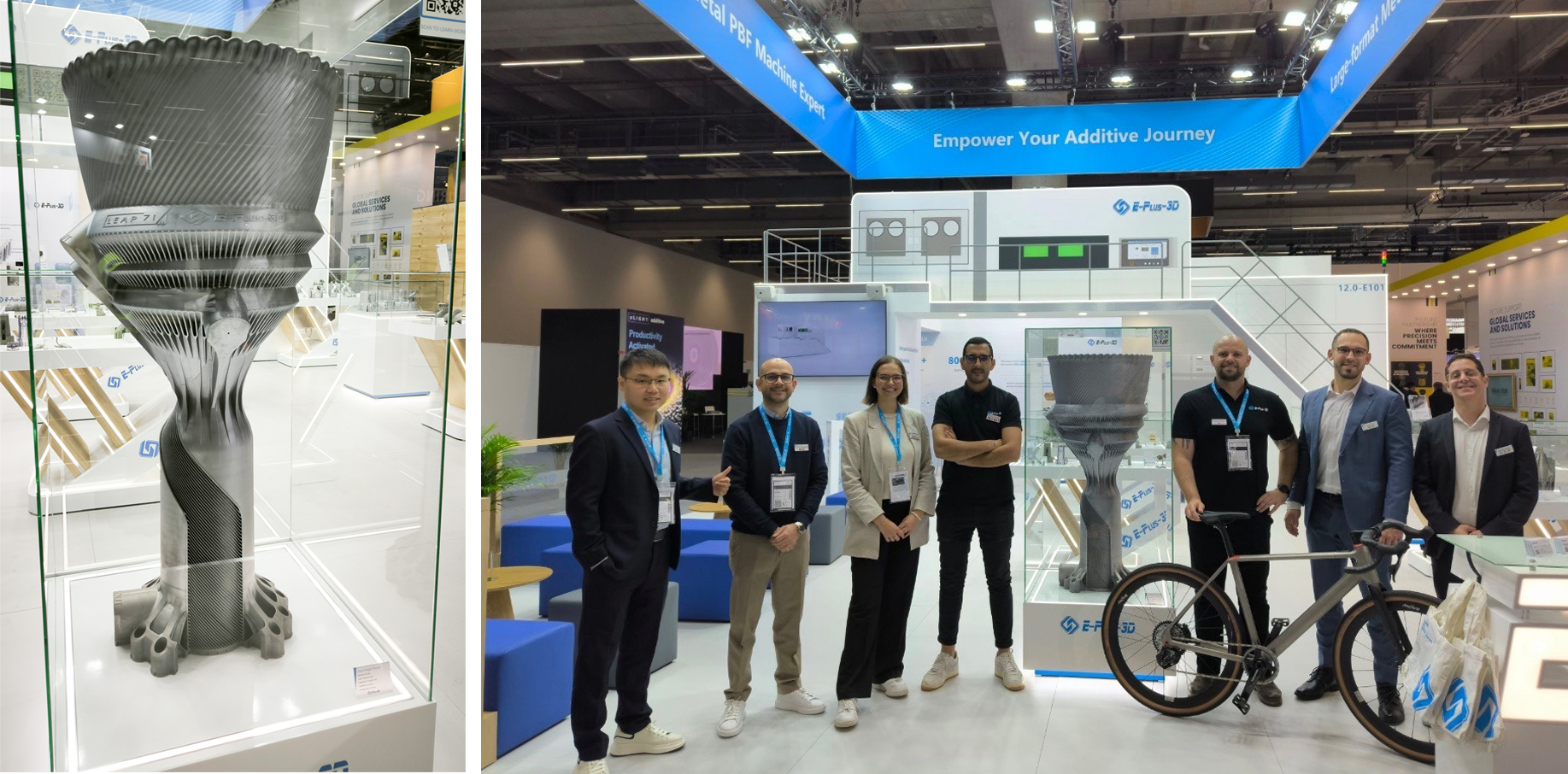
A more down-to-earth example of 3D printed aluminum’s strength can be seen in the “world’s fastest bike”, which was 3D printed in Scalmalloy, a high-performance scandium, aluminum, and magnesium alloy developed by material maker APWorks specifically for additive manufacturing. This ultra-lightweight 3D printed bike frame (3D printed on a large format EOS M400 machine) contributed to Filippo Ganna’s record-breaking speed (56,8 k/h) at the 2022 Hour Record in Switzerland.
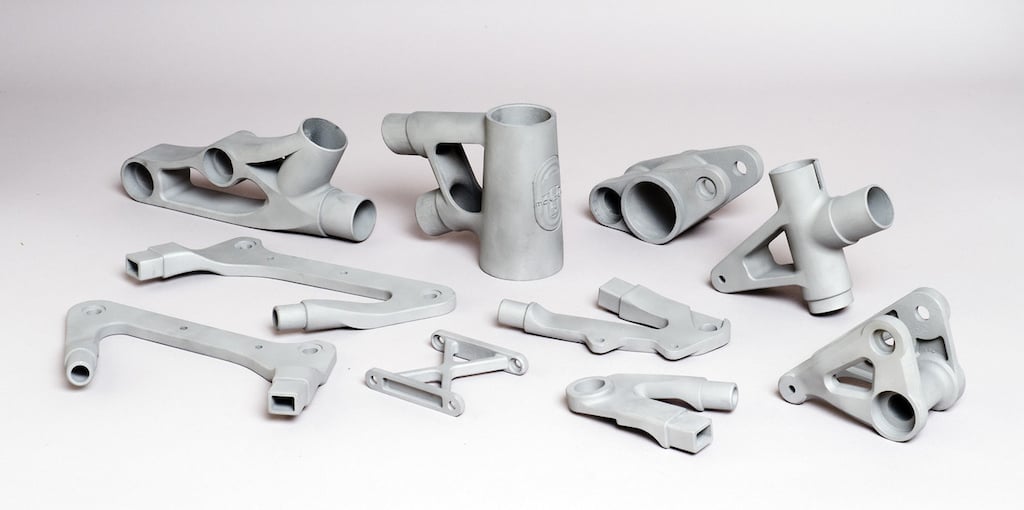
Also turning to 3D printed aluminum, Airbus Helicopters announced new plans to expand its additive manufacturing capabilities by establishing a new 3D printing centre in Donauwörth, Germany, that will house more machines by Trumpf, in addition to the ones already used by Airbus Helicopters to produce structural components made of high-strength aluminum and titanium.
Airbus Helicopters will initially use the new facility to produce components for the electric-powered CityAirbus concept and an experimental high-speed Racer helicopter, as well parts for the Airbus A350 and A320 passenger aircraft, among others.
Manufacturers large and small are turning to 3D printed aluminum, so let’s take a look at how printer makers and material manufacturers are working together to drive new applications for 3D printed aluminum.
Advantages of 3D Printing Aluminum
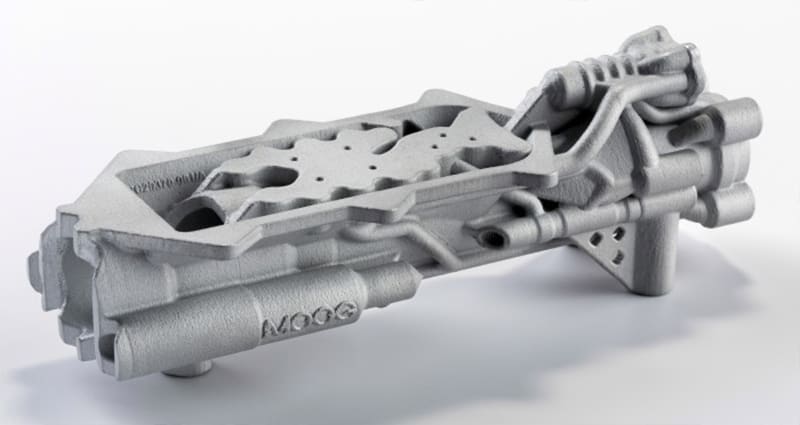
Aluminum alloys feature good chemical resistance, are very lightweight, and offer one of the best strength-to-weight ratios of any metal. It’s the choice of many in the aerospace and automotive industry for its ability to withstand harsh conditions.
There are numerous reasons aluminum is an ideal material for a wide range of applications, but couple it with the unique benefits that 3D printing can deliver, and it’s an even better choice.
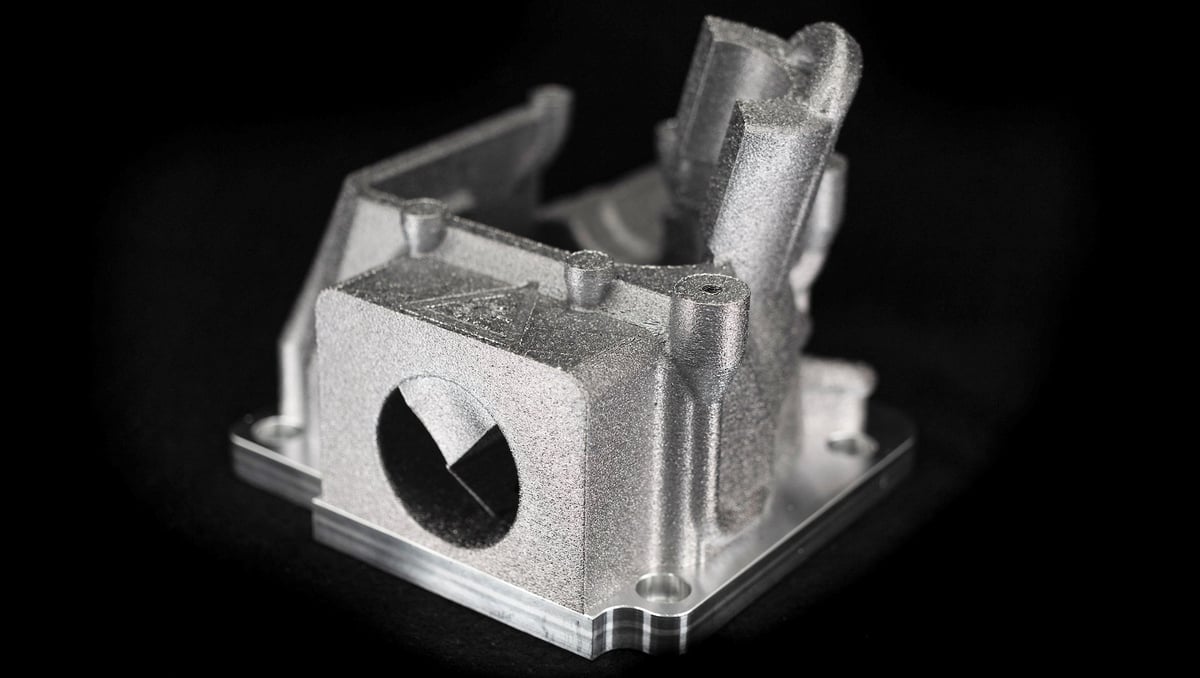
One of the biggest advantages of 3D printing in aluminum, or any metal for that matter, is that you can create parts with internal channels and features that aren’t possible to manufacture any other way. You also can print a multi-part assembly as one unit, drastically cutting down on manufacturing and assembly time, and developing a more efficient part overall.
3D printing also does not create much waste. When you’re working with expensive raw materials, anything you can do to minimize waste is a big plus. This is particularly interesting for the aerospace industry, which constantly strives to improve its “buy-to-fly” ratio, the weight of purchased raw material compared to final part weight. This ratio is crucial for assessing the efficiency of manufacturing processes, as a higher ratio indicates more material waste during production.
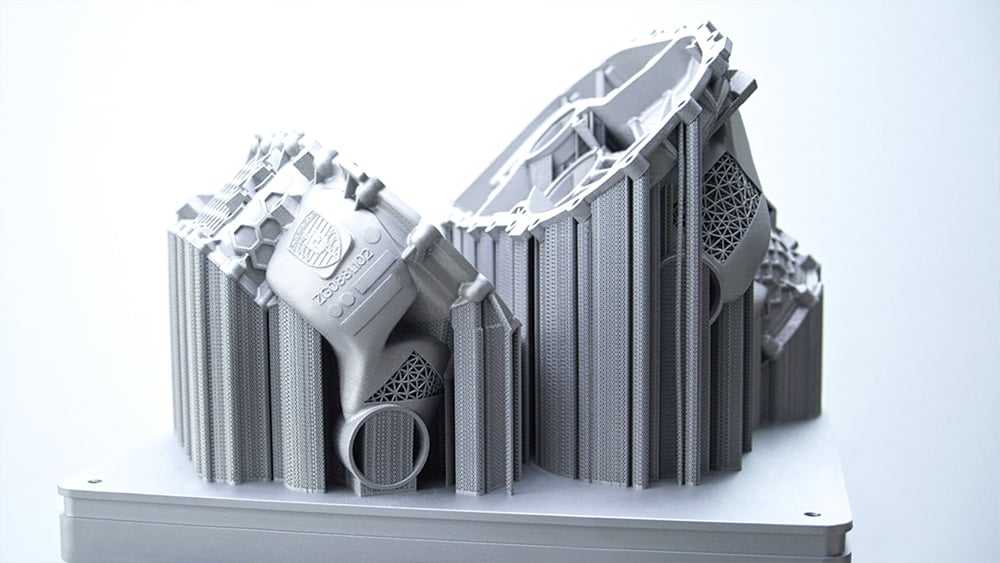
Casting or machining aluminum often has higher production costs (especially for low volumes) and uses more energy during fabrication. There’s also the additional cost of first producing tooling or molding for the traditional processes.
In addition to these advantages, 3D printing aluminum is also the economical choice when you need just one spare part or a low volume of products. Additive manufacturers can produce low-volume and custom parts quickly and affordably and emerging technology continues to make both larger production runs and lower operational costs a reality.
How to 3D Print Aluminum
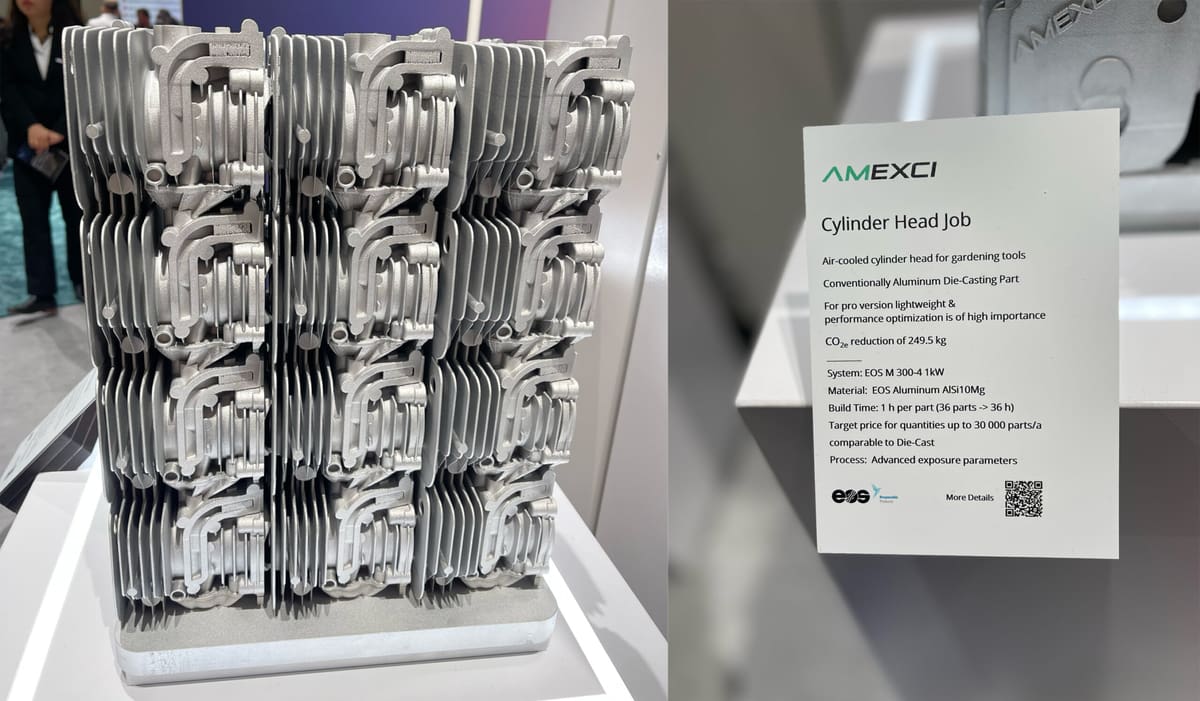
With aluminum, the choice of 3D printing technology is rarely about whether it can be printed since almost every major metal AM method can, but about the trade-offs between precision, size, speed, feedstock cost, and post-processing.
LPBF dominates precision applications such as aerospace and thermal management; WAAM and molten DED dominate large structural builds; Cold Spray dominates repairs; and Stir Welding excels in joining and consolidating aluminum structures for aerospace and EV platforms.
Fused Deposition Modeling (FDM)
FDM technology using a aluminum/polymer blend filament can produce small solid aluminum parts for non-load-bearing applications, decorative parts, and prototypes, yet it’s not common. Only two companies currently offer an aluminum metal filament (The Virtual Foundry and Zetamix). This method requires post-processing steps — debinding and sintering in a furnace — to achieve a more than 90% metal part. It’s the cheapest way to get an aluminum part since aluminum filament will work on most desktop FDM printers.
Laser Powder Bed Fusion (LPBF)

Top Aluminum LPBF 3D Printers
Electron Beam Melting (EBM)
EBM is a similar process to LPBF, but uses an electron beam instead of a laser. The high process temperature of the electron beam results in slower cooling of the single layers and, therefore, coarser microstructure compared to LPBF. Pure aluminum is not compatible with EBM, but titanium-aluminum alloys are.
Top Aluminum Alloy EBM 3D Printers
- QBEAM Aero350
Cold Spray & Wire Arc Additive Manufacturing (WAAM)
Cold spray and WAAM technologies are used to quickly create net-shape large aluminum parts that are then often machined to finer tolerances. While Cold Spray uses powder, WAAM technology is fundamentally applicable to any material available in weldable wire form, including aluminum alloys. This method is far more economical than casting for single, unique parts used in heavy industry.
Top Aluminum Cold Spray 3D Printers
Top Aluminum WAAM 3D Printers
- ALM3D
- MX3D
- Gefertec
- WAAM3D
- Caracol
Metal Binder Jetting
Metal binder jetting for aluminum does exist, but it’s not as mature or widely adopted as binder jetting for steels, stainless steel, or other metals. The technology is the top option for fast printing of medium to large volumes of parts but requires post-processing.
Specialty Aluminum Technologies
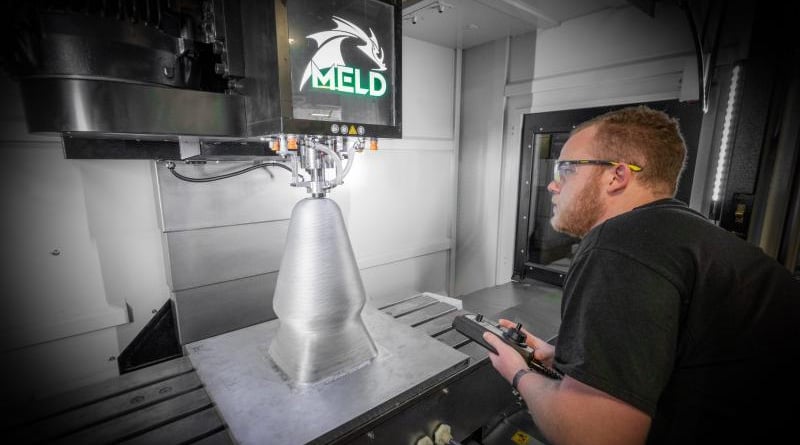
One specialty technology involves extruding molten aluminum. Called molten direct energy deposition (molten DED) or liquid metal jetting, among other terms, this technology differs from metal extrusion 3D printing in that the extrusion versions use a metal feedstock with a bit of polymer inside to make the metal extrudable. The polymer is then removed in the heat treatment stage.
Molten DED, on the other hand, uses a pure metal. It’s available from 3D machine makers Grob, Valcun, and ADDiTec. Xerox had offered the technology on its ElemX 3D printer, which is currently installed at select US military installations, but sold it to ADDiTec. The benefit of this approach is that there’s no hazardous metal powder to work with and the finished prints do not require any post-processing.
Another specialty technology for aluminum at production volumes is in development from start-up called Alloy Enterprises. The company uses a type of sheet lamination 3D printing process that uses as its feedstock sheets of aluminum. It’s not clear whether Alloy Enterprises will offer their technology as a machine or a service.
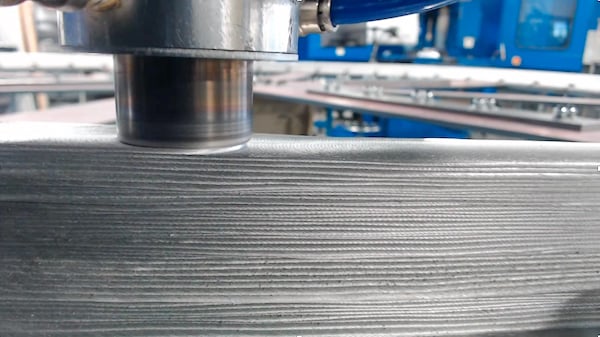
In a category of its own, yet similar to molten DED, one company called Meld uses friction energy deposition (also called friction stir energy deposition). FED is a solid-state process, meaning the material does not reach the melting temperature during printing so it produces parts with low residual stresses and full density, the company says, using significantly lower energy than more conventional fusion-based processes. FED is also a single-step process that does not require sintering or post processing. The process has potential for quick metal manufacturing without hazardous metal powders or heat.
Advanced Aluminum Materials
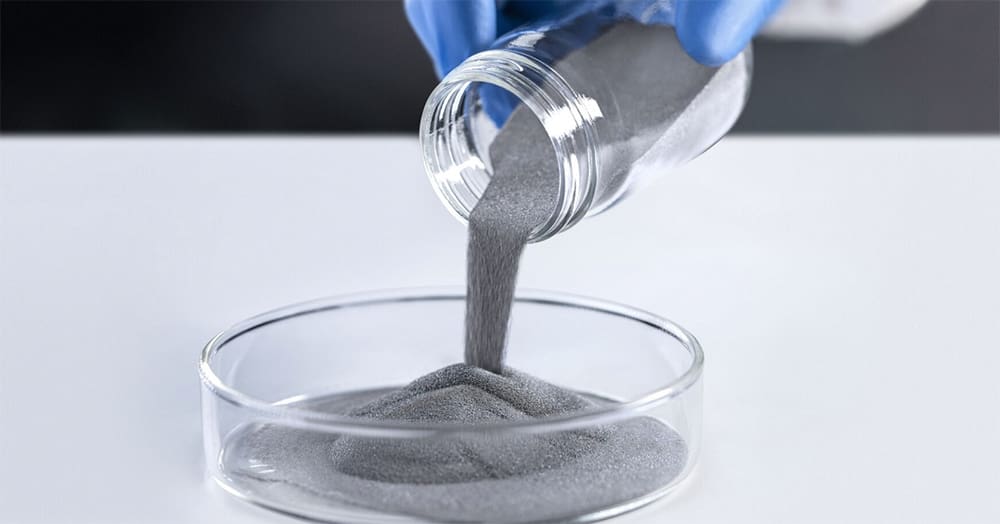
Over the past several years, the aluminum materials landscape for additive manufacturing has expanded significantly. What began with workhorse alloys such as AlSi10Mg has evolved into a much more diverse ecosystem of powders tailored for faster printing speeds, higher strength, elevated temperature performance, and specialized electrical or thermal properties. New alloy families and powder chemistries are enabling aluminum to compete with traditional aerospace materials, while dispersion-strengthened and scandium-modified aluminum variants are improving weldability and extending mechanical performance beyond conventional 6000 and 7000-series alloys. At the same time, sustainability has become a meaningful differentiator as powder manufacturers embrace recycling and closed-loop production, and research continues into binder-jettable aluminums and alternative aluminum-focused AM processes. Together, these developments are pushing aluminum deeper into end-use applications and making it a far more capable material than it was just a few years ago.
Top 10 Aluminum Powder Providers for Additive Manufacturing
Equispheres
Specializes in highly spherical aluminum powders optimized for high-speed LPBF, including non-explosible variants and powders tuned to reduce print time.
APWorks / Scalmalloy
Producer of Scalmalloy, a high-strength scandium-modified alloy designed specifically for AM and used in aerospace and motorsports as a lightweight 7000-series alternative.
Eckart Group (A20X)
Supplies A20X aluminum alloy for AM and casting, enabling lighter aerospace-grade components with high strength-to-weight performance.
Elementum 3D
Offers dispersion-strengthened aluminum alloys via its RAM process, enabling AM of previously unprintable 2000- and 7000-series aluminum families with improved weldability.
EOS (Al2139 AM)
Provides proprietary aluminum powders for LPBF, including Al2139 AM for elevated temperature (up to ~200°C) and high-strength structural applications.
Constellium (Aheadd Series)
The Aheadd portfolio includes CP1 for high ductility and conductivity and HT1 for higher temperature applications, optimized for LPBF throughput and surface quality.
Gränges Powder Metallurgy (S220 AM)
Develops Al-Si-based LPBF alloys with low density and low thermal expansion; S220 AM currently distributed through printing service offerings.
6K Additive
Produces aluminum AM powders using a recycling-based plasma process, emphasizing sustainability for aerospace procurement and closed-loop powder sourcing.
Sandvik (Osprey)
Offers spherical aluminum powders within its Osprey alloys portfolio for LPBF and DED processes, supported by strong aerospace and industrial supply chain infrastructure.
Metal Powder Works
Manufactures aluminum powders using patented production technologies designed to reduce cost and improve powder uniformity, with a strong focus on scalable, sustainable AM feedstock production.
Standard Manufacturing Aluminums
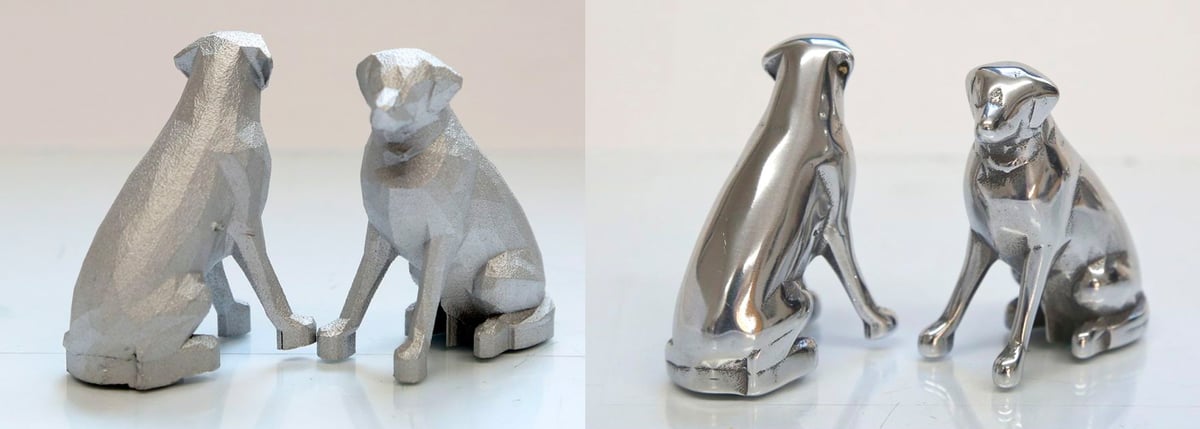
Many of the current aluminum alloys for 3D printing are simple casting alloys, such as AlSi10Mg. These aluminum alloys are not particularly strong, nor can they manage high temperatures. Still, their mechanical properties are suitable for a wide range of applications and the material is “weldable” and, therefore, can be used in 3D printing without cracking. The properties of these materials may be all some companies are looking for in metal 3D printing, but others, especially aerospace and advanced manufacturing, need more.
While there are several different types of aluminum alloys on the market, here are some of the more common ones being used in AM.
- AISi10Mg is the most common aluminum alloy and features solid strength, hardness, and dynamic properties. Its light weight also supports good thermal properties and has strong buildability for use in challenging geometries. Uses include housings, ductwork, engine parts, and production tools.
- AlSi7Mg0 combines aluminum, silicon, and a small amount of magnesium to create a highly durable and lightweight allow suitable for fine objects and complex geometries. It’s used in applications that require a strength/mass ratio as well as good thermal properties.
- Al 6061 & Al 7075. 3D manufacturers are starting to have success with printing using 6061 and 7075, which were previously thought not to be conducive to the AM process. Merging nanoparticles is showing progress.
Alloys in the 6000 series have properties that make them one of the most popular traditional manufacturing of electrical or electronic parts. They are ductile with high thermal conductivity, electrical conductivity, and corrosion-resistant. The 6061 is a precipitation-hardened aluminum containing magnesium and silicon.
7000 series alloy powders have a high zinc content, are known for excellent mechanical properties for higher strength and are heat treatable. 7075 is most commonly used in highly-stressed structural parts, such as aircraft parts, and is stronger than many standard structural steels.
Order Aluminum 3D Printed Parts
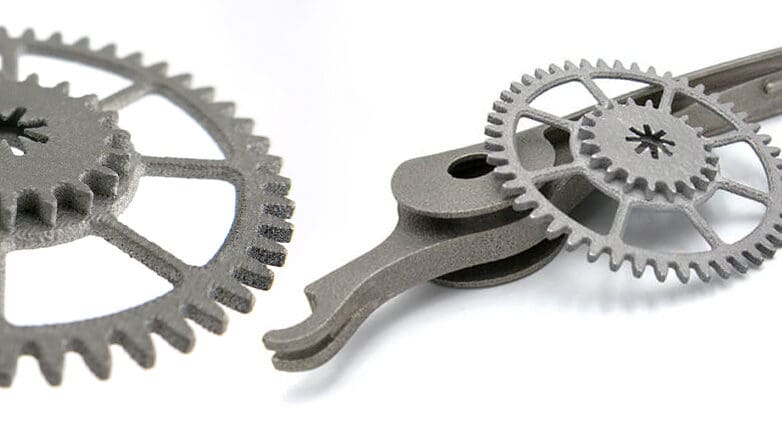
Investing in a metal 3D printer is no small decision, and part of any good due diligence is ordering sample parts. You can order these from the manufacturer, but many printer manufacturers on this list also offer print-on-demand services. For smaller projects, one-offs, and tests, outsourcing your 3D prints to a metal 3D printing service can dramatically save on the capital cost and overhead of operating your own system.
There’s a growing number of contract manufacturers with fleets of metal 3D printers ready to custom print your part whether it’s a prototype, a final functional part, a unique spare part, or a work of art. With dozens of potential service providers to chose from, you can spend weeks tracking down the best price and delivery options. Fortunately, there are a few marketplaces of 3D print services, such as Craftcloud, where you simply upload your 3D model and receive multiple quotes from suppliers from which you choose the best fit.
You May Also Like:
Lead image source: Clockwise: 3D Systems designed by nTopology, Constellium Powders, One Click Metal, dog by Cole Mathisen with Mass Finishing Inc., EOS.
License: The text of "The Reality of 3D Printing Aluminum: What You Need to Know Before You Start" by All3DP Pro is licensed under a Creative Commons Attribution 4.0 International License.