The X1C Expansion Board is Here, and X1Plus v3.0 With It

With the first arrivals of the third-party X1Plus Expander comes a v3.0 release of the X1Plus firmware, but support for Bambu Lab’s new AMS’ may take some time.
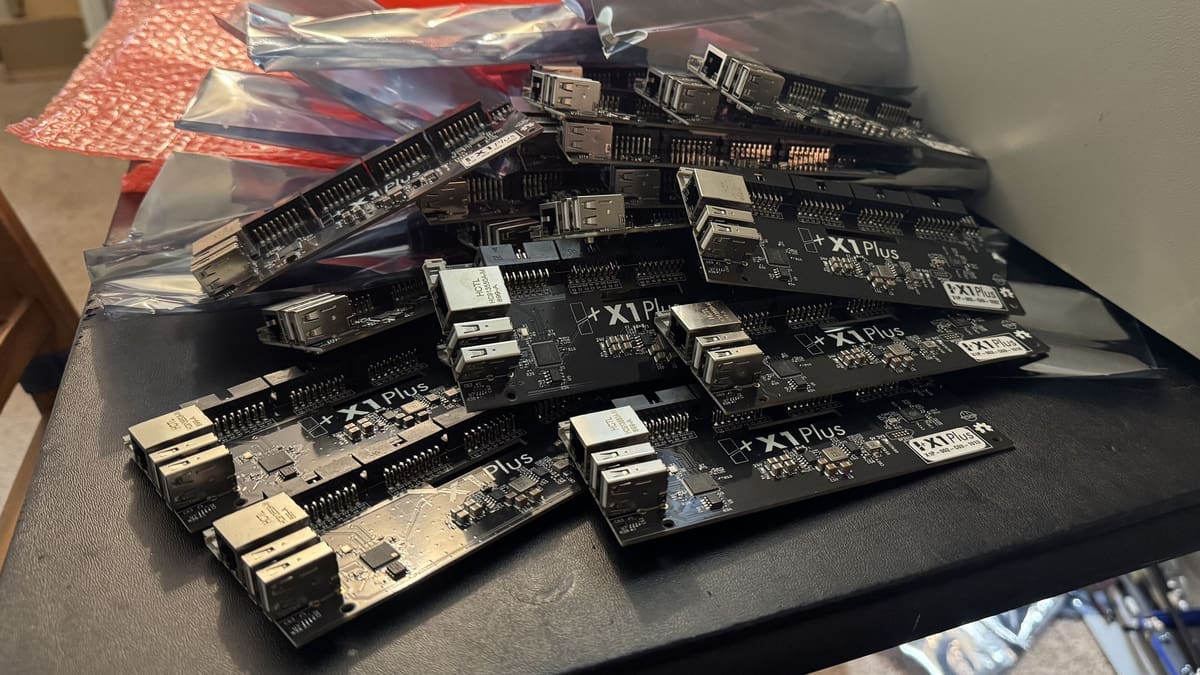
The X1Plus Expander, a third-party open-source GPIO for Bambu Lab’s X1C by Accelerated Tech, is arriving to Crowd Supply backers now, with new pre-orders set to ship June 30. It’s accompanied by a version 3.0 update to the X1Plus firmware.
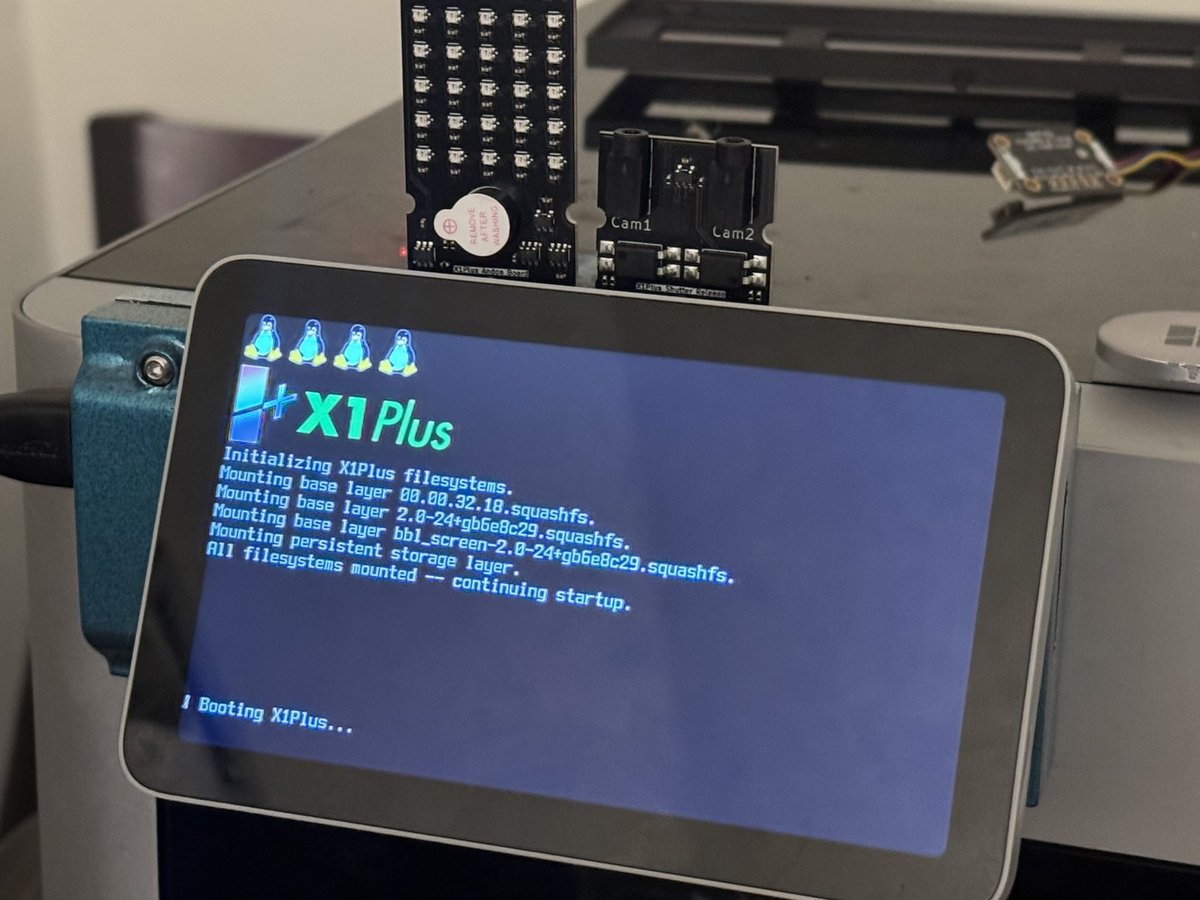
The device adds a host of functionalities to the X1C, including Ethernet and USB ports, an I²C connector, and space for sold-separately plugin modules, such as an LED strip driver. It also includes an on-style light for print farms, and a camera shutter release to help users create time-lapses from external devices. Like the X1Plus firmware, the X1Plus Expander is fully open-source.
After Accelerated Tech’s successful crowdfunding campaign late last year raised nearly $67,000 – representing funding of over 1000% of the project’s $6,500 goal – Senior Engineer and Vice President Joshua Wise started work on delivering the X1Plus Expander. Backers began receiving their Expanders earlier this month, Wise told All3DP, and initial feedback has been positive.
With the arrival of the X1Plus Expander comes a v3.0 release for the associated X1Plus firmware. The update adds compatibility for the X1Plus Expander, of course, but also updates base firmware and databases, and adds a few user-contributed QOL features like support for USB Ethernet adaptors, and the ability to toggle lights with hardware buttons. But, of course, there are more tidbits to peruse on the firmware’s GitHub. Expander support is the main event bringing the firmware to its new version number.
Any Hardware Changes?
Wise has been steadily publishing updates on the X1Plus Expander’s campaign blog since its launch. But progress towards shipping has been the only development to glean from them, for the most part, and Wise seems proud of that fact.
“The most important change, of course, is that the board is black, and not green – because all great hardware devices have black silkscreen,” Wise joked when asked if changes were made to the hardware during its development. “I’m actually pretty happy that I haven’t changed the product definition much since we started. A few folks have contributed support for some other I2C sensors, including the PMSA003I air quality sensor, which can report air quality right at the printer to Home Assistant or other MQTT clients, without needing to station a computer nearby. And this is made possible by a community-contributed dynamic module system for the X1Plus Python daemon, so hopefully people who want other I2C sensors should be able to reasonably plug them in.”
The X1Plus Expander is now available for pre-order from Crowd Supply for $129, with a variety of add-ons to increase its functionality. The $10 shutter-release module, for one, can drive DSLR and mirrorless camera shutters to help create high-quality time-lapses.
“That’s one of the features of Expander that I’m really happiest about,” Wise says. “It feels like the kind of creative outcome that really motivates the need to build customizations in ways that the manufacturer might not have thought of.”
X1Plus Expander’s Perfect Timing
The X1Plus Expander is arriving at an ideal time for those frustrated by Bambu Lab’s Authorization Control update that rolled out on X-series 3D printers in March, and just recently to the company’s budget P- and A-series’. The update has blocked third-party communication with the printer, requiring use of a middleware application called Bambu Connect, or for users to sett their hardware to a LAN-only “Developer Mode” that restricts some native features.
X1Plus, on the other hand, is open source, with an installation path supported by Bambu Lab. Following it will void your hardware’s warranty, but opens the X1C up to a lot of functionality, with the X1Plus Exander serving as a great demonstration of how far that can go.
“It seems like the kind of thing that is a couple of months out at least,” Wise says of making X1Plus compatible with Bambu Lab’s new AMS systems. He was quick to inform X1Plus Expander’s backers of this, writing in the Expander updates on April 10 that he expected to take a break from X1Plus following the Expander and its firmware shipping out, before diving into the new hardware.
“I’d love to take contributions to the X1Plus main repository, even if I’m not actively working on it,” he told All3DP when asked whether there were plans to hand off development during his break. “If people want to fork X1Plus, that’s fine by me, too, though I hope to be responsive enough that they would not need to do that!”
“On the other hand, there have been really very few third-party contributions to X1Plus so far, which is, in part, why I am a little less motivated to add more hardware support at this time,” Wise told All3DP. “It’ll be interesting to see what kind of interest comes up as Expanders start showing up in users’ hands.”

We’ve been publishing some comparisons between the X1C and the Prusa Core One since the latter’s release earlier this year. In our recent recommendation of the Core One over the X1C, customizability through optional hardware like Prusa’s GPIO expansion was considered, and lands squarely in the more recent hardware’s favor. The X1Plus Expander seems an exciting way to close that gap on the nearly three-year-old X1C hardware, which still has a few standout features some users prefer over Prusa’s more recent hardware using open-source firmware.
Read more recent news:
License: The text of "The X1C Expansion Board is Here, and X1Plus v3.0 With It" by All3DP is licensed under a Creative Commons Attribution 4.0 International License.