Why This 14-Printer EOS Deal Proves Metal AM Has Left Prototyping Behind

Driven by defense and energy sector part demand, Incodema3D’s latest investment underscores a growing industry-wide transition toward standardized, repeatable metal AM supply chains.
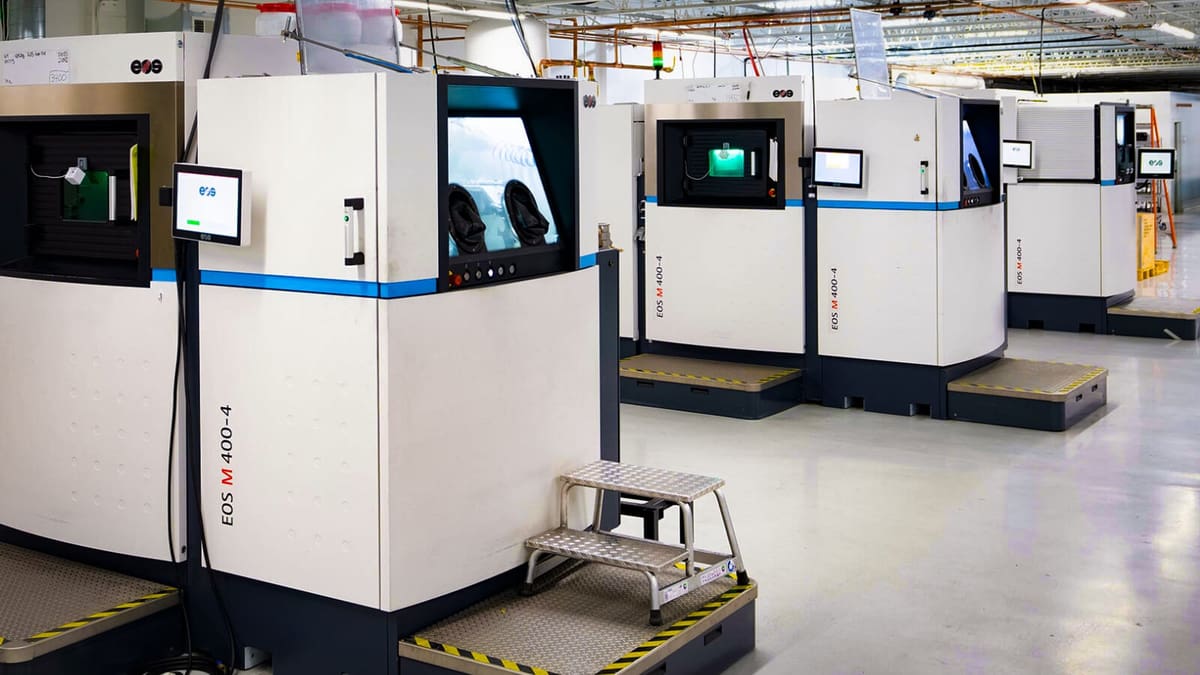
Freeville, New York-based 3D printing service Incodema3D is scaling up its metal additive manufacturing capacity with a major EOS machine investment, facility expansion, and hiring push, as demand for production AM parts, particularly from defense and energy sector clients, continues to surge.
The industry has spent years arguing that additive manufacturing is ready for end-use parts; investments of this size show that some manufacturers are now betting on that future. Metal AM’s growth is being pulled by sectors where supply chain resilience, part performance, and shorter lead times can justify the technology.
Moving from “capability building” to production scaling
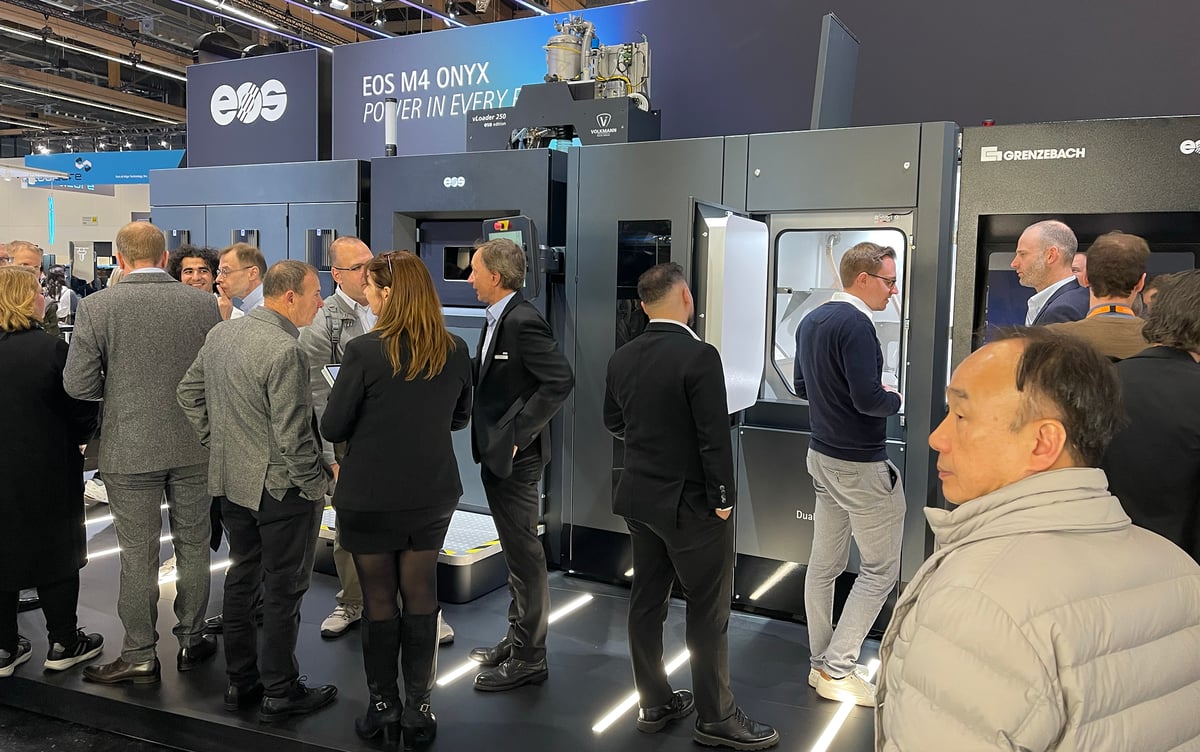
Incodema3D says it is preparing to take delivery of four EOS M 400-4 systems and one of the new EOS M4 ONYX systems, while also signing an agreement to purchase nine additional EOS machines: four EOS M4 ONYX, two EOS M 400-4, and three EOS M 300-4 systems. Once installed, the additions will bring the company’s EOS metal 3D printer fleet to more than 50 machines.
The investment follows what the company describes as 50% year-over-year growth. Founder and CEO Sean Whittaker said Incodema3D expects continued high growth through 2030.
“With a sense of urgency to support national priorities, we truly feel that we are setting the bar for contracted metal AM production and have created well-oiled processes to produce everything from 10 mission-critical parts for a defense customer to 10,000 parts for an energy company,” says Whittaker.
AM Research estimates direct U.S. DoD AM spend at $800M in 2024, rising to more than $2.6B by 2030, which implies roughly 21.7% CAGR from 2024 to 2030.
The company says its manufacturing capacity is planned to increase three-fold by 2030, including a second manufacturing facility that has not yet been formally announced. Incodema3D currently operates a 60,000-square-foot facility in New York, which is also slated for expansion.
Fleet standardization as production strategy
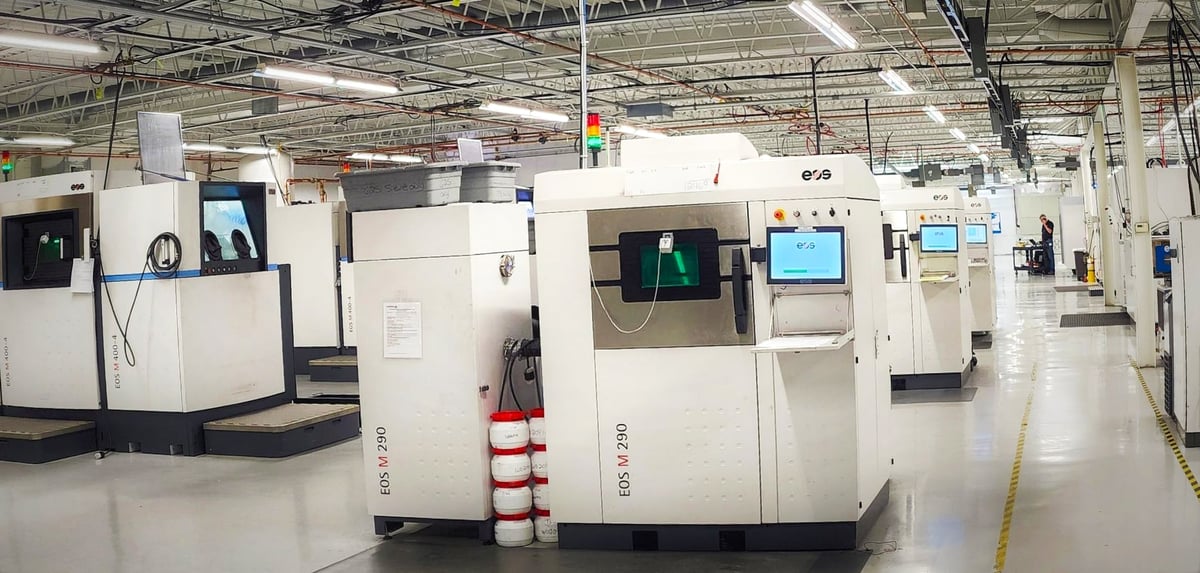
Incodema3D says it will continue to standardize around EOS metal additive manufacturing technology. The company bought its first EOS system in 2012 and has since consolidated its business exclusively around EOS metal AM systems.
That kind of fleet standardization matters. For a contract manufacturer, running a large number of similar or related machines can simplify qualification, operator training, maintenance, process control, and repeatability across production jobs. In metal AM, where customers in aerospace, defense, energy, and industrial markets often require tight documentation and repeatable output, a consistent machine ecosystem can become a competitive advantage.
Another large metal AM service provider, i3D MFG (now a division of ERA Industries) operates a fleet of over 36 EOS, while fast-growing contract manufacturer, Addman Group., boasts more than 50 metal 3D printers from EOS, Velo3D, Renishaw, and others in a combined ecosystem with traditional manufacturing.
Incodema3D is also emphasizing vertical integration with traditional manufacturing and post processing.
According to the company, its model combines design for additive manufacturing, industrial-scale 3D printing, post-processing, precision machining, inspection, and fulfillment under one roof. Matt Lewis, vice president of programs, says, this “end-to-end approach allows us to support demanding production programs while reducing lead times, improving part performance, and simplifying the supply chain.”
The scale of the investment points to a broader shift in metal AM: service bureaus and contract manufacturers are increasingly positioning themselves less as low-volume print shops and more as production infrastructure.
Private capital is betting on AM production, not just AM hardware
The expansion also comes after AFM Capital established a majority stake in Incodema3D, giving the company financial backing as it pursues its growth plan.
For EOS, the order reinforces the importance of long-term production customers that build large installed fleets around a single technology platform.
Metal AM market entering a “prove-it” phase
For the wider additive manufacturing industry, Incodema3D’s expansion suggests confidence in metal AM’s role as a production tool, particularly for regulated and performance-critical sectors. Incodema3D’s focus on aerospace, defense, energy, and industrial applications implies that demand is coming from customers that need repeatable processes, documentation, inspection, machining, and fulfillment. The purchase says the market is rewarding suppliers that can deliver qualified parts at volume, not just low-volume, prototype, or one-off builds.
Metal AM production is not just about printer count, of course. The winners are likely to be companies that control the full workflow from design to finished, inspected part, using an ecosystem of traditional and additive technologies.
You May Also Like:



License: The text of "Why This 14-Printer EOS Deal Proves Metal AM Has Left Prototyping Behind" by All3DP Pro is licensed under a Creative Commons Attribution 4.0 International License.