Why the U.S. Is Betting $4.2M on Norsk Titanium to Solve Its Submarine Part Shortage

By backing Norsk’s wire-fed titanium process, the U.S. is testing whether additive manufacturing can solve real bottlenecks in maritime manufacturing.
3D printer manufacturer and material maker Norsk Titanium just won a multi-million dollar U.S. defense contract to prove its metal 3D printing technology can deliver titanium parts for American submarines faster, cheaper, and better than traditional manufacturing. The company has 18 months.
The contract suggests that defense buyers are increasingly looking at additive manufacturing not as a promising experimental technology, but as a potential qualified supply-chain tool for hard-to-source, mission-critical metal parts. The work is not simply about showing that a part can be printed, it’s about whether a process can be trusted, certified, repeated, and inserted into defense supply chains.
For the aging U.S. submarine industrial base, large, high-performance metal components can face long lead times through traditional forging, casting, and machining routes. In April, the U.S. Government Accountability Office found “Navy and Coast Guard shipbuilding programs have consistently fallen short of expectations over the last two decades” and “they are billions of dollars over cost and years behind schedule.”
Additive manufacturing will not solve that problem immediately, but this investment is further evidence that the U.S. defense establishment is seeking and funding practical qualification work, not just additive manufacturing demonstrations.
A Hybrid Route for Critical Titanium Parts
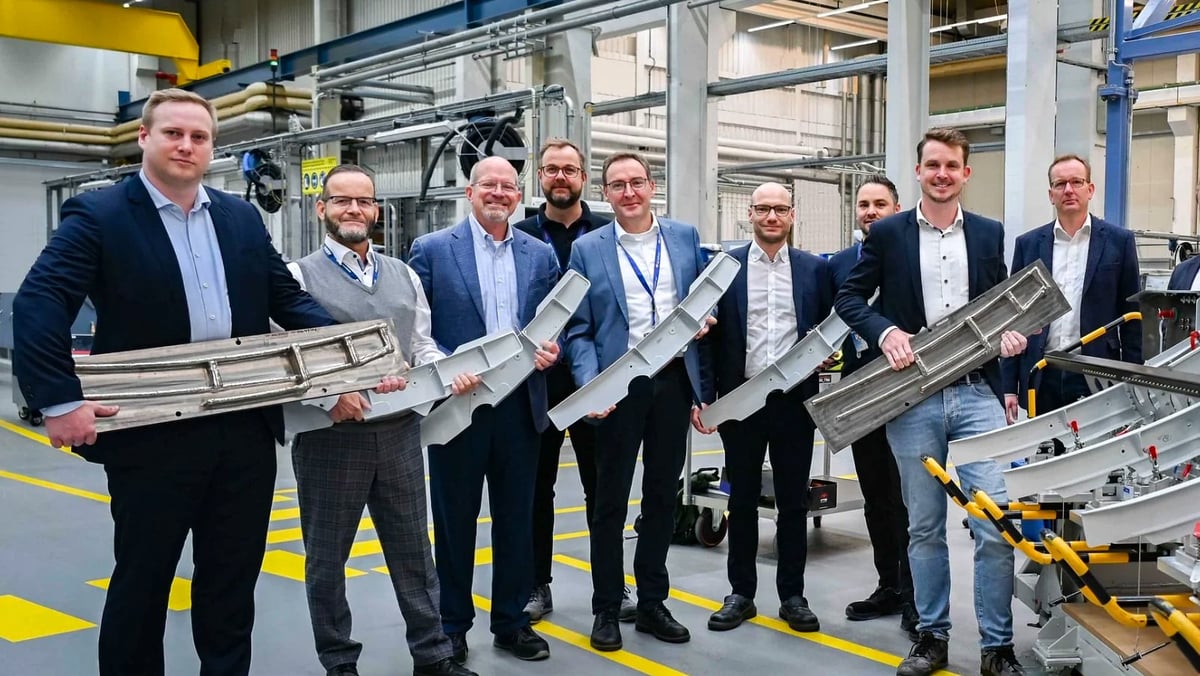
The Norway-headquartered Norsk, with facilities in New York, announced the funding from the Office of the Assistant Secretary of War for Industrial Base Policy last week. Public details on the award remain limited; the contract has been announced by Norsk Titanium, but a corresponding U.S. government notice was not readily available. The funded work is intended to advance “next-generation” manufacturing capabilities focused on revitalizing U.S. maritime and submarine industrial capacity, Norsk says.
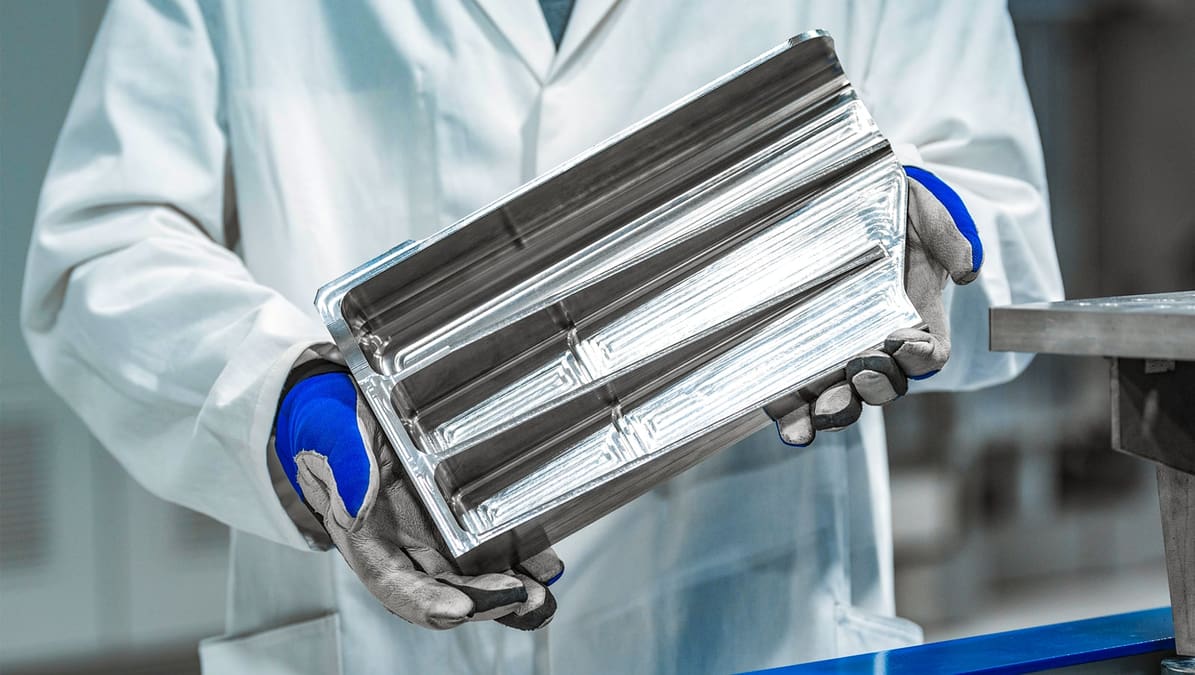
Although there’s no information on who Norsk was up against for this contract, the U.S. government’s selection of Norsk’s Rapid Plasma Deposition technology in interesting in itself. RPD is a wire-fed directed energy deposition process that uses a plasma arc to melt titanium wire in an argon environment, depositing metal layer by layer into a near-net-shape preform. That print is then finish-machined to its final dimensions. The company describes it as a way to produce high-performance metal components using less raw material, energy, and time than traditional forming methods.
This technology is designed to produce larger structural metal forms that are much closer to final geometry than a forged block, billet, or plate would be, while still fitting into conventional inspection and qualification workflows. RPD is not aimed primarily at printing small, intricate, finished components straight from the machine, as in some powder-bed fusion processes.
The choice of this technology could be a larger signal. For defense buyers, that hybrid route may be easier to insert into existing supply chains using a known titanium material while preserving conventional machining, inspection, and certification steps.
Defense Keeps Multiple AM Paths Open
At just over $4M, the award is meaningful for Norsk Titanium, but relatively small in broader defense-industrial-base terms. It also just one of several recent U.S. government investments in additive manufacturing vendors or processes.
AML3D, for example, announced a roughly $1.84 million order in March 2026 to produce five non-safety-critical replacement components for U.S. Navy submarines using its wire additive manufacturing process.
“Signing this order is a significant milestone for AML3D,” says company Sean Ebert. “It shows our advanced manufacturing technology is key to solving critical supply chain challenges for the U.S. Navy’s submarine program. These complex components are no longer supported by the original manufacturer and could not be sourced in a time and cost-effective manner from the Navy’s traditional supplier base.”
Other defense-related AM awards in recent months have gone to companies including Velo3D, Stratasys Direct, and Materials Resources, though those efforts were tied to different defense programs.
Taken together, though, those awards point to a defense sector keeping multiple AM approaches in play.
Norsk’s advantage is that it can point to an established aerospace track record. The company says its RPD-printed parts are already flying on commercial aircraft, and it operates industrial-scale production in Plattsburgh, New York. Norsk reports 700 metric tons of production capacity and says it has gained traction with large defense and industrial customers. It also appears to have the kinds of supplier registration, aerospace quality certifications, Nadcap accreditation, and ITAR-compliant capability that can support U.S. government and defense contracting.
For years, defense AM has been discussed in terms of agility, distributed production, and supply-chain resilience. Now metal AM companies are being asked to prove they can become reliable parts of the defense industrial base. For Norsk Titanium, the DIB-EDGE award is another step toward that role. For the defense sector, it is another indication that additive manufacturing is moving from promise to procurement — carefully, incrementally, and with qualification at the center.
You May Also Like:



License: The text of "Why the U.S. Is Betting $4.2M on Norsk Titanium to Solve Its Submarine Part Shortage" by All3DP Pro is licensed under a Creative Commons Attribution 4.0 International License.