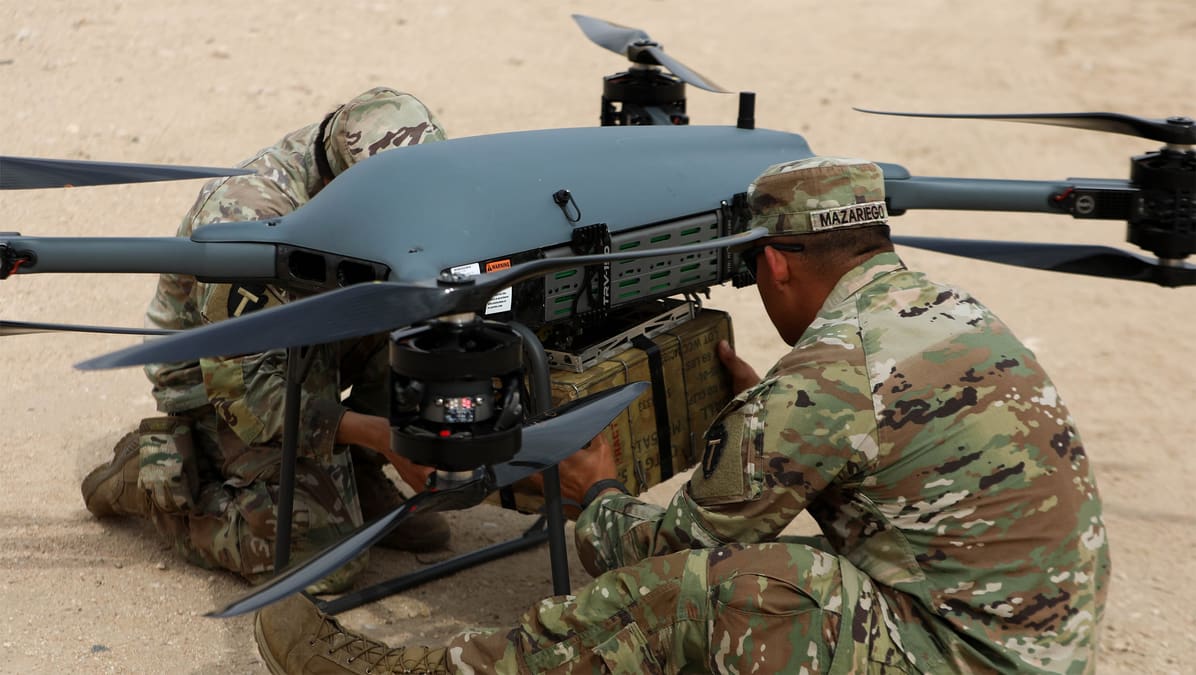
$70M in Federal Grants to Additive Manufacturing in the Last Year: How Can You Get Some?

Navigating America Makes’ collaborative project calls is becoming the defining strategy for securing a piece of the nation's surging additive manufacturing funding calls.
For additive manufacturing companies — including startups, established manufacturers, suppliers, service bureaus, research labs, universities — government funding can be a powerful route to de-risk R&D, build strategic partnerships, and move promising technologies closer to production. The notable uptick in announced DoD-backed project-call funding recently has brought more attention to how companies can get government funding.
One of the most important gateways into that ecosystem is America Makes, the U.S. national public-private partnership for additive manufacturing technology and education. Since its founding in 2012, the institute has supported more than 396 projects and helped direct more than $625 million into initiatives focused on AM technology development, transition, workforce growth, and industrial-base readiness. For companies working in 3D printing, design, materials, testing, software, or production, understanding how America Makes funding works is increasingly important.
But winning support through America Makes is not simply a matter of having a good idea. Project calls are structured around national priorities, technical roadmaps, measurable outcomes, and collaborative teams that can demonstrate a credible path from research to adoption. This article explains how AM businesses can approach those opportunities with confidence, from building the right consortium and defining clear performance targets to aligning proposals with America Makes’ roadmap, managing project data, and planning for commercialization from the start.
For many companies working in additive manufacturing, government-funded project calls can feel both exciting and intimidating. The promise of grant funding, national collaboration, and accelerated innovation is compelling, but the process can appear complex from the outside.
Yet with the right preparation, any business with a meaningful stake in 3D printing can approach proposal development with confidence. America Makes, the National Additive Manufacturing Innovation Institute, has designed its requests for proposals (RFPs) to surface the most impactful ideas from across its membership. While the requirements may seem extensive, they provide a clear roadmap for information needed to secure funding for companies ready to advance the nation’s AM capabilities.
Alexander Steeb, senior director of operations at America Makes, explains: “As a public-private consortium, we at America Makes create a structured, collaborative framework to turn additive manufacturing advancements into national capabilities. We focus on technology maturation, standards development, supplier readiness, workforce programs, and secure digital practices aligned with Department of War priorities. This way, our progress isn’t just limited to individual organizations but becomes scalable, interoperable capabilities that help boost U.S. industrial competitiveness and defense readiness.”
Funding is not the same as revenue
Project-call totals represent available or announced funding opportunities, not necessarily money paid directly to AM companies. Awards may go to consortia that include universities, primes, labs, nonprofits, and suppliers. Companies should treat America Makes funding as a way to offset R&D, generate qualification data, join transition-focused teams, and gain visibility inside the AM industrial base—not as a simple sales pipeline.
The Institute serves as an impartial, government-aligned platform that unites industry, academia, small manufacturers, depots, and federal agencies to create a cohesive AM ecosystem. With over 350 members, including primes, regional suppliers, standards organizations, and research institutions, America Makes fosters collaboration, reduces entry barriers, and expands the number of companies capable of supporting Department of Defense requirements.
Based on organizational guidance, Steeb examines how businesses can position themselves for funding through America Makes.
Recent calls show where the money is going:
- AM Process Advancement and Stability
- Inspection, Qualification, and Quality Assurance
- Sustainment, Repairs, and Lifecycle Readiness
- Digitalization and Modernization of Manufacturing Infrastructure
- Materials Innovation and Supply Chain Resilience
- Workforce Development, Training, and Industrial Base Expansion
- Technology Landscape Assessments and Future Planning
Build the Right Team Before You Build the Proposal
Additive manufacturing innovation does not happen in isolation. Winning America Makes proposals almost always begin with a well-crafted, well-balanced team. A successful team might include a university plastics engineer, a materials scientist from a leading institution, and an expert from a manufacturing firm.
Think of it as assembling a championship roster. Each partner must bring clear value, whether through technical expertise, materials knowledge, machine capabilities, design experience, or industrial application insight. Funders are not only assessing the idea itself but also the individuals responsible for it.
Successful teams articulate:
- Clear roles
- Credible experience
- Complementary capabilities that reinforce the proposal’s goals
- Strong teams signal strong outcomes, and funders take notice.
Ground Your Project in Real, Validated Need
One of the most common missteps for new proposers is assuming that a promising idea is automatically a good fit for a project call. For instance, a team proposing a new method to reduce the weight of drone components should identify the specific military challenges it addresses.
America Makes reviewers want to see evidence-based justification:
- Why does this work matter?
- What gap does it fill in the AM community?
- What prior research, industrial challenge, or performance barrier does it address?
- Why now? Why you? Why this team?
A compelling proposal meets the RFP requirements and articulates how the work advances the broader national AM ecosystem. Reviewers seek assurance that the effort is not simply a repeat of previous work but is actually building on or accelerating it in a meaningful way.
When proposers can answer, “Why is this unique, necessary, and timely?” they’re already ahead.
Recipients Include Some Familiar Names
Public America Makes award announcements over the past decade show participation from a broad mix of AM companies and industrial end users, including: 3D Systems, EOS, Velo3D, Divergent Technologies, Autodesk, Carbon, 6K Additive, and Addman.
Treat Your Technical Approach Like a Blueprint
Technical complexity is a given in AM-focused proposals. The mistake many teams make is overwhelming reviewers with dense, unstructured information. A successful submission on a novel metal 3D printing technique might present a clear methodology outlining phases for design iteration, material testing, and performance validation.
The strongest submissions read more like clean architectural plans:
- Sequential tasks
- Clear interdependencies
- Logical flow from problem → method → outcome
- Welldefined responsibilities
- Transparent rationale behind each step
America Makes seeks assurance that your team can deliver on schedule, within budget, and aligned with the mission. Clear communication is valued and offers a competitive edge.
Define Success with Precision, Not Hope
Without clear, quantifiable success criteria, even the most promising proposals can read like
exploratory science experiments. For example, a project focused on improving the thermal stability of materials might define success with specific temperature thresholds or lifecycle testing results.
Key Performance Parameters (KPPs) are where successful teams demonstrate that they understand:
- What the AM community needs
- What decision makers look for
- What constitutes measurable, actionable progress
Strong KPPs might focus on:
- Cycle time reduction
- Cost decrease relative to current baselines
- Boosts in mechanical performance
- Improvements in productivity
- Meaningful shifts in microstructure or process stability
Equally important is demonstrating how the proposed technology can transition beyond the project itself. Reviewers increasingly look for evidence that a solution can be adopted by industry, integrated into existing manufacturing environments, and ultimately create value in the commercial marketplace. A clear path to commercialization signals that the project’s impact can extend well beyond the period of performance.
The more your KPPs reflect industrial relevance and technological maturity, the more compelling your proposal.
Prioritize Data Management as a Strategic Deliverable
Data management is the backbone of a strong proposal. Establishing robust data protocols that track material properties and manufacturing parameters, for instance, can greatly enhance reproducibility and compliance with quality standards.
Funded teams should be prepared to coordinate:
- What data will be collected
- How it will be measured
- How definitions will be standardized
- How traceability will be maintained
- How datasets will be structured for reuse by the wider membership
Prioritizing data management not only supports internal project execution but also builds trust with funders and stakeholders, demonstrating a commitment to transparency and accountability. Weak data management undermines everything else.
Tie Your Work Directly to the America Makes Roadmap
The Institute’s technology roadmap serves as a strategic compass, shaped over years of community engagement, and has become a crucial tool in RFPs. For example, a team developing a new AM process for aerospace components might outline how their performance reduces material waste and enhances strength-to-weight ratios in line with roadmap sustainability goals. If there are gaps in the roadmap, teams should advocate for new requirements that highlight potential benefits, such as advanced materials with improved mechanical properties.
Funding reviewers prioritize teams that:
- Show explicit alignment to existing roadmap requirements
- Identify where new requirements may be needed
- Participate in working groups
- Engage with member feedback
This is one of the most underutilized advantages available to companies seeking funding. Engaging in roadmap development strengthens proposals and the entire AM ecosystem.
Prepare for the Final Report from Day One
Many proposers focus heavily on the execution phase but overlook the reporting requirements that follow. America Makes structures project timelines to include specific reporting periods for review, revision, and finalization. A project developing a new AM technique would benefit from collecting data and maintaining documentation throughout the process. This preparation leads to a more comprehensive final report that highlights outcomes and lessons learned.
Teams that plan early, collect data accurately, maintain documentation, and draft continuously enter the reporting phase with significant momentum. Those who don’t often end up scrambling.
Strong reporting effectively closes a project and helps to widen its impact, showcasing responsible management of federal funds.
In the past year (April 2025–April 2026), America Makes released 14 competitive project calls totaling more than $72.5M in funding, including two spring 2026 calls valued between $14M and $25M, to strengthen the additive manufacturing technology pipeline and foster collaboration among industry, government, and academia.
A Call to Action for AM Businesses
The path to securing America Makes funding is methodical, transparent, and built on collaboration. The organizations that succeed are those that engage early, participate actively, and treat proposals not as forms to complete but as opportunities to shape the future of additive manufacturing in the United States.
If your business prints, designs, tests, or deploys AM technologies, get involved. Start by attending a working group, joining a project call, reviewing the roadmap, and building your dream team. The next breakthrough in American additive manufacturing could come from you.
Interested in learning more? Please connect with our membership team at membership@americamakes.us.
Dawn Marzano is the communications director at America Makes.
About America Makes
America Makes is the nation’s leading public-private partnership for additive manufacturing (AM) technology and education. America Makes members from industry, academia, government, and workforce and economic development organizations work together to accelerate the adoption of AM and the nation’s global manufacturing competitiveness. Founded in 2012 as the Department of War’s National Manufacturing Innovation Institute for AM and the first of the Manufacturing USA network, America Makes is based in Youngstown, Ohio, and managed by the not-for-profit National Center for Defense Manufacturing and Machining (NCDMM). Learn more at americamakes.us.
License: The text of "$70M in Federal Grants to Additive Manufacturing in the Last Year: How Can You Get Some?" by All3DP Pro is licensed under a Creative Commons Attribution 4.0 International License.