Why Prusa Just Removed Wi-Fi & Cameras From Its Top Printers

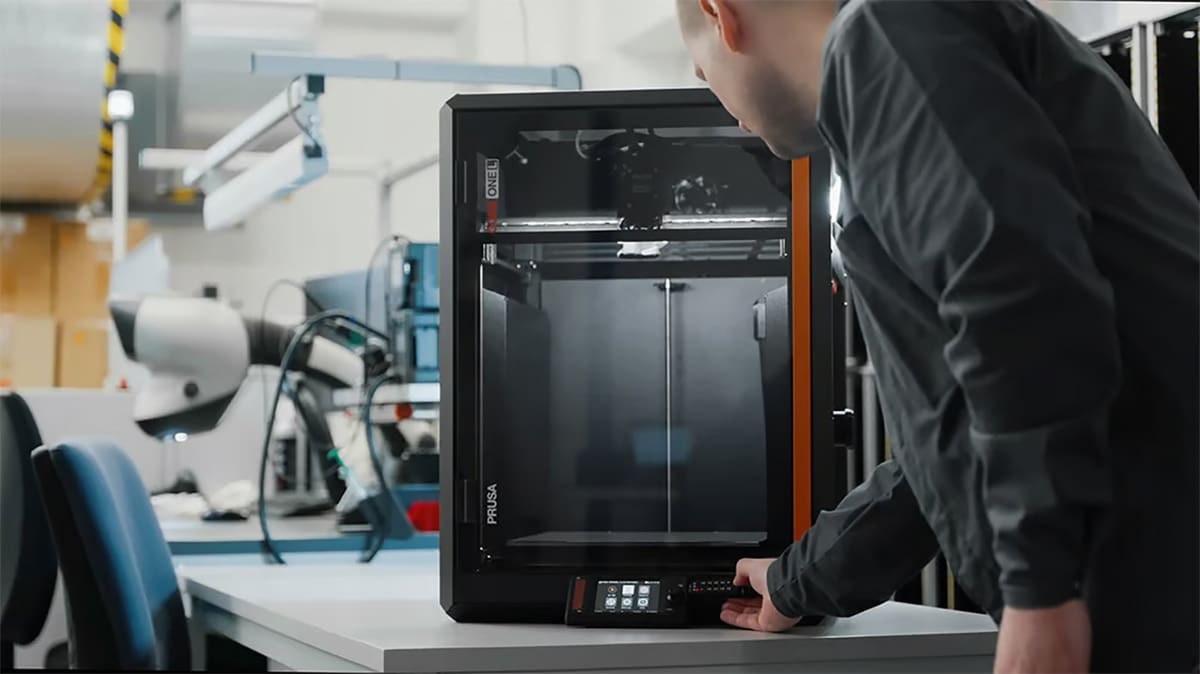
Prusa’s new "Critical Infrastructure" editions of the Core One L and Prusa XL physically strip some features in order to guarantee an air-gapped secure workflow.
In an era where every smart device is a potential security leak, Prusa Research is taking a radical step backward to move forward: it is physically breaking its own connectivity. It just unveiled a new line of “Critical Infrastructure” editions for its Core One L and Original Prusa XL 3D printers, targeting high-security sectors, such as defense, aerospace, and advanced manufacturing.
Amid growing industry concerns regarding data privacy and network vulnerabilities in desktop 3D printing and the growing adoption of desktop 3D printers in enterprises and sensitive facilities, the Czech manufacturer is taking a hardline approach.
Unlike “stealth modes” found on consumer printers that rely on software toggles or physical switches to turn on or off network access, these new editions physically eliminate the threat: the Wi-Fi connectors and related wireless circuitry have been physically removed from the custom mainboards.
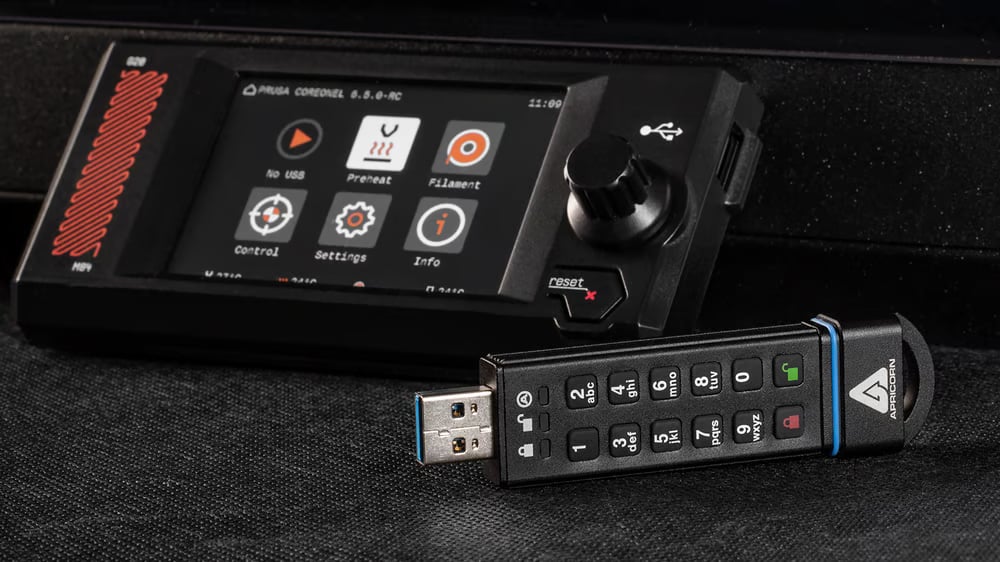
The new “Critical Infrastructure Edition” machines are designed as a “true, verifiable air-gapped solution”. According to the company, this eliminates the attack vector of a network-connected device entirely, ensuring full functionality in a 100% offline environment.
In addition to the modified mainboard, these units ship without cameras and include a certified, encrypted USB drive for data transfer. To meet stringent government and enterprise protocols, Prusa also provides letters of volatility, certifying that the machines do not retain sensitive data after power cycles.
“We Definitely Don’t Play the Game with Security”
In an interview with All3DP, Prusa CMO Rudolf Krcmar emphasized that for their clients in sectors like defense, security is not a marketing gimmick but an operational necessity.
“For us the security is like something which is statement promise and it’s becoming a larger amount of our market,” Krcmar says. “We definitely don’t play the game with security. For us the security is something which is absolute.”
When asked how much of the burden of security should fall on the 3D printer maker and how much on the enterprise, Krcmar points to the European security standards that Prusa must comply with, but notes that the company “always aims to go the extra mile.”
For Prusa, the goal is to provide peace of mind that a printer sitting in a research lab or a secure facility isn’t a leak point.

The Prusa move comes as the data security of internet-connected 3D printers is increasingly scrutinized. The British army was lambasted in the press last month for using China-based Bambu Lab 3D printers in a drone manufacturing military exercise.
Printer manufacturers are now rushing to add safety features like removable Wi-Fi modules and encrypted data transfer to better serve industrial clients. Like Prusa, Bambu Lab has gone to new lengths to promote new security features, including an air-gapped mode for some of its printers and an online Trust Center that details the full breadth and depth of Bambu Lab’s security architecture — from hardware-level encryption to third-party data storage.
Netherland-based UltiMaker launched its Secure Line of FDM 3D printers this past summer. The Secure Line, completely stripping its S6 and S8 of any risky hardware or software, even the cameras.
The Prusa CORE One L Critical Infrastructure Edition retains the performance specs of the standard model, featuring a massive 300 x 300 x 330 mm build volume and a CoreXY kinematic system housed in a steel exoskeleton. It also has an AC convection heatbed designed to handle advanced engineering materials like PC and ASA without warping.
Prusa also stressed the transparency of its supply chain. The custom mainboards are manufactured on Prusa’s own PCB production line in Prague, and final assembly occurs in both the EU and the USA (Delaware).
Prusa has robust security features on its other 3D printers as well, including encrypted communication with its cloud platform, Prusa Connect, two-factor authentication for your Prusa account, and a new camera with custom firmware. The Prusa Pro HT 90 was built for enterprise environments with security in mind, including options to run it completely offline by removing the Wi-Fi for secure cells, Prusa Chief Marketing Officer Rudolf Krcmar told All3DP. It’s a good fit if you want security-conscious options without giving up remote ops.
A Commitment to Open Source
While some manufacturers are creating “walled gardens” to purportedly enhance security, Prusa argues that their open-source philosophy makes them more trustworthy. Krcmar noted that this transparency actually helped them gain entry into highly secretive environments.
Krcmar says that because Prusa’s software is open-source, the broader community can inspect the code for vulnerabilities or backdoors. Bugs and vulnerabilities can potentially be spotted and patched faster because more eyes are on the code.
The Critical Infrastructure Editions of the Core One L and Original Prusa XL are available now (prices have not been released but you can request a quote) with lead times currently estimated at 6–7 weeks.
You May Also Like:



Listen to All3DP’s News Podcast:
License: The text of "Why Prusa Just Removed Wi-Fi & Cameras From Its Top Printers" by All3DP Pro is licensed under a Creative Commons Attribution 4.0 International License.