Why Large-Scale 3D Printing Beats Glued Parts

A larger 3D printer build volume means less compromise in a part’s design, functionality, and performance.
For most people, the first step into additive manufacturing begins small, with a desktop 3D printer. It starts with printing fairly simple objects, letting users dip their toes before diving into large, high-performance parts. However, when large components that exceed desktop build volumes enter the picture, there are compromises.
The common solution is to split the part into multiple prints, assembling it with glue or interlocking parts afterward. This can be expensive in terms of print time and material use, reducing geometric accuracy and introducing weak points in the assembled part.
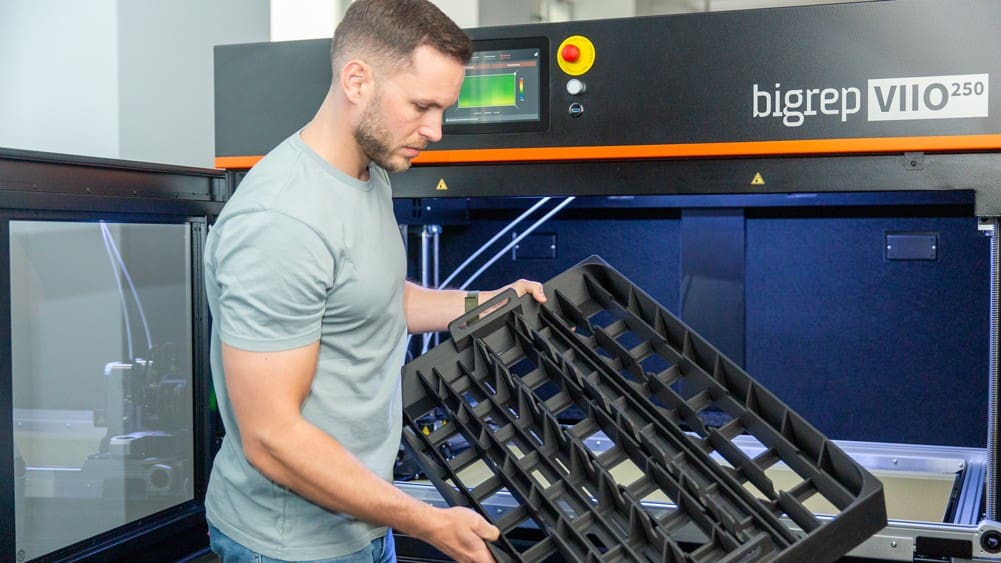
The giant leap in additive manufacturing comes when users upgrade to large-scale 3D printing. With build volumes of up to one cubic meter, the technology can be used to its full potential, as parts can be printed in their intended size and geometry from the start. Large-scale 3D printers print both big and small parts with ease, can be used for batch production, and have configuration options such as dual extruders, automated filament handling, and so on.
“One of our first and most difficult projects was a 3D printed polypropylene canister, which led us to invest in a BigRep machine because a PP part of this size could only be produced with a large-format printer with a heated build chamber,” says Stephan Mayer, WashTec Research & Development.
When printing moves beyond entry-level polymers and into engineering materials such as ABS, PC, and PP, large format 3D printing makes an even more compelling case.
ABS filament is trusted for functional prototypes, housings, tooling, and production aids. It balances toughness, ease of printing, and cost. Polycarbonate (PC) is used when applications need strength and higher thermal resistance. Polypropylene (PP) brings low weight, chemical resistance, and toughness, which makes it attractive for end-use components, containers, ducts, covers, and other industrial parts. The challenge is that these materials aren’t always the best candidates for glued parts.
When the goal is a robust functional part, secondary assembly steps can undercut the very performance benefits the material was chosen for in the first place.
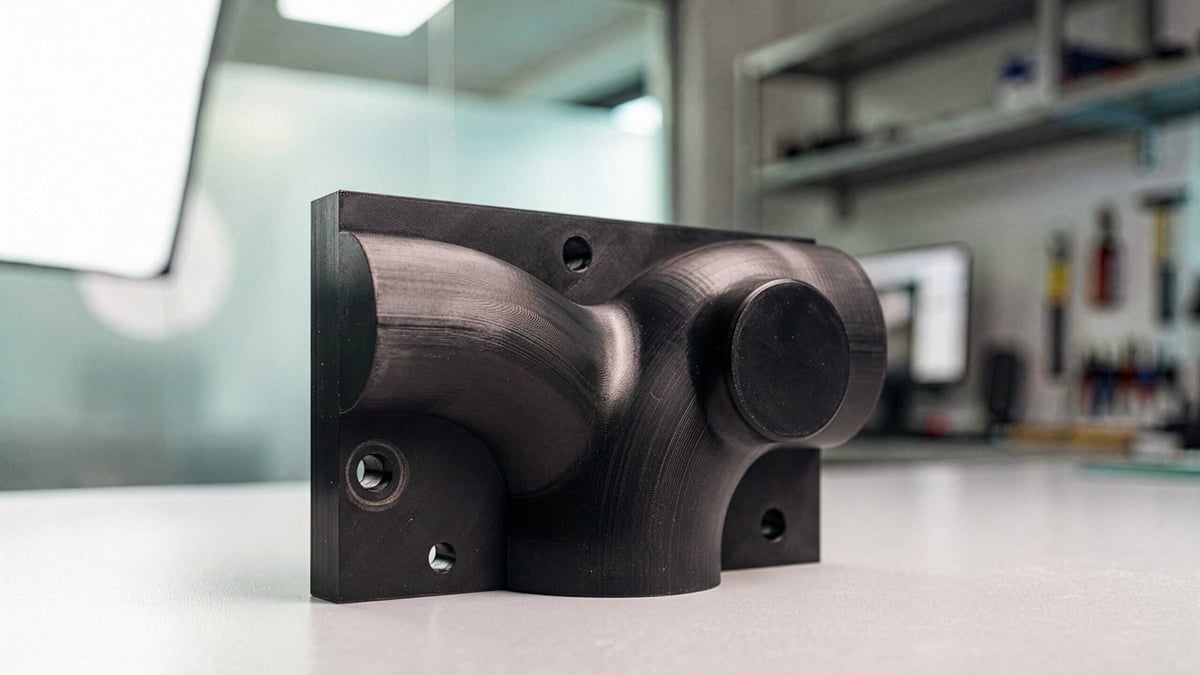
This is where 3D printers like the BigRep VIIO and IPSO are the answer to industrial-scale additive manufacturing.
The VIIO is designed for automated large-format 3D printing, making it a good fit for users who want to produce parts with little to no intervention. The machine is built with breakthrough automation features: a backup extruder function known as Relay Mode, auto-bed calibration, auto-sequential printing, and the automated filament handler – Infinity Box – with 32 kg of filament.
For customers who need high-temperature capabilities to print with technical and engineering-grade materials, the IPSO fits the bill perfectly. It features a build chamber that reaches up to 100 °C, a print bed that heats up to 140 °C, and an extruder temperature of 450 °C. It is perfect for printing with materials such as PP and PC, where stable chamber conditions and high extrusion temperatures help improve dimensional accuracy, layer adhesion, and reliability in functional parts.
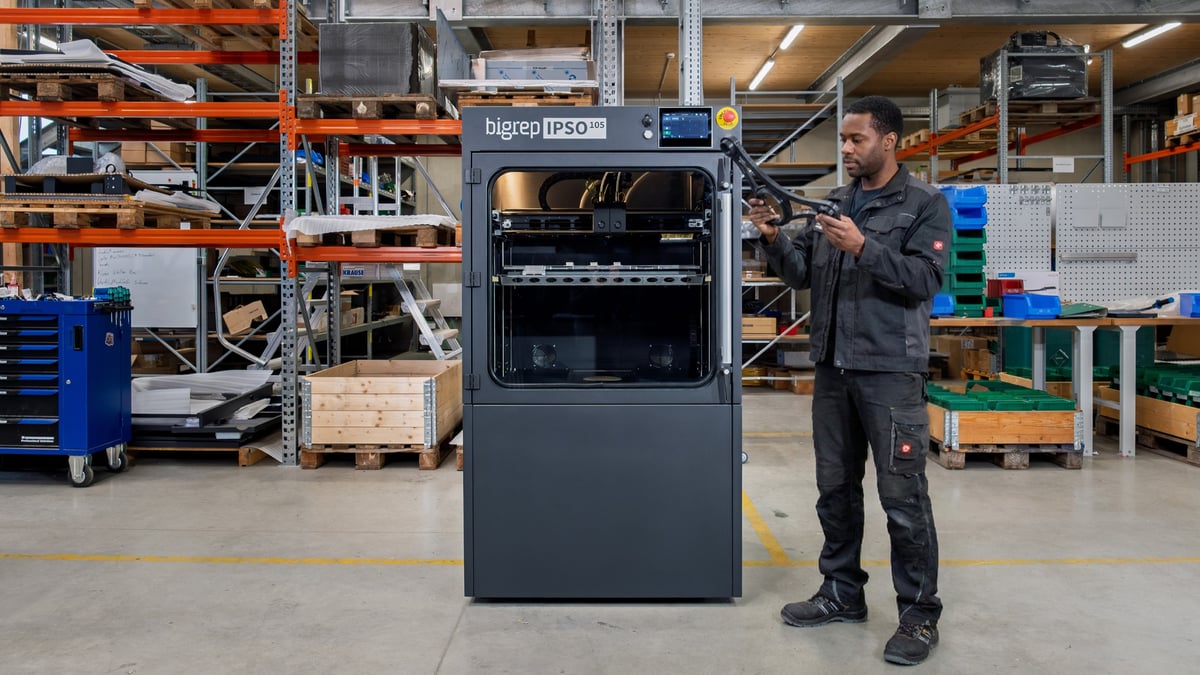
While these machines are a bigger investment than desktop 3D printers, the ROI justifies it. Industrial giants like Airbus or Ford Motor Company found that their investment in a large-scale BigRep 3D printer returned in less than a financial quarter. “After two or three successful prints, the BigRep printer was already paid for,” said Lars Bognar, a research engineer at Ford.
In industrial environments, the value of large-format 3D printing becomes especially clear in applications such as jigs and fixtures, molds, assembly aids, machine covers, ducting, and full-scale functional prototypes. These are parts that need to fit, perform, and hold up in real working environments. Printing them in one piece not only reduces labor but also delivers high-quality parts consistently and reliably, better suited to the application they were designed for.
Ready to stop printing in small pieces? Upgrade to BigRep for large industrial-scale 3D printers. Contact an expert today.
License: The text of "Why Large-Scale 3D Printing Beats Glued Parts" by All3DP Pro is licensed under a Creative Commons Attribution 4.0 International License.