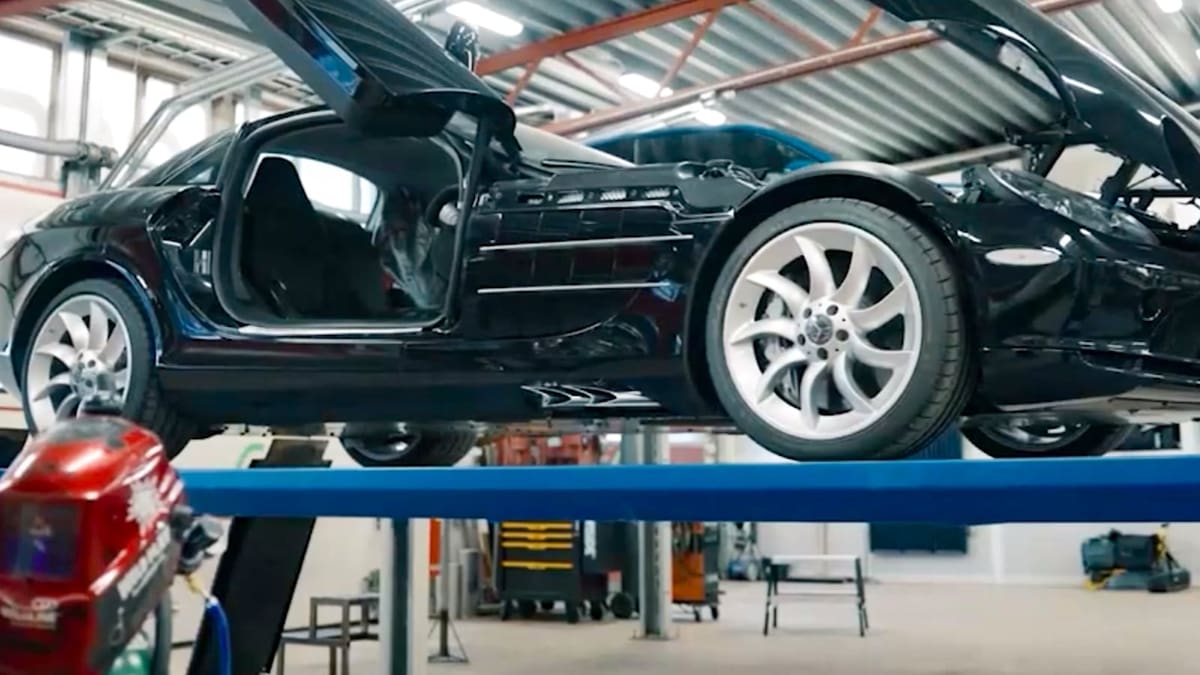
Why 3D Print These Custom Mercedes SLR McLaren Exhaust Tips? 50% Cost Savings, Made in 5 Hours

Swedish exhaust specialist Ferrita used a Meltio robotic wire-laser DED system to produce two matching stainless-steel side-exhaust tip assemblies for a customized Mercedes-Benz SLR McLaren, reportedly halving the cost of conventional production.
Producing one unusual exhaust-tip assembly is relatively straightforward. Producing a mirrored pair with matching complex geometries, under a one-week deadline and without investing in dedicated tooling, is a different proposition.
That was the challenge facing Swedish exhaust specialist Ferrita Sweden AB when a customer brought in a 2003 Mercedes-Benz SLR McLaren. The car was not undergoing a repair. Its owner wanted a bespoke exhaust system that would make the already rare supercar more distinctive. Ferrita used wire laser metal deposition to manufacture two paired side-exhaust tip assemblies; one positioned behind each front wheel and each terminating in two outlets.
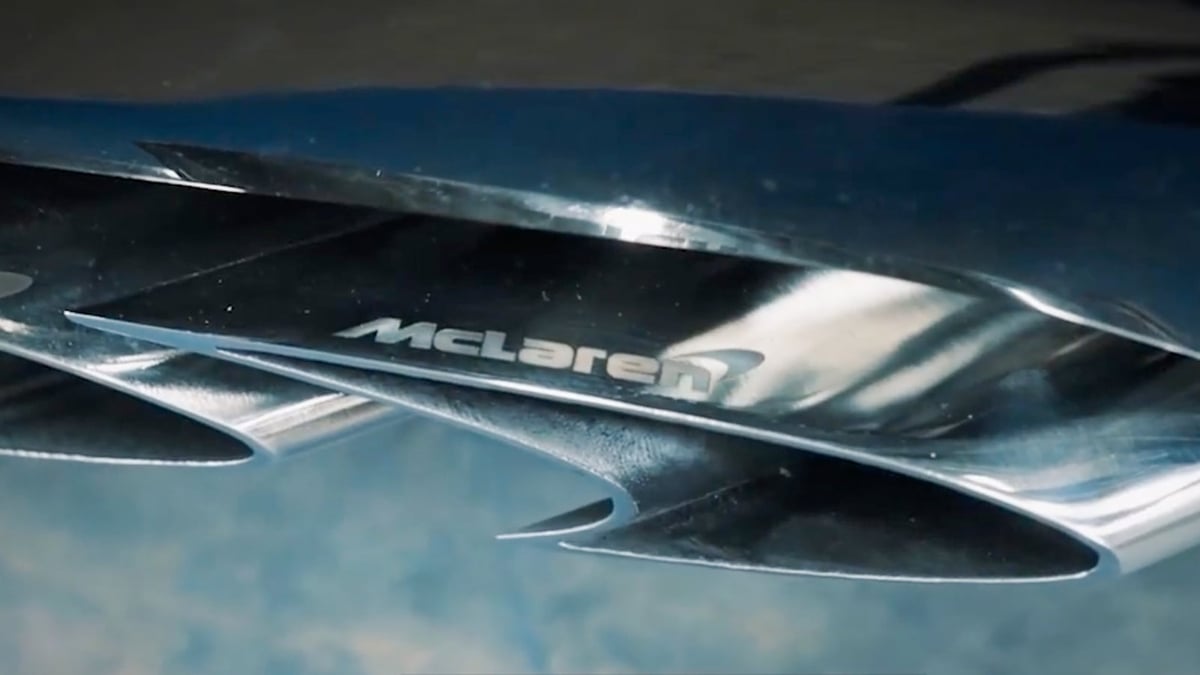
Because the entire underside of this McLaren chassis is sealed flat for airflow, there is physically no room to route traditional exhaust piping to the rear of the car. As a short-cut solution, the exhaust from the supercharged 5.5-liter V8 is routed directly out of the sides, creating one of the supercar’s most iconic design features.
Ferrita redesigned the wider exhaust system to reduce weight and heat, while using metal additive manufacturing to produce its four visible tailpipes. According to the company, the tailpipes took approximately four to five hours to print using wire-laser directed energy deposition (DED) technology from Meltio, the a bit more time to finish and polish before installation.
A One-Week Customization Window
Ferrita is known for its exhaust, sound-attenuation, vibration-control, thermal-insulation, and exhaust-gas treatment systems. CEO Micael Ljungström says the country’s project-car culture gives the it considerable freedom to experiment with custom exhaust designs.
That freedom comes with a tight schedule. Ferrita typically has access to a customer’s vehicle for only about one week. During that time, its engineers must develop a concept, measure the available space, design the system, manufacture its components, and install everything on the car.
For the SLR McLaren project, the team wanted two mirrored side-exhaust tip assemblies shaped to follow the existing lines of the vehicle. Each assembly incorporates a pair of visible outlets, giving the car four exhaust outlets in total.
Producing the assemblies conventionally would have required special tooling, making a pair of one-off parts prohibitively expensive and potentially difficult to complete within the available time.
Ferrita estimates that a tooling-based production route using conventional processes such as casting or forging would have cost close to €4,000 (or $4,500). Producing the parts additively cost around half as much, including polishing, according to the company.
From Scan to Plastic Prototype
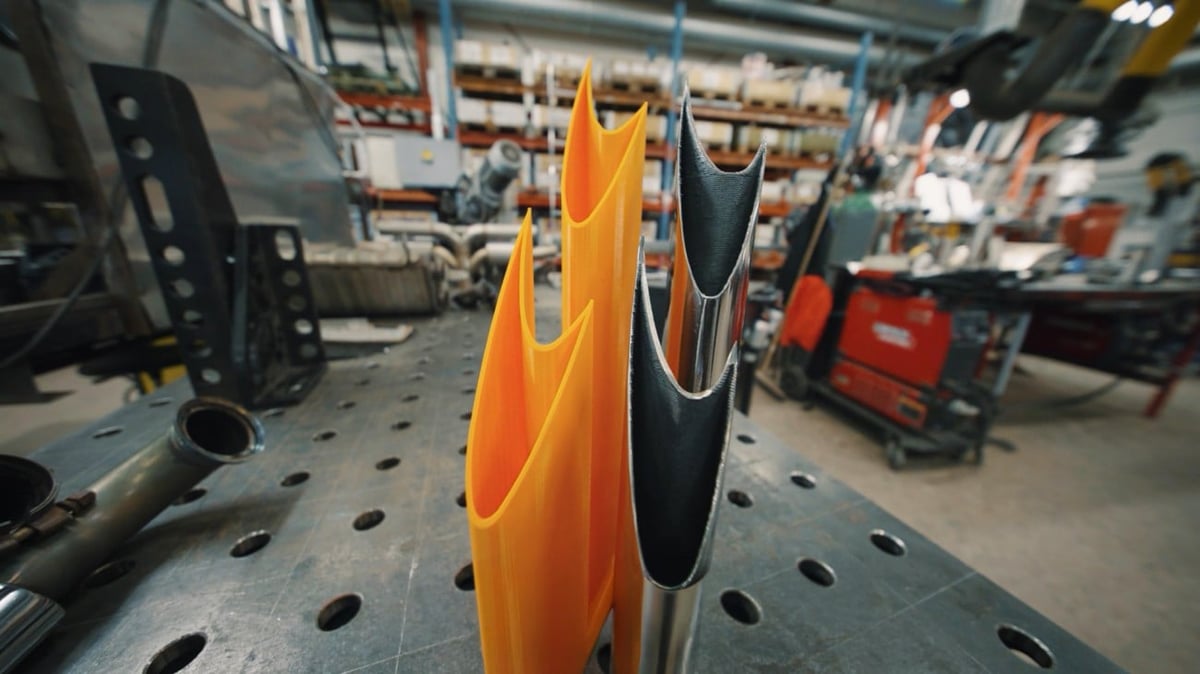
Ferrita began by scanning the area around the exhaust outlet and the relevant mounting surfaces. The resulting geometry gave its engineers a digital representation of the space available for the pipes and valves.
The team then developed the tailpipe design in CAD, adjusting it to match the bodywork while remaining within the SLR McLaren’s unusually constrained exhaust packaging.
Before committing to metal, Ferrita produced a polymer prototype. Printed in a matter of hours, the model allowed the team to check the tailpipes’ proportions, alignment, and relationship with the car’s bodywork.
Once the fit had been verified, Ferrita moved the design to its Meltio Robot Cell for metal production.
Printing Four Stainless Steel Exhaust Pipes
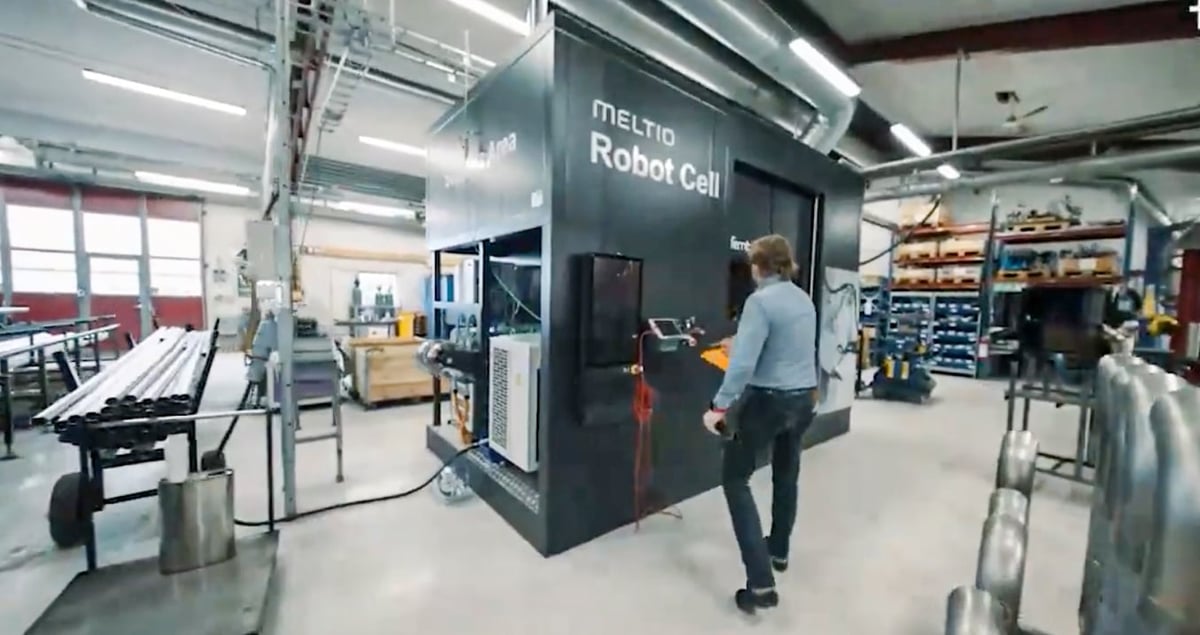
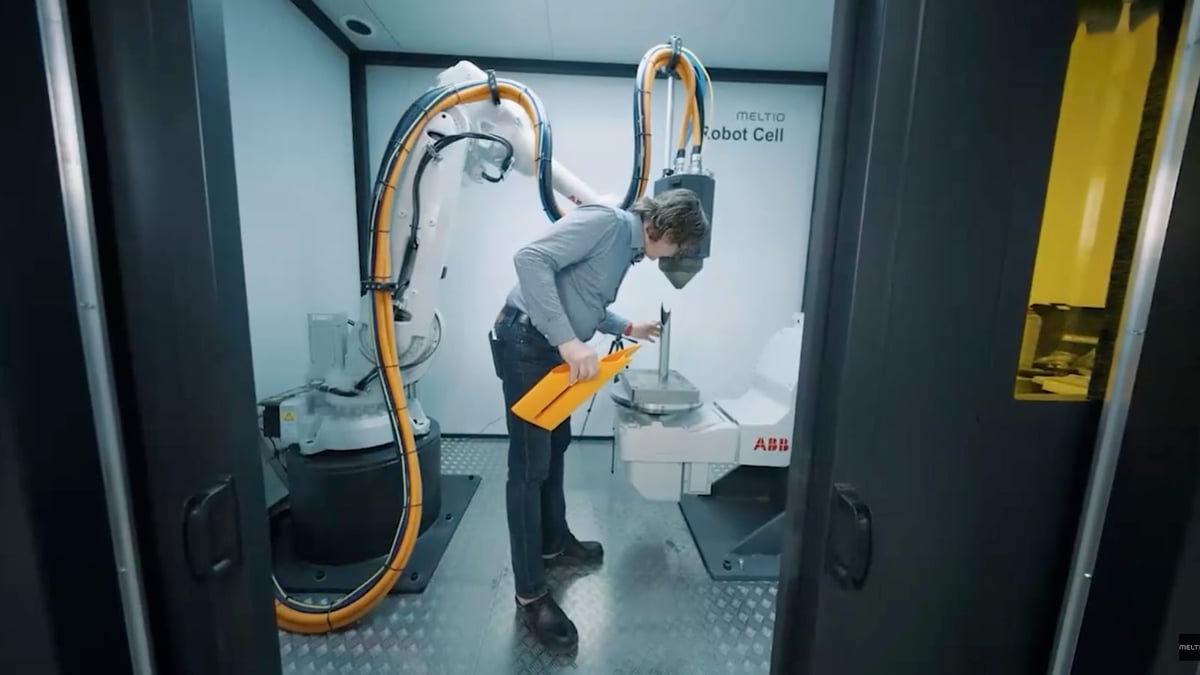
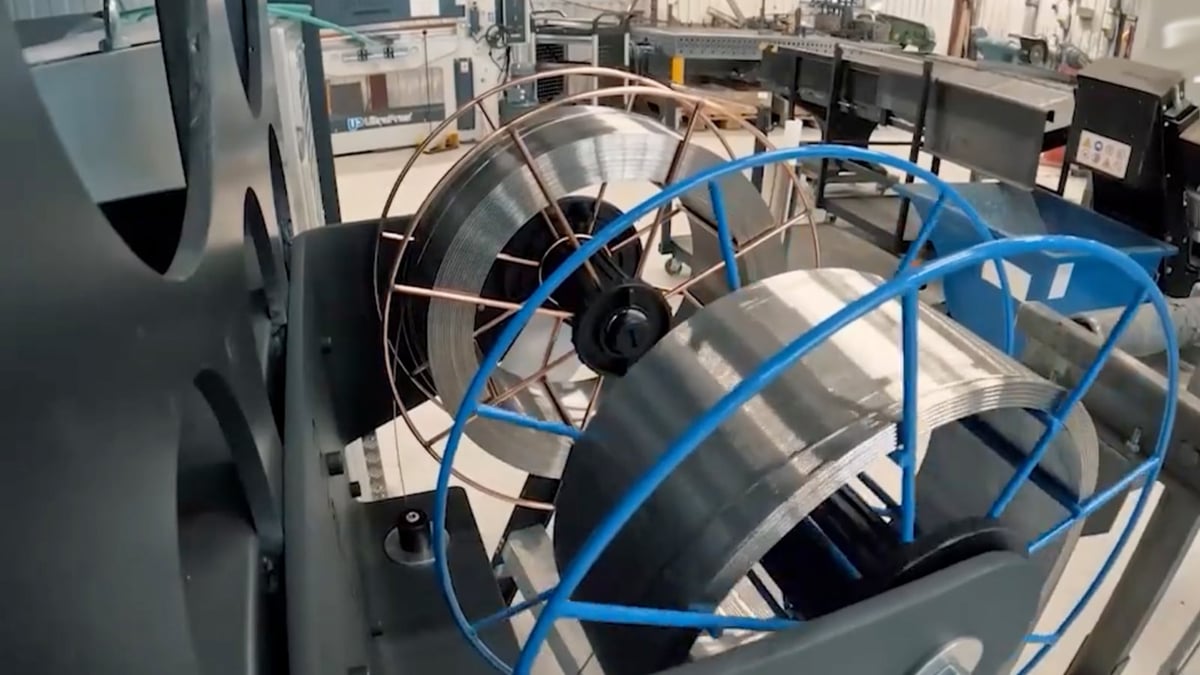
The Meltio system combines an ABB industrial robot with a wire laser metal deposition head. Rather than melting powder, it feeds metal wire into a melt pool created by nine lasers, depositing material layer by layer. There’s no hazardous metal powder and wire-fed deposition also reduced raw-material losses compared with processes, like CNC machining, that remove parts from a larger billet. Ferrita describes the deposition stage as using essentially all of the wire supplied to the build, although the complete production process still included finishing and polishing.
The Meltio Robot Cell is a turnkey, enclosed wire laser metal deposition system use for 3D printing complex geometries as well as metal-part repair, cladding, and feature addition. The Class 1 laser-safe cell includes a unified control panel, Meltio Space slicing software, a 4K monitoring camera, and an actively cooled 300 × 400-mm build platform. The complete cell measures approximately 4.05 × 2.35 × 3 meters and requires an argon supply; an optional controlled-atmosphere enclosure is available for the build area.
Ferrita printed the two paired exhaust-tip assemblies from 316 stainless steel in approximately four to five hours.
“To be internationally competitive, we entrusted Meltio and its 3D printing technology for the repair of our pieces, which helps automate the welding and repair process,” says Ljungström.
The Rest of the Exhaust Was Not 3D Printed
Although the project centered on a completely redesigned exhaust, only the four tailpipes were additively manufactured. The remaining pipes, valves, and other sections of the system were produced using Ferrita’s conventional exhaust-fabrication methods because of their standard shape. The factory exhaust was tightly packaged inside the SLR McLaren’s front-fender area and included a muffler weighing around 20 kg. Ferrita replaced this bulky component as part of the wider redesign, reducing the amount of weight and heat concentrated in that area.
Ferrita engineers also worked to improve gas flow and the character of the exhaust note. Exhaust velocity, pipe diameter, internal volume, and changes in frequency all affect how an exhaust system performs and sounds. Additive manufacturing gives engineers greater freedom to produce smooth transitions and internal geometries affecting performance that would be difficult to form or weld by hand.
More Freedom for One-Off Parts
For this build, the immediate benefit was eliminating tooling required for a custom design. Ferrita could move from a scan to a fitted prototype and then to four matching metal parts while the vehicle was still in its workshop.
It is an application particularly suited to additive manufacturing: low volumes, unusual geometry, high customization, and a deadline that makes dedicated tooling difficult to justify. The result was not a fully 3D printed exhaust tip, but a hybrid manufacturing project in which wire-LMD was used where it offered the clearest advantage.
You May Also Like:


License: The text of "Why 3D Print These Custom Mercedes SLR McLaren Exhaust Tips? 50% Cost Savings, Made in 5 Hours" by All3DP Pro is licensed under a Creative Commons Attribution 4.0 International License.