
US Navy Just Made It Easier to Replace Conventional Metal Parts With 3D Printed Alternatives

A new Navy standard will make metal 3D printing far easier to use in submarine construction and repair, allowing approved AM materials and processes to replace conventional welding and forging.
The U.S. Navy has taken a significant step toward making metal 3D printing a routine manufacturing option for its submarine fleet.
On August 11, the Director of Submarine Programs issued Project Peculiar Document PPD 802-8436658, a new technical standard that establishes when certain additively manufactured metals can be treated as interchangeable with conventionally cast or wrought materials. The Navy announced the change publicly on August 21.
This is not a sudden change of direction. The Navy has spent years developing and qualifying additive manufacturing processes, materials, and individual components. What has changed is that it now appears confident enough in certain AM routes to stop treating every qualifying material substitution as a bespoke engineering exercise.
Navy officials had already identified that as a barrier to scaling AM. In April 2024, Matthew Sermon, executive director of the Navy’s Program Executive Office for Strategic Submarines, put the problem bluntly: “I can’t afford to update every single drawing of every single system on every single ship in order to transition to AM.”
By 2025, NAVSEA was describing its expansion of additive manufacturing as a “structured, low-risk process,” supported by new military specifications for AM materials and plans to qualify more parts and materials. PPD 802-8436658 now appears to turn that groundwork into a practical substitution framework.
Under the previous approach, qualifying AM substitutions could require part-by-part engineering assessments, manual drawing modifications, and repetitive testing. The new standard is intended to avoid repeating those steps when an approved AM material meets its requirements.
In other words, the Navy is not simply approving another 3D printed part. It is establishing a reusable framework that allows previous qualification work to carry across eligible applications — an important step if metal AM is to move from individual submarine success stories to routine production and repair.
Four Material Families Get a Defined AM Route
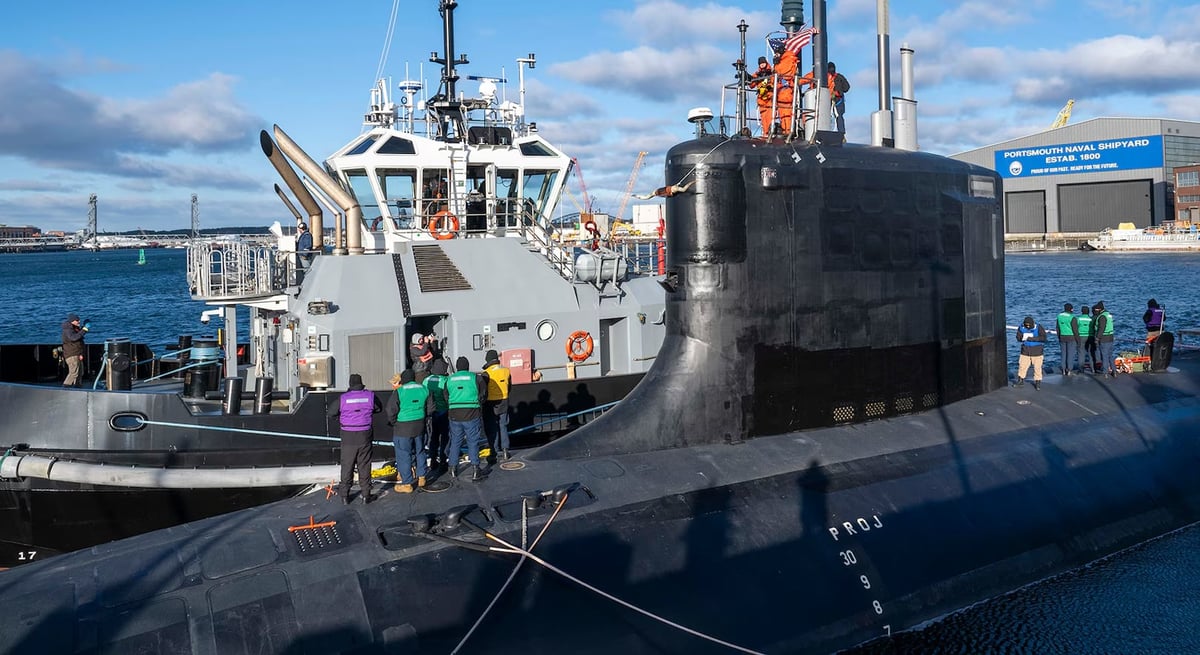
The PPD spells out which conventional materials can currently be replaced.
The table covers four broad material families, including common 304/316-series stainless steels, commercially pure titanium, 70-30 copper-nickel, and cast HY-80/HY-100 high-strength steels used in submarine applications. Depending on the material, the approved additive route is either powder bed fusion (PBF) or directed energy deposition (DED).
For example, several cast and wrought grades of 304, 304L, 316, and 316L stainless steel can be replaced by laser powder bed fusion material produced to MIL-PRF-32802. Copper-nickel has both powder bed fusion and directed energy deposition options, while commercially pure titanium uses a DED specification. The document also provides an additive route for certain HY-80 and HY-100 cast-steel applications.
Crucially, this does not mean any metal printer and nominally similar alloy can be used. The AM material must conform to the specified Navy material grade, and existing drawing requirements for properties such as hardness, tensile strength, and surface finish still apply.
The standard even specifies a fallback surface finish: where a drawing provides no requirement, AM surfaces must be machined or mechanically finished to 250 micro-inches Ra or smoother.
Skip the Repeat Explosion Test
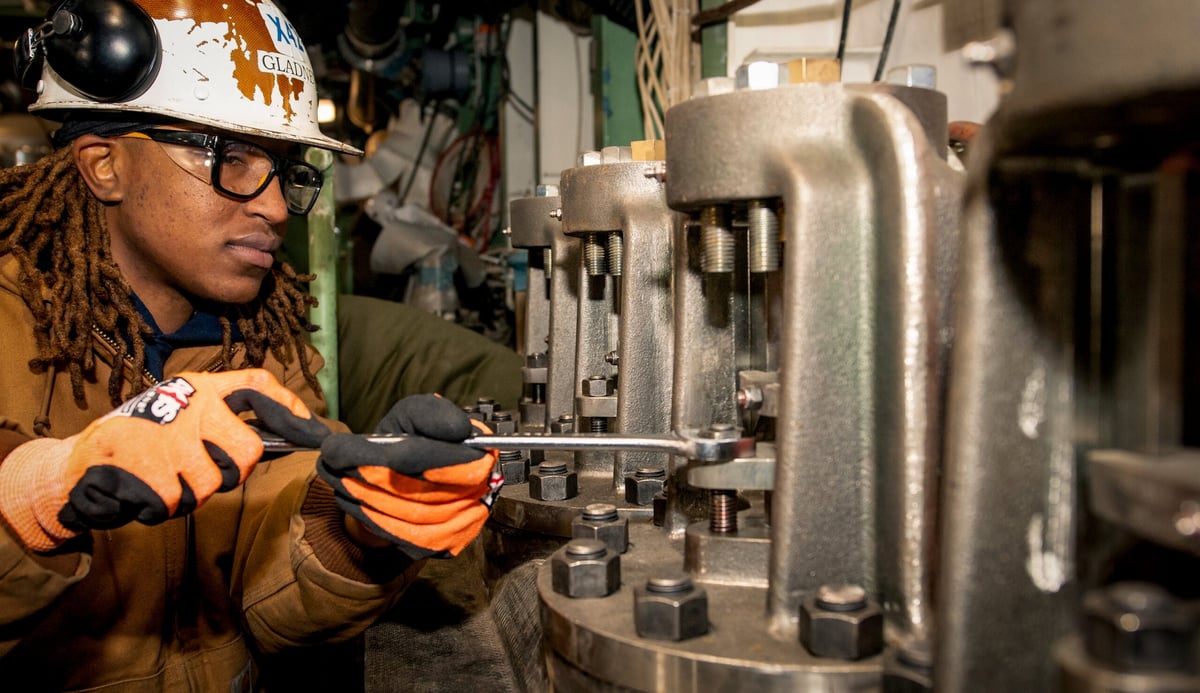
Possibly the most consequential part of the document appears several pages later.
The Navy says that when a material substitution complies with the new interchangeability table, the component design should not have to be requalified solely because its material changed from conventional to additive manufacturing.
The PPD specifically lists shock, underwater explosion (UNDEX), vibration, and acoustic testing as examples of tests that do not need to be repeated simply because an approved AM material has been substituted.
That is a major distinction from relaxing testing altogether. New designs still require their normal qualification, and a new supplier can still be required to undergo first-article or vendor-qualification testing. What the standard attempts to eliminate is repeating expensive design validation on an already-qualified component simply because an approved manufacturing-material route has changed.
That could make AM considerably more useful for one of the applications where the Navy wants it most: replacing parts with long lead times, obsolete suppliers, or limited domestic production capacity.
The Navy has already demonstrated what that can look like. Its Maritime Industrial Base program previously reported replacing a damaged submarine air-throttling valve using a part reconstructed from a 3D scan. The AM replacement was produced, tested, and delivered in less than 22 days, versus an estimated traditional procurement time of more than 18 months.
Faster Doesn’t Mean Inspection-Free
The new rules retain some decidedly submarine-grade quality controls.
Both directed-energy-deposited and powder-bed-fused components are subject to dedicated nondestructive inspection requirements. For PBF parts, for example, the standard calls for visual inspection at 5x magnification over 100% of accessible surfaces, as well as magnetic-particle or liquid-penetrant testing over all accessible surfaces. Radiographic and other volumetric inspection requirements apply according to the component and its criticality.
The rules are stricter again for high-consequence applications. Materials destined for SUBSAFE use — the Navy program governing systems whose failure could cause uncontrolled flooding or loss of a submarine — must be procured to the document’s Grade A requirements unless specifically approved otherwise. Level I materials also remain subject to additional Navy material-control requirements.
There are boundaries to the policy, too. The PPD explicitly excludes Strategic Weapons Systems and Attack Weapons Systems under Strategic Systems Programs, and it does not automatically permit hybrid construction in which features are printed directly onto a conventionally manufactured component. Hybrid parts still require separate procurement approval.
Organizations also can’t simply invoke the standard and start ordering submarine components on their own; the accompanying memorandum says they need an approved procurement strategy submitted to Team Submarine.
Still, the shift is notable. A few years ago, the Navy was qualifying individual metal AM components one by one. Now it is defining circumstances under which an approved printed metal can simply stand in for its cast or wrought counterpart.
The Navy says metal AM parts are already operating aboard the USS Washington and USS Nevada, and the new requirements are authorized for immediate use in submarine design, construction, overhaul, and repair.
For metal additive manufacturing, the most important development here may therefore be less about a new printer or spectacular part and more about something considerably less photogenic: 3D-printed metal is starting to become a normal material choice on US submarines.
You May Also Like:


License: The text of "US Navy Just Made It Easier to Replace Conventional Metal Parts With 3D Printed Alternatives" by All3DP Pro is licensed under a Creative Commons Attribution 4.0 International License.