Tungsten Carbide Was Too Hard to 3D Print, Not Anymore

Researchers in Japan have developed an additive manufacturing process for producing tungsten carbide-cobalt parts with industrial-grade hardness while potentially reducing material waste.
Tungsten carbide is one of the hardest materials on Earth, hard enough to cut steel and survive years of drilling and grinding, but that same toughness has made it nearly impossible to 3D print without ruining it. Now, researchers in Japan have cracked it: a new laser-based printing process that builds tungsten carbide-cobalt parts as hard as the ones made the traditional way, while wasting far less of this expensive material.
According to the study, published in the International Journal of Refractory Metals and Hard Materials, the team used a hot-wire laser deposition process to manufacture WC-Co cemented carbide. The material combines extremely hard tungsten carbide particles with cobalt as a binder and is widely used in cutting, drilling, and wear-resistant tools.
Its hardness, however, also makes WC-Co difficult and expensive to machine. Conventional production typically involves powder metallurgy, followed by grinding or other subtractive processes that can remove considerable amounts of costly material.
The researchers say additive manufacturing could reduce that waste by depositing cemented carbide only where it is required. Printing WC-Co remains difficult, however, because excessive heating can decompose the tungsten carbide or alter the cobalt binder, degrading the finished part.
Diode Laser + Electrically Heated Rod
The team used a Laserline LDF-6000 industrial diode laser alongside a 2.7 mm-diameter WC-Co rod. Instead of relying entirely on laser energy, the process passed a pulsed electrical current through the rod to preheat and soften it before deposition.
According to the report, the hot-wire supply operated at 100 Hz with a 50% duty cycle. The laser then delivered localized heat to the rod, substrate, and developing deposit.
The diode laser’s optics allowed the researchers to alter both the size and shape of the beam. Three configurations were tested:
- A rod-leading arrangement used 3.0 kW of laser power and a 2.3 × 3.0 mm rectangular spot.
- A laser-leading arrangement used 6.0 kW and a 2.0 mm circular spot.
- The final laser-leading configuration, incorporating a nickel-based alloy intermediate layer, used 2.8 kW and a longer 1.6 × 6.0 mm rectangular spot.
This relatively broad heating pattern differs from laser powder bed fusion, in which a tightly focused beam selectively melts thin layers of powder. Here, electrical resistance heating softened the solid WC-Co feedstock, while the shaped diode-laser beam controlled heating around the deposition area.
Controlling Heat & Carbide Decomposition
The researchers initially tested a rod-leading arrangement, with the WC-Co feedstock positioned ahead of the laser. According to the study, this produced decomposition products and defects because the laser irradiated the deposited carbide too intensely.
Moving the laser ahead of the rod reduced decomposition and produced a more stable deposit. However, the resulting material did not initially reach the required hardness.
The team then inserted a nickel-based alloy intermediate layer between the iron substrate and the WC-Co deposit. The researchers say this layer helped control dilution from the substrate and reduced degradation of the cemented carbide.
Careful temperature management was also important. The process needed enough heat to melt or soften the cobalt-rich binder phase, but not so much that the tungsten carbide grains grew excessively or decomposed.
With the adjusted laser-leading process and intermediate layer, the team produced cemented carbide without significant defects or major changes in hardness and grain size. The report states that the deposited material achieved a Vickers hardness of approximately 1,400 HV, comparable with conventionally manufactured WC-Co.
You May Also Like:


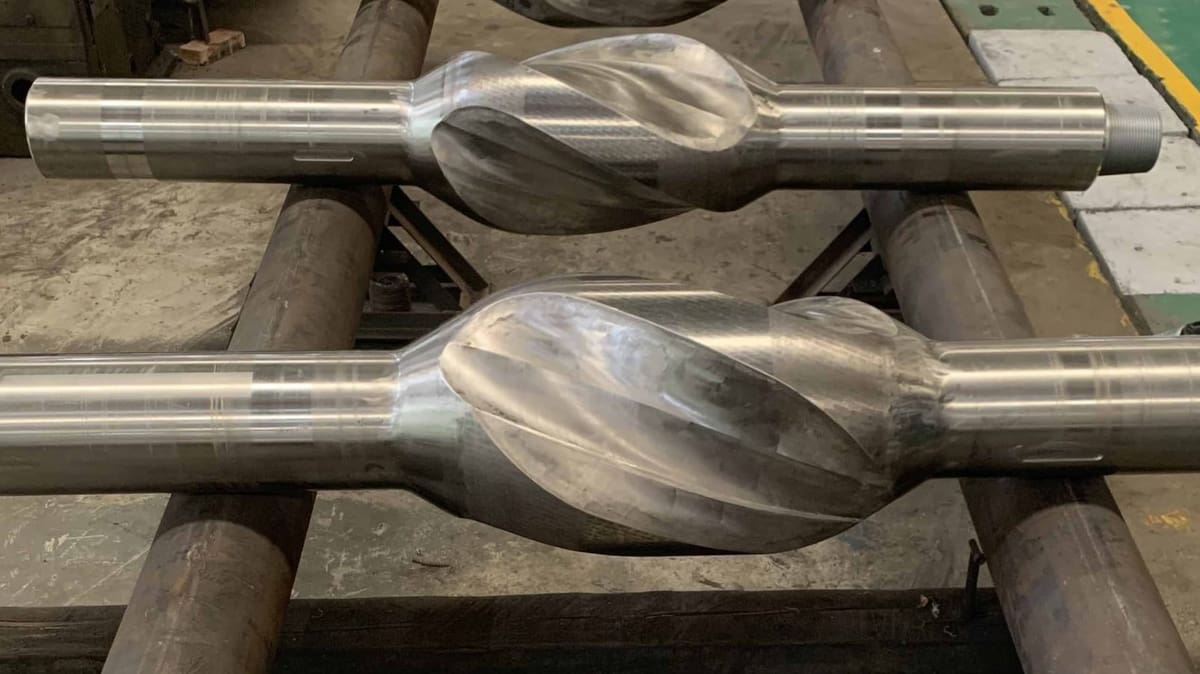
Main image caption: This Non-Magnetic Integral Blade Stabilizer from manufacturer GPE Oil Machinery combines one-piece blade construction, precision-machined connections, and tungsten carbide hardfacing for demanding oilfield service. It was not 3D printed. No 3D printed part images were releases as part of the research.
License: The text of "Tungsten Carbide Was Too Hard to 3D Print, Not Anymore" by All3DP Pro is licensed under a Creative Commons Attribution 4.0 International License.