This 2.5-Meter Metal 3D Printer Switches Between Wire & Powder

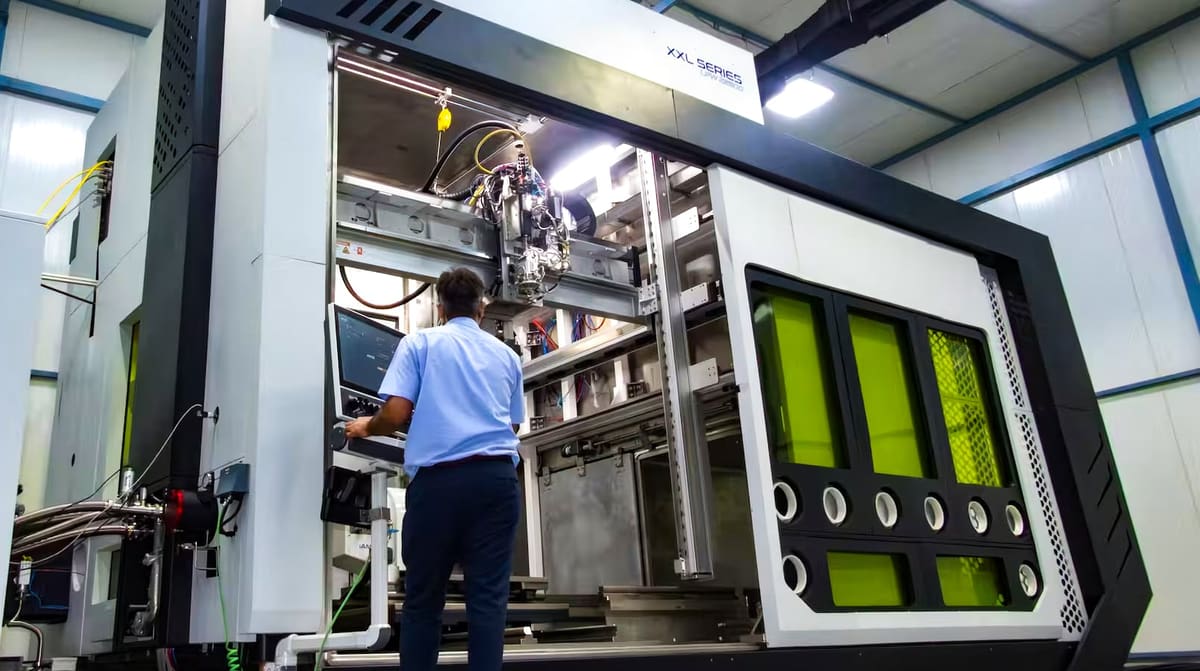
iAM3D’s enormous LPW Z2500 combines powder- and wire-fed laser DED in one machine, with a 2.5-meter-tall build envelope, 6-kW laser, and controlled argon atmosphere.
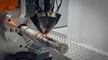
Indian start-up iAM3D’s new LPW Z2500 is a metal 3D printer with a 2.5-meter-tall build volume that switches between two entirely different ways of building parts: laser deposition with powder, or with wire. The India-based startup’s machine uses an integrated beam switch to move between the two feedstocks without swapping systems — a rare combination in extra large-format directed energy deposition (DED).
That combination is arguably more interesting than the machine’s considerable size. Different deposition modes give iAM3D a way to address different jobs without requiring separate DED systems: the company positions powder deposition for higher-resolution freeform fabrication and surface engineering, while wire is its option for particularly high deposition rates.
And there is plenty of room to put those capabilities to work.
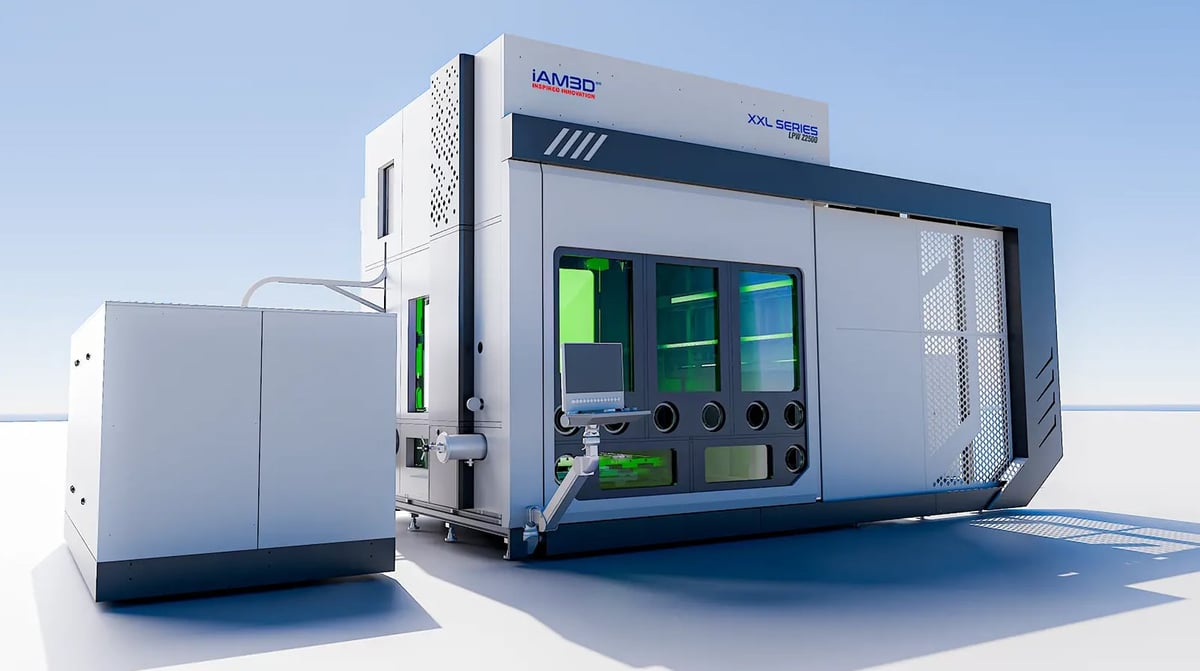
Dual-feedstock DED itself isn’t unprecedented. Systems from Oscar-PLT, Prima Additive, and FormAlloy also offer routes to depositing both powder and wire. Where iAM3D’s machine stands apart on paper is the scale at which it combines those capabilities inside a controlled argon atmosphere.
Powder or Wire
The choice of feedstock comes with different advantages. For powder-fed freeform fabrication, iAM3D specifies deposition rates of up to 1 kg per hour. Powder-fed cladding can reach 3 kg per hour, while switching to wire raises the maximum claimed deposition rate to 4 kg per hour.
That allows the same system to address jobs with different priorities. Powder can be used when finer material placement or surface processing is required, while wire offers faster material deposition for larger builds.
iAM3D is positioning the LPW Z2500 for more than simply printing new parts. The company lists repair, hybrid manufacturing, and laser surface engineering among its intended uses, with potential applications including rocket nozzles, propellant tanks, turbine components, shafts, seals, marine hardware, and wear-resistant surfaces.
The manufacturer says the system can process metal AM alloys available in either powder or wire form, with a particular focus on titanium, nickel-based alloys, and refractory metals.
Keeping the Atmosphere Under Control
Those materials also explain the machine’s fully enclosed argon environment.
iAM3D specifies an oxygen level of 10 ppm for the system, providing a controlled atmosphere for processing reactive alloys. The company has separately demonstrated titanium deposition using both powder and wire in the machine.
Process monitoring includes HDR melt-pool imaging, pyrometer feedback, and live diagnostics. iAM3D also lists machine-learning software and a process library among the LPW Z2500’s features, although it has published few details explaining precisely how the machine-learning component influences the deposition process.
The LPW Z2500 is the flagship system from iAM3D, which was founded in 2024 and focuses on large-format laser DED.
Its individual ingredients aren’t unprecedented: both wire- and powder-fed DED are established technologies. The more interesting proposition is putting both into a single, very large controlled-atmosphere platform.
For manufacturers handling large components, that could mean using powder when precision matters and switching to wire when deposition speed takes priority — without changing machines.
For all the specifications iAM3D has published, several practical details remain undisclosed, such as list pricing, order lead times, installation requirements.
You May Also Like:
License: The text of "This 2.5-Meter Metal 3D Printer Switches Between Wire & Powder" by All3DP Pro is licensed under a Creative Commons Attribution 4.0 International License.