Study Finds 3D Printing to Repair Aging Bridges Could Save Billions and Keep Traffic Flowing

Cold spray 3D printing can replace welded and bolted plates for faster and more efficient infrastructure repair.
According to a recent American Society of Civil Engineers’ (ASCE) report, about half of bridges in the U.S. are in only “fair” condition, while 7% are in poor condition and may need to be replaced. Repairing fair bridges before they become poor bridges can save an enormous amount of money, time, and traffic disruption.
This is why the ASCE has called for more funds to research innovative technologies, materials, and construction techniques to extend and preserve the life of bridges, which is just what the University of Massachusetts Amherst has been up to.
Last month, in a first-of-its-kind proof-of-concept, UMass researchers used a 3D printing technology called cold spray on a Western Massachusetts bridge built in 1949.
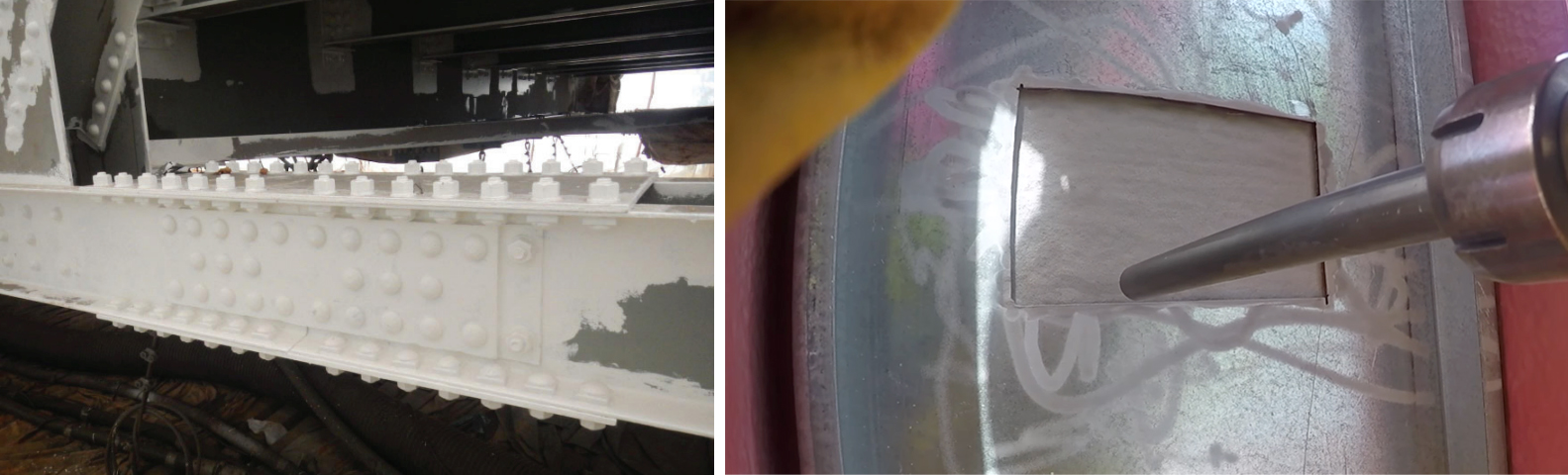
Cold spray involves spraying high-velocity metal powder particles to bond with and coat deteriorated sections of a bridge’s metal beams. Repeated sprays create multiple layers, restoring thickness and other structural properties to the treated area. Unlike welding, cold spray does not melt the powder feedstock during deposition, minimizing oxidation, thermal residual stresses, and phase transformations in the deposits, according to the university’s report. Cold spray has been successfully tested by the U.S. military for field repairs of battle vehicles.
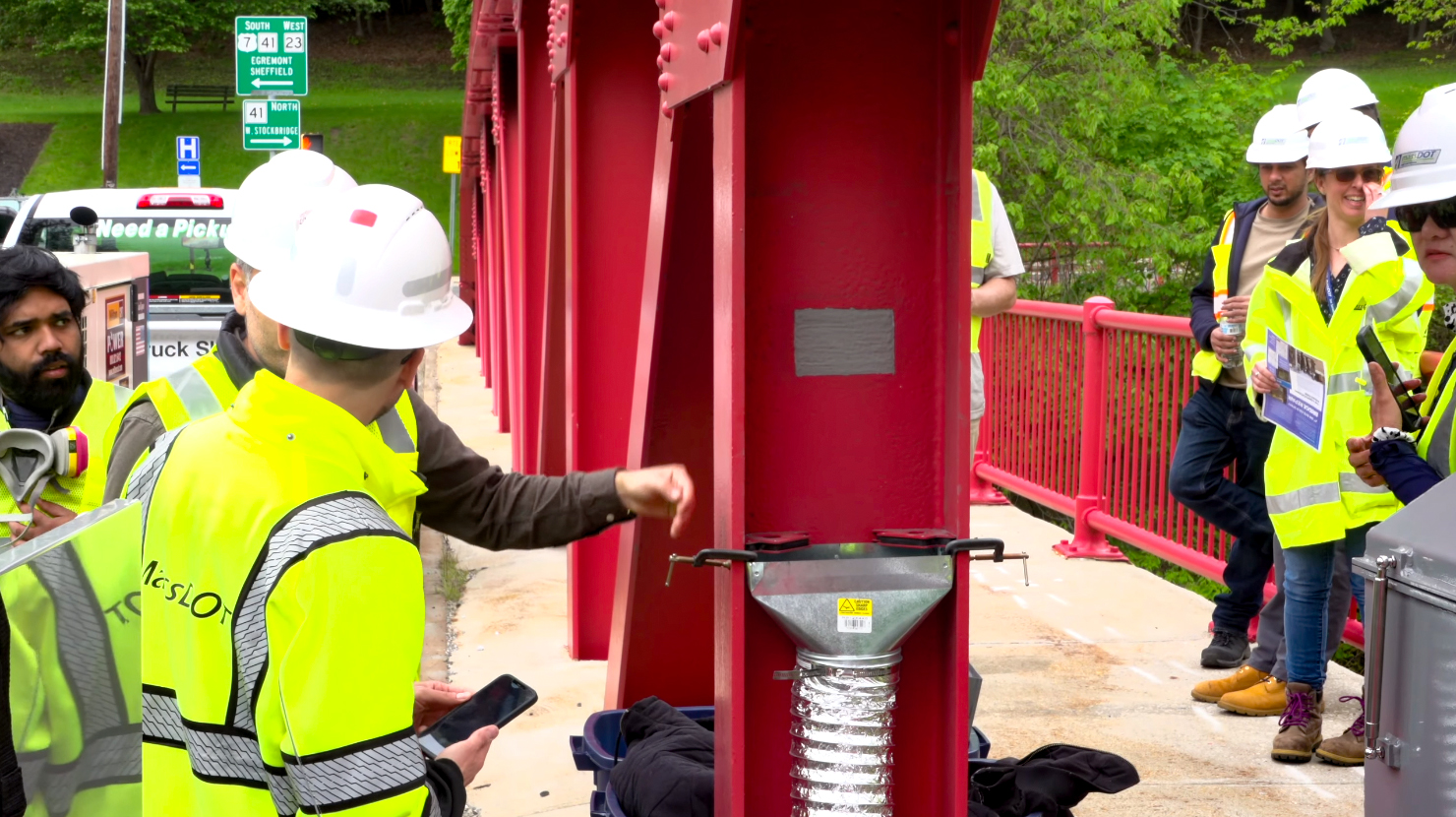
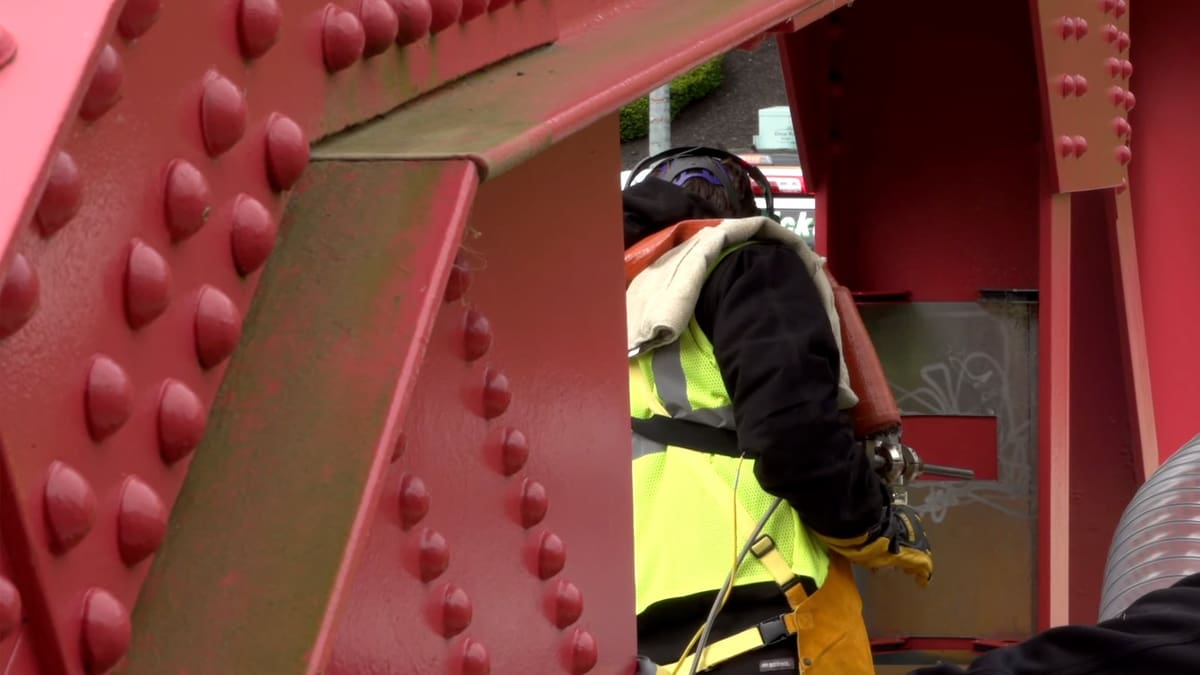
Researchers, as part of a Massachusetts Department of Transportation research program, applied metal to the bridge using cold spray and evaluated the effectiveness, costs, and benefits of this potential repair method.
“Now that we’ve completed this proof-of-concept repair, we see a clear path to a solution that is much faster, less costly, easier, and less invasive,” principal investigator on the project, Simos Gerasimidis, said in a UMass news report.
The strength of the cold spray metal repair was studied in the field and in the lab. The conclusions were that “cold spray can restore the strengths of A36 base metal cold spray is a promising technique for repairing transportation infrastructure.”
The researcher found significant cost savings using cold spray vs. traditional repair methods. First, a single operator can complete the field repair. Additionally, waste can be captured at the point of deposition so that no additional environmental safeguards are necessary, the cold spray equipment can be modified to serve as “grit/sand blast” equipment to also perform surface preparation, plus several kilos of structural steel can be deposited in a single day resulting in considerably fewer work (and bridge closure) days.
Researcher and UMass Associate Professor Chengo Ai, said: “We believe this is the most cost effective way for repairing bridges and if this becomes the reality of repairing thousands of bridges, I think that billions of dollars will be saved.”
Access the full research: Feasibility of 3D Printing Applications for Highway Infrastructure Construction and Maintenance.
You May Also Like:


License: The text of "Study Finds 3D Printing to Repair Aging Bridges Could Save Billions and Keep Traffic Flowing" by All3DP Pro is licensed under a Creative Commons Attribution 4.0 International License.