Slashing Waste by 90%: How Metal 3D Printing Solves Heavy Industry’s Spare Part Problem

By integrating Meltio’s metal wire DED technology, Italian specialist Eurobearings is replacing weeks of traditional machining and welding with days of additive manufacturing to repair and produce massive industrial components.
When heavy industrial machinery stops, the consequences are immediate. Turbines, cement mills, marine systems, and other large rotating equipment depend on critical bearing components that are often massive, highly specialized, and difficult to manufacture or repair quickly.
For Eurobearings, an Italian company based in Cortemaggiore with nearly 30 years of experience designing, manufacturing, and repairing industrial bearings and similar parts, that challenge has long been central to its work. Traditional production methods for these parts, such as casting or machining from solid blocks, involve long lead times and unfortunate material waste, sometimes up to 80% of the starting material.
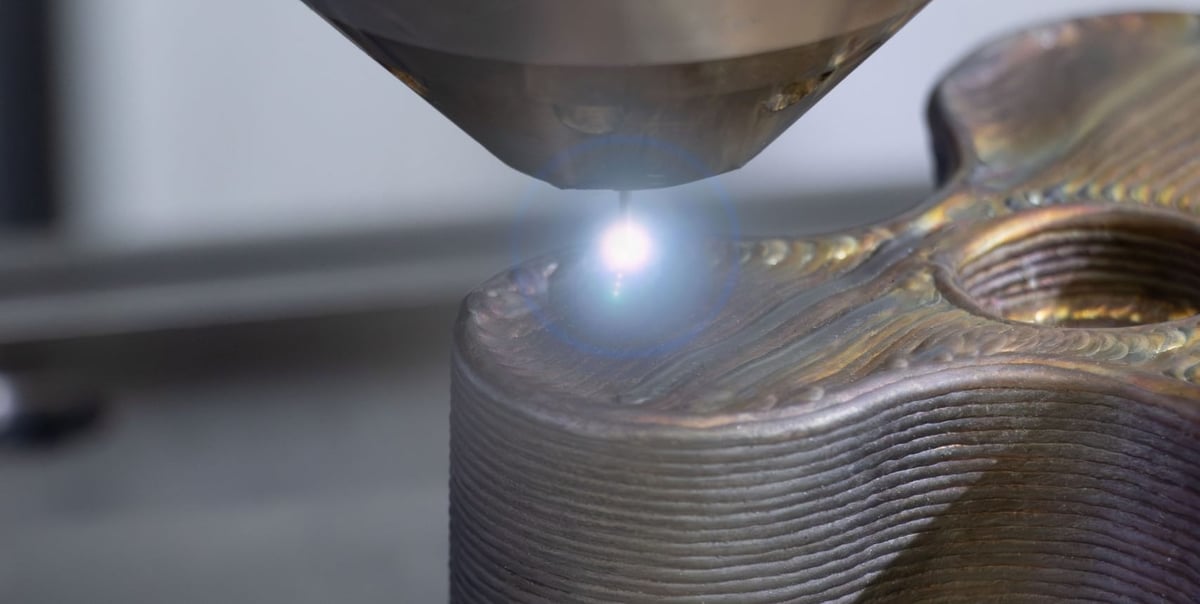
Looking to modernize and stay a step ahead of the competition, Eurobearings has integrated metal 3D printing technology into its production facility to manufacture and repair large-scale industrial components more efficiently.
Additive manufacturing is not replacing traditional expertise in bearing production; it is giving Eurobearings another way to build, restore, and extend the life of components that keep heavy machinery moving. With its new DED from Meltio, Eurobearings says it was able to replace four weeks of manual welding with four days of 3D printing.
The 90% Waste Problem: Moving Beyond Solid Blocks
At the center of Eurobearings’ new setup is the Meltio Engine Robot Integration, which brings wire-laser directed energy deposition (DED) to a robotic manufacturing cell. The system enables Eurobearings to deposit “white metal”, also known as babbitt, as well as other metal alloys.
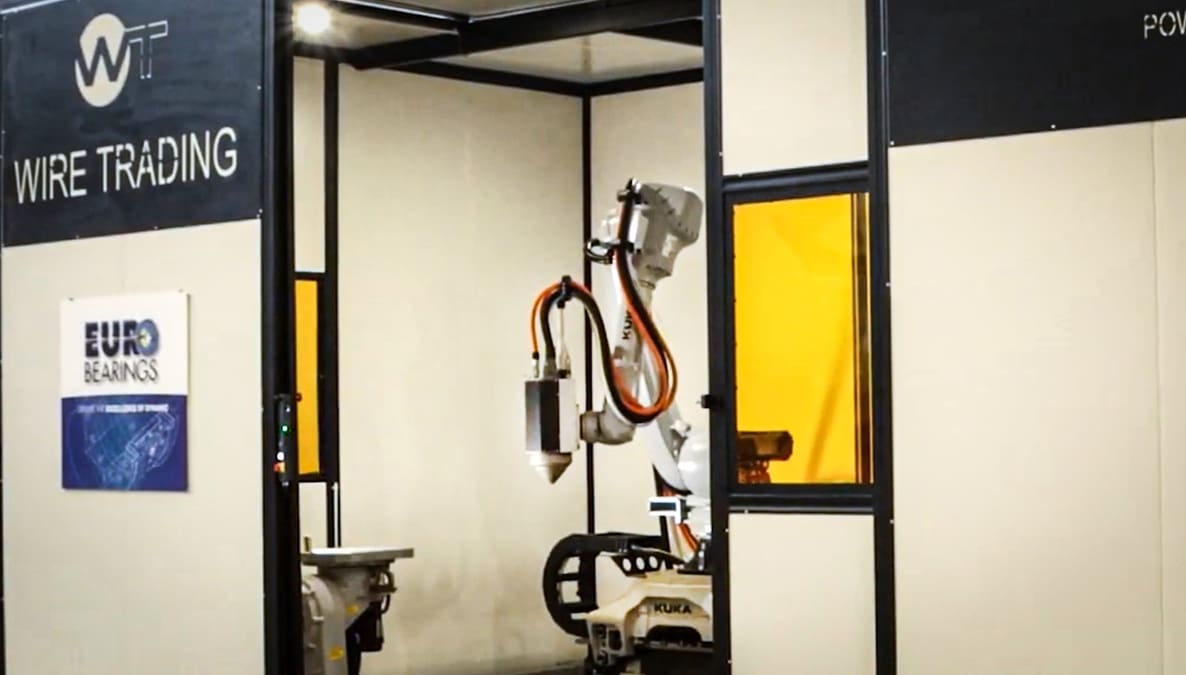
The company’s engineering team incorporated the Meltio system into a high-capacity robotic cell centered around a massive KUKA industrial robot mounted on a gantry. This configuration expands the robot’s working envelope, enabling the deposition head to reach and process oversized industrial parts that would otherwise exceed conventional 3D printing volume limits.
For a company focused on large bearing systems, that added freedom is key. Rather than being limited by a fixed build chamber, Eurobearings can position the robot around different part sizes and geometries, making the system suitable for complex, heavy-duty components.
Unlike many other metal 3D printing methods, the system uses standard welding wire as feedstock, which can help to reduce raw material consumption and lower the cost per component. Wire-fed DED enables Euroberrings to not just manufacture new parts, but rehabilitate existing ones. Repair and fabrication are done with the same set up and now that the company can more easily opt to repair instead of fabricating a new part, it significantly lowers its environmental footprint.
Eurobearings can print directly onto worn components, restoring high-value parts that might otherwise be scrapped. For sectors such as energy, oil and gas, marine, defense, cement, and rolling mills, that repair capability can extend component lifecycles and reduce the need for full replacements.
This is where robotic DED is particularly well suited: material can be added only where needed, making it possible to rebuild worn surfaces or restore functional geometry with a targeted process.
According to the Meltio, Eurobearings has achieved lead time reductions of up to 50% for complex components by printing directly onto parts and reducing the need for subsequent machining.
That change is especially relevant in industries where downtime is expensive. Instead of waiting on lengthy conventional manufacturing routes, Eurobearings can use near-net-shape metal deposition to build or restore parts closer to their final geometry, saving both time and material.
Heavy Industry Applications
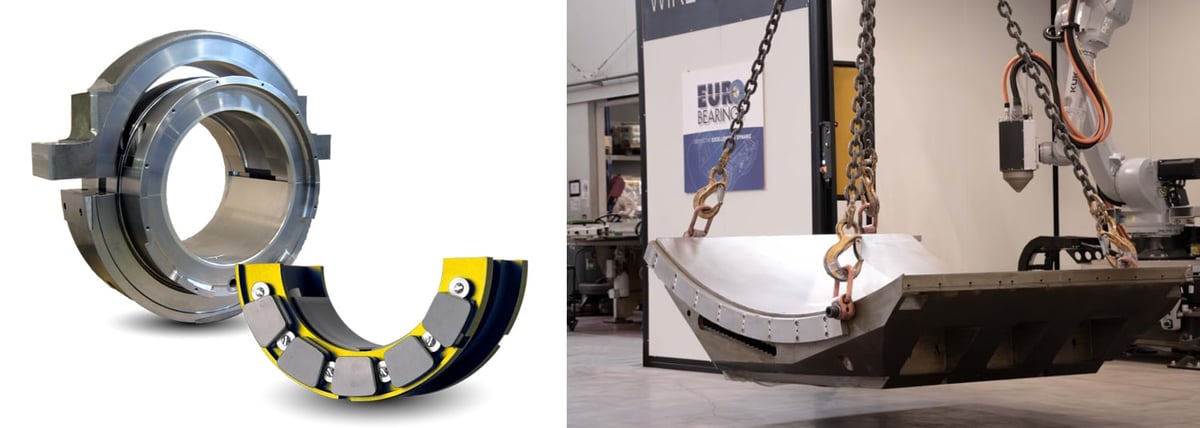
Eurobearings is applying the system across several demanding sectors from turbine components for the energy sector, customized engineering solutions for marine and defense machinery, and bearing shoes used in cement and rolling mills, where parts must withstand extreme loads.
The broader impact of Eurobearings’ adoption of Meltio DED technology is material efficiency. By moving away from production routes that remove large amounts of metal from solid stock, the company can reduce waste through near-net-shape deposition. The same setup also supports repair, which further reduces the need to manufacture replacement components from scratch.
For heavy industry, where individual parts can be large, expensive, and mission-critical, that combination of shorter lead times, lower material waste, and repair capability is significant.
Eurobearings’ implementation shows how robotic metal 3D printing is moving beyond prototyping and into practical, large-scale industrial manufacturing and maintenance.
License: The text of "Slashing Waste by 90%: How Metal 3D Printing Solves Heavy Industry’s Spare Part Problem" by All3DP Pro is licensed under a Creative Commons Attribution 4.0 International License.