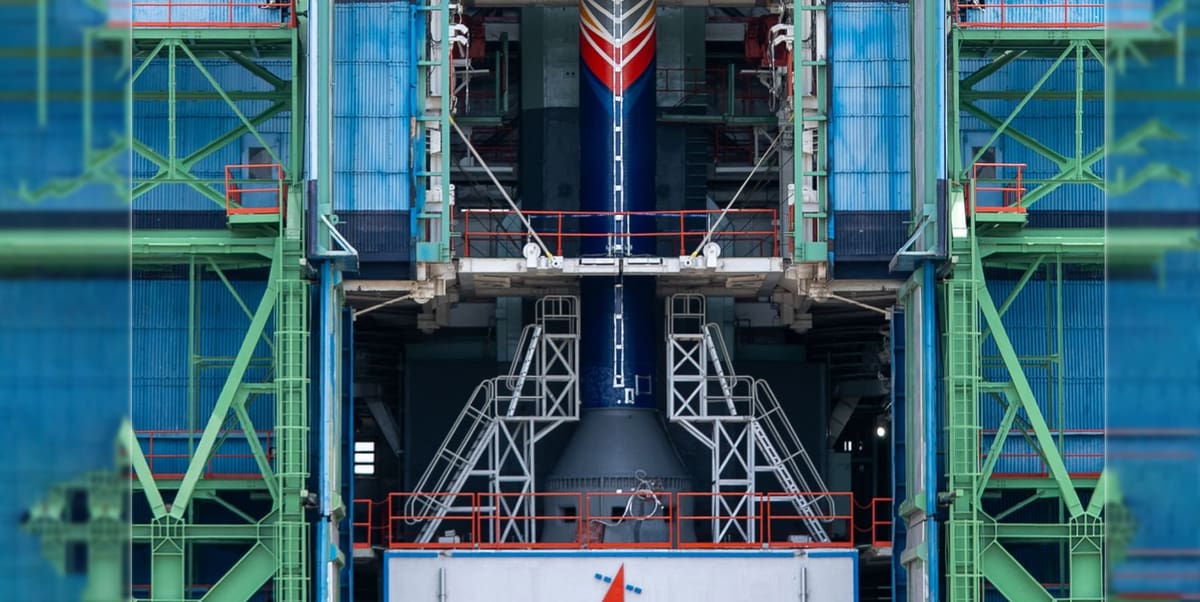
Skyroot’s Vikram-1 Makes Its Orbital Debut with a 50% Lighter 3D Printed Engine

Vikram-1’s successful maiden flight takes Skyroot’s additively manufactured propulsion technology beyond the test stand, although the Indian startup has yet to reveal exactly how the engine is printed.
Skyroot Aerospace’s Vikram-1 lifted off from the Satish Dhawan Space Centre on July 18 and reached orbit on its first attempt, making Skyroot the first private company to achieve an orbital launch from Indian soil.
Two satellites, Scope and Grahaa, were released into low Earth orbit, while several other payloads remained attached to the upper stage to conduct experiments in space. Overall a complete launch success giving Skyroot something that separates its flight hardware from even the most impressive test-stand demonstrations: orbital experience.
Vikram-1 used three solid-propellant stages followed by a liquid upper stage powered by Skyroot’s 3D printed Raman engine.
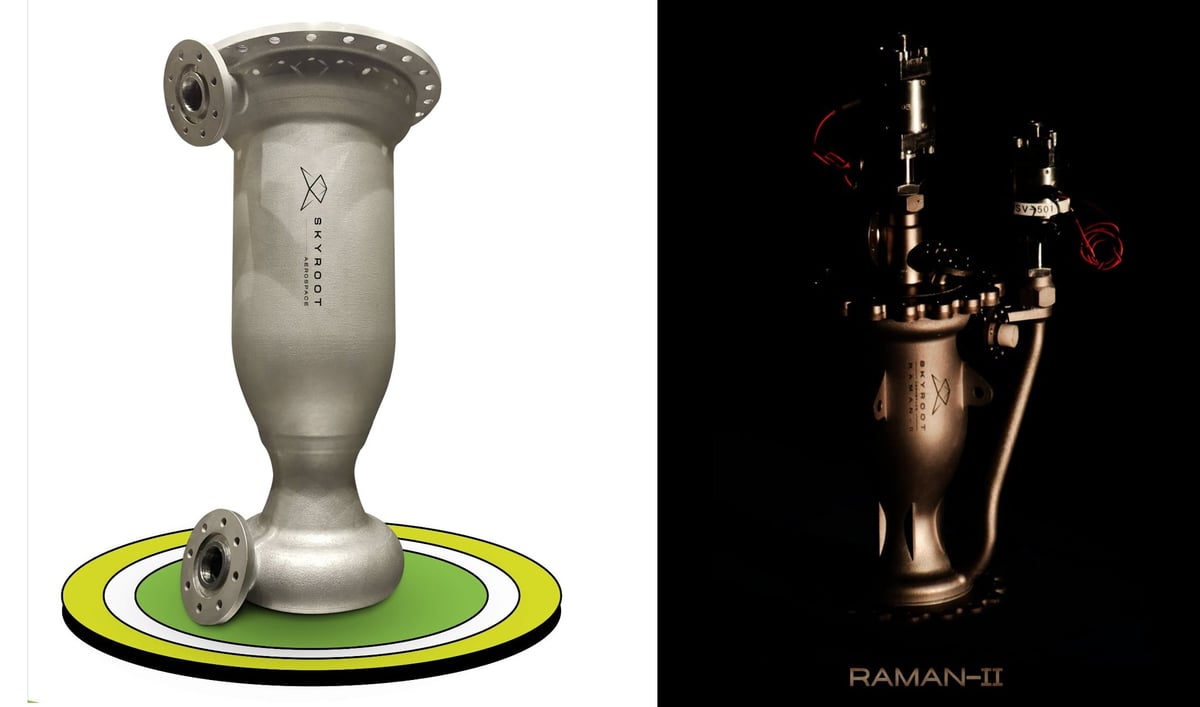
Skyroot calls Raman a liquid engine with a fully 3D printed injector capable of multiple restarts which enables the launch vehicle to insert satellites into multiple orbits in a single mission. The injector is 50% lighter compared with conventional manufacturing, Skyroot co-founder and CEO Pawan Kumar Chandana said in an interview with The Times of India, and also features a reduced number of components, cutting the time to manufacture by 80%.
The company has also said additive manufacturing can compress the journey from engine design to production to a matter of days. It has not disclosed Raman’s exact print time or the additive manufacturing machine platform, alloy, or figures for part consolidation. So, Skyroot’s “3D printed rocket engine” making headlines this week can mean very different things.
At one end of the spectrum, additive manufacturing may be used for a single complex component, such as an injector or regeneratively cooled combustion chamber. At the other, most of the engine’s primary hardware can be printed, reducing a traditionally complicated assembly to a much smaller number of parts. Raman’s orbital debut is significant either way, but let’s take a look at the 3D printed rocket landscape.
Joining a Growing Group of Printed Engines
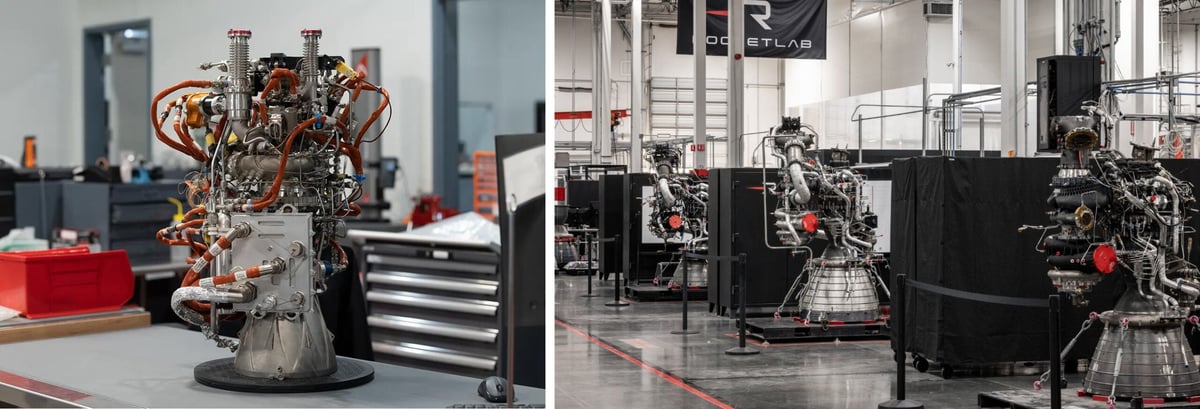
Skyroot joins a small but growing group of companies that have moved extensively 3D printed liquid propulsion into flight. Ursa Major’s Hadley engine, approximately 80% additively manufactured, has completed ten successful hypersonic flights, while its largely printed Draper engine flew twice in early 2026. Unlike Skyroot’s Raman-II, however, neither engine has yet been reported as powering an orbital launch.
Rocket Lab offers the most mature comparison. Its Rutherford engine uses additive manufacturing for all its primary components, including the chamber, injector, pumps, and main propellant valves. Rutherford engines have powered Electron orbital launches for years, making them one of the clearest examples of 3D printed propulsion moving into routine service.
Closer to home, fellow Indian launch startup Agnikul Cosmos has developed Agnilet and Agnite as single-piece, semi-cryogenic engines. Agnikul says the Inconel builds incorporate everything from the injector to the cooling channels, eliminating separate parts and assembly operations. The company follows printing with CT scanning, heat treatment, grinding, and cleaning.
Relativity Space is pursuing larger 3D printed methane engines for its Terran R rocket. Its first stage is designed around 13 Aeon R engines, with printed combustion chambers and other additively manufactured propulsion hardware intended to reduce part counts and simplify production.
Venus Aerospace offers another recent example of printed propulsion moving beyond the test stand, although its achievement is not directly comparable with Skyroot’s orbital mission. The engine uses 3D-printed components and generates thrust through a continuous detonation wave rotating around its combustion chamber. This month, the company raised $91 million to turn the flight demonstrator into deployable propulsion systems and scale production for defense and space applications.
Skyroot is certainly not the first company to fly 3D printed engine hardware into orbit, but what Vikram-1 adds is not just another successful orbital application, but an advancement in the lightweighting of spaceflight that ultimately lowers costs.
A Lightweight Rocket With a Reported $5 Million Price
Skyroot’s printed engine is paired with an all-carbon-composite vehicle structure, another manufacturing choice intended to keep Vikram-1 light and relatively quick to produce. Skyroot lists a maximum capacity of 350 kg to low Earth orbit and 260 kg to sun-synchronous orbit, and offers both dedicated and rideshare missions with custom orbital deployment.
India’s NDTV has estimated the price of a flight at around $5 million, attributing the figure partly to the rocket’s composite construction and use of printed engines. Skyroot has not published that price on its own launch-service page, however, so it remains unclear whether $5 million is a firm commercial tariff or a target based on future production volumes.
At that price, Vikram-1 would be competitive with other dedicated small launchers, although it would still cost more than booking the equivalent mass on a large rideshare mission, from, says SpaceX. The attraction of a smaller rocket is less about achieving the lowest possible price per kilogram and more about giving satellite operators greater control over scheduling, destination orbit, and deployment.
For now, the most important result is the flight itself. Raman-I is no longer simply an engine described as 3D printed or shown operating during a ground test. It has flown aboard an orbital rocket and helped deliver satellites to space.
You May Also Like:


License: The text of "Skyroot’s Vikram-1 Makes Its Orbital Debut with a 50% Lighter 3D Printed Engine" by All3DP Pro is licensed under a Creative Commons Attribution 4.0 International License.