Shipping 1 Million Units Wasn’t Enough: Bambu Lab Confirms US Retail Stores Are Next

Brulé, the Japanese sister-company of American 3D printer reseller Dynamism, just announced a showroom-style Bambu Lab store in Tokyo, and it's only the beginning for a retail strategy for Bambu Lab.
For consumer tired of buying 3D printers based entirely on polished YouTube reviews and online spec sheets, Bambu Lab is about to completely change how you choose your next machine. Following a massive wave of over one million printer shipments in 2025, the desktop printing giant is rapidly opening physical “experience stores” designed to let you see, hear, and test hardware in person before pulling out your wallet.
For the everyday creator and the first-time 3D printer buyer, these physical locations solve the biggest frustrations of buying online. Instead of guessing how loud a printer runs or wondering if complex multi-color parts live up to the marketing hype, you can step inside to compare actual fan noise, check the real-world physical footprint, inspect finished models up close, and get face-to-face workflow advice from specialist staff.
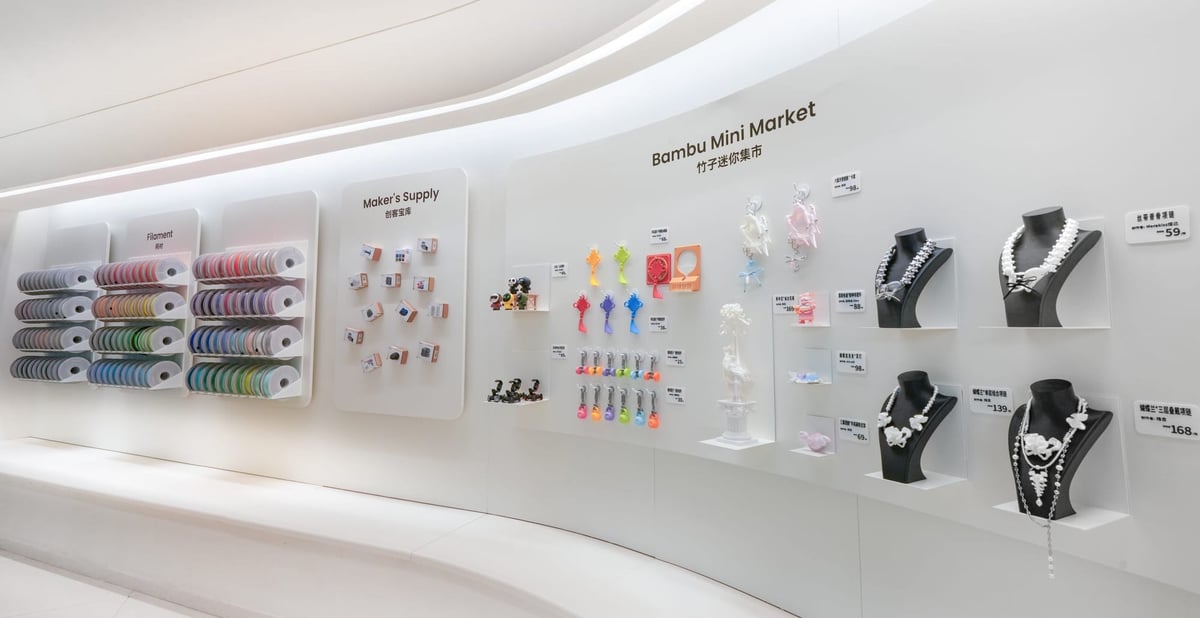
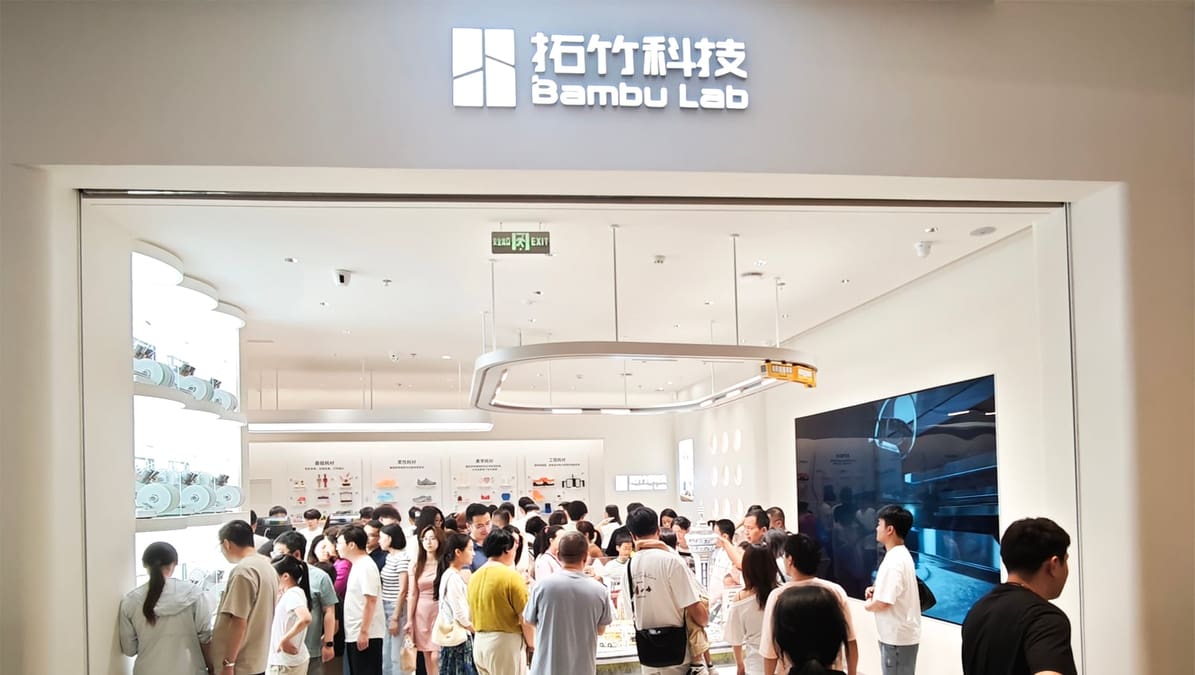
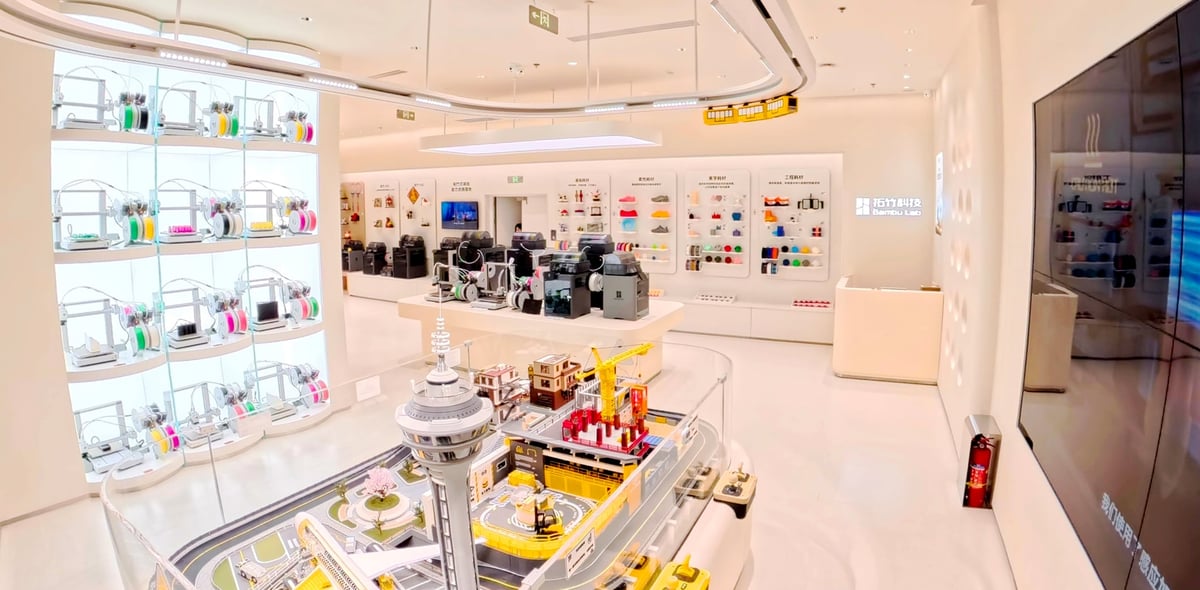
In the past few weeks alone, Bambu Lab has expanded its physical retail presence in Asia, with a new certified store preparing to open in Tokyo next week less than two weeks after its third store opened in Thailand. The company already operates a popular 244-square-meter flagship retail space in Shenzhen’s Nanshan District.
“We currently have nine authorized stores open outside of mainland china,” Bambu Lab’s co-founder, Huaiyu “Sprite” Liu, told All3DP. This is in addition to a growing retail presence in major retail outlets, including Officeworks, JB Hi-Fi, and Harvey Norman in Australia and, in the U.S., Target, Best Buy, and MicroCenter.
The expansion points to a new phase in Bambu Lab’s growth: one in which the company is trying to make desktop 3D printing feel less like a specialist purchase and more like a mainstream consumer technology. After building much of its momentum online, Bambu Lab now appears to be using physical retail to lower the barrier for first-time buyers, demonstrate increasingly differentiated machines, and give regional partners a more visible role in customer education and support.
The timing is notable. Bambu Lab recently bought new factory space in China said to have an annual capacity of three million printers. With that kind of production ambition, physical stores could help the company convert curiosity into purchases, particularly among customers who may still want to see, hear, and test a machine before bringing one home.
Liu says the “experience store” concept is part of the company’s consumer focus and the idea that Bambu Lab customers may be first-time 3D printer owners. “For a long time, 3D printing carried a reputation for being overly technical, leaving a lot of people feeling intimidated or assuming it wasn’t for them,” he says. “But the technology has come a long way, and the best way to show that is to let people experience the magic in person, rather than just talking about it. These stores are intentionally designed to be an open, welcoming gateway for complete newcomers.”
Chasing the Apple-Store, Lego-Store Experience
The Tokyo location, operated by Japanese additive manufacturing supplier Brulé, will hold its grand opening on July 13 and give prospective buyers an opportunity to see and test Bambu Lab’s growing range of desktop 3D printers before committing to a purchase.
Despite its “Bambu Lab Certified Store” designation, the Tokyo space will not be a conventional street-level electronics store. It will be located on the eighth floor of the Marushima Building in Tokyo’s Taito ward, where Brulé already operates its offices and showroom. “We’re very B2B focused generally,” Brulé CEO Douglas Krone told All3DP, “but for us [the Bambu Lab Store] is not a shift, it’s an add. Bambu Lab drives a lot a lot of interest in 3D printing and engages with the community. And those are all things that we’re excited about.”
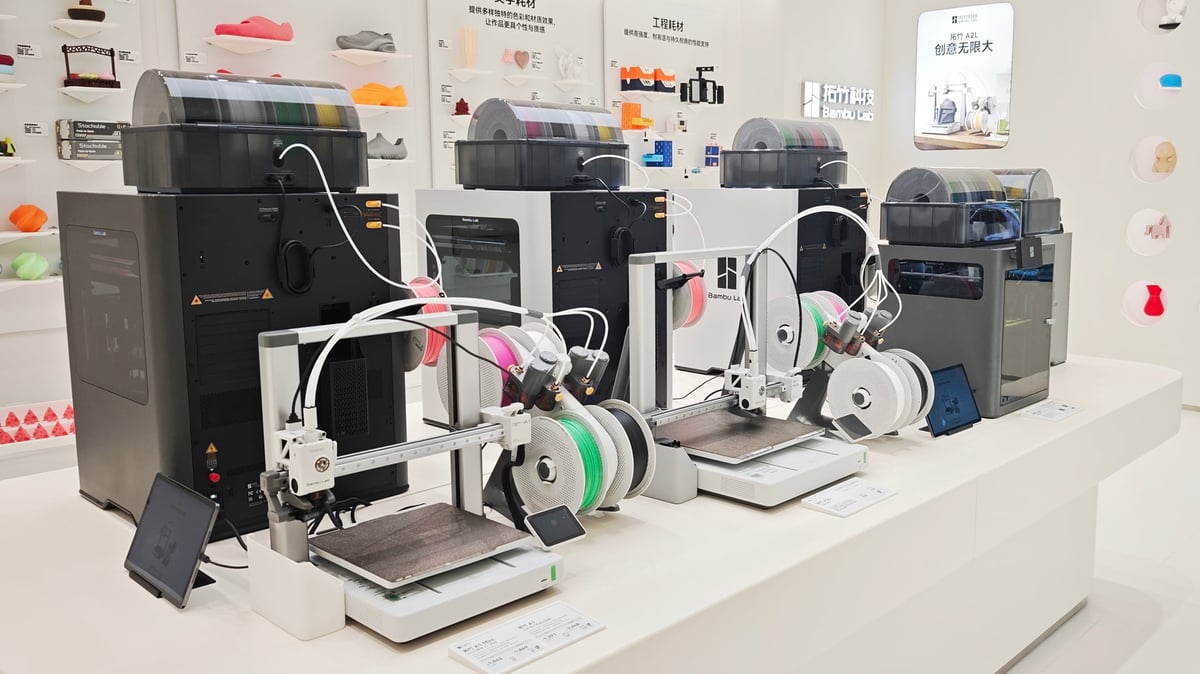
At the Brulé Bambu Lab store, visitors will be able to watch printers running, examine completed models, compare operating noise, physical footprint, fan noise, ease of access and the visible differences between parts produced on different systems, plus discuss possible applications with specialist staff.
Brulé is positioning those comparisons as one of the store’s central attractions. Visitors will be able to see machines operating and inspect completed models, including multicolor prints, rather than relying entirely on photographs and promotional videos.
Testing the Storefront Formula
Meanwhile, Bambu Lab and its Thai distribution partner, 3D Studio, announced the opening of an Authorized Premium Store at Bangkok’s Siam Paragon shopping center on July 1. According to the company, Thailand is among its fastest-growing markets in Southeast Asia, with its local business more than doubling compared with the same period a year earlier. The store will combine product demonstrations and specialist guidance with the full Bambu Lab ecosystem, including its hardware, software and MakerWorld platform, where users can find printable models and project ideas.
This past weekend another store opened in Nanjing, China. Bambu Lab’s head of communications and RP, Nadia Yaakoubi confirms that Bambu Las is working on developing experience stores with local partners in the U.S.: “We can’t share details yet, but what we can say is that something is coming this year.”
The openings suggest Bambu Lab and its regional partners are experimenting with several forms of physical retail, from a consumer-facing shop in one of Bangkok’s most prominent malls to a specialist showroom inside an established 3D printing Tokyo office.
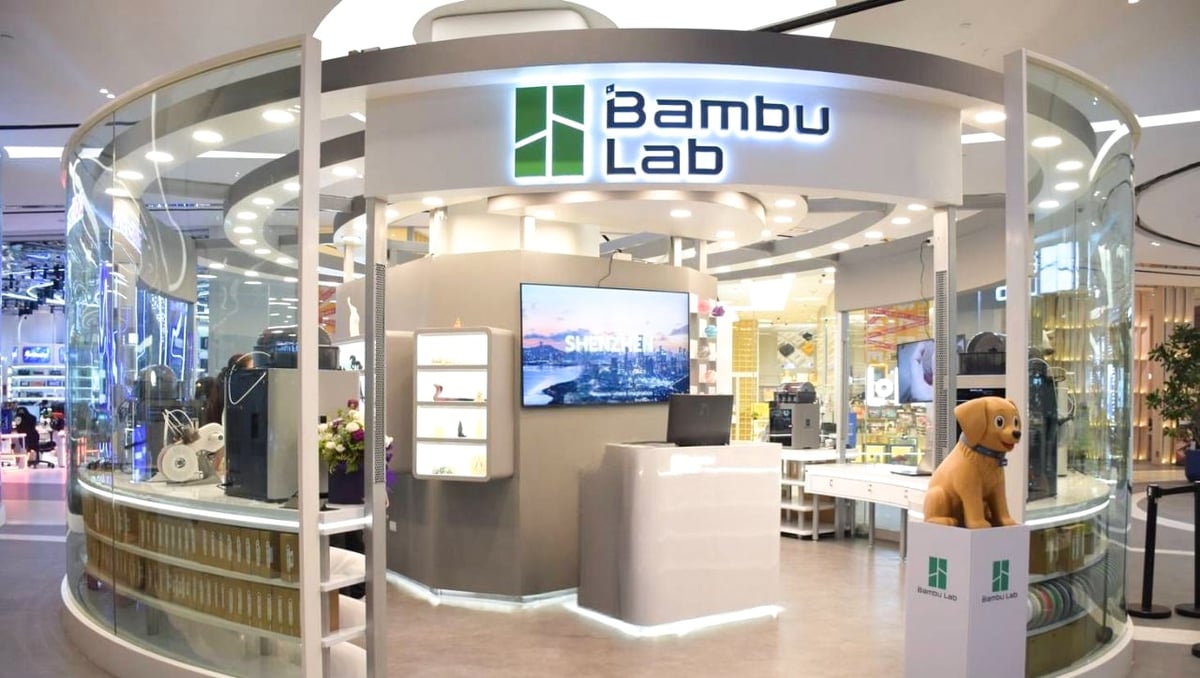
Bambu Lab says the primary design benchmark for these retail outlets will be its Apple store-like flagship in Shenzhen, but a standardized format hasn’t been rolled out yet. “As we grow, our plan is to take the retail lessons and design frameworks we are developing in China and extend them to our global partners to help guide future formats,” says Liu. This may allow Bambu Lab to test which physical-retail formats work in different markets without taking on the cost and complexity of operating a large network of company-owned stores.
Whatever the format, the locations will all demonstrate Bambu Lab’s current focus including education, creative learning, home decoration and organization, personalized household objects, and small creative projects.
From Online Breakout to Retail Brand
Bambu Lab’s rapid growth has been driven largely by online sales, enthusiastic user communities, and reseller networks. Physical locations could address some of the limitations of that model, particularly as the company’s product range becomes larger and the differences between machines become harder to evaluate from specifications alone.
Stores can also provide something an online checkout cannot: the ability to hear a machine running, judge its size, inspect its output and obtain immediate advice about materials, maintenance and workflow integration.
Overall, the new locations point to a more visible, hands-on phase in Bambu Lab’s expansion. Whether they remain isolated partner showrooms or become templates for a wider international retail network will depend on how customers respond.
You May Also Like:
License: The text of "Shipping 1 Million Units Wasn’t Enough: Bambu Lab Confirms US Retail Stores Are Next" by All3DP is licensed under a Creative Commons Attribution 4.0 International License.