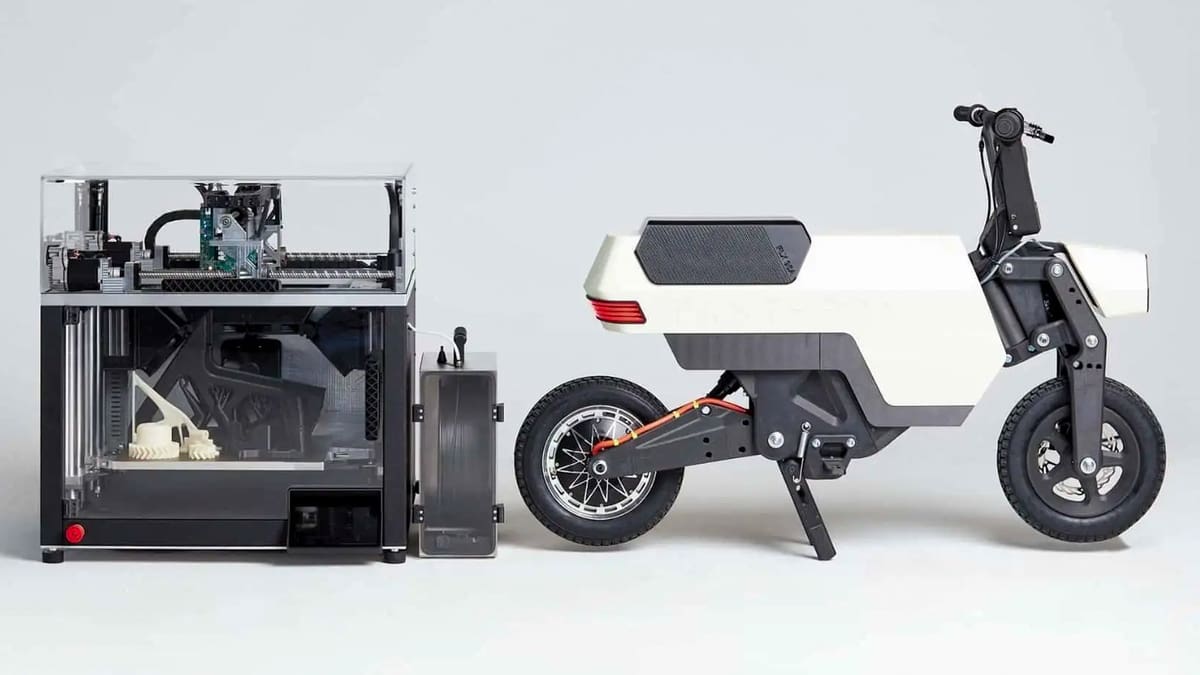
Pantheon 3D Printed This Motorcycle in a Week on This 3D Printer

Canadian 3D printing startup, printed all the structural components for a fully functional motorbike — and the viral video proves it holds up to the ride.
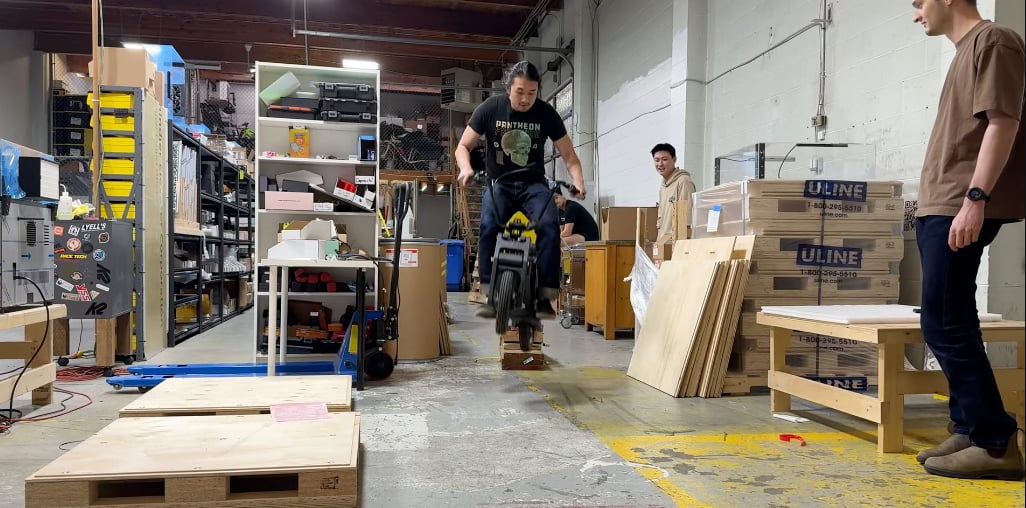
As promotional stunts go, we have to say this one is pretty impressive. Canada-based start-up Pantheon wasn’t on our radar as a 3D printer manufacturer or a 3D printing service, but when they posted a video of 3D printing, riding, jumping, and even crashing a fully functional 3D printed mini motorcycle, yeah, it caught our eye.
The team at Pantheon is obsessed with the idea of 3D printing a motorcycle in one day that they could go race the next, which didn’t happen this time — it took a week — but it did show that their HS-Pro FDM could print all the composite nylon parts needed for the bike — including chassi and handlebars — in a week. They printed 2 kilos of material a day.
For the team behind Pantheon, motorcycles came first, and 3D printers followed.
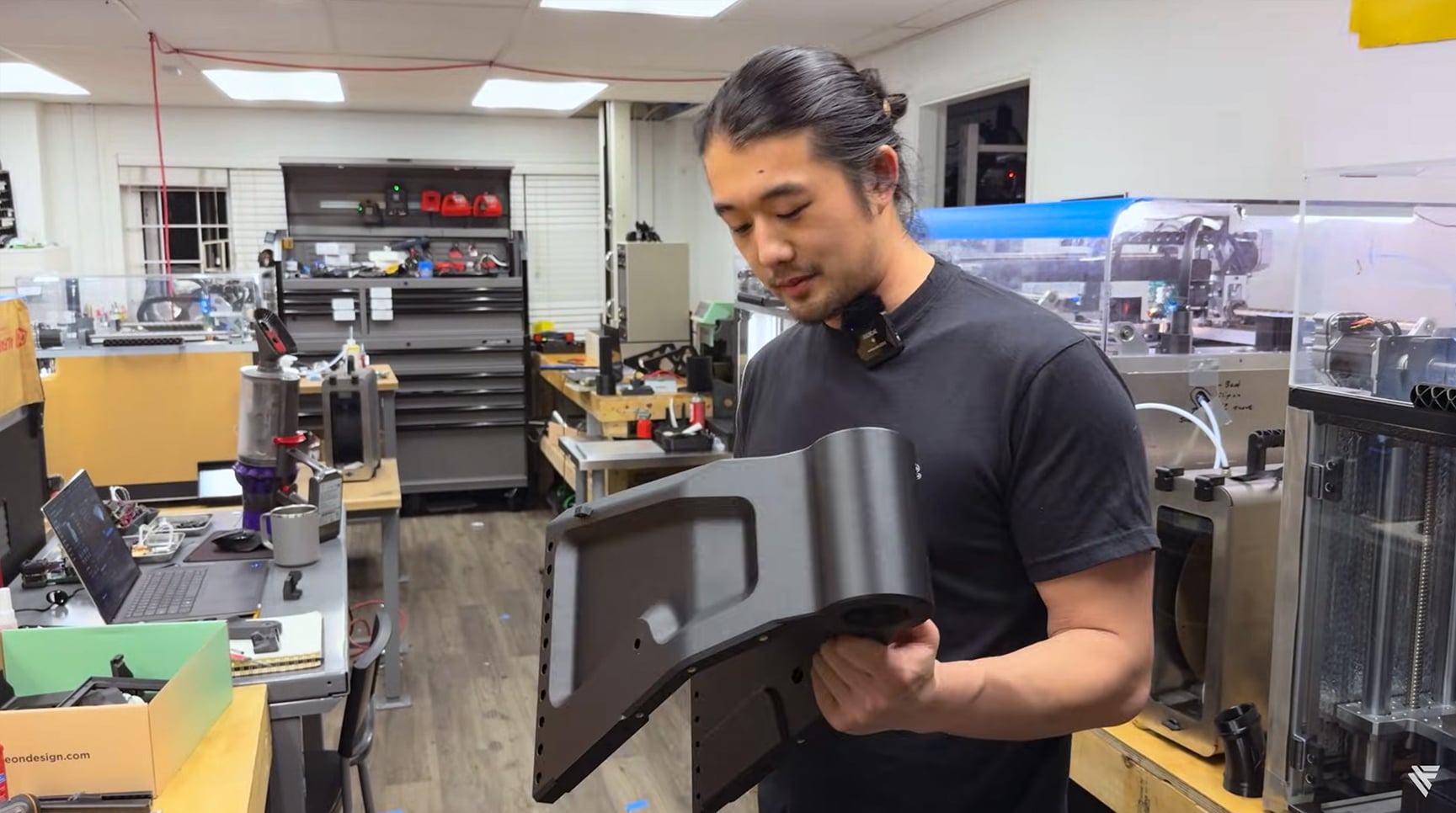
Pantheon founders and engineers, Alex Wiecke and Bob Cao, say they were frustrated with their software jobs and dreamed of building things in the real world, not just on a screen.
One day, they started a motorcycle shop in their backyard to get their hands dirty, which led to using 3D printing as a manufacturing tool to create automotive parts. That path led them to design and build their own 3D printers, materials, and software for the biggest and strongest parts for their project. Eventually, they started a product development firm and attracted a team of creative hardware engineers. They’ve used 3D printing to develop and manufacture medical devices, build concept vehicles, and make mechatronics systems for the film industry.
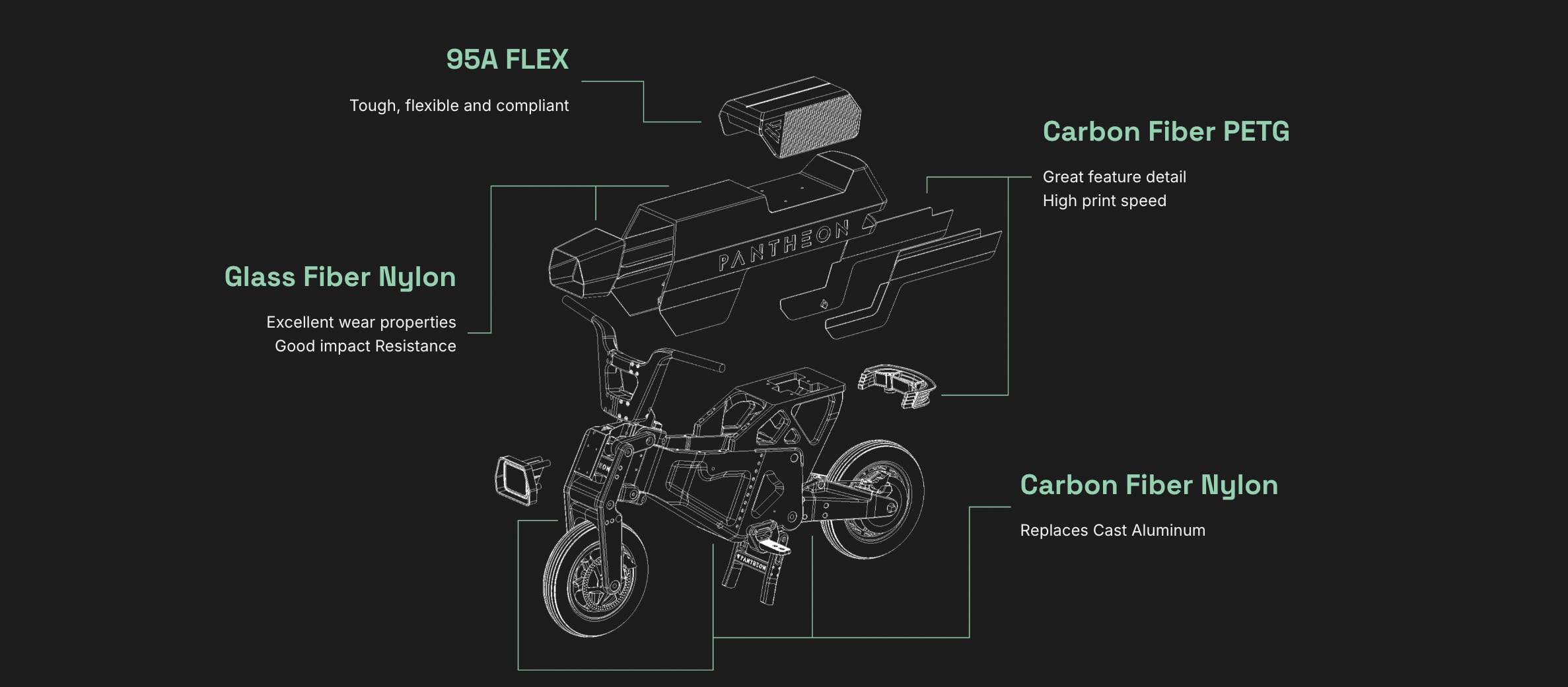
Designing the mini motorcycle from scratch took some time and experimentation along the way. Cao brought a prototype to the Rapid TCT trade show for additive manufacturing in April and rode it on the exhibit floor.
“This project has gone completely out of scope,” says Cao. “Initially, this was supposed to be a demo project for our new HS-Pro printer, just to flex and show off how strong our composite nylon parts are, but from all of the comments from people at Rapid (TCT), it seems people want to see more of this 3D printed bike.”
Pantheon is planning a new video series on building more bikes and seeing how far they can push the 3D printed chassis. And they may just produce some for sale, or so they teased in their video.

The HS-Pro 3D Printer from Pantheon
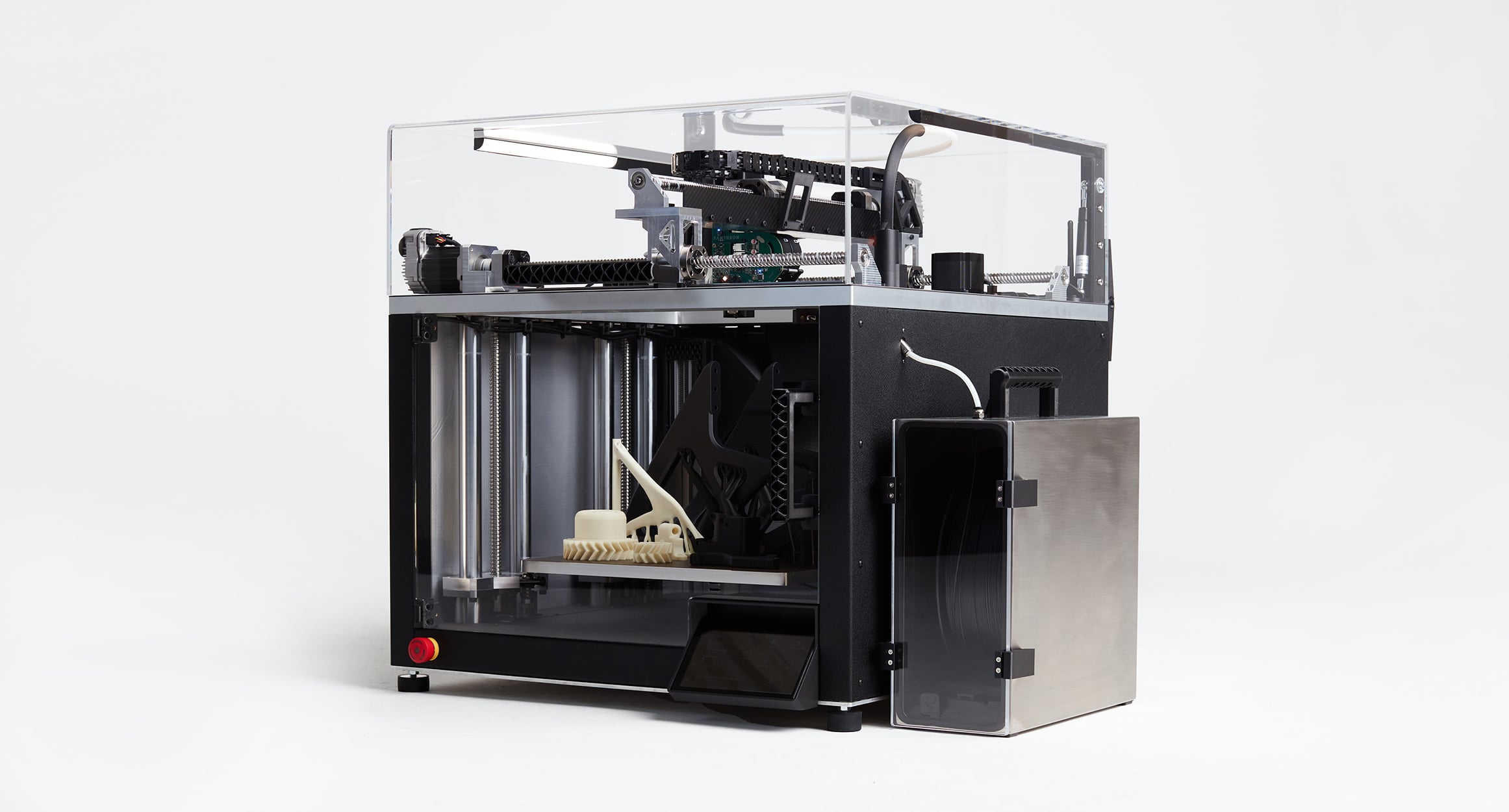
Launching this month, the company says the HS-Pro 3D printer from Pantheon is a high-speed, industrial-grade FDM 3D printer engineered for rapid production of strong, end-use parts. Designed and manufactured in Canada, it “emphasizes speed, precision, and durability, making it suitable for demanding applications in sectors like automotive, aerospace, and manufacturing.”
Tech Specs
- Build Volume: 400 x 400 x 300 mm
- Print Speed: 500 mm/s
- Acceleration: 250,000 mm/s2
- Materials: PA-CF, PA-GF, PETG-CF, 95A Flex
- Chamber: Actively heated to 60ºC
- Nozzle Temp.: 500°C Max
- Bed Temp.: 145°C
- Connectivity: WIFI , ethernet , USB
The company hasn’t released more tech specs for the machine, but if its smaller (300 x 300 x 300 mm) unit, the HS3, is any indication, you can expect a nozzle temp up to 500ºC. The smaller version retails for about $10,000.
Pantheon has even developed its own slicer. The Pantheon Slicer is for Mac and Windows, runs locally, unlimited seats, no logins, and, the company boasts, the “multithreaded” slicing uses your whole computer’s power and means large projects are easy to iterate on. There is a complete set of G-code visualization and analysis tools to show you exactly what the printer is doing.
Mesh and surface part modifiers let you set up part walls, infill, and supports on a per-feature basis, and every slicing parameter is continuously adjustable, letting you dial in exactly what you want.
Pantheon says its printers, including the original HS3, are built to be serviced. Modularity and serviceability are the guiding principles.
“We provide documentation and a stockpile of readily available service components so that you can fix problems on your own,” the company says.
You May Also Like:



License: The text of "Pantheon 3D Printed This Motorcycle in a Week on This 3D Printer" by All3DP Pro is licensed under a Creative Commons Attribution 4.0 International License.