OpenScan Is Pushing for a Standard 3D Scanner Benchmark

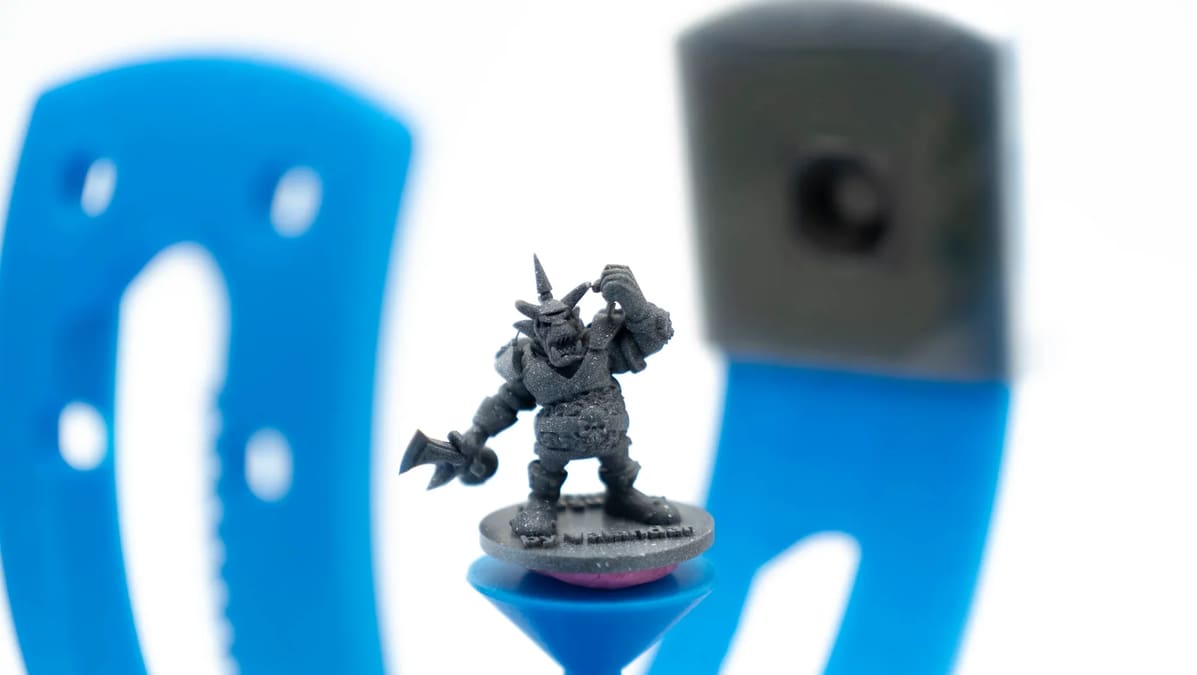
The benchmark initiative sees users scanning the same orc model, then share their results on a dedicated GitHub page.
OpenScan, the open-source designer of the OpenScan Classic and Mini, is pushing for a standard benchmark for 3D scanners – similar to how a Benchy model is often used in 3D printing.
The project has been in the works for some time, first announced on OpenScan’s blog back in July. However, a recent Reddit post – also by OpenScan – has revealed a comprehensive GitHub containing results from 36 scanners, including the OpeScan Classic and Mini, which we named on our list of the best open-source 3D scanners.
The model is a miniature orc for resin 3D printers, available on Thingiverse from designer Valandar. It was chosen for its differently scaled features that pose “a challenging real-world use case for many scanners”, according to the GitHub.

Of course, there are a few challenges here – all resin 3D printers are not created equal, for instance, with the quality of a printed model affecting a 3D scan. OpenScan has addressed some of these issues, as well as potential solutions, under “Limitations” on the project’s GitHub.
This is quite an endeavor, and will require user support and participation to succeed, but would result in a highly useful standard for evaluating 3D scanner performance across different technologies and price ranges and a new resource for prospective buyers.
By contributing, users can help refine that benchmark – so be sure to do what you scan. (Get it?)
Read more recent news:
License: The text of "OpenScan Is Pushing for a Standard 3D Scanner Benchmark" by All3DP is licensed under a Creative Commons Attribution 4.0 International License.