On-Demand Metal Parts for Defense: Why Wire-Laser DED is Gaining Traction with Armed Forces

By relying on spools of metal wire, this robotic technology is making on-demand manufacturing a reality for forces in the field.
There hasn’t been a 3D printing technology that the defense industry hasn’t funded or backed in some way: FDM for polymer drone parts, laser powder bed fusion (LPBF) for aerospace parts, cold metal fusion and wire arc additive manufacturing (WAAM) for frontline metal tools and repairs. But today, one niche technology seems to be getting a renewed focus for a range of reasons that make sense to armed forces.
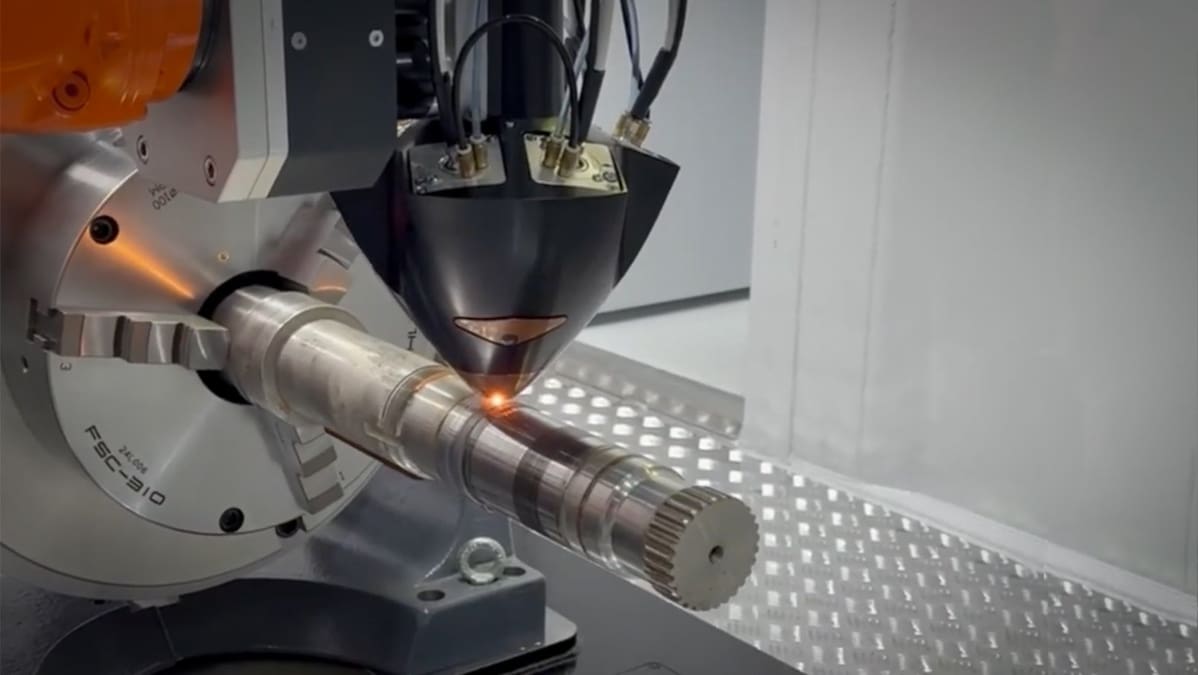
Wire-laser DED (directed energy deposition) is a process that feeds metal wire into a focused laser beam, melting it to build up or repair parts layer by layer. It works much like precision welding guided by a robotic system, allowing both new components and repairs on existing equipment. Advocates of wire-laser DED argue it offers advantages in ease of storage, scalability, and repair flexibility compared with metal powder-based systems.
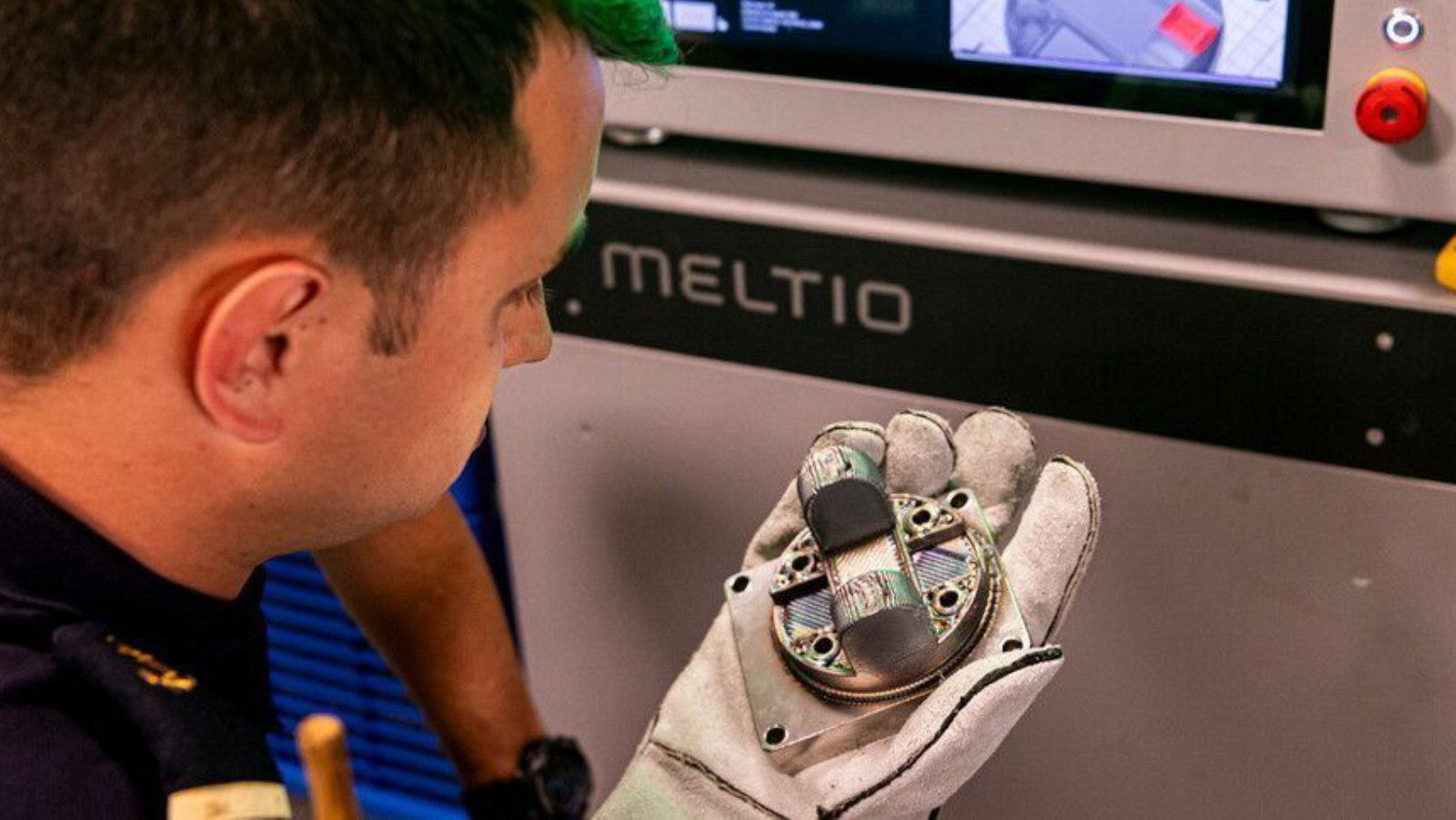
For military and defense systems, this flexibility is crucial; metal wire is physically easier to source, store, handle, and transport compared to powder. And because DED printing can produce objects from scratch or modify existing parts, it is ideal for both quick repairs on tank wheels and fabricating broken gears.
Although very similar to WAAM, another technology frequently adopted in the defense and maritime industries, wire-laser DED offers the advantage of being more precise and often needing less of the post-process machining common with WAAM. Its near-net shape approach lowers overall manufacturing time and reduces material waste, making the process a bit more environmentally friendly.
The Promise of Wire-Laser DED for Defense
Wire-laser DED is the midway between the complexity of LPBF and the raw, unfinished nature of WAAM that more companies are taking a look at.
So much so, that one company, Meltio, partnering with Fastech, is set to open its first advanced additive manufacturing site in the U.S. next week (Oct. 14) in Danville, Virginia, marking a milestone for further expansion and wider partnerships.
On-Demand Production: A Game Changer for Military Readiness
The facility will serve as both a production hub and a demonstration site for defense and industrial partners, reflecting a shift in the production industry toward where parts and repairs are produced closer to where they are needed. For militaries facing supply chain vulnerabilities, the ability to manufacture on demand signals a move toward hardwiring resilience directly into readiness operations, Meltio says.
In addition to refurbishing mechanical parts, Meltio says it aims to help companies alleviate long wait times and reduce physical storage space needed for repairs. Consider the redesign of a naval eductor, a metal fluid-pumping system. After its design in Meltio Space, the company’s printer software, the part was optimized for improved wall thickness and less post-processing time. As wire feedstock is more affordable than metal powders, this is a build that is iterable, fast, and doesn’t need to be physically stored – it was printed on-demand within 58 hours.
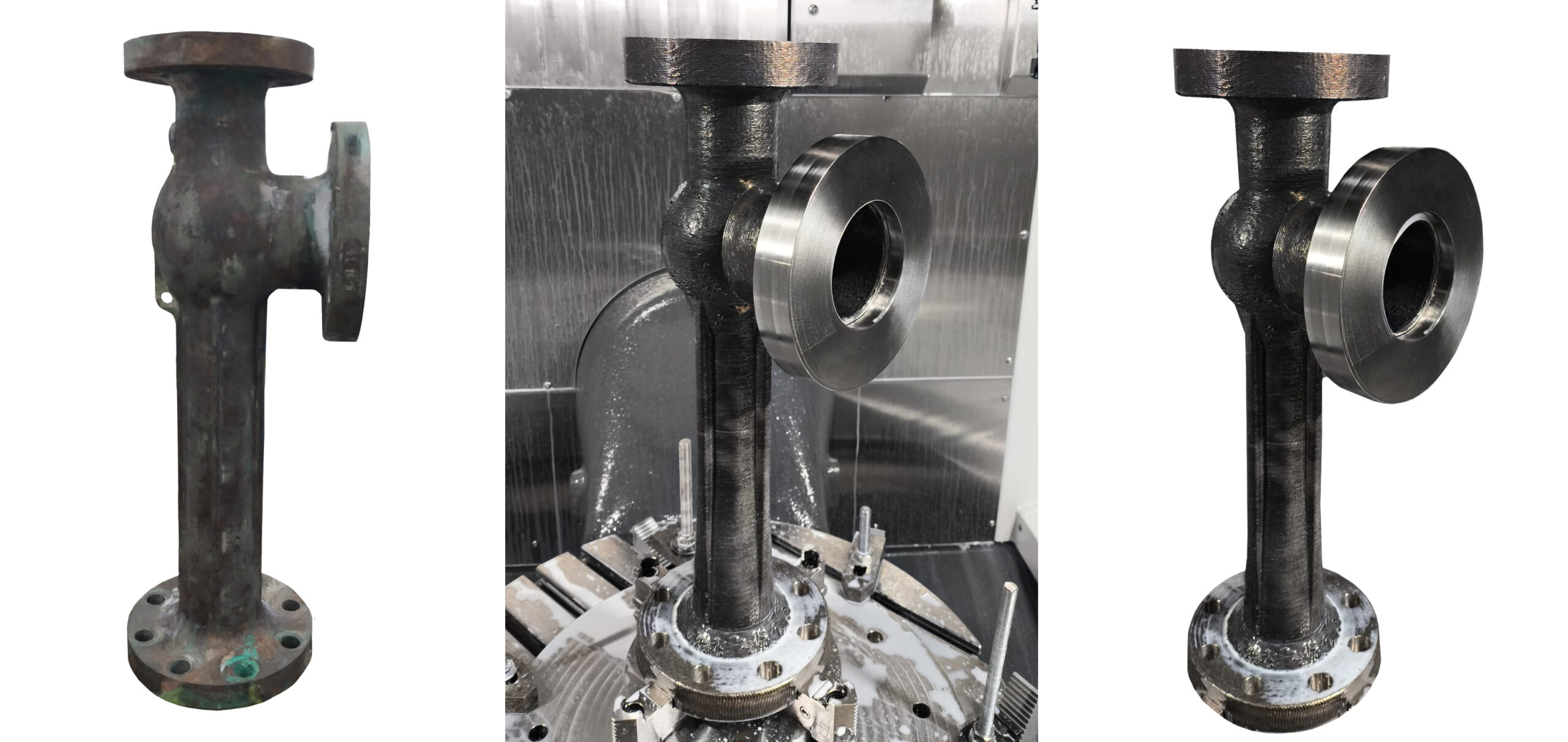
Naval systems often remain in service for decades, and spare parts for pumps, impellers, and gears can vanish from supply chains long before the vessel is retired. Despite its niche nature, the newly printed eductor just became resilient to any supply chain issues at hand.
“If the crew had to rely on a replacement part without using additive manufacturing, it would have taken weeks or months,” says Staff Sgt. Jordan Blake, a member of the Marine Innovation Unit. “With this technology, we’ll have the new component printed and ready for installation before the order for a replacement would be completed.”
It’s not only the U.S. looking hard at laser-wire DED. In South Korea, the Army has adopted Meltio’s wire-laser systems in collaboration with AM Solutions, deploying robot-based 3D printing for spare parts and repairs. According to the Korean defense press, the technology is now certified and in use to address obsolescence and reduce maintenance lead times. A spokesperson from Meltio’s Asia-Pacific team noted that this marks the first instance of the Korean military integrating metal 3D printing in its logistics operations.
Spanish and French forces have also adopted laser-wire DED for manufacturing and repair processes for metal parts.
Tackling Challenges: Certification, Precision, and Hybrid Manufacturing
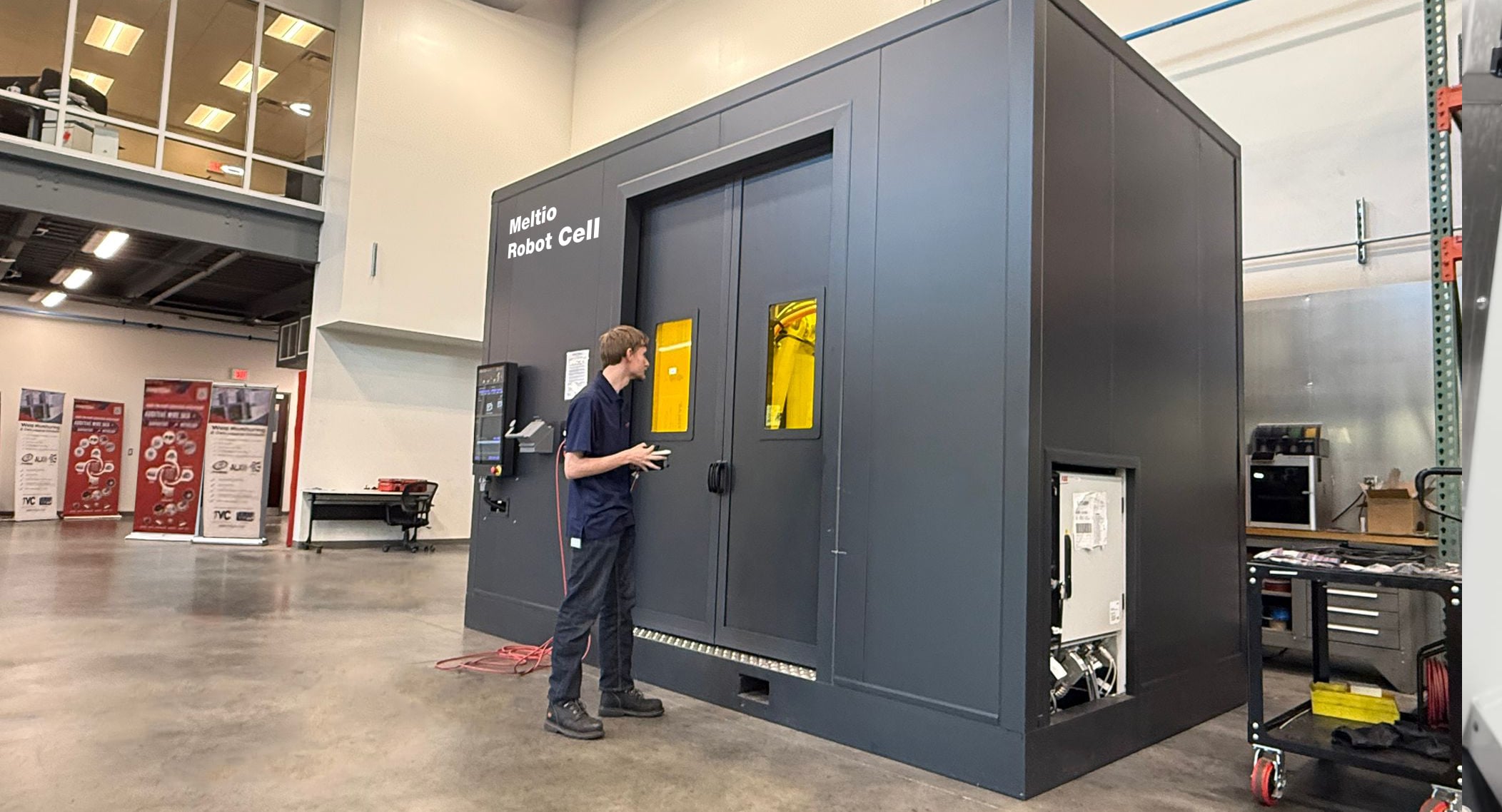
While certification, surface finish, and integration remain hurdles for wire-laser DED, Meltio has already begun addressing them with a hybrid manufacturing approach, which combines additive and CNC machining, directly tackling precision and surface finish issues by enabling in-process milling.
The open-material nature of wire-laser DED allows operators to use qualified industrial wires, giving traceability and material consistency that align with military certification requirements. As militaries worldwide grapple with aging platforms, contested supply chains, and tighter budgets, additive manufacturing is shifting from experimental to operational. The spread of wire-laser DED across global militaries suggests that on-demand, distributed production is no longer a future ambition, but an emerging pillar of global defense readiness.
You May Also Like:


License: The text of "On-Demand Metal Parts for Defense: Why Wire-Laser DED is Gaining Traction with Armed Forces" by All3DP Pro is licensed under a Creative Commons Attribution 4.0 International License.