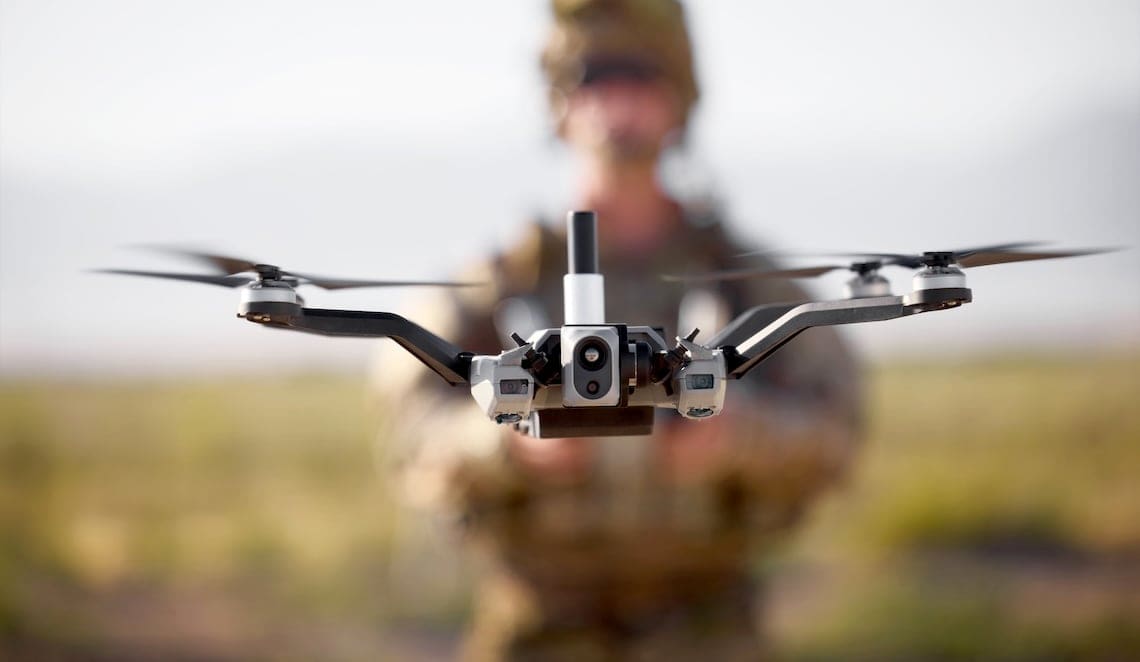
Is 3D Printing the Key to U.S. Military’s Drone Dominance? We Asked One Man Who Would Know

As the Pentagon calls for a massive increase in drone production, additive manufacturing is moving from the lab to the front lines and scaling up for production. The director of America Makes explains why this moment could finally "unlock" the technology's full potential.
Although John Wilczynski is not a general or staff at the Department of Defense (DOD), and he says he has no insights into military strategy, he does know where the DOD has spent most of its growing investment in additive manufacturing over the past six years.
With more than a decade and a half at the intersection of additive manufacturing and the defense industry, Wilczynski is the executive director of America Makes, the DOD’s public-private partnership for advancing additive manufacturing technologies. He facilitates allocating nearly $100M in government funding for additive manufacturing R&D annually, and supports the DOD team that charts the technology roadmap for the application of AM for defense.
A Surge in Drone Demand

Today, he says, is as strong as he’s ever seen the defense sector’s interest in rapidly scaling and applying AM, with drones being the application that could accelerate it all.
Let’s step back and take a look at just the past few months in the application of 3D printing and drones.
“Unleash U.S. Military Drone Dominance”

U.S. Secretary of Defense Pete Hegseth said in July: “We will bolster the nascent U.S. drone manufacturing base by approving hundreds of American products for purchase by our military. Leveraging private capital flows that support this industry [and] we will power a technological leapfrog, arming our combat units with a variety of low-cost drones made by America’s world-leading engineers and AI experts.”
One of the most striking developments has been the ability of soldiers on the front lines to print and assemble their own drones on demand. In mid-2025, the U.S. Army’s 173rd Airborne Brigade demonstrated this concept by building a fleet of small FPV “quadcopter” drones from scratch using simple 3D printers and off-the-shelf electronics. The experiments in field-built drones sparked a concerted push by defense organizations to industrialize these ad-hoc successes – scaling them up from platoon labs to mass production lines.
One example was Project Flytrap 4.0, a joint U.S.-U.K. counter-drone exercise in Poland in mid-2025, where Army researchers were tasked with providing over 100 target drones for training. They 3D printed dozens of drone airframes and components virtually from scratch, assembling a large fleet of targets in short order. The success of this rapid manufacturing effort was something of an “aha moment,” revealing how quickly additive manufacturing could fill the gap and deliver swarms of drones on demand, underscoring a new approach to military supply: printing drones as needed, rather than stockpiling them.

What started as innovative field hacks by resourceful soldiers has rapidly evolved into formal programs and strategic initiatives. To further institutionalize this capability, the U.S. Army just launched new training and outreach initiatives. It stood up a formal program called the Unmanned Advanced Lethality Course (UALC) to teach soldiers how to design, print, and deploy FPV drones.
The DOD launched a program to accelerate the development of next-generation drones dubbed “Project G.I.” It challenges vendors to rapidly build and deploy small and medium unmanned aerial systems at scale. Manufacturers have until Dec. 2025 to submit mature and mission-ready drone designs for a shot at $20 million in funding.
Defense Dollars Start to Flow Toward Scaling
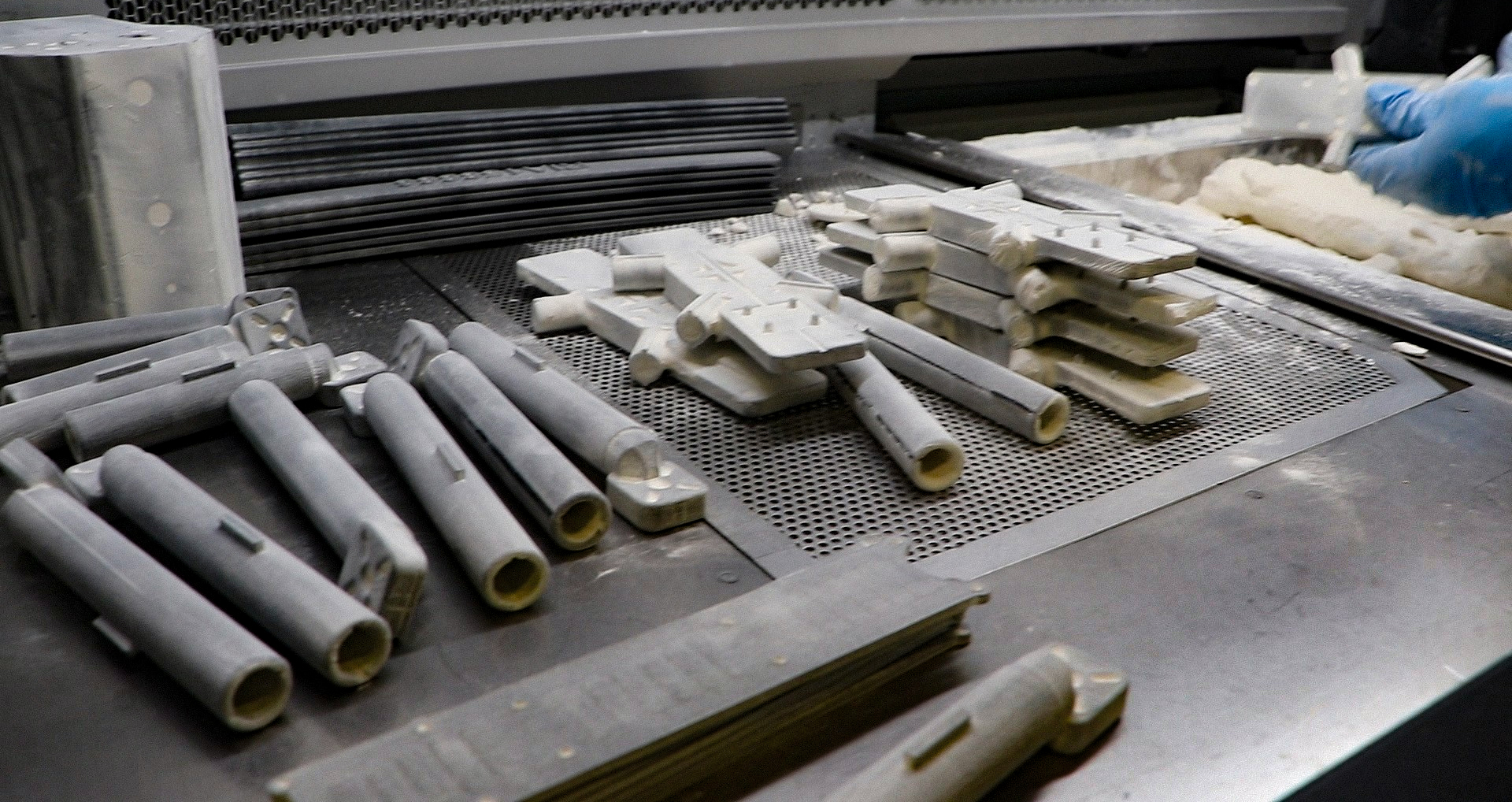
Ever since the DOD established America Makes in 2012, there have been peaks and valleys in funded R&D. Wilczynski had thought of America Makes as existing mostly in the research space.
But there’s been a steady increase in defense funding for AM over the last five years, says Wilczynski, who expects a bigger piece of the defense budget, which is up 13% from the previous budget, to be directed toward scaling additive and advanced manufacturing.
Yet, it’s not just funding, though, that could lead to additive manufacturing making its biggest strides yet; There’s a perfect storm of executive directives, American-first manufacturing, and removal of some previous hurdles to scaling AM, such as procurement and certifications.
“We’re getting questioned more regularly,” says Wilczynski, referring to the past few months where DOD leaders are asking: “How is what you’re doing delivering warfighter capability and where is the industry’s capability at today?”
It’s no longer about researching technologies that will take effect a decade from now. “The time for development is past,” says Wilczynski, “they need solutions, and they need things to be transitioned [to production].”
Drones Move from Memo to Mission
In a July 10 memo, Defense Secretary Pete Hegseth said that “U.S. units are not outfitted with the lethal small drones the modern battlefield requires.” He pledged to “bolster the nascent U.S. drone manufacturing base by approving hundreds of American products for purchase by our military.”
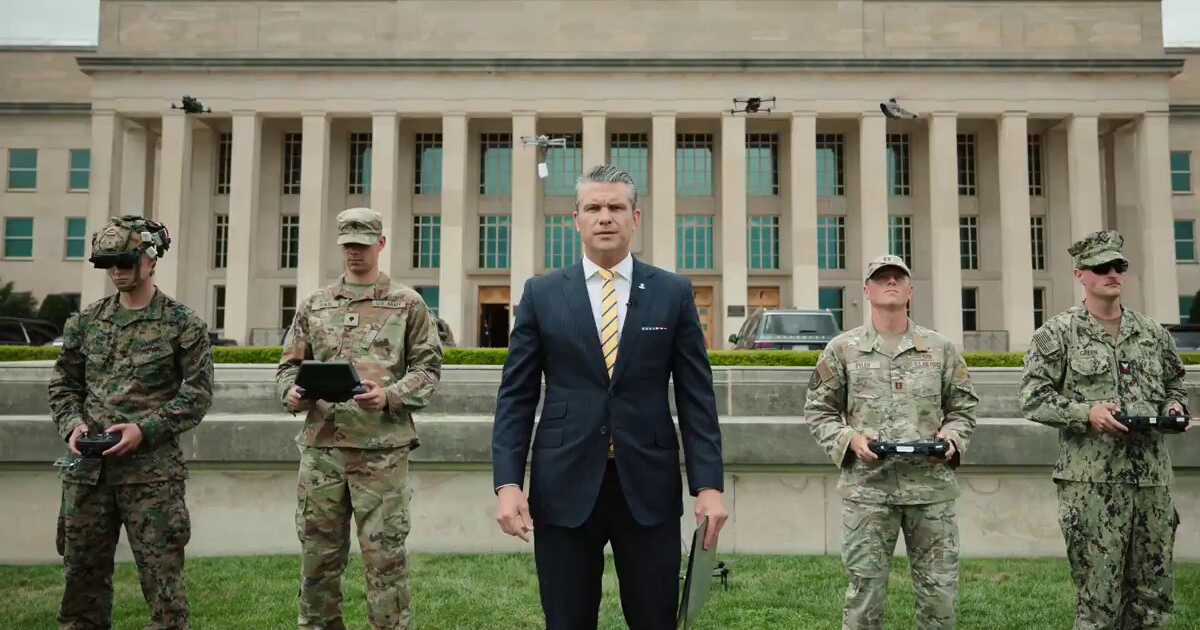
Soon afterward, on July 16, a video from the Pentagon featuring Secretary Hegseth and a chorus line of hovering drones was staged to announce a new order that, among other things, calls for scaling the use of small drones across DOD and encourages “local innovation” like 3D printing parts.
How will the U.S. rapidly scale up production of small drones, using what technology, and where — on the front line with 3D printers? These are the kinds of questions Wilczynski says he is being asked lately. “The space is rapidly evolving,” he says, “and drones’ applicability to additive, is one where we’ve seen pretty dramatic shifts.”
“Drones are the biggest battlefield innovation in a generation, accounting for most of this year’s casualties in Ukraine,” Secretary Hegseth said at his Pentagon lawn presentation. “Our adversaries collectively produce millions of cheap drones each year.”
The conflict in Ukraine shifted the wartime definition of drones away from the multi-million dollar, extremely sophisticated, large, unmanned vehicles that the U.S. has relied on. Now, the world has seen the capabilities of mostly 3D-printed drones as munitions.
A Perfect Match for Additive
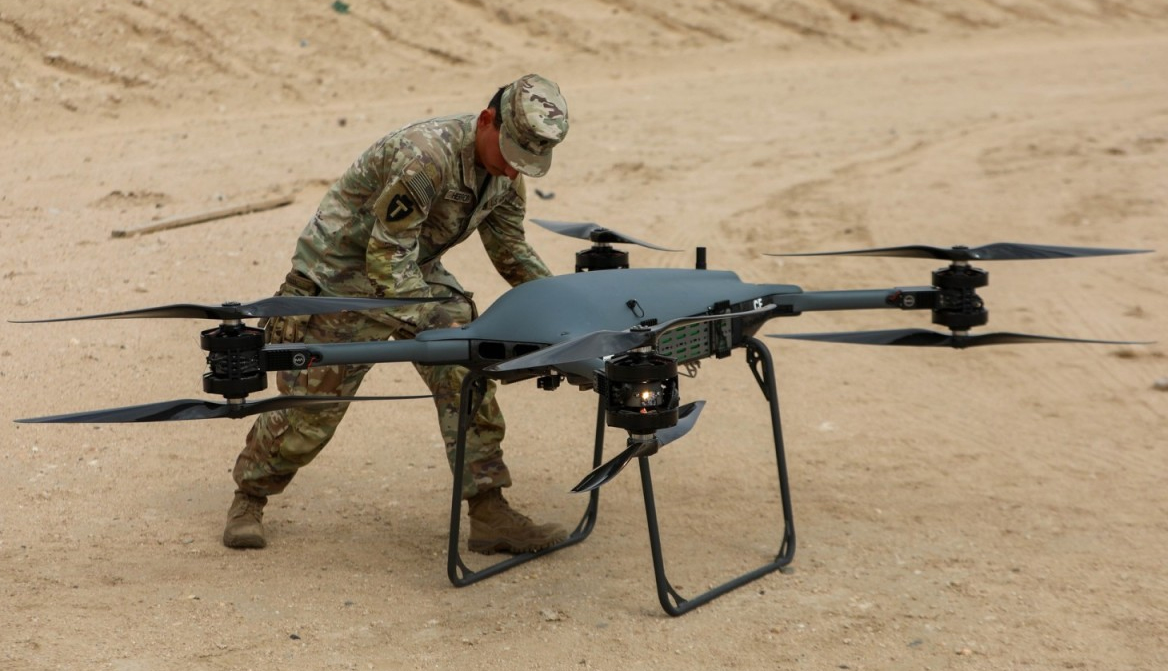
“We’ve learned a lot through our connection points in the military regular contact with folks over there [in Ukraine],” says Wilczynski. And the question he’s hearing from the DOD is: “How will we do that?”
The U.S. military’s call for the rapid advancement and application of technology to become the world’s dominant drone power could be a unique opportunity for additive manufacturing. It is well suited to this demand since it enables faster prototyping and production cycles compared to traditional manufacturing. Drones, especially small ones, could be developed and produced more quickly and at a lower cost using 3D printing, bypassing lengthy tooling or traditional assembly line processes.
AM enables on-demand production of drone parts, allowing military units, like we’ve seen in Ukraine, to produce components directly where and when needed, getting around traditional supply chains.
“Things like this latest executive order on drones are a really interesting opportunity to unlock some of [additive’s capabilities],” says Wilczynski, “because we’ll have a better understanding of what we need to produce for organizations that are trying to get in this [booming market].”
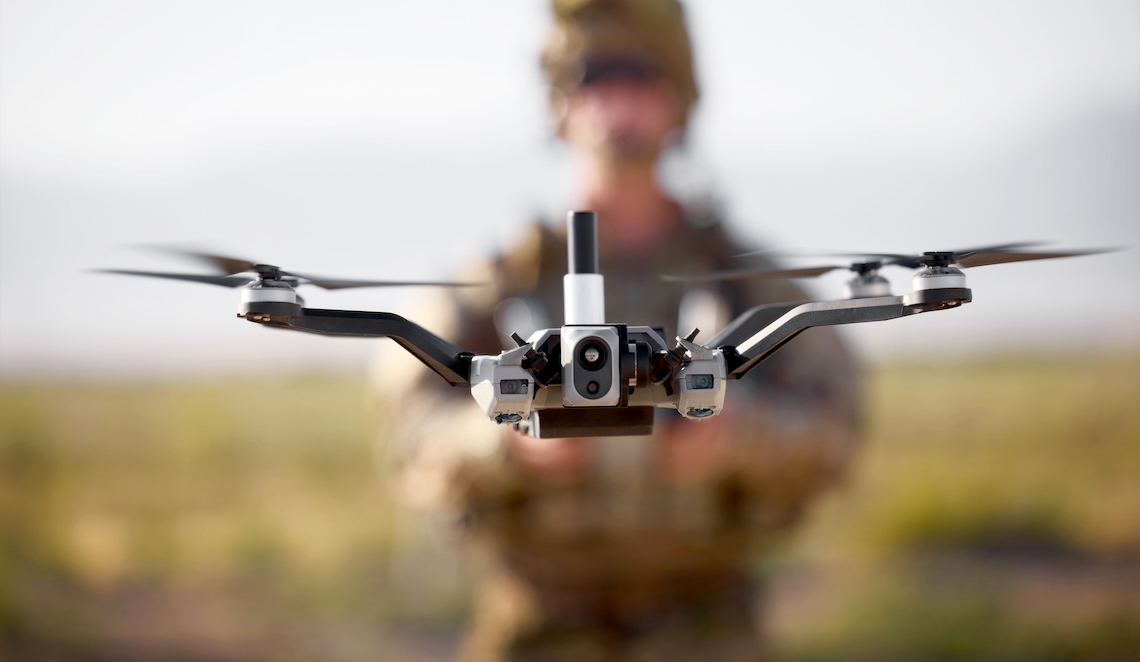
The DOD has not gone into much detail about the types of drones it envisions producing, but from Secretary Hegseth’s video and comments, it appears to be a wide variety. This is another plus for additive manufacturing, since one of its strengths is customization, which would be particularly valuable for military drones that may require specialized components or configurations depending on the mission.
“We’re still a relatively new technology, and investment will only be made when there’s a known opportunity to be able to make money off of it,” says Wilczynski. “If you’re a small business, like many of the folks potentially reading this, you want to know, where do I apply my machine? What do I use it for? What machine do I get?”
America Makes has hundreds of partners, including nearly every major 3D printer manufacturer in America and beyond, including EOS, 3D Systems, Stratasys, Formlabs, Lithoz, Renishaw, Nikon SLM, and many more. All potentially have a claim to stake in domestic drone production.
Is Secretary Hegseth’s call for drone dominance the opportunity additive manufacturing has been waiting for to be let off the leash to show what it’s really capable of?
Wilczynski says the ramp-up of America’s military capabilities has been a priority for the past several years as China’s military advances technologically, but the Trump administration is putting more “focus” on this priority.
Rethinking AM Rules for the Drone Age
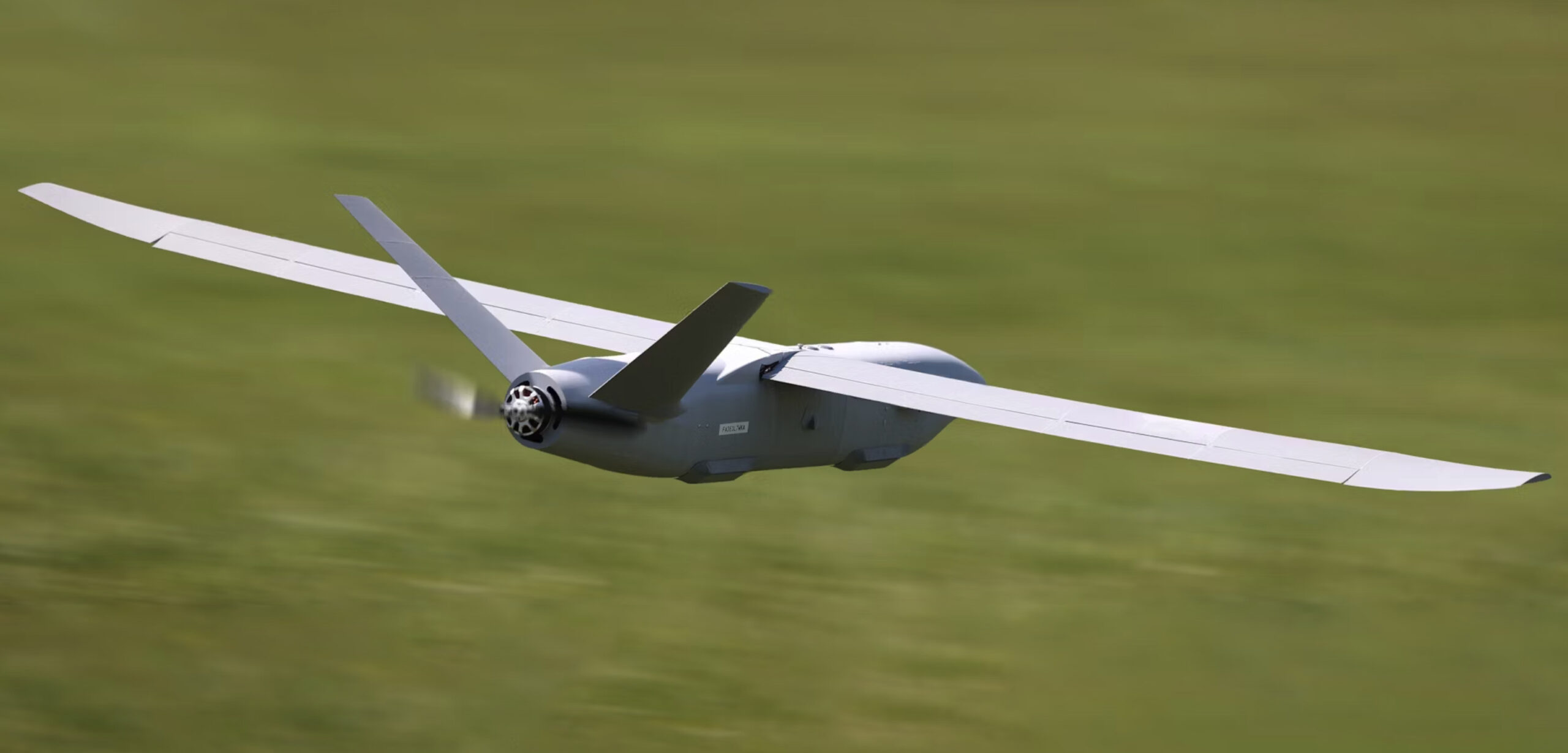
The new demand from the military for accelerated domestic manufacturing could upend the established – and much-hated – processes of additive manufacturing R&D, certifications, qualifications, and approvals.
“One of the major challenges that exists within the global AM community is qualification and certification,” says Wilczynski. Unlike metal forging and casting that have been used for hundreds of years, additive technologies need to prove that they’ll work, and reprove it for every part, every material, and every application, individually.
How Disposable Drones Change the Rules
The push for drones, however, may break open that problem. Currently, most additive manufactured parts are subject to the same certification requirements whether they will be used in an application for a manned vehicle or an unmanned vehicle.
The revised National Defense Industrial Strategy issues in 2024, acknowledged this issue and called for more progress, but Wilczynski says that the real-world global challenges going on today are accelerating this push.
“This is an interesting place where drones are starting to drive some change in our approaches,” says Wilczynski. “This is where DoD is really pushing … things like attritable aircrafts [intended for single-use or disposable purposes] and platforms where they’re unmanned systems and may not return, so you would be able to design them differently. Therefore, you can use different processes, different approval approaches.”
The most recent executive order on drones and their acquisition, “has the potential to unlock this technology that we are all confident can meet those needs.”
Public proclamations are exciting, but no progress will actually be made without money.
The U.S. budget, passed on July 4, calls for a 13% increase in military spending up to $1.1T. “Where exactly that’s being applied is not clear to us at this point,” notes Wilczynski.
The DOD is a unique agency in the United States in that it both funds R&D activity but also can then procure what it funds.
For example, whether it’s to meet a requirement to produce tens of thousands of drones of different types, America Makes can identify the companies and technology available or, if the capability is possible, where to invest in, say, a new laser technology so that we’re able to produce components more quickly or a larger scale, or in a single build, based on requirements driven by the DOW.
The Trump Administration, with its new Under Secretary of Defense for Research and Engineering Emil Michael, has not yet provided America Makes with its critical technology areas for R&D, but Wilczynski expects the new surge in drone variety to drive activity, along with other major drivers over the years, including new propulsion systems.
“A couple of weeks ago, I visited several Space companies and additive was everywhere you went,” says Wilczynski. “It is one of those industries where additive has found a home, and these companies are using it at a scale that is unimaginable for most in our industry.”
We asked Wilczynski to imagine a Trump visit to one of those space companies. Picture the President studying a fully 3D printed rocket thruster and imagine what you’d do if he suddenly said, “We need to be doing a lot more of this.”
“I would see it driving an increase in investment in the U.S., but would likely result in a surge in activity globally,” says Wilczynski. “We would see the creation of new factories and expansion in several existing factories, along with a significant focus on rapid qualification.” This could ultimately lead to a significant expansion in AM’s role in manufacturing, not only drones but across manufacturing.
“I think our community is up for that directive and the challenge.”
Lead image caption: War Secretary Pete Hegseth and Undersecretary of War for Research and Engineering Emil Michael speak to reporters while touring multidomain autonomous displays at the Pentagon, July 16, 2025 (Photo by Navy Petty Officer 1st Class Alexander Kubitza)
You May Also Like:


License: The text of "Is 3D Printing the Key to U.S. Military’s Drone Dominance? We Asked One Man Who Would Know" by All3DP Pro is licensed under a Creative Commons Attribution 4.0 International License.