How an Uncomfortable 3D Printed Dress Stole the Spotlight at This Week’s Paris Fashion Show

Forget breathable fabrics, the future of haute couture is rigid, custom-extruded, color-shifting PETG. Just don't try to sit down.
Paris Fashion Week is not exactly where you expect to see FDM filament stealing the show, but here we are. Vogue contributing fashion critic Luke Leitch was absolutely gushing over yesterday’s runway show by Kunihiko Morinaga’s label Anrealage that featured 3D printed elements in its Spring/Summer 2027 collection called Skin.
“Morinaga has conjured up many viral moments thanks to his experimental approach to integrating tech into fashion and his dedication to placing material innovation at the heart of his avant-garde practice,” says Leitch.
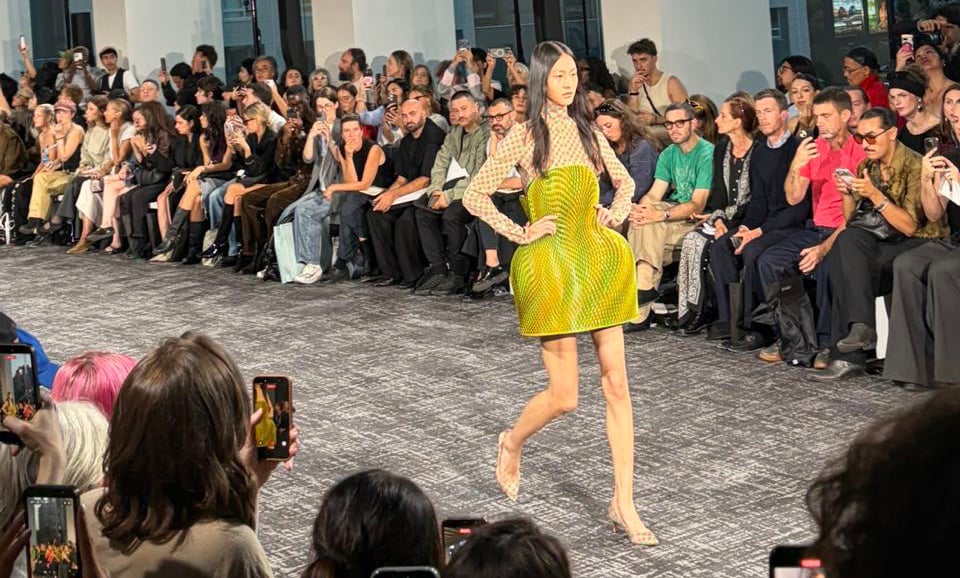
The full collection played heavily with surfaces that shift, react, and transform, exploring the idea of clothing as a “second skin” that can mutate, shed, and renew. For us, though, the obvious highlight was the 3D printed dresses.
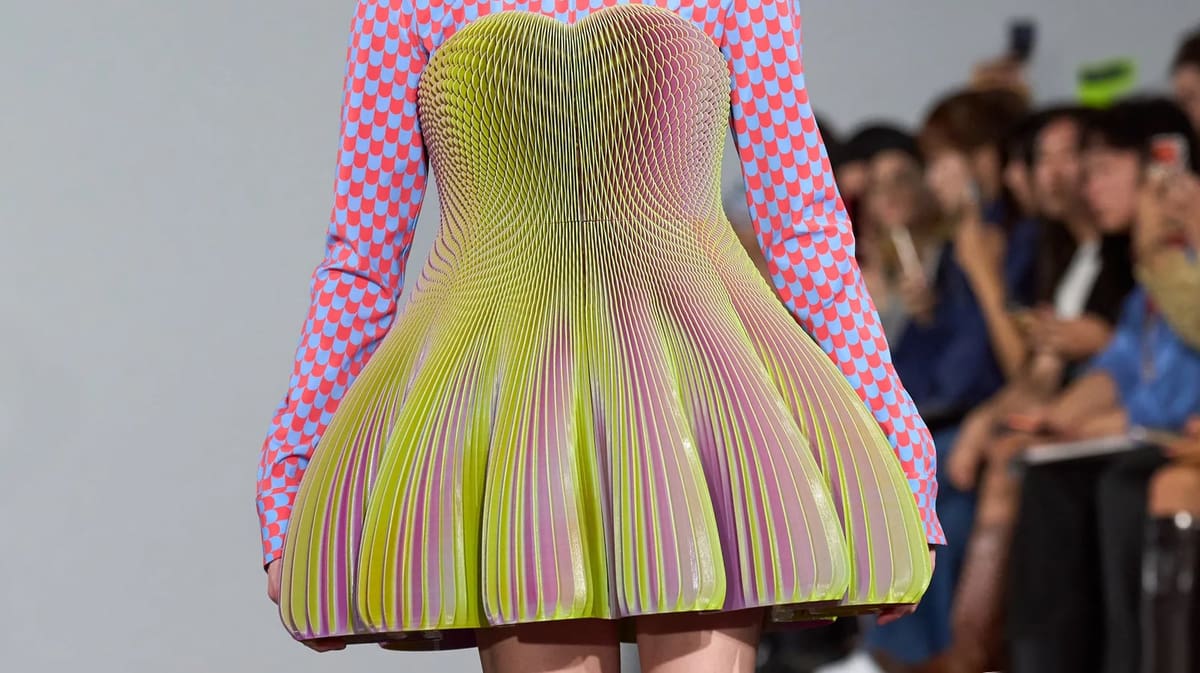
The hard-shell bustier dresses were made using what Anrealage calls ‘Effective Skin’ technology. The 3D printed scales were colored differently according to angle, so the skirts registered as different shades as the models moved and shifted.
This is the typical affect seen when printing with a dual-color filament, but the workshop behind actually printing the dresses uses something unique.
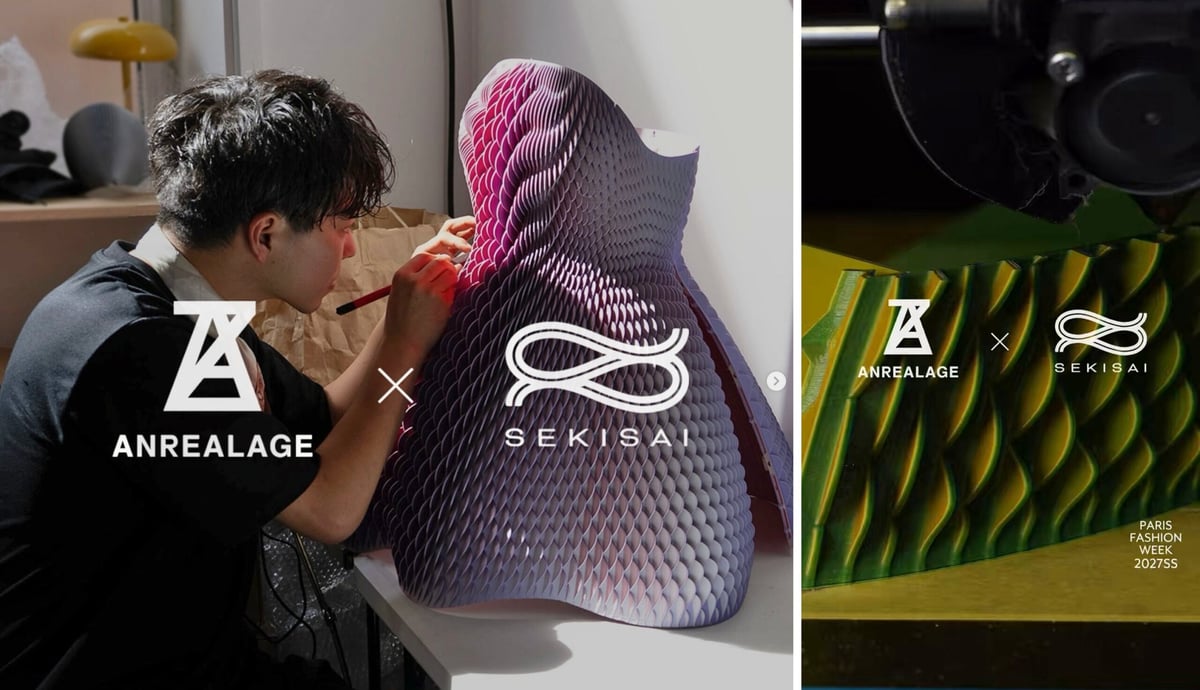
Tokyo-based Sekisai Design, a design and fabrication studio specializing in 3D printing, devised a custom color-printing techniques using a custom print head that combines three filament to blend textures, transparency, and gradients. The iridescent effect and color-shift depends on your viewing angle. Sekisai has been making vases, chairs, and lampshades with this approach for a few years.
The custom extruder can reportedly print three different colored filaments at temperatures that prevent them from mixing. A proprietary toolpath software determines which colors appear on different faces or portions of the geometry.
Filament maker Kexcelled says Sekisai Design used its The K5 PETG filament for the Anrealage dresses. The K5 collection of PETG includes more than 50 fashionable colors including translucent and metallic variations.
Although Sekisai’s technology is not commercially available, the broader story, though, is clear enough: FDM 3D printing made it onto an official Paris Fashion Week runway as part of the final look. That’s quite the glow-up for melted plastic.
You May Also Like:



License: The text of "How an Uncomfortable 3D Printed Dress Stole the Spotlight at This Week’s Paris Fashion Show" by All3DP Pro is licensed under a Creative Commons Attribution 4.0 International License.