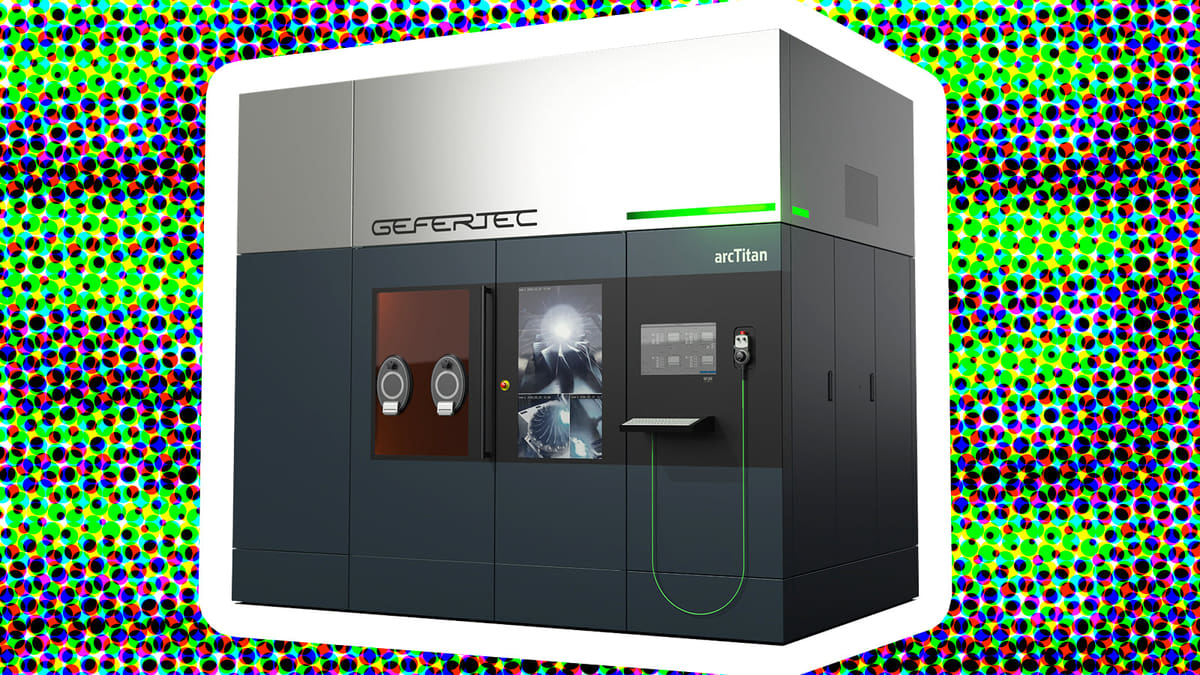
Gefertec Launches ArcTitan, a Sealed-Chamber WAAM Printer for Large Titanium Parts

A sealed inert-gas chamber and plasma-based deposition promise more controlled titanium WAAM, although Gefertec has yet to publish material-property data, pricing, or delivery details.
Germany-based Gefertec just launched the ArcTitan, a wire arc additive manufacturing (WAAM) metal system designed specifically for producing large titanium components.
Unlike titanium options added to more general-purpose WAAM machines, the ArcTitan combines a plasma-based deposition process with a fully enclosed, inert-gas build chamber. Gefertec says the controlled environment maintains oxygen concentrations between 10 and 15 parts per million, helping prevent contamination while titanium remains hot and reactive.
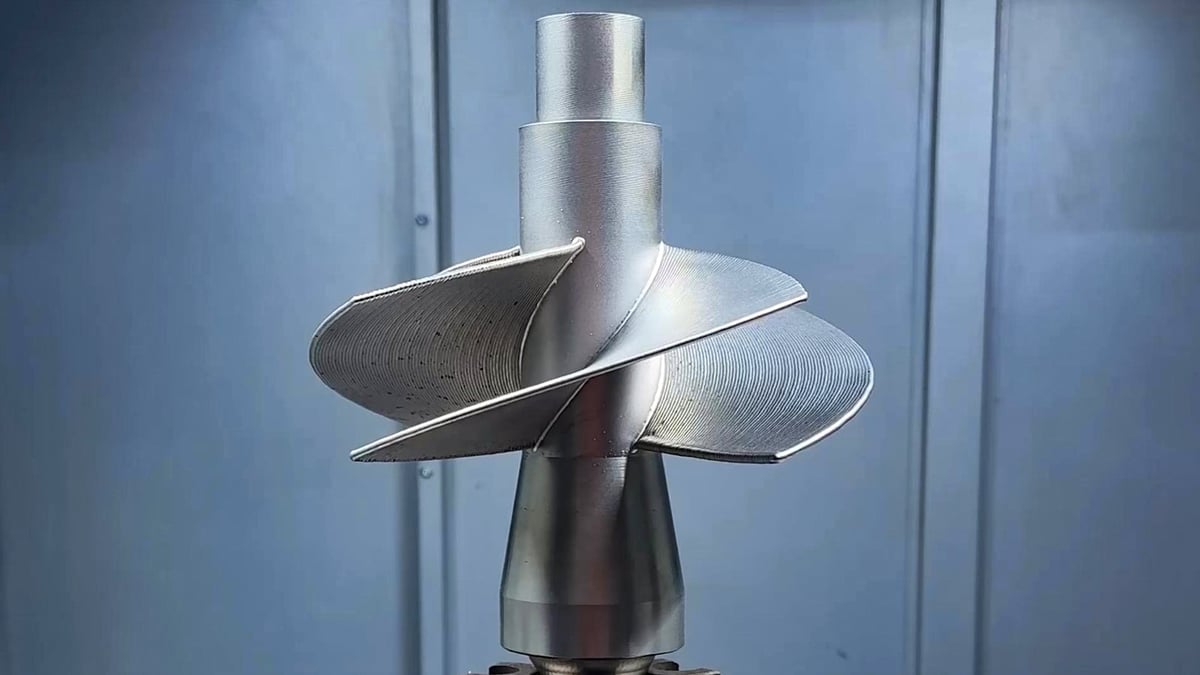
The system offers a 2 x 0.7 x 1 meter build envelope and a maximum deposition rate of 3 kg per hour. Gefertec is initially positioning the customizable machine for large near-net-shape components in aerospace and energy, where titanium’s high cost can make machining parts from large billets especially wasteful.
The sealed chamber is arguably the ArcTitan’s main advantage. Titanium WAAM systems can use local gas shielding around the deposition head, but maintaining consistent coverage becomes more difficult as components grow or their geometry becomes more complex. Controlling the atmosphere around the complete build could simplify shielding and provide more repeatable conditions over long production runs.
Gefertec also describes its plasma process as established and qualified for aerospace applications. However, the company has not said whether that refers to the underlying welding technology, a specific titanium material specification, the ArcTitan’s process parameters, or parts made on the machine. It has also not published density, tensile, fatigue, porosity, dimensional-accuracy, or repeatability results from ArcTitan builds.
Potential ArcTitan Applications
The combination of a large build chamber, relatively high deposition rate, and controlled atmosphere could make the ArcTitan suitable for:
- Aircraft structural components, including large brackets, ribs, frames, and reinforcement elements
- Engine and propulsion preforms that can be deposited near net shape before precision machining
- Spacecraft and launch-vehicle structures produced in low volumes from high-value titanium alloys
- Energy-industry components requiring large, complex, or corrosion-resistant titanium structures
- Marine and offshore parts intended for corrosive operating environments
- Replacement and legacy components for which conventional forgings have high costs or long lead times
Gefertec has not yet named a launch customer or identified a component being manufactured commercially with the system.
Just Titanium?
Although the ArcTitan may be optimized for titanium it is not a one-trick pony, the specs online say it’s capable of printing in aluminum and nickel-based alloys as well.
For now, ArcTitan’s combination of a two-meter build length, low stated oxygen level, and titanium-focused architecture makes it a notable addition to the WAAM market. But prospective users will need more than headline specifications. Gefertec has not announced the machine’s price, first customer, order availability, purge time, gas consumption, supported titanium grades, maximum component weight, sensor package, or required post-processing.
License: The text of "Gefertec Launches ArcTitan, a Sealed-Chamber WAAM Printer for Large Titanium Parts" by All3DP Pro is licensed under a Creative Commons Attribution 4.0 International License.