From Industrial Expertise to Desktop Manufacturing: The Story Behind FibreSeek

Continuous fiber reinforcement has long been confined to costly industrial setups, but FibreSeek is bringing that capability to the desktop following a $4.7M Kickstarter campaign.
Continuous carbon fiber 3D printing has long offered a way to make strong, lightweight parts, but high equipment costs have kept it largely within industrial settings. For a small engineering team, developing a functional part means balancing weight, strength, design flexibility, and the time needed to test the next version.
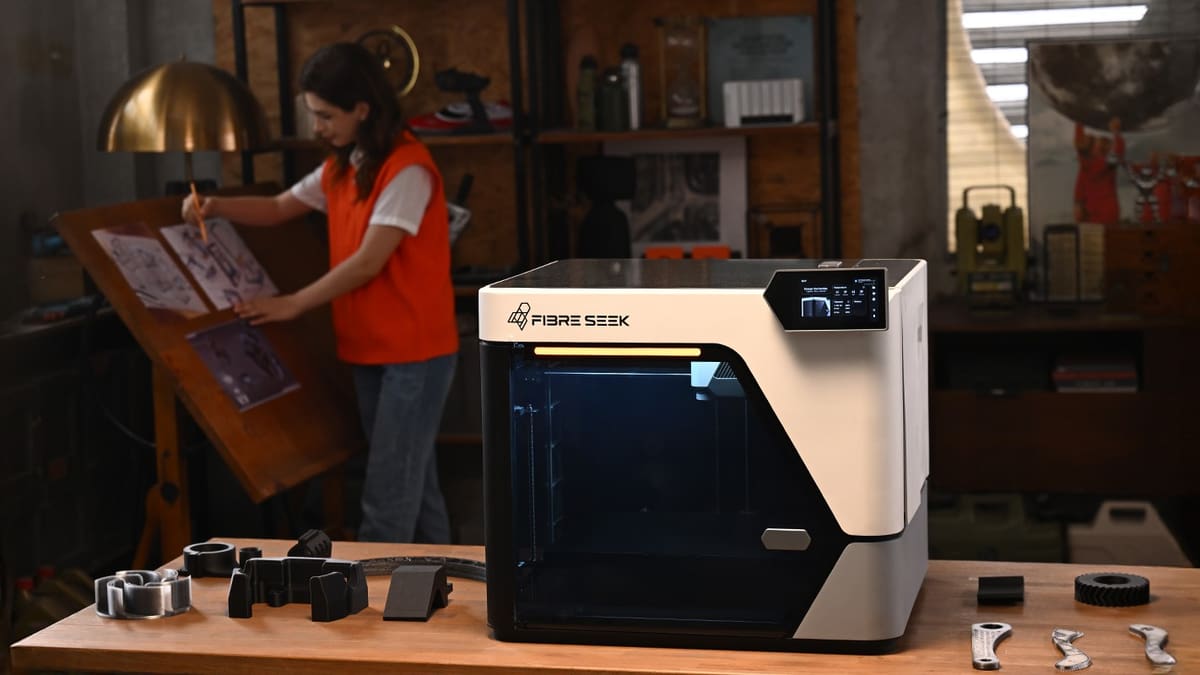
FibreSeek has launched its US online store, bringing its pioneering desktop continuous fiber 3D printer FibreSeeker 3 to North American engineers, makers, and small R&D teams. Positioned as the world’s first consumer-focused desktop continuous fiber 3D printer, it uses Composite Fibre Co-Extrusion (CFC) to embed unbroken reinforcing fibers into thermoplastic parts. Unlike chopped-fiber-filled filaments, these continuous strands can follow engineered load paths, adding reinforcement where a drone frame, robotics joints, or RC airplane parts need it.

Engineering Experience Behind FibreSeek
Ryan Liu, Founder and CEO of FibreSeek, was an early member of Anisoprint’s technical team, where he contributed to the development of industrial continuous fiber printing technology. Ryan’s goal is to make continuous fiber printing practical and accessible for individual engineers and small teams, bringing the technology into everyday design and prototyping work. That experience shapes the brand’s engineering approach, linking composite processing and printing systems with the practical demands of product development.
Adapting this technology for desktop use involves every stage of a print, from preparing materials and planning fiber paths to setting up the machine. For FibreSeek, making those steps easier to navigate is an essential part of bringing composites into smaller R&D environments.
Built on the founding team’s experience developing industrial composite printing systems at Anisoprint, the FibreSeeker 3 attracted $4,698,825 from 1,539 backers on Kickstarter in early 2026, demonstrating demand for more accessible continuous-fiber manufacturing. Since the campaign, FibreSeek has moved into production and begun shipping machines to early backers – an important step for prospective buyers looking for evidence of manufacturing and delivery beyond a successful crowdfunding launch.
Why Continuous Fiber Is Central to Its Approach
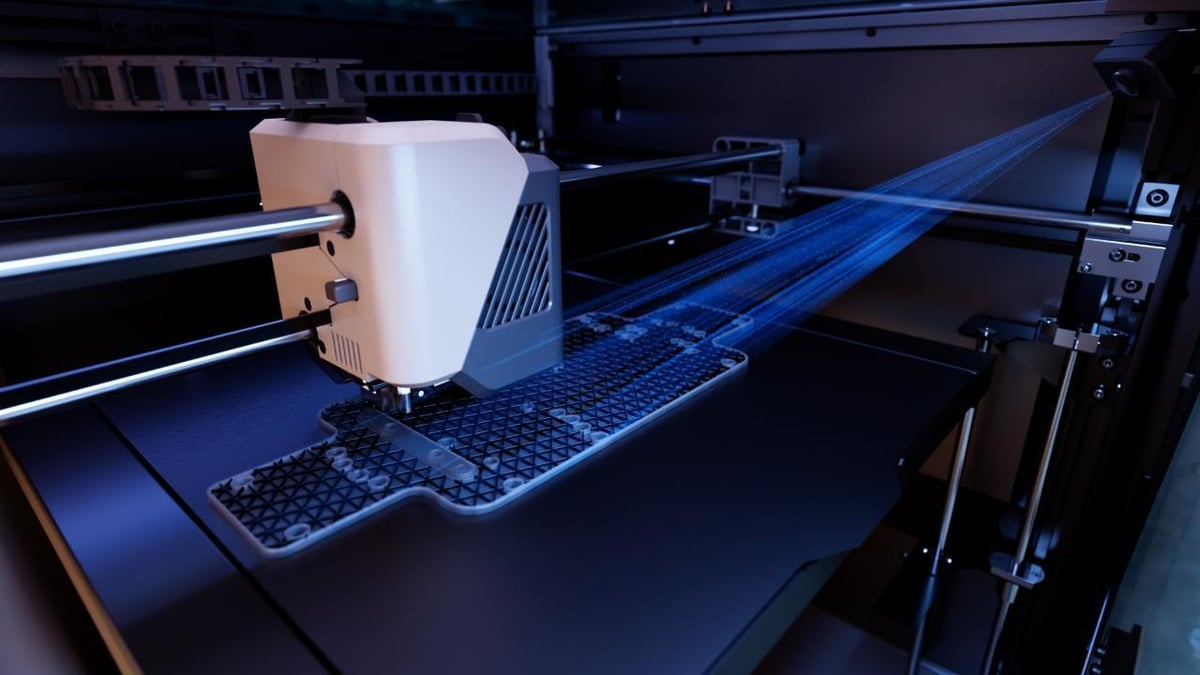
Continuous Fiber Co-Extrusion (CFC) is the technical foundation of FibreSeek’s 3D printing. Its co-extrusion process combines continuous reinforcing fibers with a polymer matrix and thermoplastic material, making reinforcement part of the printing workflow.
Fiber placement is a key design choice alongside geometry, wall thickness, and print orientation. Engineers can plan reinforcement around selected regions and the loads they need to carry.
A robotic arm component, for example, might call for reinforcement along a section subject to bending, while a mounting bracket may need additional stiffness around its attachment points. These design decisions connect FibreSeek’s material technology with its path-planning software: the shape of a part and the arrangement of its reinforcement are considered together.
Building a Workflow Around the Technology
The software side of this workflow centers on Rocket Slicer, FibreSeek’s slicing software for preparing 3D models and planning fiber reinforcement. Its fiber-routing tools and path-planning controls help engineers tailor reinforcement strategies to the requirements of individual parts, from functional prototypes to end-use components.
Three modes – Speedy, Reinforced, and Fortified – provide starting points for different turnaround and reinforcement priorities. Users can select an approach suited to the job, then assess the preparation, material use, and printing time involved.
The FibreSeeker 3 brings this workflow to the desktop. A 300 × 300 × 245 mm build volume accommodates a range of component geometries, while its dual-nozzle configuration, 65 °C actively heated chamber, and automated calibration support the printing process.
Developing the printer alongside the software and materials lets FibreSeek address the transitions between tasks: choosing a material, planning reinforcement, preparing the print, and producing a component for evaluation. This project-based view guides the design of the wider system.
Supporting Functional Engineering
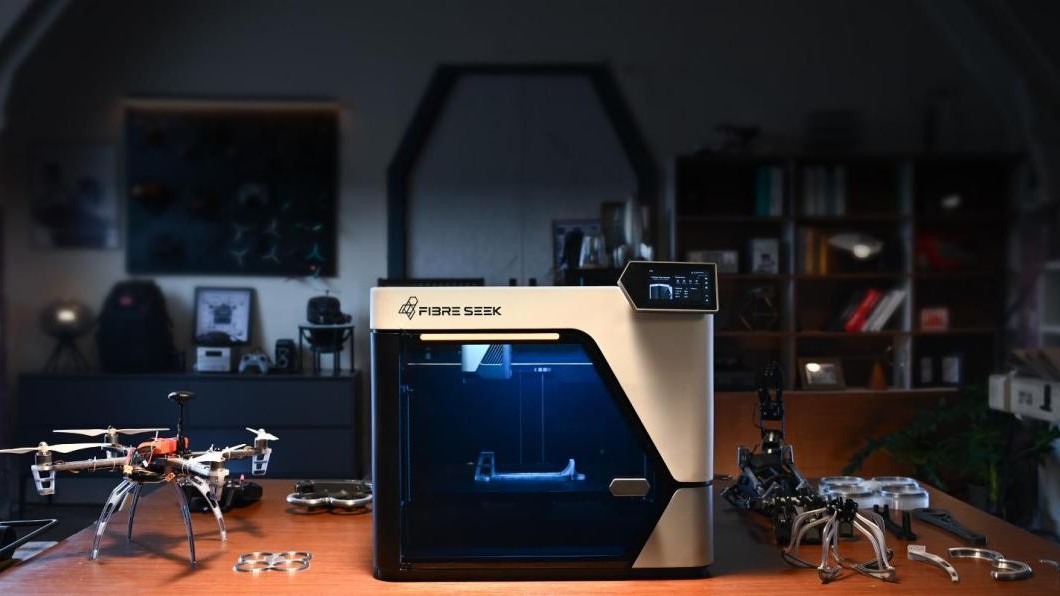
Tooling, robotics, drone components, and functional prototyping are among FibreSeek’s intended applications. Customized geometries and repeated design changes make these areas relevant to smaller teams developing and evaluating parts in-house.
A laboratory might investigate a lightweight structural component, while a workshop could develop a custom fixture for a recurring task. In either case, preparation time, material consumption, fit, and performance under defined conditions provide concrete measures for evaluating the process.
Engineering validation remains part of that process. Material selection, fiber direction, dimensional requirements, and expected service conditions determine whether a printed component is suitable for its intended role.
Bringing Desktop Composites to North America
FibreSeek’s US online store gives North American users a direct destination for product information, purchasing, and support resources. Engineers, makers, and educational teams can explore the FibreSeeker 3 and Rocket Slicer as they consider how continuous fiber printing could fit into their development work.
The brand brings its composite engineering experience to this effort through coordinated hardware, software, and material development. Its goal is to make continuous fiber printing a more approachable part of everyday design and testing, giving smaller teams another way to develop lightweight, reinforced components.
The FibreSeeker 3 has an MSRP of US$3,499, with an exclusive Black Friday offer available through FibreSeek’s official US store. Learn more about continuous fiber 3D printing technology on the FibreSeek website.