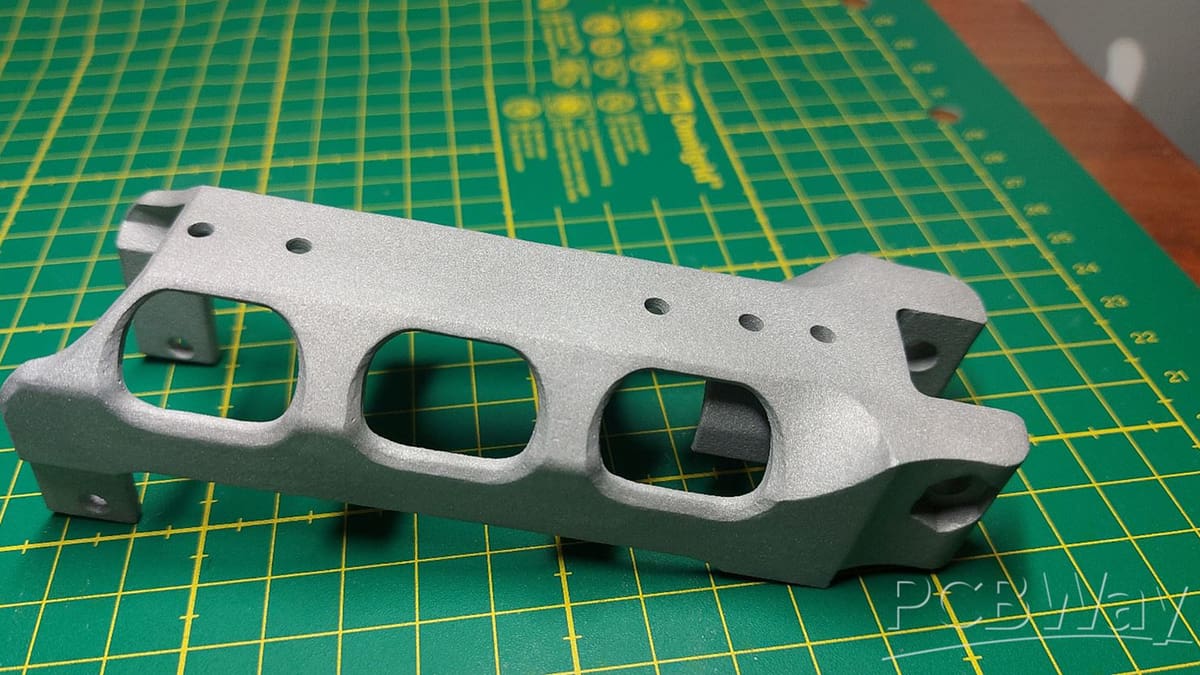
Ditch the CNC? Why Engineers Are Using PCBWay Metal 3D Printing for End-Use Tooling

PCBWay's metal 3D printing service can create parts in aluminum, stainless steel, titanium, and tool steel with full post-processing support.
Metal 3D printing has evolved far beyond basic rapid prototyping. Today, engineering teams are using the technology to bypass traditional machining entirely, deploying selective laser melting (SLM), also known as metal laser powder bed fusion (LPBF), to manufacture parts that were once deemed impossible to produce with traditional manufacturing like CNC machining.
The limiting factor is no longer the technology itself, but finding a manufacturing partner capable of scaling complex internal geometries across diverse materials like titanium TC4 and tool steel.
PCBWay’s metal 3D printing service is bridging this gap with a controlled-atmosphere SLM process that turns dense metal powders into structurally sound, tight-tolerance end-use components. Here’s how its current material lineup stacks up under real-world operating loads, as well as several example engineering applications for each.
Aluminum AlSi10Mg: Lightweight Without Compromise
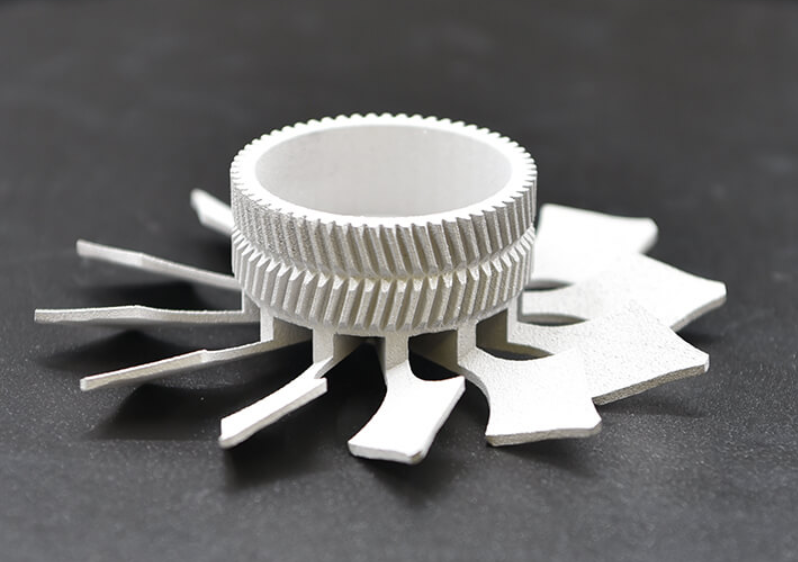
Aluminum AlSi10Mg is the go-to material for engineers who need strength without the weight penalty of steel. The alloy combines silicon and magnesium to deliver good hardness, dynamic load resistance, and thermal conductivity, making it well-suited for thin-walled parts and complex geometries.
At 1.45 g/cm³ bulk density, with 330 MPa tensile strength and 245 MPa bending strength, the strength-to-weight ratio is hard to argue with, especially in aerospace and automotive work where every gram has a cost. Post-processing options include machining, polishing, anodizing, and heat treatment.
If you’re designing a UAV structural frame where saved weight translates directly to flight time, or an automotive intake manifold with internal lattice structures that a mill can’t touch, AlSi10Mg is usually where that conversation starts. It also works well for electronics enclosures that need both thermal conductivity and thin walls.
Stainless Steel 316L: Corrosion Resistance Meets Versatility
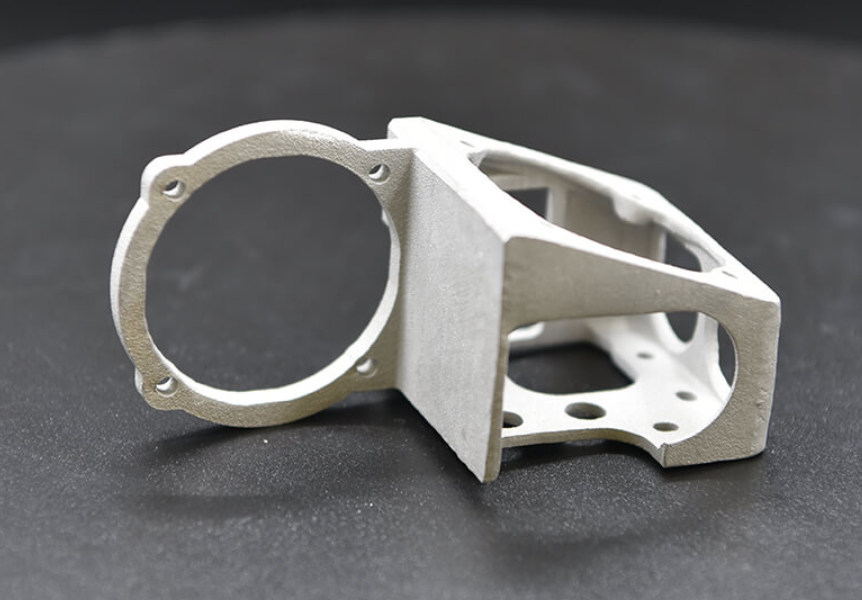
316L stainless steel is the workhorse of industrial metal printing. It resists corrosion from air, steam, water, acids, alkalis, and salts, as well as maintains its mechanical properties at high temperatures.
Its tensile strength hits 560 MPa with 480 MPa bending strength, and is backed by high plasticity, toughness, and a bulk density of 3.9 g/cm³.
That profile covers a lot of ground. A chemical processing engineer might use it for a custom valve body handling aggressive media, while a food equipment manufacturer might print a complex fluid manifold where hygienic design and surface finish both matter. In medical settings, 316L shows up in surgical instrument components and sterilizable fixtures where dimensional stability under repeated autoclave cycles is non-negotiable, and where the material polishes exceptionally well when surface quality is part of the spec.
Titanium TC4: One of the Highest Strength-to-Weight Ratio of Any Metal
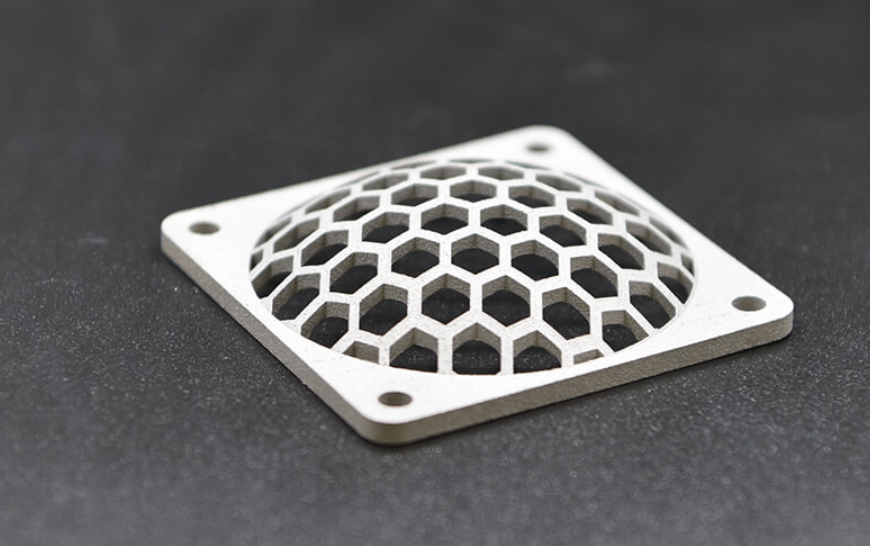
For demanding functional applications, Titanium TC4 is in a class of its own, with a bulk density of just 2.5 g/cm³, 600 MPa tensile strength, 540 MPa bending strength, excellent fatigue resistance, low thermal conductivity, and outstanding corrosion resistance. It;s also biocompatible and weldable.
Here, think of an aerospace team designing a structural bracket that needs to survive cyclic loading in a high-vibration environment without adding mass to the airframe. Or an orthopedic device engineer developing an implant prototype where biocompatibility isn’t a nice-to-have. TC4 also handles petrochemical equipment exposed to corrosive media at elevated pressures, and marine hardware where saltwater resistance and structural integrity both have to hold over a long service life.
Tool Steel: Built for High-Temperature Tooling
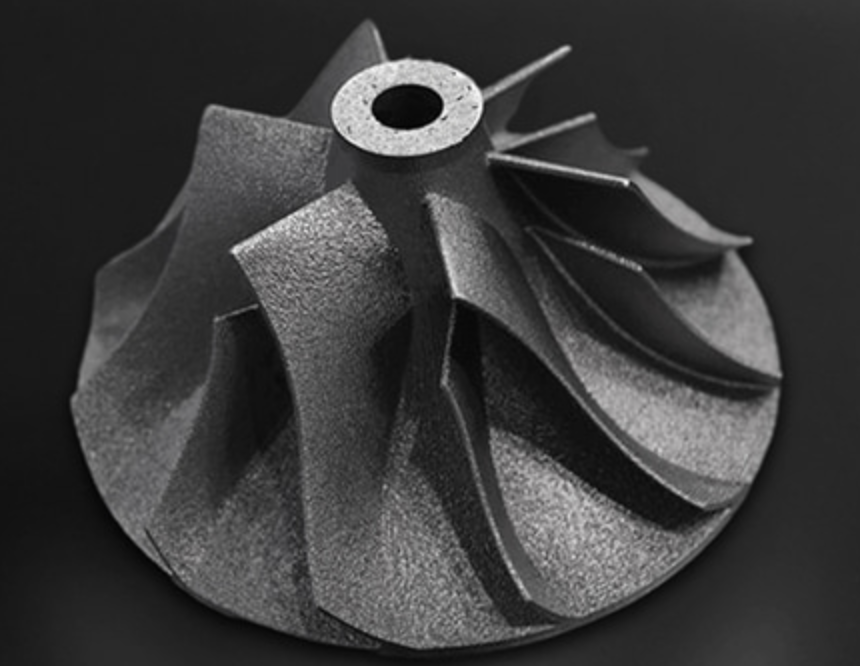
Tool steel rounds out the material lineup as the hardest, strongest option PCBWay offers , with 1,090 MPa tensile strength, 1,000 MPa bending strength, and a bulk density of 4.3 g/cm³. It maintains strength and hardness at high temperatures, with excellent red hardness (the ability to retain hardness in extreme heat) and thermal fatigue resistance that make it uniquely suited to sustained high-heat environments.
Tool steel becomes especially interesting when considering internal geometry. A mold insert with conformal cooling channels, shaped to follow the contours of the cavity rather than running in straight lines, can significantly reduce cycle times and improve surface quality on the finished part.
The same logic applies to brazing fixtures that need to hold complex assemblies in precise alignment at high temperatures, or cutting tools designed with internal features that standard machining simply can’t reach.
What You Can Actually Build
Put those four materials together with SLM’s geometric freedom and the scope gets interesting. On the prototype side, you can test under actual operating loads rather than approximations. For low-volume production, aerospace, automotive, and medical hardware that doesn’t justify a full machining setup is a natural fit.
Other applications include conformal-cooled mold inserts in tool steel, lightweight structural brackets in aluminum or titanium for UAVs and motorsport, corrosion-resistant fluid manifolds and valves in 316L.
PCBWay also handles post-processing, including machining, heat treatment, surface finishing, so your parts arrive ready to use, no extra work required.
Request a Quote for Your Metal 3D Print
PCBWay offers instant online quoting for metal parts. Upload your STL or STEP file, select your material, and you’ll have a quote within minutes. For parts with complex geometries, tight tolerances, or low-to-mid production volumes, it’s a practical starting point for understanding what’s achievable. Request a quote today for a custom look at what PCBWay can do for you.
License: The text of "Ditch the CNC? Why Engineers Are Using PCBWay Metal 3D Printing for End-Use Tooling" by All3DP Pro is licensed under a Creative Commons Attribution 4.0 International License.