‘CAD Illiteracy Is a Barrier’: How Stratasys Plans to Simplify 3D Printing for Everyone

Maybe the future of manufacturing isn't expert software, but simple apps that could make 3D printing as easy as ordering a photo mug.
Victor Gerdes helped build some of the world’s most sophisticated and powerful CAD, PLM, IoT, and AR software platforms during his 22 years at PTC. Now, as a VP at Stratasys, he’s on a mission to kill the very complexity he used to create.
Gerdes argues that the 3D printing industry’s reliance on “CAD literacy” is the single biggest thing holding it back, and he’s championing a new wave of radically simple software, like the new Fixturemate, to fix it.
Gerdes frames this new direction as a core part of the company’s value proposition. Stratasys is on mission “to deliver software that makes 3D printing more accessible and the value of 3D printing much easier to achieve,” says Gerdes.

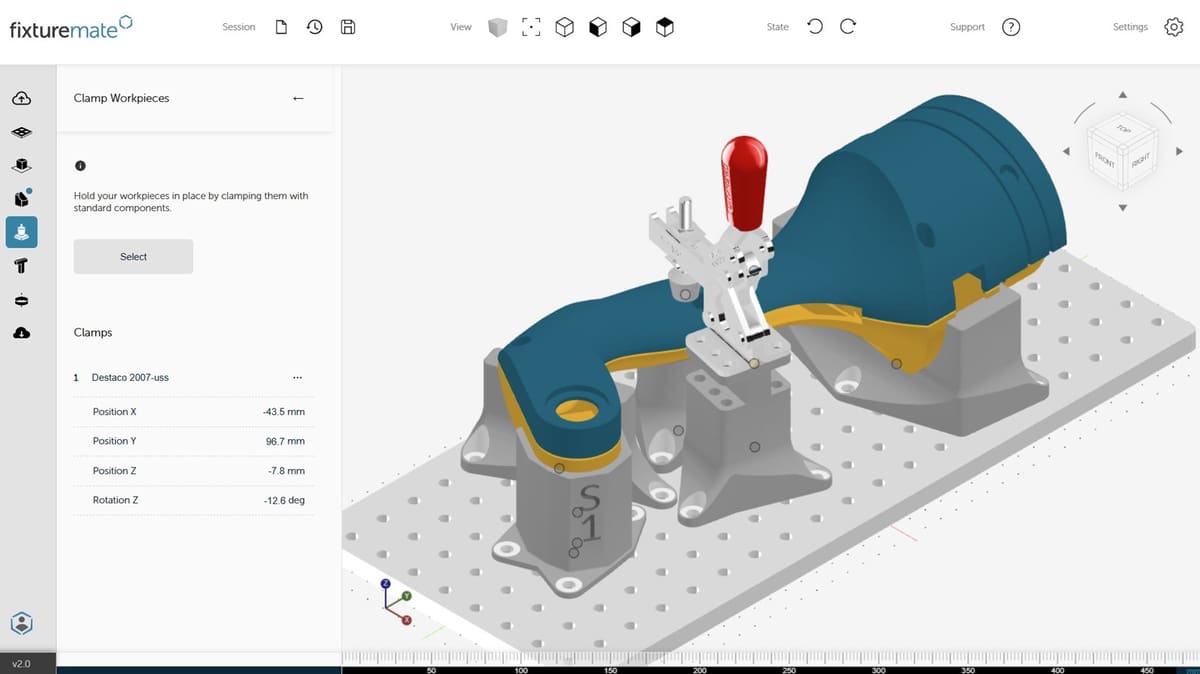
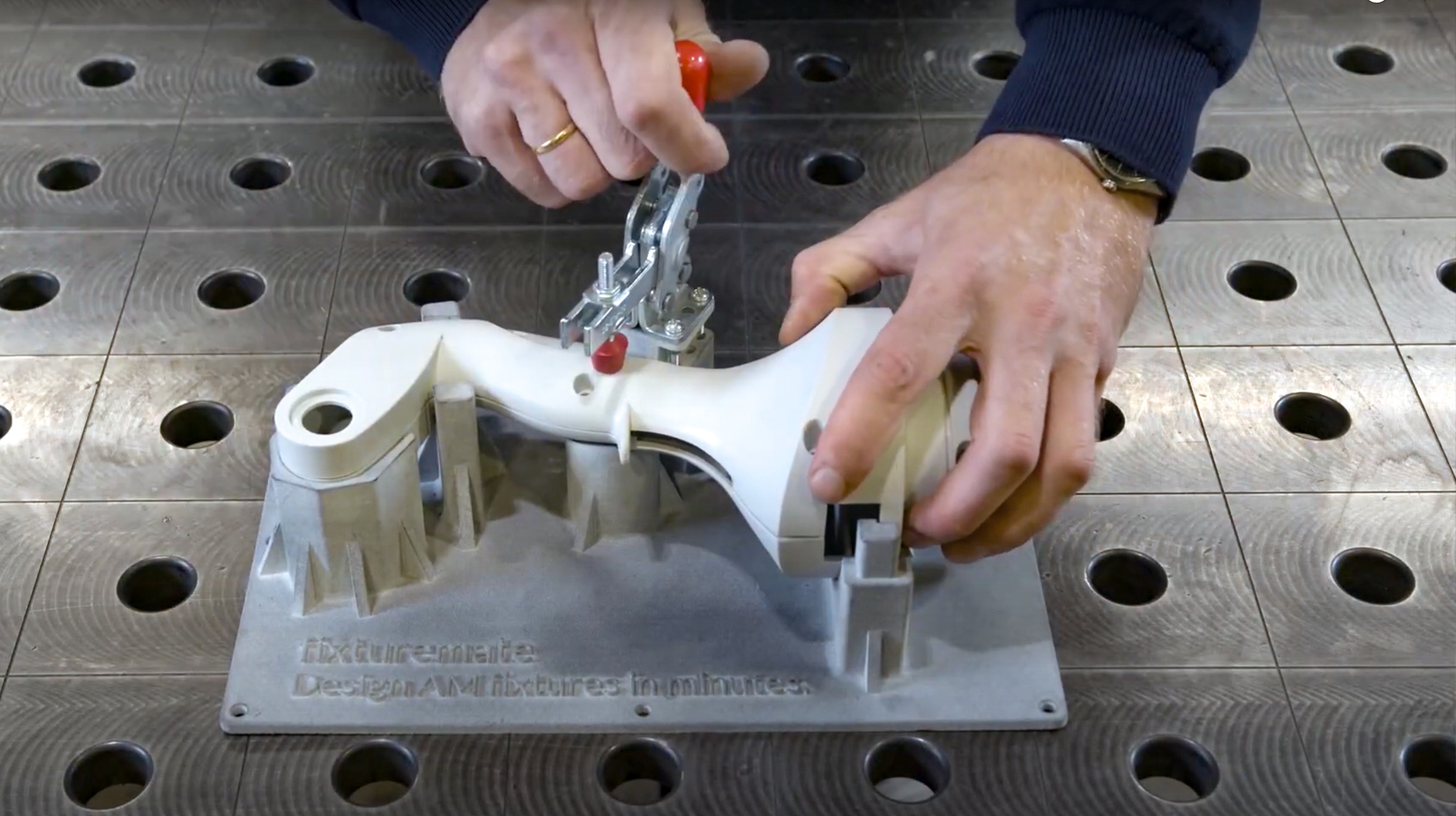
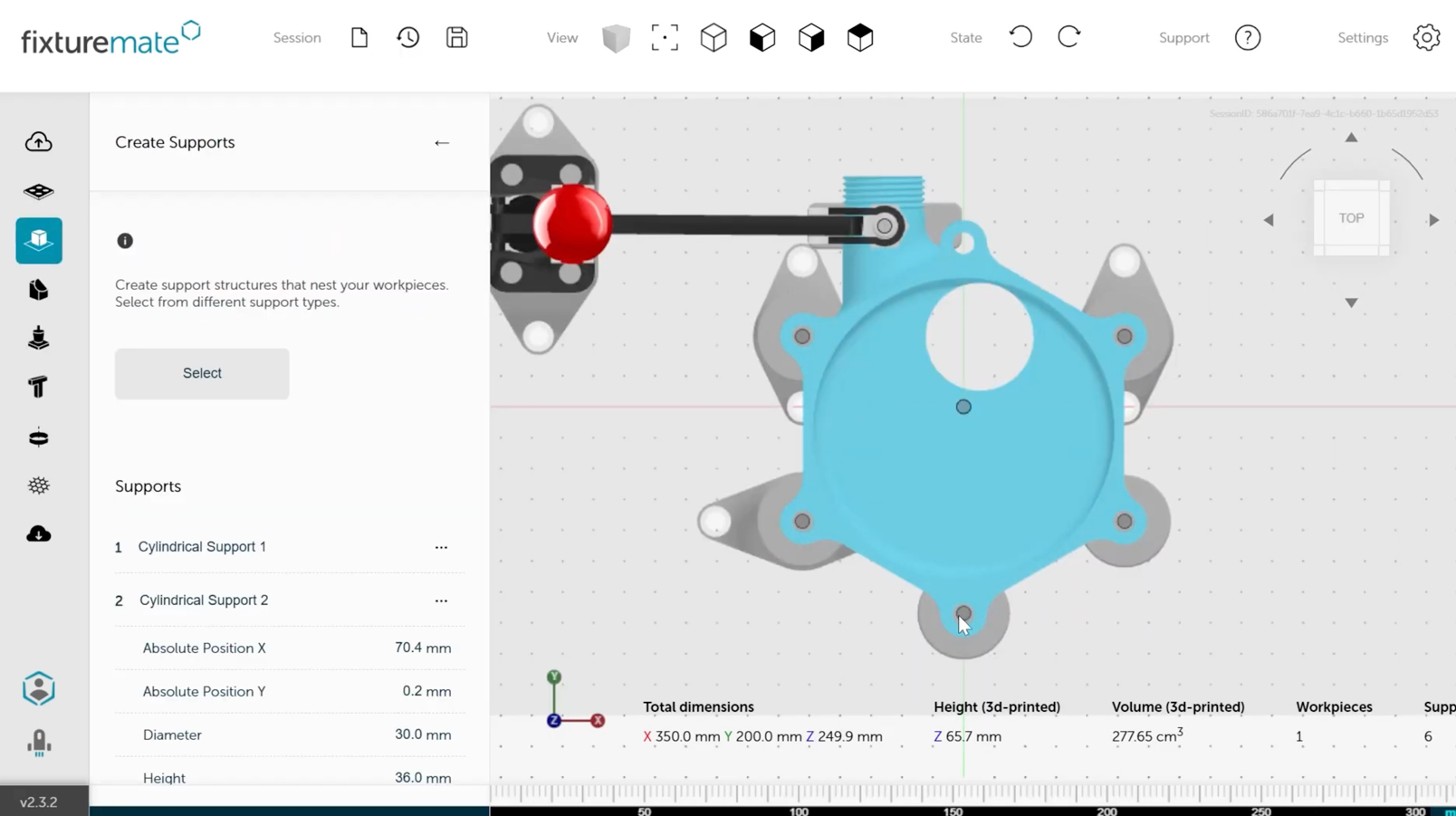
Fixturemate, developed by software company Trinckle in 2024, is a highly automated fixture making software tool for the non-designer offering a simplified step-by-step workflow and user-friendly options enabling fixture creations in minutes, or 80% less design time, the company says. In 2025, Stratasys partnered with trinckle to secure a five-year exclusive license for the software and has incorporated it into its own print prep solution, GrabCAD Print Pro.
Rather than simply making the existing process cheaper, Gerdes explains that the goal is to make designing and 3D printing fixtures so easy that it becomes ubiquitous across manufacturing. Fixturemate enables companies to remove steps and people from the fixture-making workflow, Gerdes says. “We’re not reducing the cost of [3D printed] fixtures, we’re going to increase the fixtures across the entire factory floor. That’s changing 3D printing. It’s no longer the domain of experts.”
The ‘CAD Literacy’ Barrier
This shift away from expert-only tools is critical, Gerdes believes, to finally push additive manufacturing beyond its niche and into mainstream manufacturing.
“The vast majority of 3D printing is still in the early adopter stage, after 35 years,” says Gerdes, who believes software like FixtureMate is the kind of offering that moves people to the early majority.
Compared to software offerings from PTC or even some of Stratasys’ legacy print prep software, Fixturemate is relatively simple. It’s a highly automated, user-friendly way to make one customized thing.
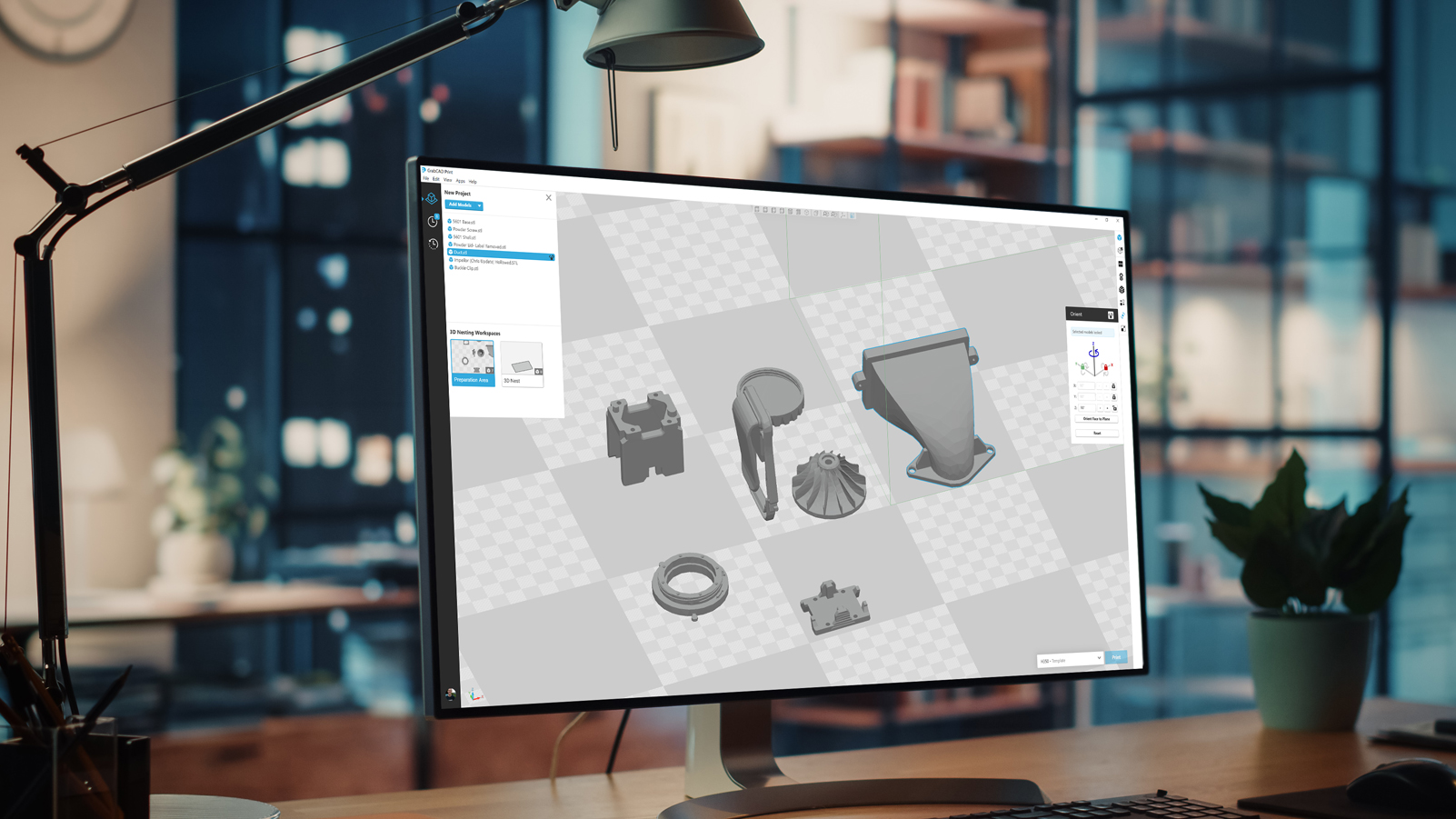
This focus on targeted, simple applications marks a significant shift in thinking for industry veterans like Gerdes. He now sees the previous industry push towards massive, all-encompassing Additive Manufacturing Execution Systems (AMES) as a misstep for the broader market.
“If you asked me five years ago, I would have said, AMES is the future of additive manufacturing software, but that’s wrong,” says Gerdes. AMES platforms aim to manage or integrate the end-to-end workflow from part design, ordering, print-prep, creation, post-processing, and delivery. “Those six-digit systems take years to develop, and are only useful for people who have high volume production. Very few people have high volume production outside of 3D printing service bureaus and specialized industries, like teeth aligners and hearing aides.” Fixturemate is a solution for a much broader audience. Stratasys has another similarly use-case-focused solution for making anatomical models called Digital Anatomy Creator.
"You have to be CAD literate to use your printer, and that's the one thing I think the vast majority of people completely missed when they thought that printers were going to take off." — Victor Gerdes, Vice President, Global Software Product Strategy, Stratasys
A ‘Shutterfly’ Model for Manufacturing
To explain this new paradigm, Gerdes offers a powerful analogy from the consumer photo industry.
“You go to Shutterfly to make a mug or a mouse pad. You don’t go to Shutterfly for the software, you go for the product,” he says. “So imagine that model where you open GrabCAD Print’s app suite and select from one, five, 20 different apps, where you can make a fixture, make soft jaws, or make a drill guide.”
Coincidentally, on the other end of the FDM 3D printing spectrum, Bambu Lab is pursuing the same objective. Among the apps on its MakerWorld platform, Bambu Lab launched “Make My Desk Organizer” and “Image to Keychain” apps that enable users with no design experience to create and print customized objects.
Both Bambu Lab and Stratasys have realized that there is a chasm that exists between those who know a complex piece of design software and those who need to print a product. These automated design apps are the new middle ground offering customization with a low barrier to entry.
Before these two giants of 3D printing launched their design automation tools, there were others, such as Gridfinity and Hero Forge. These software makers aimed to address a specific use case for people who are not CAD literate but have a specific problem to solve or product to create with 3D printing.
For Gerdes, this disconnect is most evident in the consumer space, a graveyard of well-intentioned but ultimately unused 3D printers.
“I love to ask people who bought 3D printers for their kids, how that’s working out, because nine times out of 10, it’s not,” says Gerdes. “And the reason it’s not is because people aren’t CAD literate. You have to be CAD literate to use your printer, and that’s the one thing I think the vast majority of people completely missed when they thought that printers were going to take off.”
From Complex Workflows to Simple Apps
If complexity is the problem, Gerdes argues that the solution requires both a new philosophy of simplicity and a more open, collaborative approach from machine manufacturers (OEMs).
“It’s just so complex that the only way the 3D printing industry can really move forward is for the OEMs to be open, have APIs so that various other programs can connect our software and we can connect to other software.” Stratasys offers an API to software developers and connects with software, like Authentise.
Beyond open platforms, Gerdes stresses that the industry needs a cultural shift away from celebrating complexity for its own sake. He points to generative design and topology optimization as powerful for metal 3D printing but is often misplaced for driving mainstream adoption for polymer 3D printing.
“We just need a lot more software that makes things simpler, not more complicated. Topology optimization, for example — with all due respect to the people who are in that business — seems so completely outside of what the 3D printing industry really, really needs." — Victor Gerdes, Vice President, Global Software Product Strategy, Stratasys
“We just need a lot more software that makes things simpler, not more complicated. Topology optimization, for example — with all due respect to the people who are in that business — seems so completely outside of what the 3D printing industry really, really needs. It makes things even more complicated, as opposed to more accessible.”
He acknowledges the incredible results such tools can produce but questions if they serve the majority of potential users today and actually drive adoption.
“There are parts that are just absolutely fantastic in performance and in behavior because of topology optimization, but that’s not .”
Ultimately, he believes the industry needs to refocus on delivering immediate, practical value.
“Sometimes we want to do the hardest things in the world, and somehow the simple things are below us, but they are the ones that just add value.”
A New Strategy for Design
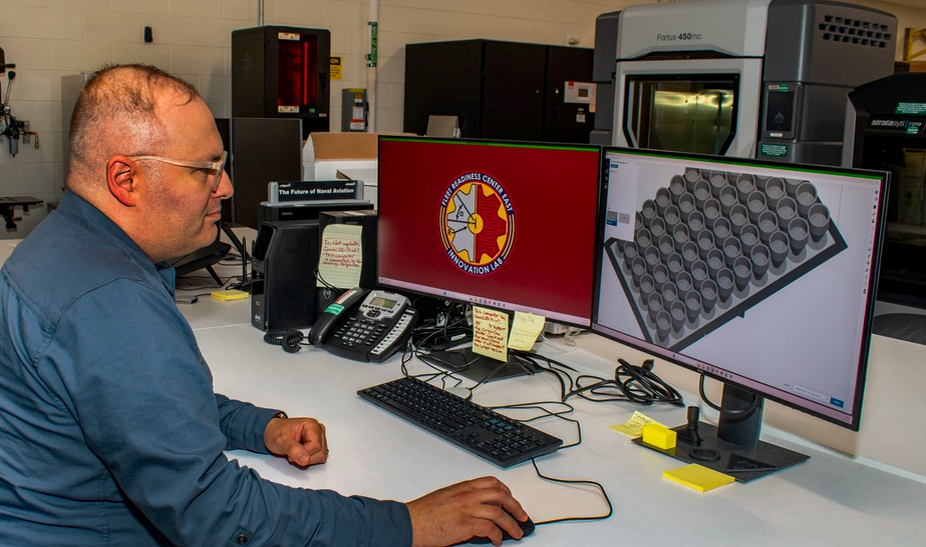
This philosophy is now actively guiding Stratasys’s software development, particularly within its GrabCAD Print platform.
“We’re focused a lot on fixturemate, but the larger theme of what we do is making 3D printing more democratized. To that end, there’s a lot of things we put into GrabCAD Print so that you don’t have to use CAD software.”
A recent example is the ability to add complex textures to a part’s surface directly in GrabCAD Print, a task that would previously require a separate, specialized design program. The benefit isn’t just convenience; it’s speed.
This move into application-specific design automation represents a fundamental shift in strategy for Stratasys. Gerdes admits that the company now sees a role for itself where it previously saw none, born from the realization that traditional CAD vendors are unlikely to create these specialized tools.
"Five years ago, I would have said that design is the domain of the PTC, Siemens, Dassault Systèmes, and Autodesk. We don't belong there. But we've changed our opinion about that..." — Victor Gerdes, Vice President, Global Software Product Strategy, Stratasys
“Five years ago, I would have said that design is the domain of the PTC, Siemens, Dassault Systèmes, and Autodesk. We don’t belong there. But we’ve changed our opinion about that, because they are not going to create design automation tools for 3D printing. If you’re a CAD company, how do you create design automation for an infinite number of parts across every known industry?”
The reason, he argues, is that a 3D printing company has a more focused view of what its customers are actually trying to make. “For 3d printing, we already know the use cases that are really well suited for 3d printing,” says Gerdes.
This focused approach is already yielding insights. By constantly being attuned to customer feedback using Fixturemate, Stratasys is gathering real-world data to guide the evolution of the application, ensuring it continues to solve practical problems for a growing user base.
“We’re finding customers use different clamps in Japan than they do in Germany than they do in the US, so we are focused on how to put more clamps in the app,” says Gerdes. “We release updates to GrabCAD Print every month and we’re always thinking about addressing the market need and what the adoption issues are.”
Ultimately, the shift championed by a 30-year veteran like Gerdes represents more than just a new software strategy for Stratasys; it’s a verdict on the industry’s past. By deliberately pivoting from the intricate domain of CAD experts to the accessible simplicity of task-specific apps, the goal is no longer to just build a better tool for the existing user. The mission, as Gerdes frames it, is to eliminate the ‘CAD literacy’ barrier itself — a move that might finally unlock 3D printing’s long-promised mainstream potential.
You May Also Like:



License: The text of "‘CAD Illiteracy Is a Barrier’: How Stratasys Plans to Simplify 3D Printing for Everyone" by All3DP Pro is licensed under a Creative Commons Attribution 4.0 International License.