Atomform’s Palette 300 Promises 12-Nozzle Color Printing Without the Purge Waste – Closer Look

Atomform's twelve-nozzle-changing 3D printer may be coming sooner than you think. We got up close to it at Rapid + TCT to find out how it works and what to expect.
Update – April 22: Added new information about presale pricing and Kickstarter.
First shown at CES in January and picking up steam with a media launch party in San Jose last month, Mova, the Chinese consumer robotics brand behind Atomform, is on the march to make sure everyone knows its name ahead of what we’re told will be a June launch for its debut 3D printer, the Palette 300.
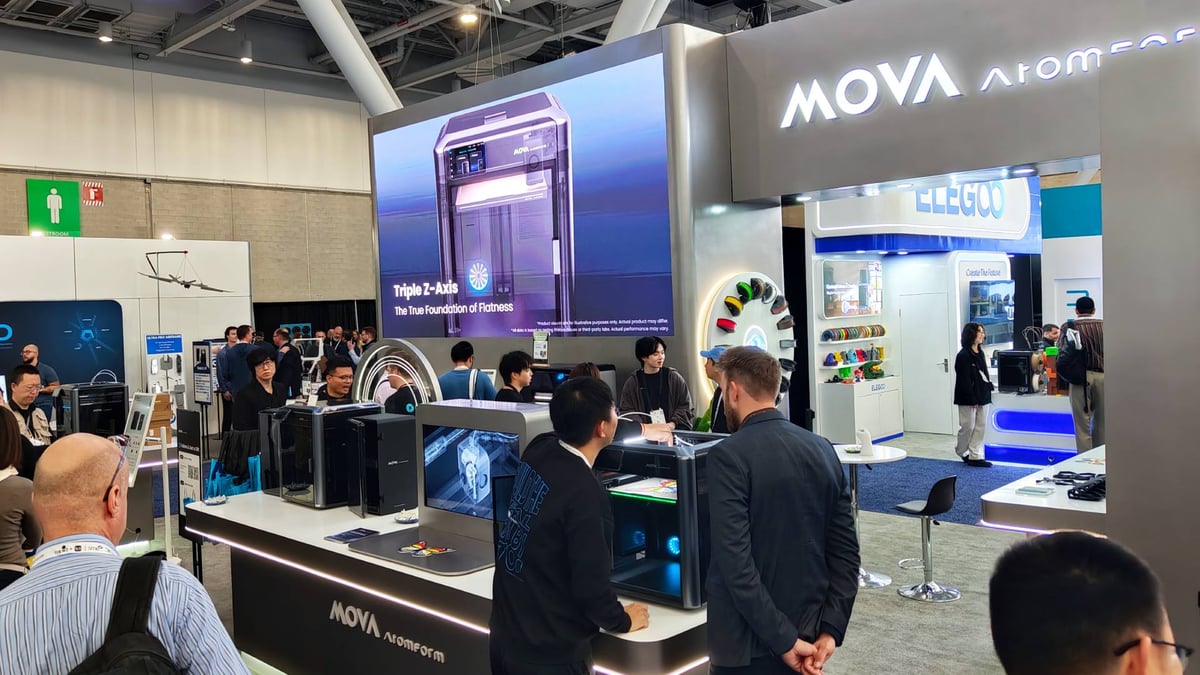
The company had one of the larger booths at Rapid + TCT for consumer-pitched brands – remarkable considering the brand has yet to actually launch a product. For additional context about why this could be significant, Mova itself is a sub-brand of Dreame, a major home appliance brand in China. There’s serious money behind this endeavour, and talking to them on the ground at the show, big plans for a wider ecosystem of tools beyond just 3D printers.
The tip of the spear for this new creative-tech company’s offerings is the Palette 300, a 300 x 300 x 300 mm build volume printer with a top hot end temp of 350°C and bed temp of 110°C. Fully enclosed, it has active chamber heating to 65°C and, core capability wise, sits in the ballpark of the ,~$1,250 Bambu Lab H2S. Of course, the similarity ends there, because the Palette 300 features a nozzle-changing mechanism the expands its capabilities for multicolor and multi-material without the need for material purging.
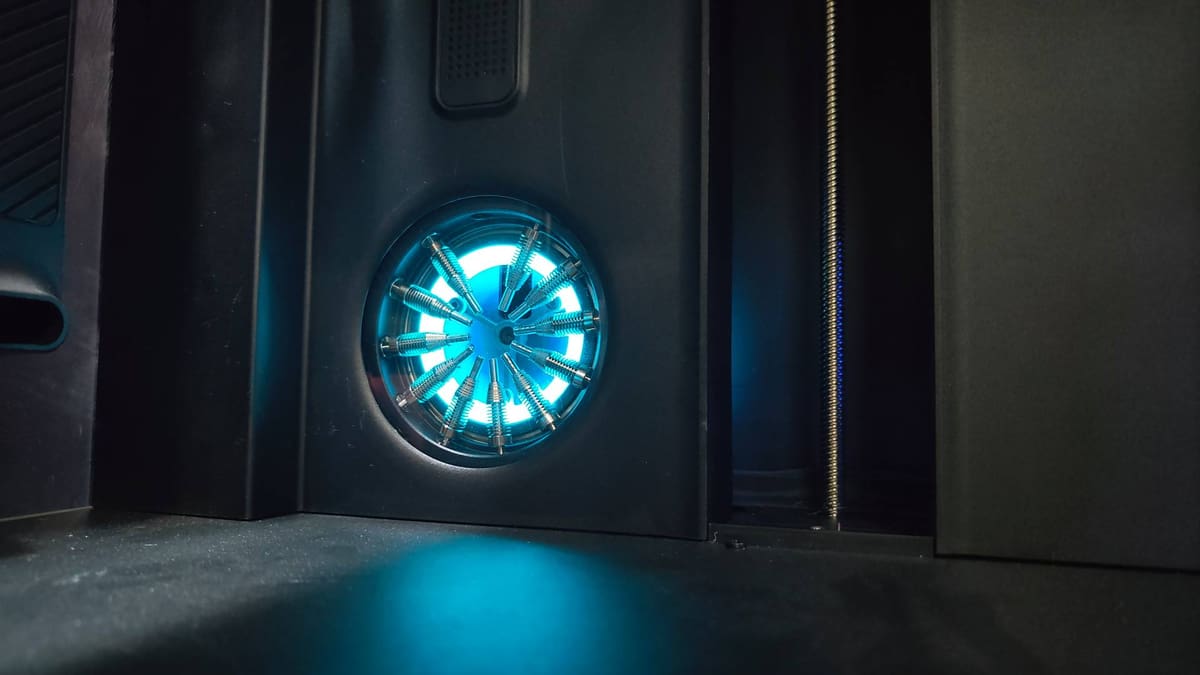
Nestled at the base of the Palette 300’s build volume is a pulsating blue ring – a showy, visual aid to remind you that this printer has a drum of up to 12-nozzles at its disposal, all usable in a single print job if you need them.
In action, it behaves and performs very much like any single-nozzle 3D printer. At filament change, it does things a differently. It still has to cut the filament as many, if not all, single nozzle systems do, but there are two filament paths that can feed the active nozzle, so while one material is finishing up in a layer, the next is drawn up to the threshold ready to go once the other has been withdrawn. It’s a minor time-saver, and one that potentially complicates things for complex multi-filament prints that take advantage of its 36-spool upper limit. In the software demonstration given to All3DP, Atomform showed the considerable effort its making to have the system be smart enough to intelligently route filaments, and the software simple enough for you to not to need to care.
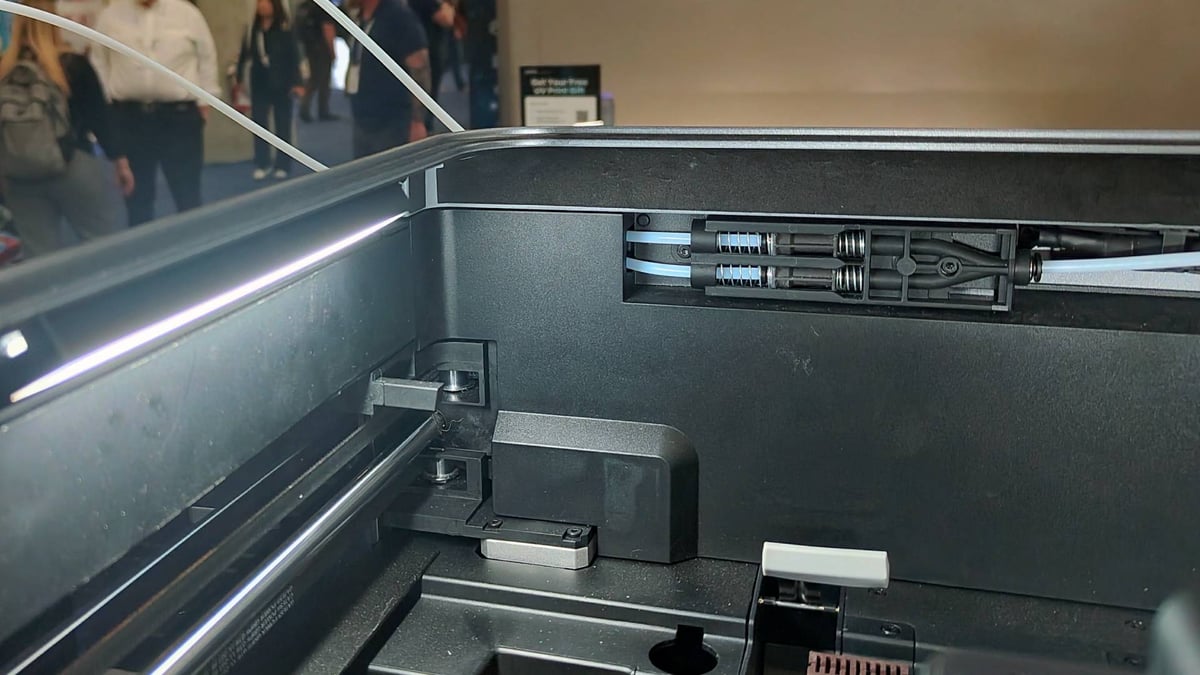
Part of this simplification comes in the filament-nozzle relationship. The printer remembers which nozzles contain which filament, pairing them on a per-job basis so that they can be called upon again without needing to purge. Beyond the material efficiency, this also minimizes the risk of clogging, opening up in-job material mixing as a toolchanger or other multi-nozzle system, such as the Snapmaker U1 or Bambu Lab H2C, does.
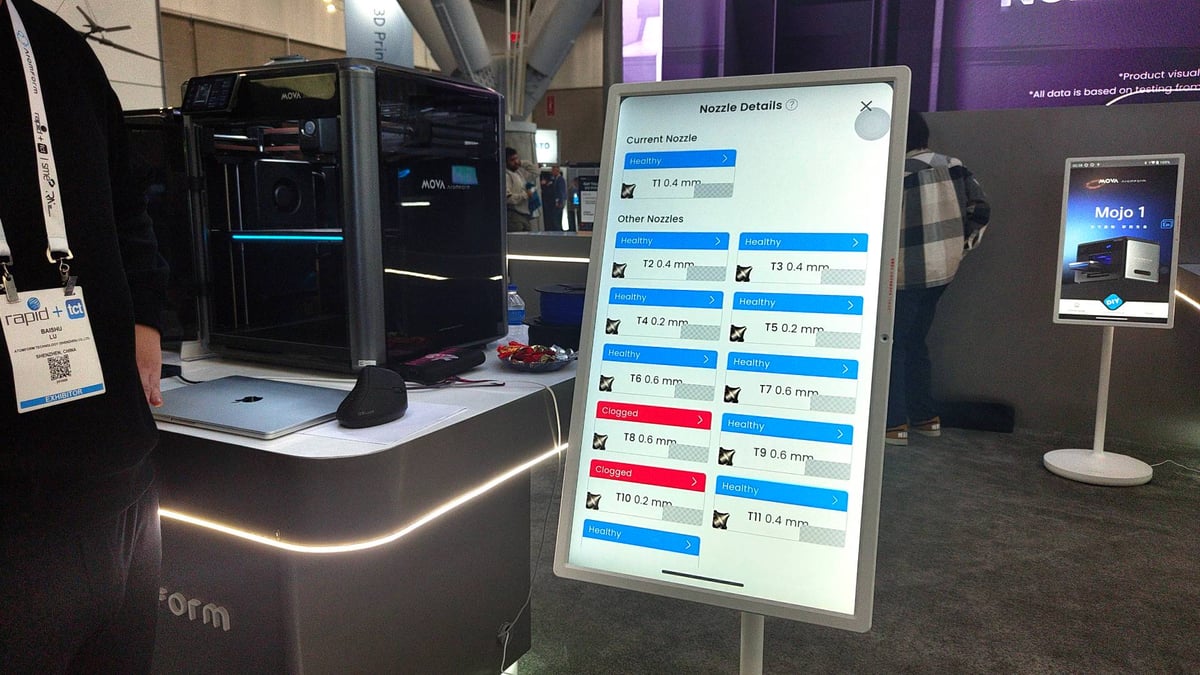
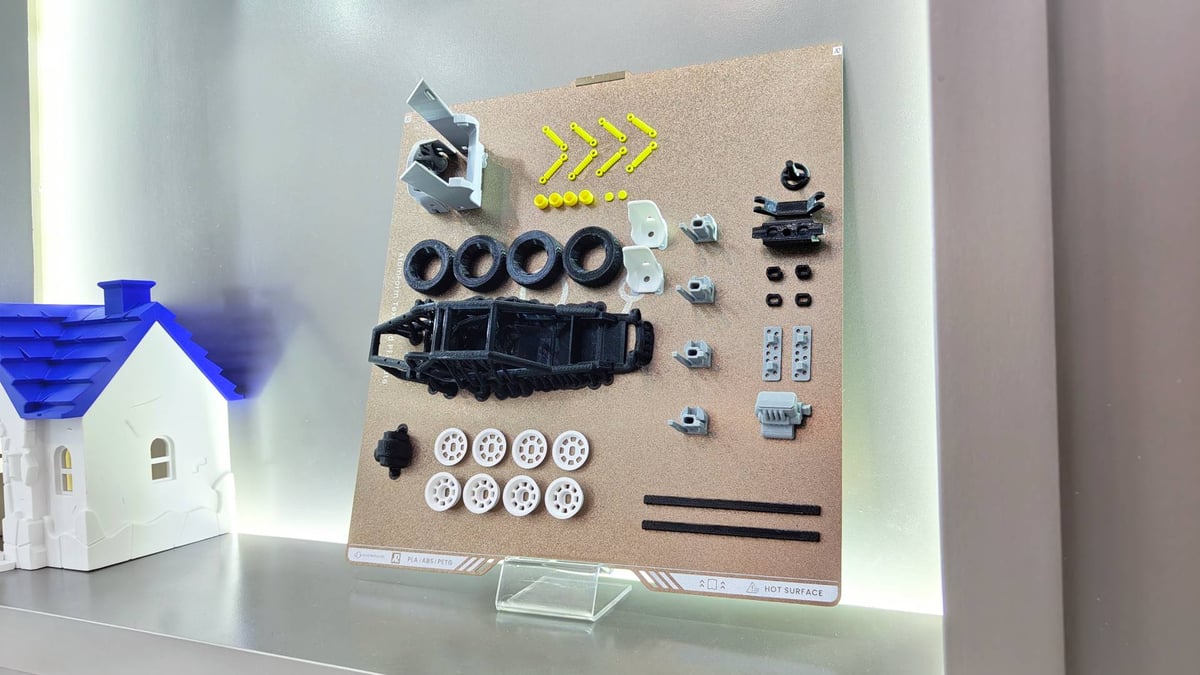
We were given a lengthy tour of the printer’s software and app, with one innovation standing out in the printer’s ability to reroute around clogged nozzles, taking “bad” nozzles out of a job and using and the spares to continue without skipping a beat. In theory, that is. All we’ve actually seen of the printer in action is a simple flat butterfly design that, as we understand it, has been the go-to print at all other showings of the hardware.
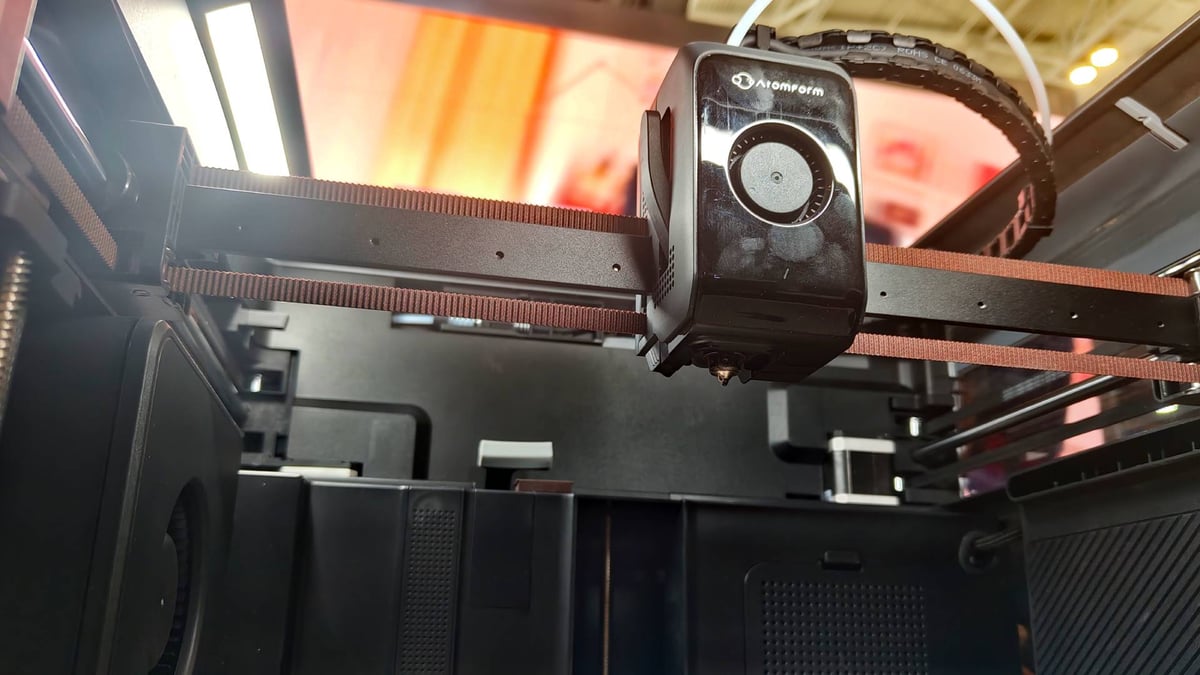
The Atomform slicer is based on OrcaSlicer, the company tells us, and features an novel approach to job management with multiple projects open in various states simultaneously for faster recall. This extends to the printer itself, with smart grouping of print plates per project helping you keep track of what has been, or has yet to be printed from a long multi-print job. It’s clear the company is intent on doing more than just putting out flashy hardware with a familiar experience – though it’s worth bearing in mind that everything we’ve seen thus far was a demonstration and not necessarily reflective of what will eventually release.
OrcaSlicer carries a GPL-3.0 license, which requires any fork to publish its source code, meaning Atomform will have to release its source code for the slicer, a fact a representative acknowledged with the caveat that it might follow shortly after the launch. How closely the company honors this commitment will undoubtedly be closely scrutinized when it does launch.
As ever where multi nozzle systems are concerned, we asked if nozzle diameter mixing will be possible – the ability to use a large-bore nozzle for quickly lay down infill and inner walls, with a small bore nozzle for detailed outer walls: it’s working in the lab, but not production ready yet was the gist of the response.
The nozzle changing system itself is buried inside a panel in the print chamber. While you get to see the selector in action and a grabber reaching up to pull the active nozzle from the printhead, you don’t see what happens in between. Do I expect there to be day-one mods making this part of the chamber transparent? Yes.
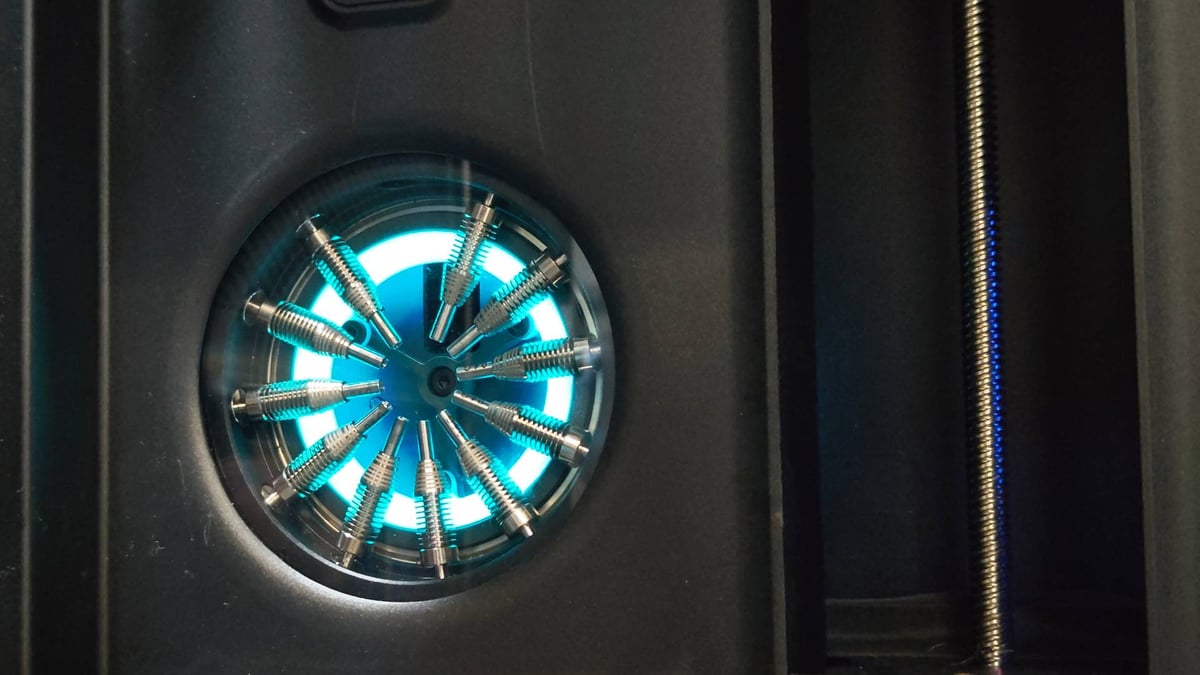
The nozzle-change mechanism happens out of reach as a matter of safety, we’re told. The nozzles are still hot when they’re changed out, making them a hazard to be avoided. This raises the question of reliability and the users’ possible need to maintain the system, but no specifics were given about whether and to what degree this will be a user-serviceable part or not. Mova’s robotic vacuums, mops and lawnmowers are praised for their modularity and ease of disassembly, but that doesn’t appear to extend much to intricate and delicate assemblies.
Nozzle changes complete in 20-40 seconds, which is not as snappy as the sub 10-second changes we’re becoming used to with modern toolchangers, but Atomform is optimistic it’ll get quicker through optimizations between now and the printer’s launch. At Rapid, the company had three printers on display in total, but only one was operational and printing a multicolor model. In the brief time I spend stood in front of it, the nozzle change sequence caught a couple of times, failing to disengage a nozzle. To the printer’s credit though, after a moment’s pause and repeated attempts the issue cleared and the printer continued with no visible intervention from the booth staff.
The Atomform Palette 300 in combo with the company’s RFD-6 filament changer is anticipated to cost in the region of $2,500 at full retail price, though a presale phase will have it and other bundles at discounted “early-bird” pricing. The company’s previous plan to launch via Kickstarter has been shelved in favor of a direct launch via the Atomform webstore and, in China, large resellers and marketplaces like JD and Taobao.
A representative for Atomform has told us the company’s previously advertised pricing for presale and deposit scheme remain in place, through its website instead of Kickstarter.
My impression from finally seeing it up close and printing? There’s a lot of novelty on show here that, done well, could certainly turn heads away from established brands like Bambu Lab and Creality. Multicolor and multi-material printing without the purge waste is the hot topic right now, so a low-to-no waste (prime tower notwithstanding) system that ticks a lot of other boxes – build volume, speed, the upper end of temps for technical materials – has space to run in 2026.
June is very close now, and we’ve only seen one machine printing one flat, simple multicolor print. As I understand things from speaking to others, that’s all anyone has seen. It’s too early to say this is necessarily it, the must-buy new printer, but maybe it could be? We’re looking forward to going hands-on and seeing how the rubber hits the road on that nozzle-changer. I expect once more units are in the wild and thousands of changes are on the clock, any issues with reliability will quickly become known.
Read more recent news:
License: The text of "Atomform’s Palette 300 Promises 12-Nozzle Color Printing Without the Purge Waste – Closer Look" by All3DP is licensed under a Creative Commons Attribution 4.0 International License.