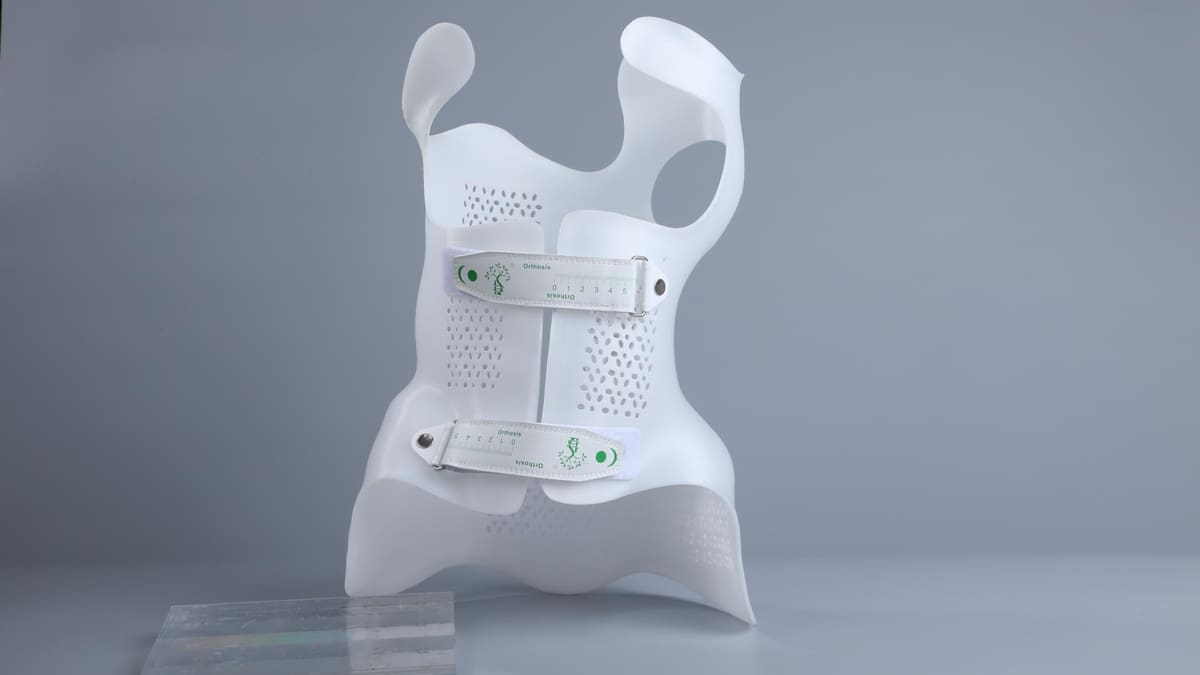
3D Printing Scoliosis Braces with PioCreat: A Clinically Complete Solution

As personalized healthcare devices continue to advance, 3D printing has emerged as a transformative force in orthotics – particularly in the treatment of scoliosis.
Traditionally, scoliosis braces have often had lengthy production times and don’t always conform to each patient’s unique anatomy, which can affect overall comfort and effectiveness. In contrast, additive manufacturing offers a faster and more precise alternative that enhances clinical accuracy while improving patient comfort and production efficiency.
Why 3D Printing for Scoliosis Braces?
Scoliosis braces play a vital role in correcting abnormal spinal curvature, especially in children and adolescents. However, traditional braces often require long production times, intensive manual labor, and lack the ability to be fully digitally customized. This is where 3D printing technology has brought a significant breakthrough.
Here’s why more and more healthcare professionals are turning to 3D-printed scoliosis braces:
- Lightweight: Additive manufacturing enables the use of lighter materials and structural designs that are approximately 30% lighter than traditional materials. This reduces bulkiness while maintaining the brace’s strength, making it easier for patients to wear throughout the day.
- High Durability & Flexibility: The materials provide exceptional support while maintaining flexibility. After over 10,000 opening and closing tests, results showed the risk of breakage during patient use is significantly minimized.
- Breathable & Comfortable: 3D printing allows for intricate mesh-like structures that increase airflow and reduce skin irritation, significantly improving patient comfort.
Growing Adoption in Clinical Practice
In China alone, more than 30 hospitals and clinics currently use PioCreat 3D printers for scoliosis brace production. PioCreat’s in-house medical applications team also manufactures 2-300 scoliosis braces per month for a variety of medical facilities – not including the growing number of units produced by client machines. This widespread adoption demonstrates both the clinical viability and scalability of 3D printing in scoliosis treatment.
The ability to produce braces with consistent quality and patient-specific customization has led to improved comfort, compliance, and treatment outcomes. Instead of relying on plaster molds or manual shaping, clinicians can now use 3D scanning and digital modeling to design orthoses that precisely match each patient’s body. This reduces the frequency of adjustments required by the patient and shortens the overall treatment timeline.
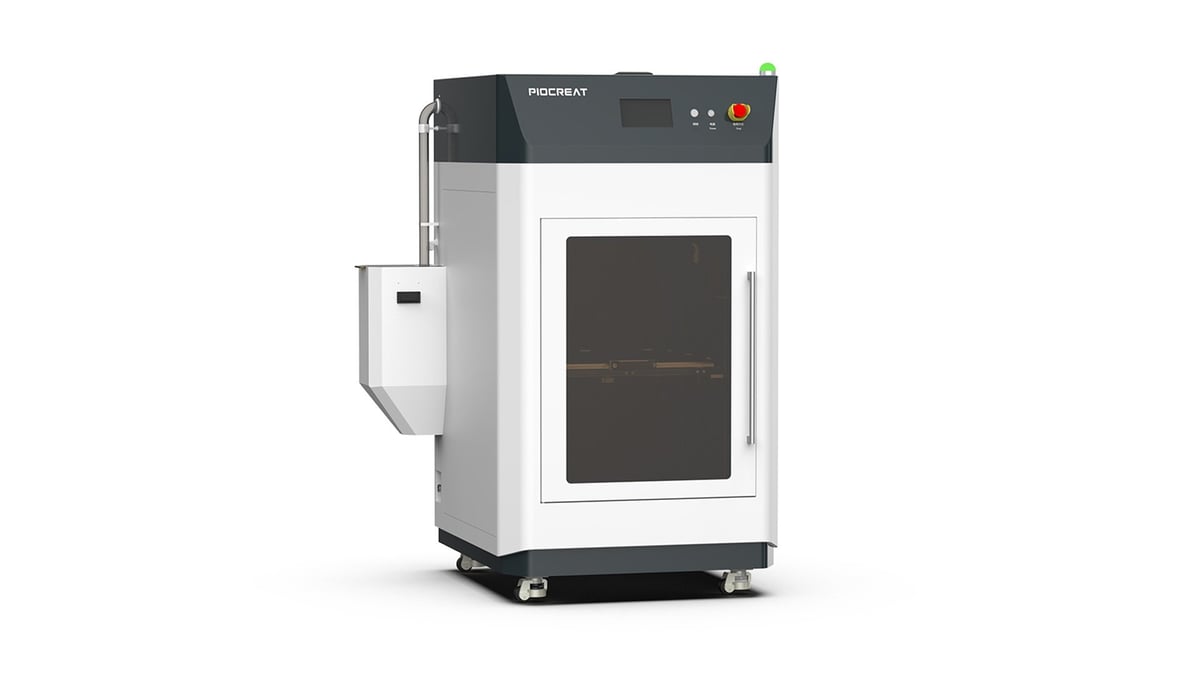
Meet the MS01 SE: Designed for Clinical Success
To support this application, PioCreat developed the MS01 SE, a pellet-based high-temperature 3D printer specifically optimized for scoliosis brace manufacturing. This model is engineered with clinical workflows in mind, simplifying use without compromising on print quality.
Key features of the MS01 SE include:
- 400 °C Nozzle Temperature: Suitable for a range of engineering-grade, biocompatible materials like PP and TPU.
- 500 × 500 × 650 mm Print Volume: Allows brace models to be fully printed in one session.
- Fully-enclosed Chassis: Effectively maintains intracavity temperature for higher print success rates.
- Dual-stage Heating: Allows materials to melt more thoroughly, resulting in stronger interlayer bonding and improving the quality of the brace.
- Pellet-fed Extrusion: Results in significant cost savings compared to filament systems, especially for facilities producing braces at scale.
A Seamless Digital Workflow
The production process for scoliosis braces begins with a high-precision body scanner performing a 3D scan, which can capture the patient’s outer contours within seconds. Afterwards, doctors compare the patient’s X-rays with the data of body contours, and then use it to design the brace digitally – modifying pressure zones, contours, and cutouts before generating the printable file. The MS01 SE can then print the brace in 5-8 hours, depending on the model size and settings.
Once printed, the brace undergoes post-processing, including edge smoothing and perforating, before being fitted to the patient – often within the same day. This workflow minimizes lead time, reduces the need for repeated fittings, and enhances the patient experience from start to finish.
As the healthcare sector continues to adopt advanced manufacturing, 3D printing will play an ever-growing role in delivering faster, better, and more cost-effective care. For more information about the MS01 SE and PioCreat’s medical 3D printing solutions, visit www.piocreat3d.com or email info@piocreat3d.com.
About PioCreat 3D
Founded in 2015 in Shenzhen, PioCreat 3D is a global pioneer in 3D printing technology, specializing in the research, development, and production of cutting-edge 3D printers, software, and materials. Dedicated to both consumer-grade and professional-grade 3D printing solutions to empower creators and industries worldwide.
License: The text of "3D Printing Scoliosis Braces with PioCreat: A Clinically Complete Solution" by All3DP is licensed under a Creative Commons Attribution 4.0 International License.