3D Printing Saved the U.S. Navy $200,000 on a Complex Underwater Drone Test

By 3D printing a custom waterproof housing for under $1,000, Navy engineers bypassed an expensive submarine retrofit to deploy a drone directly through a torpedo tube.
The U.S. Navy just demonstrated how a relatively simple 3D printed component can replace an immensely costly submarine modification and make a rather complex experiment more easily achievable.
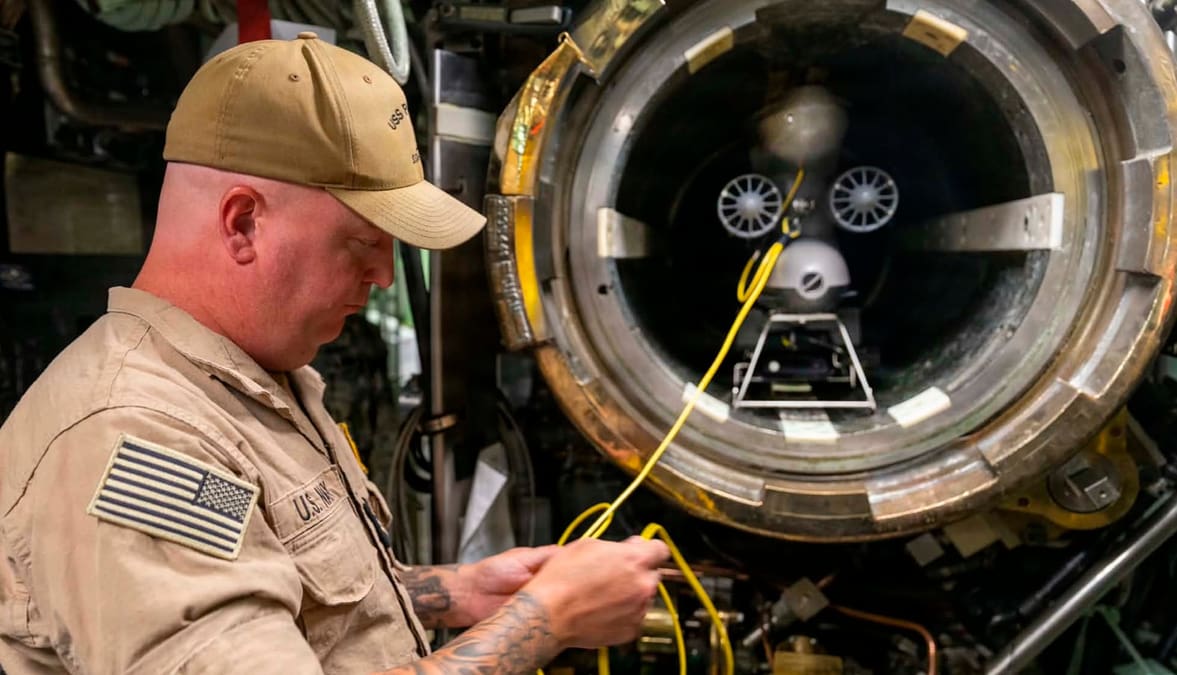
During a recent test aboard the USS Pasadena, a custom waterproof housing enabled the deployment of an underwater drone through a torpedo tube, avoiding a modification that would typically cost around $200,000, according to the Navy. The 3D printed alternative required less than $1,000 in additional materials and labor.
The system was successfully tested aboard the Los Angeles-class attack submarine USS Pasadena on Aug. 24, 2026. It allows a Blueye X3 remotely operated vehicle (ROV) to conduct underwater searches and inspections while maintaining communication with the submerged submarine.
The main engineering challenge was establishing a waterproof connection that could transmit high-speed signals through a flooded torpedo tube. Engineers from the Navy’s Shore Intermediate Maintenance Activity (SIMA) designed and produced a custom housing using a Formlabs Form 4L resin 3D printer and Rigid 10K resin.
The SIMA 2M Shop integrated low-voltage wiring into the printed component and the ROV’s tether, while a separate wiring harness maintained communication through multiple connection points. Blueye Robotics assisted with integrating the system with its controller.
Conventionally, this capability would have required a temporary submarine modification known as a Fiber Optic Penetrator, costing approximately $200,000 per vessel. The printed housing and wiring arrangement eliminated the need for that modification during the demonstration.
The project builds on the Navy’s Green Remora initiative, which explores the use of underwater robots for hull security checks, equipment inspections, and other underwater search tasks.
Following the successful test, the Navy is developing formal qualification standards for personnel operating the ROV, with the aim of supporting broader use of the technology across its submarine force.
You May Also Like:
License: The text of "3D Printing Saved the U.S. Navy $200,000 on a Complex Underwater Drone Test" by All3DP Pro is licensed under a Creative Commons Attribution 4.0 International License.