3D Printed Seawall Startup Rides a $21M Wave of Investment

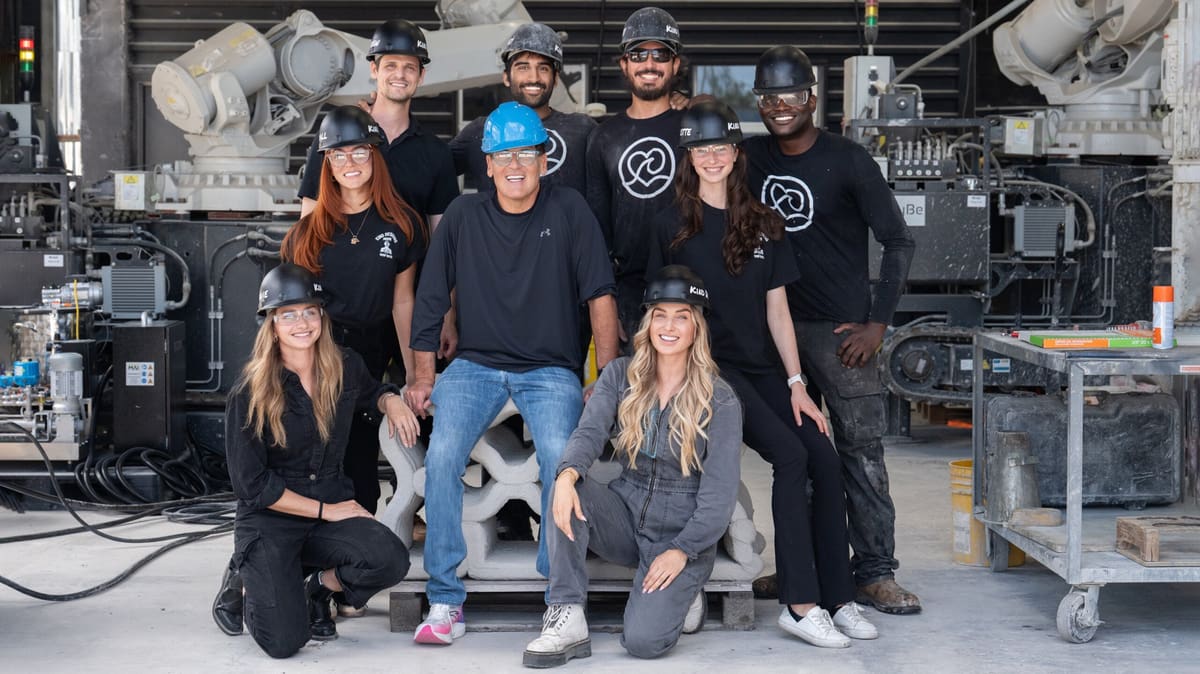
Investors are betting millions on Kind Designs, a startup using large-format concrete printing to turn ordinarily flat coastal barriers into customized infrastructure with habitat features and architectural appeal.
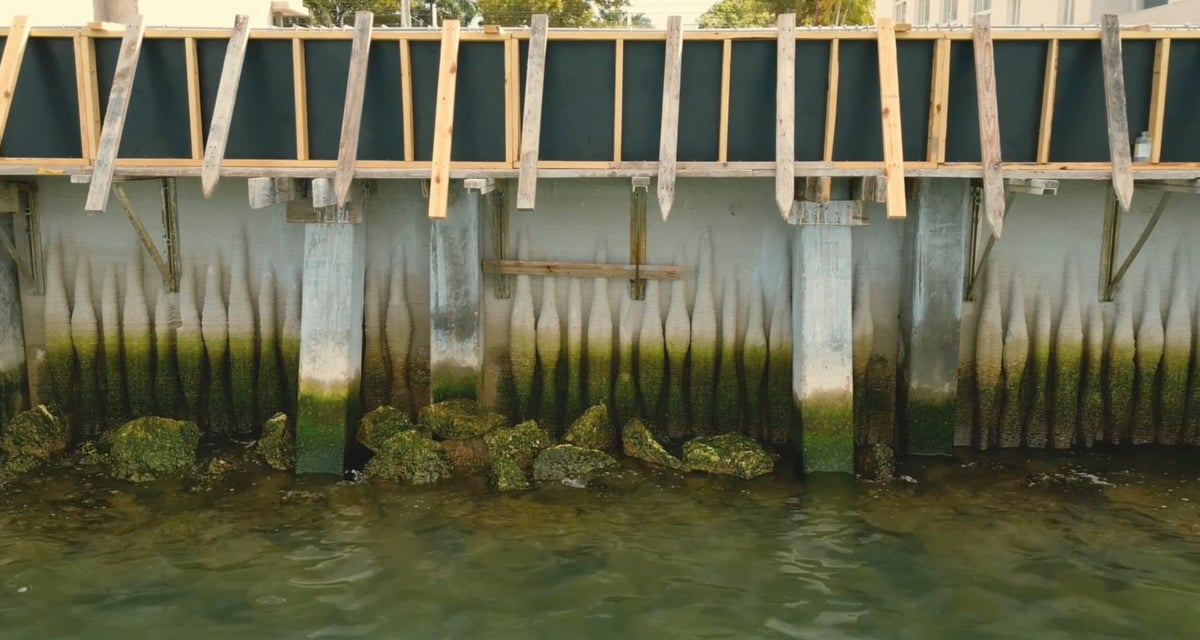
A seawall may be the least attractive object attached to a multimillion-dollar Florida waterfront home. It is typically a long, flat barrier designed to retain soil, resist water, and protect the property behind it.
Miami-based Kind Designs wants to make that wall behave more like a reef or a mangrove through 3D printing. Investors are pouring millions of dollars behind this “Living Seawall” idea.
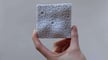
The company 3D prints concrete seawall panels with cavities, ledges, overhangs, and mangrove-root-inspired structures that create protected spaces for fish and attachement points for algae, oysters, and other marine organisms while the wall continues to perform its conventional protective role.
The idea brings several familiar advantages of additive manufacturing to marine construction: customization without dedicated molds, economical production of small project-specific batches, functional complexity, decorative value, and a valid sustainability claim.
Complexity Without Custom Molds
Conventional precasting is well suited to producing large numbers of identical, flat concrete panels. More intricate surfaces can require specialized molds that may be difficult to manufacture and uneconomical for a short production run.
With 3D printing, Kind Designs can modify panel dimensions, textures, and habitat features in the digital model rather than producing new physical tooling for each variation.
That matters because seawall projects are rarely identical. Dimensions, water depth, site geometry, structural requirements, and the connection to neighboring walls can vary from one property to another.
The company says its robotic system can print a custom panel in approximately 60 to 90 minutes. That figure applies only to the printing stage; the panels still require reinforcement, concrete infill, transportation, and installation, but overall, the company describes the panels as direct replacements for conventional precast seawall panels. According to Kind Designs, they can be incorporated into familiar systems using piles or tiebacks and installed by local marine contractors. In other words, the company is not attempting to print every part of a seawall or replace the entire marine-construction process. It is applying additive manufacturing to the component where geometric freedom may provide the most value.
A Better Wall for Buyers Who Can Afford One
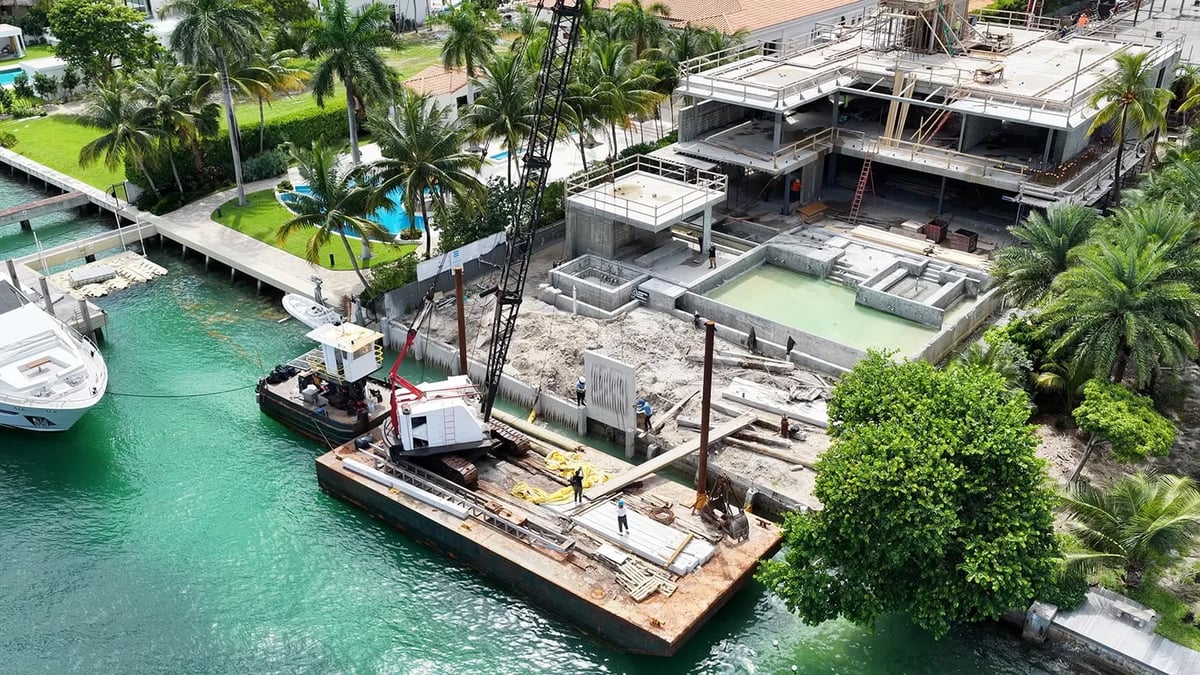
Affluent homeowners and luxury developments are logical early customers for the technology. Owners already facing the expense of replacing that infrastructure may be willing to consider a premium or differentiated product rather than purchase the simplest available concrete barrier.
For those customers, customization has value beyond engineering. Reef-like patterns and organic geometries can make the wall part of the property’s architecture and landscaping. Kind markets its projects not only as shoreline protection but also as an improvement to the appearance of the waterfront since panel designs can be adjusted to resemble local habitats such as rocky reefs or mangrove roots. Its announced customers and contracts include residential properties and luxury hospitality developments in Miami Beach.
More than Just Hold Back Water
A 3D printed concrete wall is not a substitute for an undisturbed natural shoreline, of course, but Kind claims its printed panels provide twice the surface area of a conventional flat wall leading to biological colonization within weeks.
Kind Design has an ongoing monitoring program underway with Florida International University to compare its installations with adjacent conventional seawalls at sites in Biscayne Bay, Fla.
The larger additive-manufacturing argument is compelling even while that research continues. Rather than attaching separate habitat structures to a completed wall, 3D printing allows ecological features to be built directly into the component.
The environmental benefit, therefore, may come less from printing concrete than from printing shapes that would be cumbersome or expensive to cast in small quantities.
Kind Designs says its Living Seawalls are cost-comparable to conventional seawalls and can provide ecological features without a “green premium.” Total seawall pricing also depends on demolition, structural engineering, site access, wall dimensions, soil conditions, transportation, and permitting—not simply the price of the printed panels.
The current value proposition is not that 3D printing has definitively made seawalls cheaper, but that customers may receive a customized, visually distinctive, and potentially more ecologically useful wall without a substantial increase in the overall project cost.
For owners protecting extremely valuable waterfront property, cost parity could be enough.
Traditional precasting is likely to remain highly competitive for large orders of identical flat panels. Kind’s technology makes the most sense where quantities are limited, designs vary by site, and geometric complexity has environmental or aesthetic value. And that proposition has attracted substantial investment.
Serious Financial Backing
Kind Designs just announced that it closed a $10 million pre-Series A funding round at a $70 million valuation after initially seeking $5 million. The company says it has now raised $21.5 million in total.
Kind Designs also reported $1 million in 2025 revenue, $10 million in contracted revenue, and a $175 million “active project pipeline”. It said recent work includes contracts with hospitality and residential developments, completed municipal projects, and a newly awarded $2 million U.S. Navy contract. A Navy-funded effort is to adapt, prototype, and demonstrate Kind Designs’ technology for potential application to military coastal infrastructure.
The company’s project portfolio lists residential seawalls in South Florida, a project for the Billion Oyster Project on Governors Island, and a municipal tile installation in Longboat Key. Completed projects remain small compared with major port, naval, or citywide coastal infrastructure. Long-term durability, production economics, and ecological performance at larger scales are still to be demonstrated.
Nevertheless, the product illustrates a credible direction for construction 3D printing. Kind Designs, unlike residential or building 3D printing, is not aiming to replace an established construction industry. It is using additive manufacturing to improve one component of seawalls in cases where customization, low-volume production, sustainability, and appearance may justify the technology.
You May Also Like:

License: The text of "3D Printed Seawall Startup Rides a $21M Wave of Investment" by All3DP Pro is licensed under a Creative Commons Attribution 4.0 International License.