
The Best Flexible Resins for 3D Printing in 2025

Flexible resin has a number of interesting uses and properties. Check out the best brands of flexible resin for 3D printing!
Flexible resin is a type of UV-cured 3D printing resin that mimics the properties of rubber. It stands out for it’s ability to create firm but flexible parts. How stiff or flexible these parts are depends on the Shore hardness of the resin when cured. The numbers on the Shore scale indicate how flexible a material is, with the lower numbers denoting more flexibility.
Most 3D printing flexible resins are measured either on the Shore A or Shore D scales. The former ranges from very soft and flexible to hard and semi-rigid, while the latter is reserved for tough and hard materials. Among flexible resins, a Shore hardness of around 80A is pretty common, and it’s similar to the hardness and flexibility of a rubber shoe heel.
When it comes to color, flexible resins tend to be transparent, making them a blank canvas to which you can add dye or pigment to create a color of your choice. Alternatively, you can add some flexible resin in with your usual resins to improve the tensile strength of the latter.
In this article, we’ll introduce you to some of the best flexible resin brands. If you see something you like, just be sure to check that it’s compatible with your machine. Some brands have different variants depending on your type of printer and technology – namely, the curing wavelength. Note that we’ve organized them starting with the most affordable, and read through the whole piece to find some helpful 3D printing tips.

3DMaterials SuperFlex
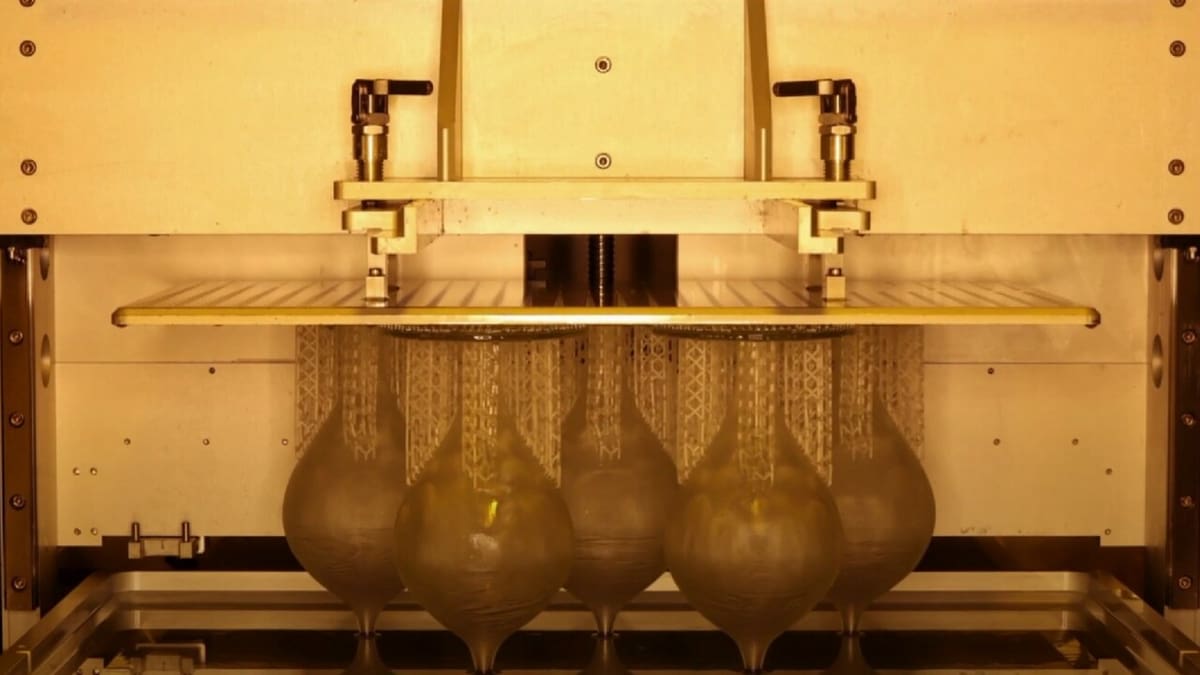
With a Shore hardness of 80A, 3DMaterials’ SuperFlex is a versatile flexible resin that’s compatible with a wide range of regular or mono LCD 3D printers. The manufacturer promises low shrinkage and exceptional dimensional stability, which is also reflected in several positive reviews.
Some users suggest blending this resin with other cheaper brittle resins to bring the cost down, while still achieving good flexibility and durability. Experienced users report achieving structurally robust prints that boast TPU or rubber-like characteristics. Beginners, however, should be cautious and follow the recommended instructions to avoid potential print breakages.
- Shore hardness: 80A
- Wavelength: 405 nm
- Color: Clear
- Price: ~$60 per kg
eSun eResin-Flex
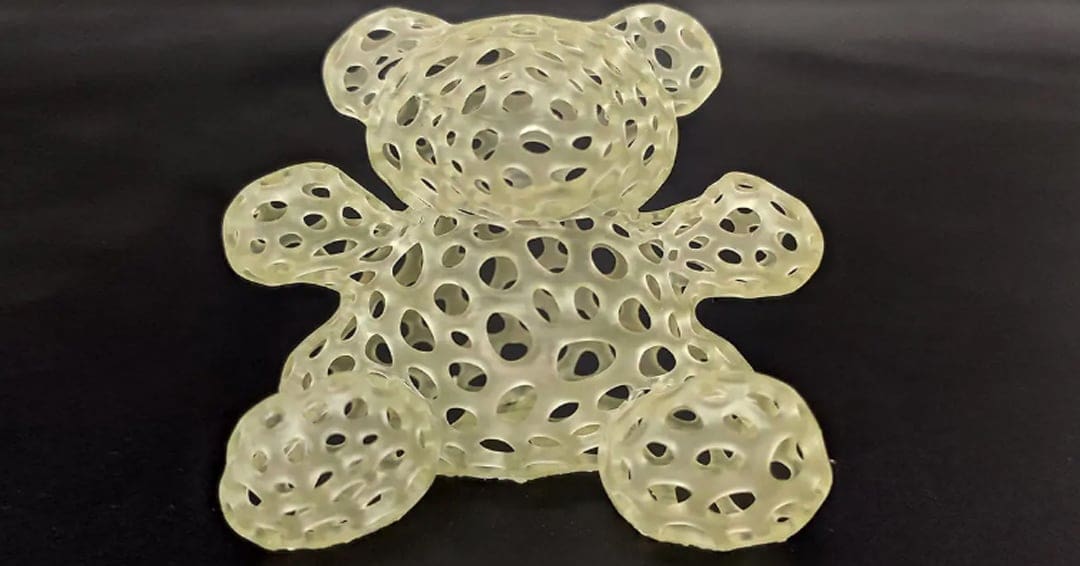
eSun’s F300 eResin-Flex is ideal for those who want to create soft, elastic, and durable components, without sacrificing precision and ease of use.
F300 eResin-Flex is designed for LCD 3D printing. Its main feature is its elasticity, which makes it ideal for the production of parts that must withstand repeated stress and strain without breaking or deforming. Other noteworthy features are high elongation, resistance to tearing, traction, and compression. Furthermore, the printed models are very pleasant to the touch, as confirmed by the author.
eSun warns that post-curing times need to be controlled: With longer exposure times, the resin will cure into a harder print, will be less flexible, and will show more yellowing. Plus, the printed parts should be cleaned before they’re cured. Given all the information readily available, it shouldn’t come as a surprise that eSun’s eResin-Flex is easy to use and can produce excellent prints.
It’s worth noting that F300 eResin-Flex is only available for bulk purchase, although on some resellers, there appears to be some confusion in terms of the product offered with eSun eResin Elastic.
- Shore hardness: 85-90A
- Wavelength: 395-405 nm
- Color: Transparent Yellow
- Price: ~$100 per kg (~$50 for 0.5 kg)
Photocentric Flexible UV160
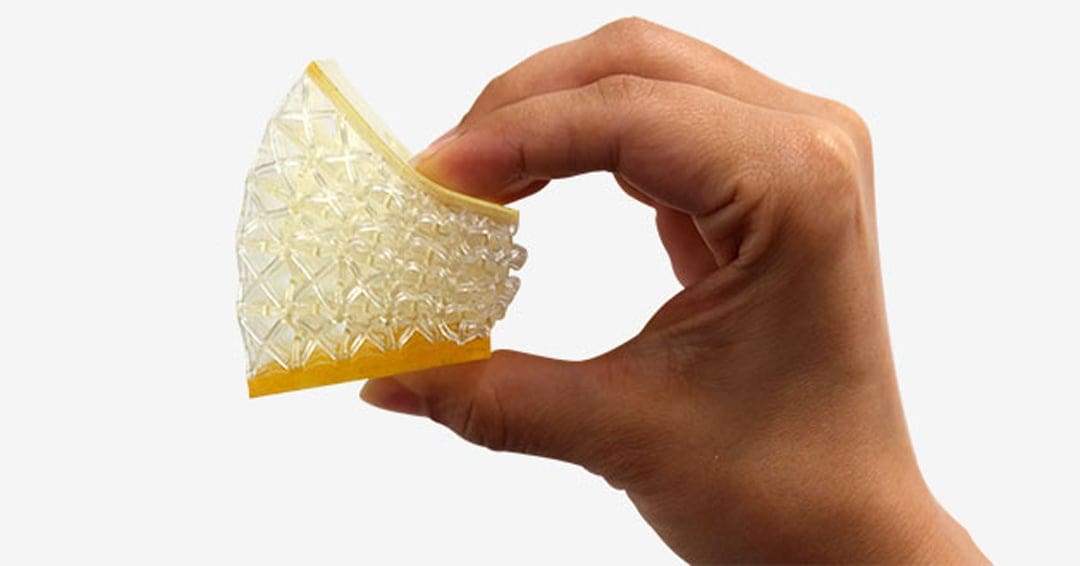
Photocentric’s Flexible UV160 is a high-quality flexible UV resin, capable of combining elasticity, hardness, and ease of processing, making it ideal for industrial applications and advanced prototyping.
This resin offers high elasticity, and the low viscosity makes it more fluid, facilitating printing and improving the definition of details. Its translucency helps speed up the post-curing process, reducing post-processing times. Parts printed with this resin are durable and maintain their elastic properties even after numerous cycles of use.
The resin is compatible with LCD and DLP 3D printers, and other machines that operate with wavelengths between 385 and 420 nm. To obtain the best performance, it’s important to follow a correct post-processing process that includes accurate washing and post-polymerization at 60 ° C for 2-4 hours, depending on the size of the part.
Flexible UV160 combines the convenience of an easy-to-print resin with the performance of a technical elastomer, without sacrificing detail definition and a quality surface finish. It could be the ideal solution for those looking for a flexible UV resin with characteristics similar to TPU.
- Shore hardness: 86A
- Wavelength: 385-405 nm
- Color: Translucent
- Price: ~$135 per kg
Liqcreate Flexible X
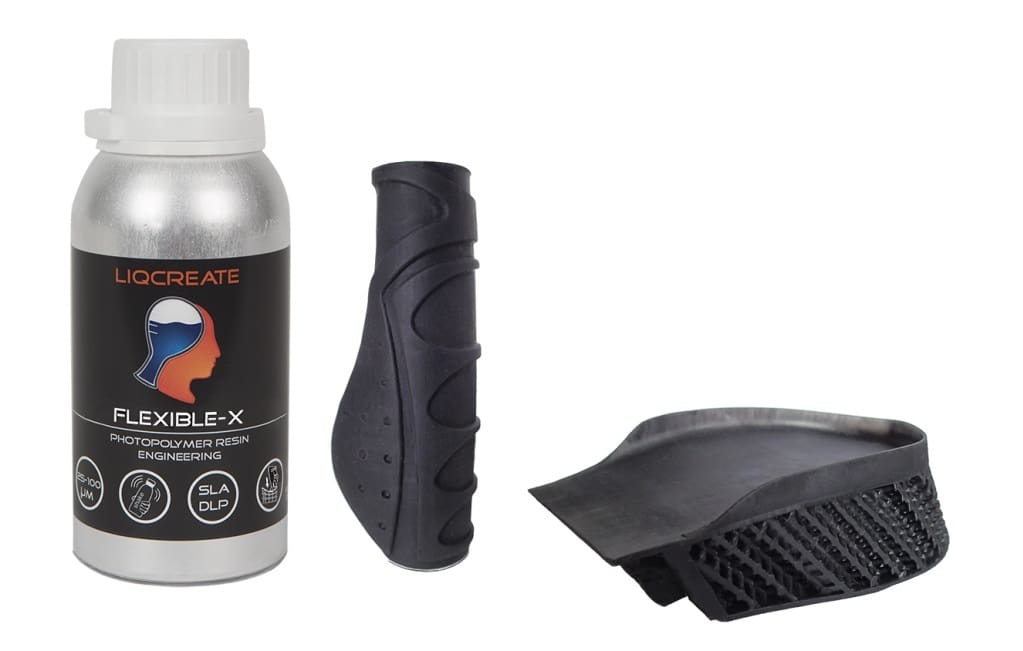
If you’re looking for an even bendier resin, particularly for a functional part, Liqcreate’s Flexible X is a great choice. With a Shore hardness of 55A, the resin produces medium soft prints that are harder than an eraser but softer than car tires. It’s fine to use on most DLP, LCD, and SLA resin 3D printers.
Flexible X represents the middle ground in Liqcreate’s assortment of flexible resins. Thanks to a Shore hardness of 43A, their Elastomer X is softer and more flexible – closer to the eraser side of the spectrum. And if you want harder, Premium Flex with a Shore hardness of 63A is more in the direction of car tires. None of these may sound all that soft, but the Shore hardness does vary a bit with material thickness. The thinner you make the part, the more flexible it tends to be.
- Shore hardness: 55A
- Wavelength: 385-420 nm
- Color: Black
- Price: ~$170 per kg (~$70 for 0.25 kg)
Formlabs Flexible 80A
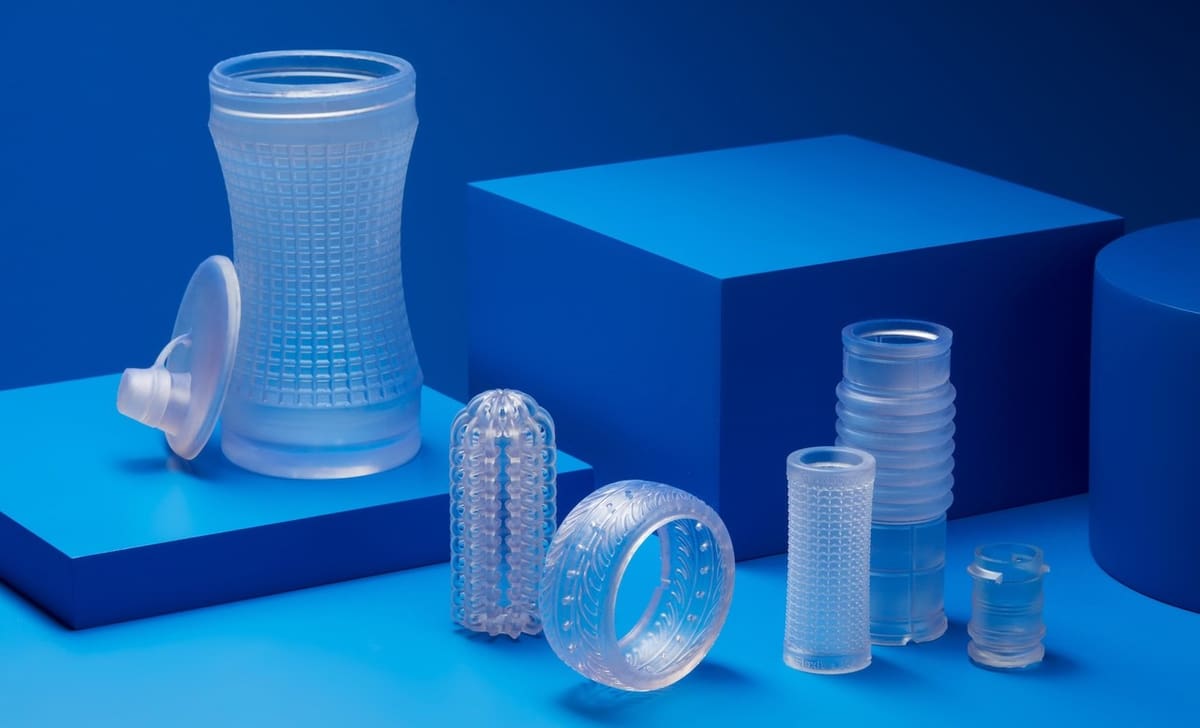
Formlabs Flexible 80A simulates TPU or TPE with a Shore hardness of 30D. It’s best suited to functional objects like seals and gaskets or personal products like a watchband. If you need something even more flexible, their Elastic 50A V2 resin produces results comparable with silicon.
As you would expect, these resins are intended to be used with Formlabs machines. This accounts for the higher-than-average price, as they’re high-quality resins.
- Shore hardness: 80A
- Wavelength: 405 nm
- Color: Transparent
- Price: ~$210 per L
Formlabs IBT
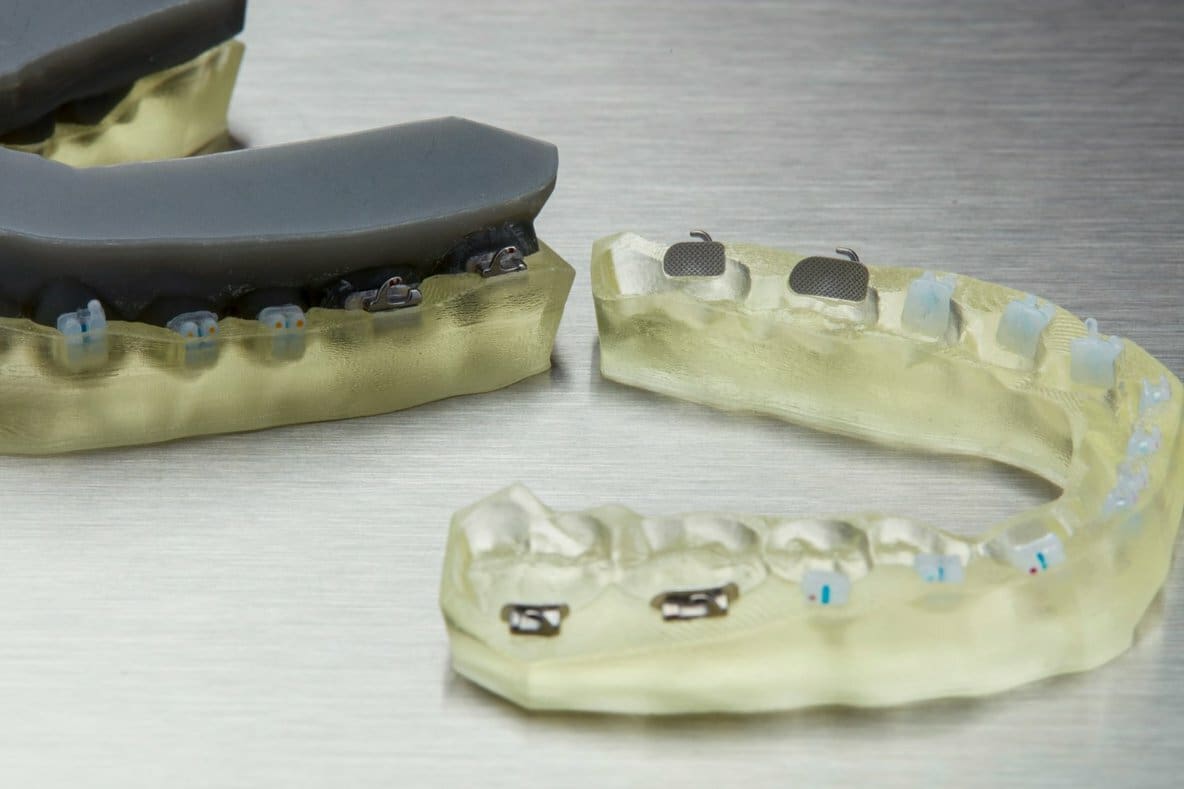
Formlabs Indirect Bonding Tray (IBT) Resin, used widely in dentistry to make flexible indirect bonding trays, is a great biocompatible flexible resin. In fact, it’s the only biocompatible transparent resin on this list. This means that if you need to print something flexible that’s in contact with food or people, such as a mouthguard or a CPAP mask, this is the safest option.
Formlabs IBT resin is more expensive than other resins on this list, but this price point is arguably justified because it’s the only resin here that’s certified non-hazardous for human internal contact. If you’re using a non-Formlabs printer and need IBT resin, you can check out alternatives such as NextDent IBT resin.
- Shore hardness: 77-80A
- Wavelength: 405 nm
- Color: Transparent
- Price: ~$250 per L
Loctite 3D IND475 Flexible
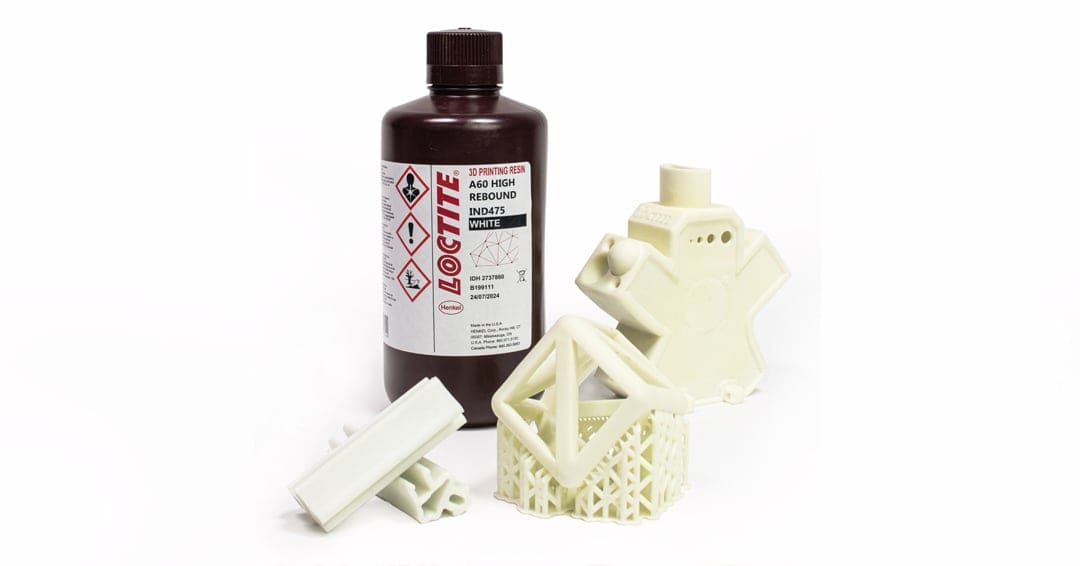
Loctite 3D IND475 could be the answer for those looking for high performance and flexibility in functional prototypes and in the most demanding industrial applications. This resin is the result of a collaboration between Henkel and Prusa Research, and is optimized to be printed on the Original Prusa SL1S Speed printer.
It’s designed for those who need components that resist stress, bending, and elastic returns, always maintaining the original shape even after numerous deformation cycles. In addition to this, it has a high level of print detail. It is ideal for a wide range of production tools, such as air and dust gaskets, flexible housings, or shock absorber bearings.
To get the most out of Loctite 3D IND475 resin, the manufacturers recommend a specific post-production process that requires the combination of Cleaner T (or TPM), compressed air, and IPA for washing and deionized water for polymerization.
- Shore hardness: 62A
- Wavelength: 405 nm
- Color: White
- Price: ~$275 per kg
Tough & Flexible
The resins in this category are measured on the Shore D scale and are harder than those measured on the Shore A scale. These options may be a better choice when you need flexible prints with high toughness and impact resistance. The degree of their flexibility, however, will have a lot to do with the thickness of your model.
Siraya Tech Tenacious
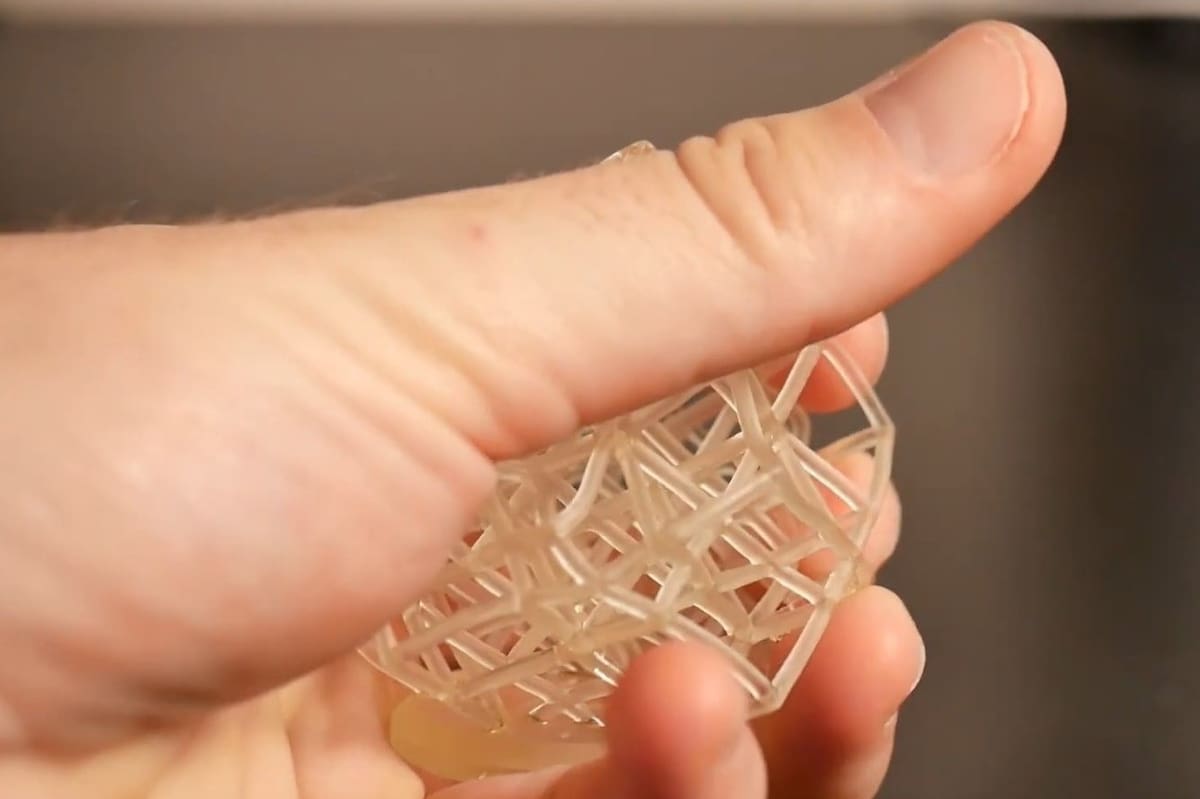
Siraya Tech’s Tenacious flexible resin is designed for LCD resin printers and is also compatible with DLP printers. For the best results, use a high-quality FEP film-based vat with the resin at 25 °C.
While the regular Tenacious resins (Clear and Obsidian Black) work great for most prints requiring flexibility, the Tenacious Flex Black resin with a Shore hardness of 70A is ideal for projects that demand higher durability and stress tolerance, such as creating gaskets or seals. Costing ~$15 more than the regular Tenacious resin, it comes with better compression properties and faster rebound performance.
Siraya Tech also makes a plethora of other resins for all your printing needs, including resins designed to be easy to print and clean, faster to print, and suitable for higher resolutions. You can mix their flexible resin with any resin of the same wavelength, letting you find the perfect combination of flexibility and stiffness for any project.
- Shore hardness: 65D-(70A Flex Black only)
- Wavelength: 405nm
- Color: Clear, Obsidian Black, Flex Black
- Price: ~$55 per kg (~$36 for 0.5 kg, ~$94 for 2 kg, ~$235 for 5 kg)
Anycubic Tough Resin Ultra
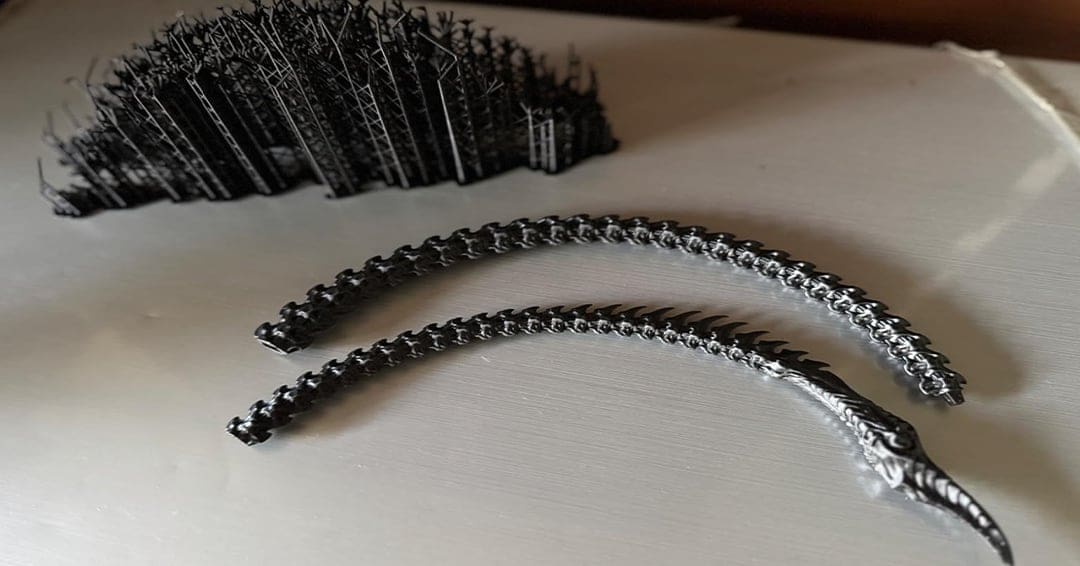
Anycubic’s Resin Tough Ultra stands out for its exceptional combination of strength, flexibility, and precision in details. This makes it ideal for those looking for high-performance and long-lasting materials for their printing projects. It’s a great flexible resin for makers who own Anycubic machines, thanks to the suggested parameters that you can find on the manufacturer’s website.
This resin boasts high mechanical strength, with tensile strength values typically ranging from 20 to 28 MPa, and excellent elasticity, highlighted by a low flexural modulus at around 350-800 MPa (for example, much lower than Anycubic standard resin, which ranges between 1,400-1,600 MPa). These properties allow printed parts to absorb impact energy effectively, drastically reducing the risk of breakage compared to more rigid materials. In addition, the resin is formulated to ensure a good, smooth surface of the models, making it ideal for applications that require high aesthetic and functional precision.
If you’re a 3D printing enthusiast or a professional who needs reliable materials for resistant prototypes or functional parts, Tough Ultra is an excellent choice. It offers a good balance between hardness, flexibility, and quality textures.
- Shore Hardness: 71-75D
- Wavelength: 365-405nm
- Color: Gray, White, Black, Clear
- Price: ~$60 per kg

Printing Tips
Printing flexible resin does pose some challenges that you won’t encounter with other resins. Implementing a few tricks in the design and printing process will help you get the best quality part.
When printing flexible parts, it’s important that they’re in their final form. For example, if you’re printing a watchband, the model should be designed in the shape of a watchband around someone’s wrist, not flat. The reason for this is that, similar to harder types of rubber, the resin will always try to revert to its original shape; it won’t form as well if you try to bend it into the desired shape after curing.
Print settings largely depend on the brand you’re using, but compared to other resins, you’ll probably want to increase the layer deposit and cure time for flexible resin. When it comes to removing flexible parts from the build platform, insert a scraper under one edge and slowly peel the print off from the build platform’s surface.

License: The text of "The Best Flexible Resins for 3D Printing in 2025" by All3DP is licensed under a Creative Commons Attribution 4.0 International License.
CERTAIN CONTENT THAT APPEARS ON THIS SITE COMES FROM AMAZON. THIS CONTENT IS PROVIDED ‘AS IS’ AND IS SUBJECT TO CHANGE OR REMOVAL AT ANY TIME.